wayground logo

Free Printable Worksheets

Font size

S
M
L
XL
Worksheets

G8 Chemistry Final Exam Review Part 3

Total questions: 61

Worksheet time: 3hrs 43mins

Name
Class
Date
1.
According to the octet rule most elements need _______ valence electrons.
a)
2
b)
8
c)
6
d)
18
2.
Hydrogen needs _____ electrons in its valence shell to be stable.
a)
4
b)
6
c)
8
d)
2
3.
Which of the following is the correct Lewis dot structure for the molecule fluorine (F2)?
a)
A
b)
B
c)
C
d)
D
4.
What is the correct structure for BF3?
a)
Option A.
b)
Option B. 
c)
Option C.
d)
Option D.
5.
How many valence electrons are in Phosphorus?
a)
15
b)
4
c)
5
d)
31
6.
When writing Lewis Structures, only __________ electrons are used.
a)
Inner shell
b)
Core 
c)
Valence
d)
Stable
7.

What is the correct Lewis Dot Structure for ammonia NH3

a)
b)
c)
d)
8.

Which is the correct molecular structure for carbon dioxide?

a)
b)
c)
d)
9.

Is this the correct structure for CH2O?

a)

Yes

b)

No

10.

Which of the following compounds has only single bonds?

a)

I only

b)

II only

c)

III only

d)

I and III

e)

III and IV

11.

NH3 has how many lone pairs?

a)

0

b)

1

c)

2

d)

3

12.

CCl4 has how many double bonds?

a)

0

b)

1

c)

2

d)

3

13.

In HCN (Carbon is usually the central atom) what kind of bond is between the C and N

a)

Single

b)

Double

c)

Triple

14.

A covalent bond is

a)

a bond that shares electrons metallicaly

b)

A bond that shares electrons between non metals

c)

Metalloids bonding

d)

metals and nonmetals bonding

15.
This is a correct dot diagram for oxygen (O)
a)
true
b)
false
16.

This is a correct Lewis dot diagram for fluorine (F)

a)
true
b)
false
17.
A molecule of water has what shape?
a)
Linear
b)
Tetrahedral
c)
Bent
d)
Triangular
18.
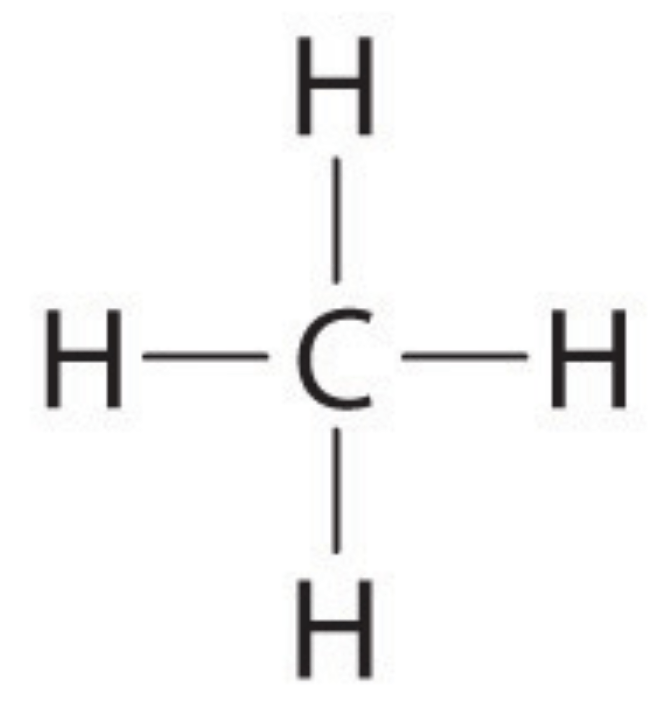
A molecule of methane has what shape?
a)
Tetrahedral
b)
Triangular
c)
Pyramidal
d)
Octahedral
19.
The theory that is used to predict the arrangement of atoms about a central atom is called?
a)
Valence shell repulsion
b)
Valence shell electron sharing
c)
Valence shell electron pair repulsion
d)
Valence electron shell repulsion pair
20.

Which image could be a representation of NH3?

a)

A

b)

B

c)

C

21.

What geometry will this molecular structure have?: PH3

a)

bent

b)

tetrahedral

c)

trigonal planar

d)

trigonal pyramidal

22.
What is the name of the following compound?
S6O3
a)
sulfurehexa trioxide
b)
hexasulfur trioxide
c)
hexasulfide trioxide
d)
trioxygen hexasulfide
23.

How many valence electrons in NITROGEN?

a)

15

b)

5

c)

6

d)

4

24.

ALUMINIUM has ___________ valence electrons

a)

2

b)

3

c)

13

d)

14

25.

What type of intermolecular force is present between two molecules of HF?

a)

Dipole-Dipole

b)

London

c)

Hydrogen bonds

d)

ionic

26.

What intermolecular force is present between two molecules of HCl?

a)

Dipole-Dipole

b)

London

c)

Hydrogen bonds

d)

Ionic

27.

What type of intermolecular force occurs between two POLAR molecules?

a)

London

b)

Dipole-dipole

c)

Hydrogen

28.

What type of intermolecular force requires BOTH molecules to have an H-N, H-O, or H-F connection within them?

a)

Hydrogen bond

b)

London

c)

Dipole-dipole

29.

Which of the following forces are found between two NONPOLAR molecules?

a)

London force

b)

Dipole-dipole

c)

Hydrogen bond

30.

The weaker the intermolecular forces of a substance the _____________ the boiling point

a)

higher

b)

lower

31.
Ionic Bonding involves...
a)
The transfer of protons
b)
The transfer of nuetrons 
c)
The transfer of electrons
d)
None Of the above
32.
Type of intermolecular force present in I2, Br2, and Cl2.
a)

dipole dipole

b)

H-bond

c)

London dispersion forces

d)

metallic

33.

NH3 is a ... molecule

a)

Polar

b)

Nonpolar

34.

Chloroform (CHCl3) is a .... molecule.

a)

polar

b)

nonpolar

c)

ionic

35.

CCl4 is a ... molecule.

a)

polar

b)

nonpolar

c)

ionic

36.

Classify the following molecule.

a)

polar

b)

nonpolar

37.

Classify the following molecule.

a)

polar

b)

nonpolar

38.
What is the VSEPR theory used to predict?
a)
Bond Strength
b)
Polarity
c)
Molecular Shape
d)
Electronegativity
39.
According to VSEPR, molecules adjust their shapes to keep which of the following as far away as possible?
a)
Pairs of valence electrons
b)
Inner shell electrons
c)
Mobile Electrons
d)
Electrons closest to the nucleus
40.
How many lone pairs are in this molecule's structure?
a)
6
b)
2
c)
0
d)
4
41.

Is this molecule polar or non-polar?

a)

Polar

b)

Non-polar

42.

Is this molecule polar or non-polar?

a)

Polar

b)

Non-polar

43.

Is this molecule polar or non-polar?

a)

Non-polar

b)

Polar

44.
In covalent bonds, electrons are ___________.
a)
transferred
b)
gained
c)
lost
d)
shared
45.
In a polar covalent bond, electrons are shared ___________.
a)
equally
b)
unequally
c)
between non-metals with similar electronegativities
d)
between a metal and a non-metal
46.
This is an example of a __________ bond.
a)
non-polar covalent
b)
polar covalent
c)
ionic
d)
metallic
47.
Which formula represents a polar molecule?
a)
H2
b)
H2O
c)
CO2
d)
CCl4
48.
A positively or negatively charged particle.
a)
covalent bond
b)
compound
c)
ion
d)
chemical bond
49.

Is this molecule polar or non-polar?

a)

Non-polar

b)

Polar

50.
What geometry will this molecular structure have?: H2S
a)
bent
b)
tetrahedral
c)
linear
d)
trigonal pyramidal
51.

What type of bond is depicted in the image?

a)

Non-polar Covalent

b)

Polar Covalent

c)

Ionic

52.

What type of bond is depicted in the image?

a)

Non-polar Covalent

b)

Polar Covalent

c)

Ionic

53.

Partial charges are present in which type of bond?

a)

Ionic

b)

Nonpolar Covalent

c)

Polar Covalent

d)

Both Polar Covalent and Ionic

54.

What is the geometric shape (CBr2Cl2) according to VSEPR theory?

a)

linear

b)

bent

c)

trigonal planar

d)

trigonal pyramidal

e)

tetrahedral

55.

Will the molecule NH2Cl be ionic, polar, or nonpolar?

a)

Ionic

b)

Polar

c)

Nonpolar

d)

Not enough information to determine

56.

Is the following molecule polar or nonpolar?

a)

polar

b)

nonpolar

57.

Is the following molecule polar or nonpolar?

a)

polar

b)

nonpolar

58.

Is the following molecule polar or nonpolar?

a)

polar

b)

nonpolar

59.

Is the following molecule polar or nonpolar?

a)

polar

b)

nonpolar

60.

What is the molecular geometry of this molecule?

a)

trigonal bipyramidal

b)

square planar

c)

trigonal pyramidal

d)

square pyramidal

61.

What molecular geometry does this molecule have?

a)

trigonal planar

b)

tetrahedral

c)

bent

d)

trigonal pyramidal