
 Worksheets
Mr. Gainza's CFE Review
Total questions: 175
Worksheet time: 3hrs 48mins
Name
Class
Date
1.
Constantinople was a strategic location for the capital of the Byzantine Empire because it was a crossroads of trade.
a)
True
b)
False
2.
The location of Constantinople helped the Byzantines control
a)
the actions of the Pope.
b)
tax policies of Rome.
c)
warring African tribes.
d)
trade between Asia and Europe.
3.
Justinian’s wife Theodora encouraged him to
a)
increase women’s rights.
b)
flee his empire when a massive riot erupted.
c)
expand his empire to include India and parts of China.
d)
ban all statues and icons of Jesus in his empire.
4.
What language was used in the Eastern Orthodox Church?
a)
Latin
b)
Greek
c)
English
d)
Arabic
5.
What was the Great Schism in 1054 CE?
a)
The Ottoman Turks conquered Constantinople
b)
Theodosius split the empire into two parts
c)
The Christian Church split into the Roman Catholic and Eastern Orthodox Churches
d)
The center of the Church was moved to Moscow
6.
One of Justinian’s greatest accomplishments was
a)
adding minarets to the Hagia Sophia.
b)
the Great Schism.
c)
re-conquest of former Roman Empire lands.
d)
codification of Hammurabi’s Code.
7.
The Code of Justinian later served as the basis for most
a)
Indian religious ceremonies.
b)
African trade agreements.
c)
European legal systems.
d)
Chinese government principles.
8.

Feudalism is a political and economic system. In the Middle Ages, it worked because it provided something that people needed. What did people need?
a)
Freedom
b)
Protection
c)
Rights
d)
Education
9.

Who is the pope?
a)
The lowest class
b)
the king
c)
The leader of the church
d)
a holy God
10.

The Black Plague spread to Europe from
a)
The Roman Empire along the Appian Way
b)
Africa along the coast
c)
Asia along the Silk Road
d)
Denmark by Vikings
11.

The Muslims and Christians were constantly fighting over which city during the Crusades?
a)
London
b)
Jerusalem
c)
Paris
d)
Babylon
12.

Being kicked out of the Catholic Church was called...
a)
extinct
b)
knighted
c)
excommunicated
d)
confirmed
13.
A manor is
a)
a large estate owned by a knight or lord
b)
another name for the Eastern Roman Empire, it survived for another 1000 years
c)
the only approved Christian church during the Middle Ages
d)
religious ideas not approved by the church
14.
What was the role of the Manor?
a)
a place of religous refuge
b)
a lords estate that profited off agriculture and serfs.
c)
a factory that made weapons
d)
A barbarian clan
15.

Monks lived in _________.
a)
dob and wattle Homes
b)
castles
c)
monasteries
d)
convents
16.

Who signed the Magna Carta?
a)
King Richard III
b)
Charlemagne
c)
King John
d)
William the Conqueror
17.

Knights had to follow a code of conduct known as...
a)
The DaVinci Code
b)
Chivalry
c)
Gentlemanry
d)
heraldry
18.
What was the name of the man who was the grandson of Charles Martel, who was crowned Holy Roman Emperor by Pope Leo III, and who helped spread Christianity to the whole empire?
a)
Charlemagne
b)
William the Conqueror
c)
Julius Caesar
d)
Alexander the Great
19.
When the Medieval popes claimed authority over all secular rulers, it was called
a)
papal supremacy
b)
pope rules
c)
feudal contract
d)
secular sequestering
20.
William, the Duke of Normandy, raised and army and headed across the English Channel to fight King Harold for the throne of England. Where did they battle?
a)
Normandy
b)
Hastings
c)
Runnymeade
d)
Nowhere
21.
"A legal system based on custom and court rulings that was applied to all of England" was called _______________.
a)
Justice
b)
Common Law
c)
Rule of Law
d)
Common Justice
22.
A group of men who swore to speak the truth and who determined which cases should be brought to trial were called ______.
a)
A council
b)
A carta
c)
A jury
d)
judgemental
23.
England's legislature was and is called the
a)
Commons
b)
Senate
c)
Parliament
d)
House of Lords
24.
What is meant by the phrase "power of the purse"?
a)
someone has control over the finances
b)
someone has control over the women of a kingdom
c)
women can participate in the government
d)
women can control the men in the government
25.
What is a fief?
a)
someone who plays the flute
b)
an estate that came with peasants to work it
c)
the number 5 in the Medieval language
d)
the sword a night carried in his pocket
26.

A loosely organized system of rule in which powerful local lords divided their landholdings among lesser lords. The lesser lords pledged service and loyalty to the greater lord.
a)
hierarchy
b)
civilization
c)
feudalism
d)
bureaucracy
27.

Lesser lords in the Middle Ages were also called _____________.
a)
knights
b)
just lesser lords
c)
serfs
d)
vassals
28.

The Crusades were
a)
a series of holy wars between Muslims and Buddhists
b)
pleasure trips to the Holy Land
c)
a series of holy wars between Muslims and Christians
d)
a huge success for Christians
29.

The Magna Carta was designed to do all the following EXCEPT _____________.
a)
limit the power of the King
b)
place the King within the rule of law
c)
make sure the law was used fairly
d)
renounce the Pope
30.

Who was the founder of Islam?
a)
the Buddha
b)
the Prophet Muhammad
c)
the Prophet Zoroaster
d)
Abraham
31.

What is the Holy book of Islam?
a)
Vedas
b)
Torah
c)
Bible
d)
Qur'an
32.

Where did Islam begin?
a)
Balkan Peninsula
b)
Arabian Peninsula
c)
Iberian Peninsula
d)
Florida
33.
Which European nation did the early Islamic Empire include?
a)
Germany
b)
France
c)
Spain
d)
Italy
34.

What factors discouraged the spread of Islam?
a)
trade routes
b)
geographic barriers
c)
common language
d)
monotheistic religion
35.

Which factor encouraged the spread of Islam?
a)
Weak Byzantine and Persian Empires
b)
Islam's division into Shi'a and Sunni
c)
the Sahara Desert
d)
mountain ranges and distance
36.

What factor encouraged trade across Islamic lands?
a)
the Arabic language
b)
the Greek language
c)
the Germanic languages
d)
the Romance languages
37.
The Muslim Empire stopped its expansion after the Battle of ____________
a)
Salamis
b)
Waterloo
c)
Tours
d)
the Bulge
38.
Which was an important contribution of the Islamic Empire?
a)
Elementary Schools
b)
Universities
c)
Finishing Schools
d)
Technical Colleges
39.

Which group is credited with the invention of Algebra?
a)
Muslim scholars
b)
Catholic monks
c)
Greek scribes
d)
Phoenician traders
40.

Muslim scholars made important contributions in the field of
a)
alchemy
b)
astrophysics
c)
geography
d)
scientology
41.
Ghana, Mali, and Songhai all traded which TWO items?
a)
Gold and fish
b)
Gold and salt
c)
Gold and timber
d)
Gold and bronze
42.
In the Empire of Mali, who was Mali's greatest leader?
a)
Mufusa
b)
Mansa Musa
c)
King Kong
d)
Nelson Mandela
43.
The city Of Timbuktu was known as
a)
The largest city in the world
b)
the most beautiful city in africa
c)
a Bustling Seaport
d)
the center of learning and trade
44.
On a hajj Mansa Musa traveled all the way to
a)
Egypt
b)
the Mongolian Empire
c)
Mecca
d)
Asia
45.

The religious traditions of the West Africa Kingdoms started as __________ but eventually converted to ____________.
a)
Christian, Judaism
b)
Hindu, Buddhism
c)
Shinto, Confucianism
d)
Animism, Islam
46.

Archeologists found an extensive wall structure that surrounded this capitol that had commercial links with coastal cities
a)
Timbuktu
b)
Great Zimbabwe
c)
Luxor
d)
Djibouti
47.
Spanish conquerors of the Americas
a)
conquistadors
b)
Aztecs
c)
Incas
d)
encomienda
48.
seventeenth-century economic theory that held that the prosperity of a nation depended on a large supply of gold and silver
a)
encomienda
b)
mercantilism
c)
mita
d)
Columbian Exchange
49.
forced labor system used by the Spanish in colonial Latin America
a)
ecomienda
b)
peninsulares
c)
indentured servitude
d)
mita
50.
exchange of plants, animals, and people between Europe, Asia, and the Americas
a)
Middle Passage
b)
Northwest Passage
c)
Columbian Exchange
d)
Magellan Exchange
51.
forced voyage of enslaved Africans across the Atlantic Ocean to the Americas
a)
Columbian Exchange
b)
Middle Passage
c)
Mita
d)
Inquisition
52.
settlement of people living in a new territory, linked with the parent country by trade and direct government control
a)
caravel
b)
colony
c)
mission
d)
state
53.
Spanish and Portuguese officials who resided temporarily in Latin America
a)
peninsulares
b)
colonists
c)
mestizos
d)
creole
54.
The Treaty of Tordesillas, signed in 1494,
a)
put an end to warfare between Portugal and Spain
b)
established a line between territories controlled by Spain and Portugal
c)
ended violence between Portuguese and Muslim spice traders
d)
made Portuguese the official language of the Americas
55.
The conquistadors' main advantage over the Aztec and Inca empires was their
a)
knowledge of the territory
b)
vast army size
c)
types of weaponry
d)
superior intelligence
56.
Why were enslaved African needed in the Caribbean Islands?
a)
Importing and paying Europeans for labor kept the balance of trade.
b)
Growing sugarcane was familiar to Africans.
c)
Spain respected the Native Americans and did not want to enslave them.
d)
The Native American population was small due to diseases brought from Europe.
57.
According to the mercantilists, the prosperity of a nation depended on
a)
importing more goods rather than exporting
b)
a large supply of bullion, or gold and silver
c)
conquering new territories and settling them
d)
finding and maintaining a supply of cheap labor
58.
Why did the Catholic Church have so much influence in Latin America?
a)
The Catholic Church gave Native Americans food and clothing
b)
Spanish and Portuguese rulers wanted Native Americans to become Catholic
c)
The missions were well organized and profitable
d)
Native Americans became docile members of the Spanish and Portuguese empires
59.
Why could only peninsulares hold important government positions in Latin America?
a)
Native American people chose the peninsulares as their leaders
b)
Only peninsulares were educated enough to govern
c)
Each colony in Latin America chose to elect peninsulares to the highest offices
d)
Peninsulares were born in the parent countries that founded their colonies
60.
Social class in Latin America in the 1500s was based on
a)
labor
b)
earnings
c)
status
d)
intelligence
61.
How did the Portuguese and Spanish make money from their Latin American colonies?
a)
farming and mining
b)
buying and selling land
c)
selling enslaved people
d)
governing the colonies
62.
What was the pattern of trade that connected Europe, Africa, and the American continents called?
a)
Golden Age
b)
triangular trade
c)
slave trade
d)
Middle Passage
63.
Who conquered the Aztec empire?
a)
Ferdinand Magellan
b)
Francisco Pizarro
c)
Hernan Cortes
d)
Hernan de Soto
64.
What provided the major economic support for the Renaissance?
a)
wealthy patrons
b)
church officials
c)
government grants
d)
kings competing for prestige
65.
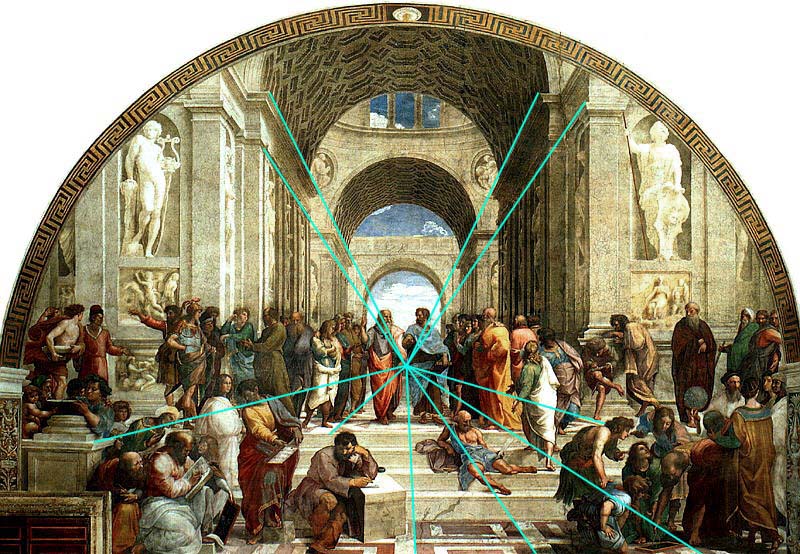
What is the artistic technique that is used to show depth and distance on a flat surface?
a)
realism
b)
perspective
c)
idealism
d)
distancism
66.
Which of the following is associated with Humanism?
a)
the ideas of the middle ages
b)
the ideas of Greece & Rome
c)
the ideas of ancient China
d)
the ideas of ancient India
67.
Where did the Renaissance begin?
a)
Italy
b)
France
c)
England
d)
Germany
68.
Who painted the Mona Lisa?
a)
Michelangelo
b)
Boticceli
c)
Leonardo da Vinci
d)
Donatello
69.
Which of the following is NOT a reason why the Renaissance began in Italy?
a)
Wealthy Italian patrons supported the arts
b)
Cultural diffusion encouraged curiosity and spread Arab and African ideas
c)
The Black Plague did not hit Italy as a result of the Alps
d)
Renewed interest in the cultures of Ancient Greece and Rome
70.
What was the Renaissance a "rebirth" of?
a)
Religion
b)
Classical culture
c)
Life (after the black death)
d)
Middle Ages
71.
The Medici Family...
a)
Were the first mafia family to live in Italy
b)
Were the most famous painters in Florence
c)
Were the family of Mona Lisa
d)
Were patrons of the arts in Florence
72.
"The end justifies the means" was a key belief of this man, who wrote "The Prince"
a)
Machiavelli
b)
Castiglione
c)
Shakespeare
d)
Petrarch
73.
Advantages of Johannes Gutenberg's printing press include all of the following EXCEPT:
a)
Cheaper book prices
b)
Increase in education/literacy
c)
Increase in church power
d)
Rapid spread of ideas
74.
Northern Humanists like Erasmus were most commonly known for what?
a)
Interest in the arts
b)
Interest in religious and social reform
c)
Interest in the cause of the Black Death
d)
Interest in the printing press
75.
While Gutenberg introduced the printing press in Europe, this country was the first to develop moveable type, which influenced his invention.
a)
Japan
b)
Korea
c)
England
d)
China
76.
What does the word "Renaissance" mean?
a)
Rebirth
b)
Stagnation
c)
Traditional
d)
A Latin term for art
77.
The Reformation began in _______.
a)
Italy
b)
Germany
c)
France
d)
England
78.
Which king broke away from the Catholic church because he wanted a divorce?
a)
Henry VI
b)
George I
c)
Charles I
d)
Henry VIII
79.
What are the complaints called that Martin Luther wrote against Indulgences?
a)
The 90 Thesis
b)
The 95 Theories
c)
The 95 Arguements
d)
The 95 Theses
80.
Who taught predestination
a)
John Calvin
b)
Martin Luther
c)
Zwingli
d)
Erasmus
81.
Leader of the Jesuits
a)
Pope Paul III
b)
Capuchins
c)
John Tetzel
d)
Ignatius of Loyola
82.
What was the Protestant Reformation?
a)
an attempt to overthrow the Pope and replace him with a Frenchman.
b)
an attempt to reform practices by the Catholic church considered corrupt.
c)
a call for Christian Europe to reclaim the Holy Land from the Arabs.
83.
What were the criticisms of the Catholic Church?
a)
that Church officials were trying to make money, especially the sale of indulgences and the veneration of relics.
b)
The pope had moved to Avignon, France and was living on a luxurious estate.
c)
That Church officials were leaving the cities to escape the plague.
84.
Counter (or Catholic) Reformation
a)
They have a series of meetings in response to martin Luther critiques of the church
b)
Come up with stricter guidelines to be catholic and put end to traditional practices
c)
Inquisition: questioning or trial
d)
all
85.
This was the Church practice of selling forgiveness for sin
a)
Usury
b)
Tithe
c)
Sin Tax
d)
Indulgences
86.
What is Predestination?
a)
where you go before you get to the end
b)
God has the foreknowledge of who is saved and who is condemned to hell
c)
faith + works
d)
None of these
87.
According to Copernicus, the sun
a)
Revolved around the earth
b)
Was the center of the Universe
c)
Was the biggest star
d)
Had many moons
88.
During the Scientific Revolution the heliocentric view of the universe was first proposed by __.
a)
Ptolemy
b)
Francis Bacon
c)
Isaac Newton
d)
Nicolaus Copernicus
89.
The idea that the earth is the center of the universe is the ___________ theory.
a)
geocentric
b)
heliocentric
c)
earthcentric
d)
world's worst
90.
The idea that the sun is the center of the universe is the ____________ theory.
a)
geocentric
b)
heliocentric
c)
solar
d)
sunny
91.
_____________________ was an Italian astronomer who developed the telescope, which then confirmed Copernicus’ Heliocentric Theory
a)
Isaac Newton
b)
Galileo Galilei
c)
Adam Smith
d)
Dennis Diderot
92.
He pioneered the use of inductive reasoning for the use in the scientific method.
a)
Kepler
b)
Bacon
c)
Galen
d)
Aristotle
93.
What type of math was Newton known for developing?
a)
Geometry
b)
Trigonomety
c)
Calculus
d)
Addition
94.
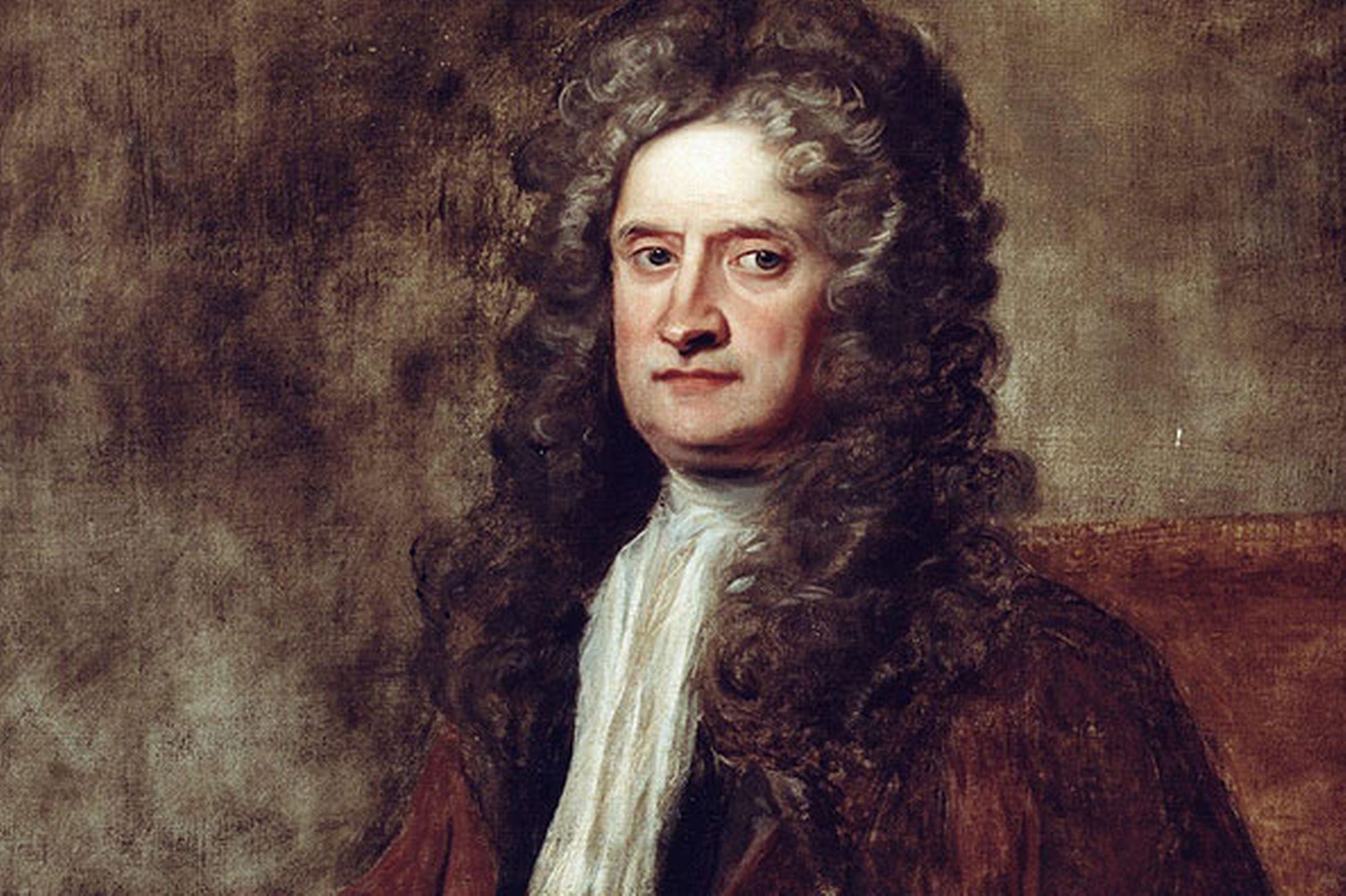
Which of the following was developed by Isaac Newton?
a)
the heliocentric theory
b)
the scientific method
c)
the theory of scientifc rationalism
d)
the theory of universal gravitation
95.

What did Francis Bacon contribute to the Scientific Revolution?
a)
the geocentric theory
b)
the scientific method
c)
the heliocentric theory
d)
the law of universal gravitation
96.
What is Denis Diderot known for?
a)
Creating the first dictionary
b)
Creating the first encyclopedia
c)
Discovering moons of Neptune
d)
Writing a book which states the basic knowledge and skills all people should have
97.
Which of the following was an early spokesperson for women's rights?
a)
Denis Diderot
b)
Marie Antoinette
c)
Mary Wollstonecraft
d)
Mahatma Gandhi
98.
What book did Adam Smith write?
a)
Wealth of Nations
b)
Gulliver's Travels
c)
A Treatise of Human Nature
d)
The Spirit of the Laws
99.
According to Rousseau, what is the role of government?
a)
It is to dictate to the people what the government wants.
b)
It is to implement policies beneficial to the government.
c)
It is to steer away from popular sovereignty.
d)
It is to protect the "general will" of the people
100.
Adam Smith’s doctrine that maintains that the state should not intervene in economics, from his book Wealth of Nations, is called ______.
a)
Laissez-faire
b)
Socialism
c)
Mercantilism
d)
Imperialism
101.
An agreement between people and the government to give up some rights for safety and protection
a)
Philosophers
b)
Democracy
c)
Social Contract
d)
Divine Right of Kings
102.
This type of government gives all powers to the king in a nation.
a)
Constitutional Monarchy
b)
Absolute Monarchy
c)
Oligarchy
d)
Democracy
103.
The idea that a monarch gets their power from God.
a)
Absolutism
b)
Balance of Power
c)
Divine Right
d)
Sacraments
104.
Divine Right of Kings is the theory that . . .
a)
Kings are Gods and all people must worship the king
b)
Kings rule because God chose them to rule
c)
Kings should only be advised by clergy
d)
Kings should be running the churches in their kingdoms
105.
This government was started by William and Mary and forces monarchs to share powers with Parliament.
a)
Absolute Monarchy
b)
Dictatorship
c)
Democracy
d)
Constitutional Monarchy
106.
France was deep in debt because
a)
money spent on the American Revolution
b)
the queen's lavish spending
c)
the 1st and 2nd estates did not pay taxes
d)
all of the above
107.
The idea that reason should guide society rather than tradition helped cause the revolution and came from
a)
the Declaration of Independence
b)
the Scientific Revolution
c)
the Enlightenment
d)
all of the above
108.
Most of the people of France belonged to the
a)
1st Estate
b)
2nd Estate
c)
3rd Estate
d)
4th Estate
109.
Why was voting in the Estates General unfair
a)
votes were not secret
b)
each estate voted by how many members there were
c)
each estate got the same number of votes
d)
the King got two votes
110.
When the other estates refused to change voting rules the 3rd Estate
a)
met separately
b)
Created the National Assembly
c)
took the Tennis Court Oath
d)
all of the above
111.
When the people of Paris heard that the military was going to stop the revolution their response was to
a)
leave the city
b)
storm the Bastille
c)
force the King to come to Paris
d)
none of the above
112.
The National Assembly set down the ideas of the Revolution in
a)
the Declaration of Independence
b)
the Declaration of the Rights of Man
c)
the US Constitution
d)
The Edict of Nantes
113.

What is the significance of the Tennis Court Oath?
a)
it led to a new constitution for France
b)
it started the French Revolution
c)
it was the beginning of the Reign of Terror
d)
it marked the beginning of the rule of Napoleon
114.

How did the Enlightenment and the American Revolution influence the French Revolution?
a)
the people of France overthrew their absolute monarchy
b)
absolute monarchy was strengthened
c)
support for absolute monarchy increased
d)
France was divided into three estates
115.
The Second Estate was composed of
a)
Church leaders
b)
Peasants
c)
Nobility
d)
none of the above
116.

Marie Antoinette was famous for
a)
saying "Let thm eat cake."
b)
her spending
c)
going to the guillotine
d)
all of the above
117.
About what percentage of France's population belonged to the Third Estate?
a)
1
b)
10
c)
98
d)
50
118.
What role did rivers in Britain play in helping the Industrial Revolution begin there?
a)
Coal and Iron ore
b)
Transportation and power
c)
cheap labor
d)
bathing, laundry, drinking water
119.
Urbanization means
a)
people moving from city to rural areas
b)
people moving from rural to city areas
c)
A growth in the birth rate
d)
A decline in the death rate
120.
James Watt invented
a)
the steam engine
b)
the spinning jenny
c)
the water frame
d)
the steam boat
121.
The Industrial Revolution led to
a)
Changes in transportation
b)
Rise of Socialism/Marxism
c)
Urbanization
d)
All of these
122.
Which of these caused industrialization to spread the fastest?
a)
steamboats
b)
peasants
c)
nobles
d)
railroads
123.
Why did many families move to the city?
a)
They could not make a living on their farms because of the Enclosure Acts
b)
They heard life was better in the city
c)
They wanted a chance to better themselves in the city
d)
They were tired of farming
124.
Why were women and children hired to work in factories?
a)
They did the work better than men
b)
They were more submissive than men
c)
They were cheaper than men
d)
They wanted to work more than the men
125.
More goods can be produced in the same amount of time. This was true of what process?
a)
Assembly line
b)
Coke-making process
c)
Textile production
d)
All of these
126.
Which 2 natural resources were the backbone of the Industrial Revolution?
a)
wood and peat
b)
oil and natural gas
c)
coal and iron
d)
cotton and tobacco
127.
Which innovation allowed factories to be built anywhere?
a)
flying shuttle
b)
spinning jenny
c)
cotton gin
d)
steam engine
128.
A person that loves their country in their heart is best expressed by
a)
Empathy
b)
Scarcity
c)
Nationalism
d)
Empathy
129.
What guided by the needs of Bismarck’s practice of Realpolitik?
a)
the needs of the people.
b)
the needs of the state.
c)
the principle of divine right.
d)
traditional morality.
130.
Nationalism is best defined as
a)
a method of solving basic economic problems of the society.
b)
the desire to take over other societies by force.
c)
the achieving of world peace and global understanding.
d)
the loyalty of a people to their values, traditions, and a geographic region.
131.
Due to Bismarck’s editing of the Ems dispatch it caused
a)
a war between France and Prussia
b)
a war between Sardinia and Prussia.
c)
an alliance between France and Prussia.
d)
an alliance between Sardinia and Prussia.
132.
China has the largest population but other nations are taking over and we are changing into a colony of the foreign powers this statement refers to
a)
Mau Mau uprising and adoption of apartheid
b)
Opium War and Boxer Rebellion
c)
Sepoy Mutiny and the Salt March
d)
Haitian Revolution and Cortes’ march on Mexico City
133.
The Qing government survived but had to share power as a result of
a)
The Taiping Rebellion
b)
The Opium War
c)
The Boxer Rebellion
134.
Because of the Treaty of Nanjing, Britain gained control of
a)
Taiwan
b)
the Suez Canal
c)
Hong Kong
d)
India
135.
What event brought about China's 100 Days of Reform?
a)
defeat in the Boxer Uprising.
b)
defeat in the Opium War.
c)
defeat in the Taiping Rebellion.
d)
defeat in the Sino-Japanese War.
136.
Which item below does NOT belong to Sun Yixian’s “Three Principles of the People?
a)
Democracy
b)
Economic security for all Chinese
c)
Imperialism
d)
Nationalism
137.
When Italy unified what type of government did it acquire?
a)
a socialist democracy
b)
a constitutional monarchy
c)
a republic
138.
In Germany the Prime Minister is called
a)
Kaiser
b)
King
c)
Lord
d)
Chancellor
139.
Why was it difficult for Italy to unite?
a)
There were too many red shirts
b)
the Monarch was too strong
c)
The identification with local regions
d)
They didn't want to fail
140.
What was the purpose of the open door policy?
a)
To protect U.S. trade rights in China
b)
To protect British trade rights in China
c)
To protect French Trade rights in China
d)
To protect China's trade rights
141.
Rife cartridges greased with animal fat were a key cause of which rebellion
a)
The Boxer Rebellion
b)
The Taiping Rebellion
c)
The Sepoy Rebellion
d)
The Mughal Rebellion
142.
Which of the following had an impact on Imperialism?
a)
Three Principles of the People
b)
Social Disorder
c)
Social Darwinism
d)
Social Order
143.
What is protectorate rule?
a)
Replacing local leaders with foreigners
b)
Putting local leaders in charge (with guidance from foreigners)
c)
Controlling a country through trade and economy
d)
Removing the government and having anarchy
144.
Whose actions in the early 1800s seemed to have started Nationalism in both Germany and Italy?
a)
Bismarck
b)
Napoleon
c)
Cavour
d)
Robespierre
145.
What country was divided into the Dual-Monarchy in the late 1860s?
a)
Germany
b)
Italy
c)
Russia
d)
Austria-Hungary
146.
Which of the following was known as "The Sick Man of Europe"?
a)
Russia
b)
England
c)
Ottoman Empire
d)
Austria-Hungary
147.
Which of the following was an effect of nationalism in Europe in the early 1900s?
a)
Britain made and alliance with France.
b)
Austria feared increasing rebellion among its subjects.
c)
Germany sought additional colonial territories.
148.
Which of the following events caused Britain to fight in World War I?
a)
Austria gave Serbia an ultimatum.
b)
Russia joined France to fight Austria.
c)
Germany invaded Belguim.
149.
For which of the following reasons did the Schlieffen Plan fail?
a)
Russia mobilized its army quickly.
b)
The United States joined the war.
c)
Germany did not have a strong army.
150.
A stalemate developed along the Western Front early in the war because
a)
Trench warfare made it difficult for either side to win an advantage.
b)
the French army fought with outdated weapons.
c)
the French army was able to push Germany out.
151.
Why was the Ottoman empire considered such a valuable ally?
a)
It had a powerful navy.
b)
It controlled Russian supply routes.
c)
It offered to give up territory for military support.
152.
Which of the following contributed to the United States' decision to enter the war?
a)
friendly relations with Russia
b)
fear of a poison gas attack
c)
cultural ties to Britain
153.
In general, the provisions of the Treaty of Versailles focused mainly on
a)
increasing German power.
b)
punishing Germany.
c)
decreasing American influence.
154.
This word means pride in one's country; it was a cause of WWI.
a)
Militarism
b)
Alliances
c)
Nationalism
d)
Imperialism
155.
This word means strengthening a country's military; it's a cause of World War I.
a)
Nationalism
b)
Militarism
c)
Alliances
d)
Imperialism
156.
This word means seeking other colonies; it was a cause of World War I.
a)
Militarism
b)
Imperialism
c)
Alliances
d)
Nationalism
157.
This word means support for different sides during war; there were the Allied and Central powers during WWI.
a)
Nationalism
b)
Imperialism
c)
Alliances
d)
Militarism
158.
Germany used their U-boats to sink ships of the Allied powers; this British passenger liner was destroyed in 1917.
a)
RMS Lusitania
b)
USS Maine
c)
USS Arizona
d)
RMS Titanic
159.
What was the last straw for the U.S. before they got involved in WWI?
a)
Zimmerman Note
b)
Lusitania Sunk
c)
Hitler invaded Poland
d)
Zombie Apocalypse
160.
The "Big Four" refers to
a)
the four empires that were destroyed during the war: Ottoman, German, Austro-Hungarian, and Russian.
b)
the four major leaders at the Paris Peace Conference: Wilson, Clemenceau, George, and Orlando.
c)
the last four major German offensives of the war.
d)
the four major Central Powers: Germany, Austria-Hungary, Ottoman Empire, and Bulgaria.
161.
What happened to Japanese Americans during World War II?
a)
They were executed
b)
They were placed in internment camps
c)
They were forced to serve in the military
d)
They were deported from the U.S.
162.
How did the U.S. convince Japan to surrender?
a)
Through diplomatic negotiations
b)
By capturing their capital city
c)
By dropping two atomic bombs on them
d)
By surrounding Japan and allowing no one to leave
163.
What caused the U.S. to enter World War II?
a)
Germany invading Poland
b)
Sinking of the Lusitania
c)
Attack on Pearl Harbor
d)
France being taken over
164.

This poster was an icon for
a)
women factory workers during WWII
b)
housewives
c)
transgender soldiers
d)
suffragettes
165.
What triggered the actual beginning of World War II?
a)
the British blockade of German ports
b)
Germany's invasion of the Soviet Union
c)
the joint invasion of Poland by Germany and the Soviet Union
d)
Frances denouncement of the Munich Conference
166.
What military action paved the way for the liberation of France and the rest of Western Europe?
a)
"island hopping"
b)
the Battle of the Bulge
c)
the D-day Invasion at Normandy
d)
the Battle of Dunkirk
167.
The Nazi "Final solution" was a systematic, industrialized attempt to:
a)
deport Christians who refused to pledge allegiance to Hitler
b)
eliminate all communist
c)
eliminate Jews from Europe
d)
repopulate France with Germans
168.

What two nations were in competition with each other during the Cold War?
a)
Spain and Portugal
b)
England and France
c)
Germany and Italy
d)
United States and Soviet Union
169.

President Truman adopted a new foreign policy during the Cold War know as the Truman Doctrine. What was the main goal of the Truman Doctrine?
a)
To expand trade with Europe
b)
To limit the build up of nuclear weapons
c)
To stop the spread of communism
d)
to send financial aid to Europe
170.

Where was Vietnam divided?
a)
17th Parellel
b)
20thParellel
c)
38th Parellel
d)
34th Parellel
171.

What was the name of the first satellite in space launched by the Soviet Union?
a)
Gagarin
b)
Apollo 11
c)
Sputnik
d)
Apollo 13
172.

President Truman’s pledge to provide economic and military aid to countries threatened by the Soviet Union in an effort to check the spread of communism is called?
a)
Containment
b)
Marshall Plan
c)
Truman Dogma
d)
Truman Doctrine
173.
In 1946, the British Prime Minister said in a speech that an "Iron Curtain" had fallen across the European continent. This "Iron Curtain" was ______________.
a)
a wall built between countries controlled by Nazi Germany and ones that weren't.
b)
another name for the Alps, which protected it from the USSR during the Cold War.
c)
an imaginary line separating Europe's communist and non-communist countries.
d)
a divider between the good and the evil.
174.

How did the Soviet Union respond to the formation of NATO?
a)
started the Cold War
b)
created the Warsaw Pact
c)
ended the Cold War
d)
launched Sputnik
175.
During the Berlin Blockade, the U.S. flew supplies to west Berlin. This was called the __________________________.
a)
Berlin Rescue Mission
b)
NATO
c)
Berlin Airlift
d)
United Nations
100 %

