
 Worksheets
Light- Reflection, Refraction, and Absorption
Total questions: 58
Worksheet time: 59mins

What happens to light passing through a hand lens that makes the image of the penny appear larger? The light is-
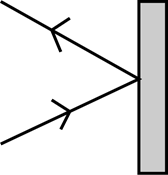
In the illustration, the light ray striking the object is-



What happens when light passes through a lens?
It's expanded
It's reflected
It's curved
It's refracted
What is the difference between reflection and refraction?
Light bends when reflected and bounces when refracted
Light travels in curved lines when refracted and travels in straight when reflected
Light no longer travels when refracted
Light bends when refracted and bounces when reflected
Which object below would reflect the most light?
A sheet of metal
Block of wood
Concrete driveway
Birds feathers

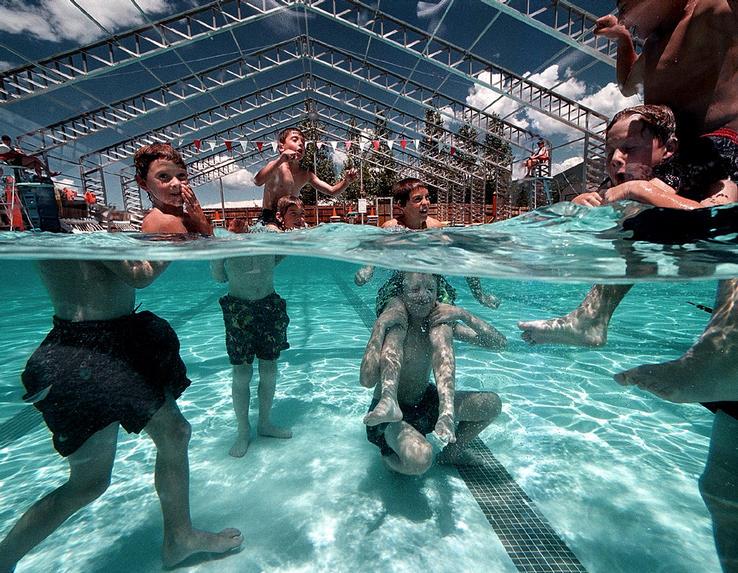
The picture shows a child standing in a swimming pool. Why does the lower part of the child appear so much different in size from the upper part? (5.6C)
The light rays that travel through water and then into air are refracted.
The light rays that travel through water and then into air are enlarged.
The light rays that travel through air and then into water are reflected.
The light rays that travel through air and then into water are reduced.
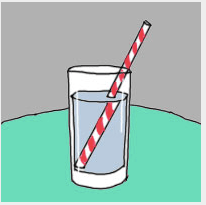
Why does the straw appear to be bent?
light is reflected
light is absorbed
light is turned
light is refracted

Students often use a hand lens to make small objects appear larger. A hand lens makes objects appear larger because the lens-
increases the light’s strength
changes the color of the light
bends light passing through it
converts light energy to heat

This is an example of...
What do we call a material that light can travel through?
air
water
medium
pathway


Reflection
Refraction

Which shows light being refracted by a lens?
a
b
c
d

The following diagram shows a driver who could see the image of a vehicle behind him without turning his back.
Why?
Light travels in a straight line
Light is refracted
Light is reflected
Light travels in two different mediums

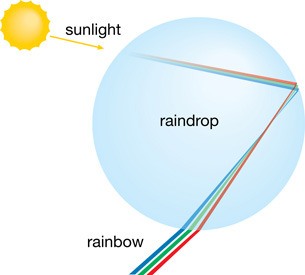
What causes the formation of a rainbow?
Light travels in a straight line
Reflection of light
Refraction of light
Light in bounced in two different mediums

A fish bowl bending light waves and distorting an image of a cat's face is an example of:
Reflection
Refraction
Absorption

A light wave bouncing off of a windshield visor is an example of:
Reflection
Refraction
Absorption


The moon provides little light at night. How does the moon give us light?
It refracts light from the sun
It reflects light from the sun
It's a source of light
It reflects light from earth
What happens when light hits an object that it cannot pass through?
The light is refracted or absorbed
The light is reflected or absorbed
The light is reflected or refracted
The light is refracted or curved

This is an example of light being---
Absorbed
Transmitted
Reflected
Absorption of light occurs best with:
mirrors
light surfaces
medium surfaces
dark surfaces

On a sunny day, why would black asphalt be hotter than cement?
Because black asphalt absorbs light while cement does not absorb light
Because black asphalt is transparent while cement is translucent
Because black asphalt is medium while cement is a prism
Because black asphalt is cooler while cement is hotter
How does the color of a surface affect its ability to reflect light?
Darker colors reflect more light.
Lighter colors absorb more light.
Lighter colors reflect more light.
Color has no effect on light reflection.

A student notices a reflection of a boat in a lake. Which statement BEST explains why the boat appears on the surface of the lake?
The boat produces light that reflects off the water.
Light reflects off the boat and reflects off the water.
The boat refracts light that then reflects off the water.
Light refracts from the water and is reflected off the boat.
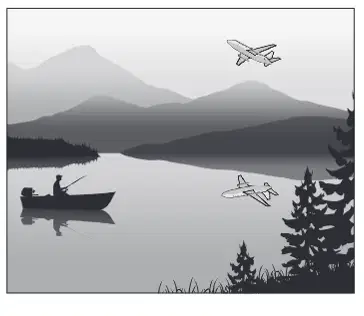
A man floating in a boat on a lake sees an image of an airplane in the water. At the same time he hears a plane and turns to see the source of the sound in the sky. Which property of light best explains why an image of the plane appears in the water?
Conduction
Reflection
Absorption
Refraction
Cason points a flashlight toward a smooth, shiny metal pan. The light bounces straight back toward him. Which property of light does this show?
Refraction
Reflection
Absorption
Transmission
Cason draws light rays bouncing off a mirror angles. Which diagram correctly represents reflection?


Mia looks through a fish tank and sees that the fish look slightly closer than they really are. What happened to the light?
It was absorbed by the glass.
It was reflected by the water.
It was refracted as it moved through the water.
It scattered in every direction.
Sophia drops a coin into a fountain. The coin appears to be closer to the surface than it really is. Which best explains this observation?
Light reflecting off the water
Light being absorbed by the coin
Light refracting as it moves from water to air
The water scattering the light

When you look on the surface of a lake, the light is______.
refracted
transmitted
absorbed
reflected

What is happening in this picture?
the light is being refracted from mirror to mirror
the light is being transmitted
the light is being reflected off each mirror
the light is being absorbed by each mirror



