
 Worksheets
Cosmology and the Origins of Time
Total questions: 62
Worksheet time: 1hrs 12mins
Name
Class
Date
1.
Which moon phase is when you can't see the moon at all?
a)
Waning crescent
b)
Full moon
c)
Waxing gibbous
d)
New moon
2.

A body that orbits a planet is a...
a)
Meteor
b)
Asteroid
c)
Satellite
d)
Comet
3.
What is the origin of the universe called?
a)
The Hubble Glitch
b)
The Big Crunch
c)
The Big Bang
d)
The Big Collapse
4.
A[n] ______________ tide occurs when the sun is at right angles to the line between Earth and the moon.
a)
high
b)
neap
c)
low
d)
spring
5.

What was the first element to form within the universe?
a)
Hydrogen
b)
Helium
c)
Carbon
d)
Oxygen
6.
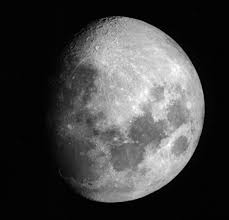
Name the moon phase
a)
waning crescent
b)
waxing crescent
c)
waning gibbous
d)
waxing gibbous
7.

Select the order from smallest to largest.
a)
Sun, Milky Way, solar system, universe
b)
Sun, Milky Way, universe, solar system
c)
Sun, solar system, Milky Way, universe
d)
Sun, solar system, universe, Milky Way
8.

Which stars have the lowest temperature?
a)
A
b)
B
c)
C
d)
D
9.

Which stars have the highest temperature?
a)
A
b)
B
c)
C
d)
D
10.

Stars located at the letter D would most likely be ________ in color.
a)
brown
b)
red
c)
green
d)
blue/white
11.

Stars located at the letter C would most likely be ________ in color.
a)
brown
b)
red
c)
green
d)
blue/white
12.

What type of galaxy is this?
a)
Spiral
b)
Elliptical
c)
Irregular
d)
Irrational
13.

A light year is...
a)
The speed light travels
b)
How long it takes light to get to you from the sun
c)
The distance light can travel in a year
d)
How many years it takes light to be emitted
14.

What does a stars color indicate?
a)
color
b)
age
c)
size
d)
temperature
15.
What is the material called that forms new stars?
a)
Galaxy
b)
Nebula
c)
Stars
d)
Pixars
16.
What is the light that we can see on the electromagnetic spectrum?
a)
Visible
b)
UV
c)
Infrared
d)
All of the Options
17.

Name the moon phase
a)
waning crescent
b)
waxing crescent
c)
waning gibbous
d)
waxing gibbous
18.

Which diagram correctly shows wind motion between pressure areas?
a)
Option #1
b)
Option #2
c)
Option #3
d)
Option #4
19.

The greenhouse effect traps solar radiation in Earth’s atmosphere. What is the likely result of increased greenhouse gases and an increased greenhouse effect?
a)
the atmosphere will increase in temperature
b)
the atmosphere will form more oxygen gas
c)
the atmosphere will become more dense
d)
the sea levels will decrease
20.

Heat is transferred within the atmosphere by
a)
solar radiation
b)
conduction
c)
reflection
d)
convection
21.

Warm air rises because...
a)
it is more dense than cooler air
b)
it has more pressure than cooler air
c)
it is less dense than cooler air
d)
it has a higher dew point than cooler air
22.

In what atmospheric layer is the greatest air pressure?
a)
thermosphere
b)
mesosphere
c)
stratosphere
d)
troposphere
23.

Air temperature generally decreases with increasing
a)
elevation & latitude
b)
convection rate & latitude
c)
elevation & longitude
d)
relative humidity & longitude
24.

The curving of air to the right in the Northern hemisphere is caused by ___________ and is called the _________ effect.
a)
Earth's rotation...Coriolis
b)
Earth's revolution...Coriolis
c)
Earth's rotation...Doppler
d)
Earth's revolution...Doppler
25.

In which zone of ocean temperatures would hurricanes MOST likely form?
NOTE: Lower temperatures are purple/blue, higher temperatures are red/orange.
NOTE: Lower temperatures are purple/blue, higher temperatures are red/orange.
a)
Zone 1
b)
Zone 2
c)
Zone 3
d)
Hurricanes do not form in any specific temperature zone
26.

There is a front approaching Virginia in the map. What type is it & what will the temperature do as it passes?
a)
Stationary front - temperature will stay the same
b)
Cold front - temperature will increase
c)
Warm front - temperature will increase
d)
Cold front - temperature will decrease
27.

In what direction is the warm front on this map moving?
a)
Southeast
b)
Northwest
c)
Northeast
d)
It isn't moving
28.

What type of clouds are these?
a)
Cirrus
b)
Nimbostratus
c)
Cumulonimbus
d)
Cumulus
29.

What is the weather on this station model?
a)
Temp: 32F Dew Pt: 29F, rainfall, Pressure: 1091.9mb
b)
Temp: 29F Dew Pt: 32F, rainfall, Pressure: 1091.9mb
c)
Temp: 32F Dew Pt: 29F, snow, Pressure: 1091.9mb
d)
Temp: 32F Dew Pt: 29F, snow, Pressure: 991.9mb
30.

Which of the following correctly matches a meteorological tool with what it measures?
a)
Anemometer - wind direction
b)
Barometer - air pressure
c)
Sling psychrometer - liquid precipitation
d)
Thermometer - humidity
31.

What system do we use to classify tornadoes?
a)
Fujita
b)
Saffir-Simpson
c)
Richter
d)
Beufort
32.

What system do we use to classify hurricanes?
a)
Fujita
b)
Saffir-Simpson
c)
Richter
d)
Beufort
33.

Moist air from the Pacific Ocean rises and cools as it passes from west to east over the Sierra Nevada Mountains. Once it is over the mountain range, the air descends and warms on the other side. What is the result of the air ascending, then descending over the mountains?
a)
Desert on the west side of the mountains and heavy rains on the east side
b)
Heavy rains on the west side of the mountains and deserts on the east side
c)
Heavy rains on the west side of the mountains and year-round snow on the east side
d)
Desert on the east side and west sides of the mountains and heavy rains on top of the mountains
34.

What sort of weather do you expect at a low pressure?
a)
Clear skies
b)
Stormy
c)
Nothing in particular
35.

What sort of weather do you expect at a high pressure?
a)
Clear skies
b)
Stormy
c)
Nothing in particular
36.

What type of clouds are these?
a)
Cirrus
b)
Nimbostratus
c)
Cumulonimbus
d)
Cumulus
37.

If the dry bulb is 6C and the wet bulb is 4C, what is the dew point?
a)
6C
b)
4C
c)
1C
d)
-4C
38.

What is meteorology?
a)
the study of meteors & comets
b)
the study of weather & climate
c)
the study of space
d)
the study of Earth's solid surface
39.
Which answer choice shows the geologic eras in the correct order from earliest to the most recent?
a)
paleozoic, precambrian, cambrian, mesozoic, cenozoic
b)
Precambrian, cenozoic, paleozoic, mesozoic
c)
Precambrian, paleozoic, mesozoic, cenozoic
d)
Precambrian, mesozoic, cenozoic, paleozoic
40.
Present day Earth is in the ____ epoch?
a)
Holocene
b)
Pleistocene
c)
Miocene
d)
Paleocene
41.
Which of the following best describes the process of relative dating?
a)
Determining the percentage of isotopes of radioactive elements in a fossil
b)
Using carbon dating to determine the age of rock layers
c)
Comparing the position of rock layers relative to one another to determine the order that they were laid down.
42.
Which era in geologic history are we currently in?
a)
Precambrian
b)
Cenozoic
c)
Paleozoic
d)
Mesozoic
43.

There have been _____ mass extinction events in Earth's history.
a)
3
b)
4
c)
5
d)
2
44.
Put this in order of smallest to largest time frame.
a)
Eon, Era, Periods, Epoch
b)
Periods, Epoch, Eon, Era,
c)
Epochs, Periods, Eras, Eons
d)
Eras, Periods, Epochs, Eons
45.
What is the largest time frame on geologic time line
a)
eon
b)
era
c)
epoch
d)
period
46.
What type of rock do fossils form in?
a)
Igneous
b)
Sedimentary
c)
Metamorphic
d)
Classic
47.
The disappearance of a species.
a)
Evolution
b)
Extinction
c)
Migration
d)
Mutation
48.
What do rocks contain that act like natural clocks?
a)
sediments
b)
layers
c)
radioactive material
d)
varves
49.
Which option below represents relative age?
a)
300 million years old
b)
451 million years old
c)
300-400 million years old
50.
How log ago did the dinosaurs become extinct?
a)
4.6 billion years ago
b)
3.5 billion yeats ago
c)
65 million years ago
d)
3 million years ago
51.
The Geologic Time Scale is a record of what?
a)
old geologists
b)
sweet geology music
c)
the known history of rocks and fossils
d)
a list of every living thing ever
52.
Paleozoic, Mesozoic & Cenozoic are all
a)
Epochs
b)
Eras
c)
Periods
d)
Eons
53.
How old do Paleontologists believe the Earth is?
a)
2015 years old
b)
3.6 billion years old
c)
4.6 billion years old
d)
4.6 million years old
54.
What is a fossil?
a)
any dead organism
b)
the preserved remains or traces of an organism
c)
a perfect copy of a rock
d)
an unusual type of rock
55.
Which of the following is not a trace fossil?
a)
Bone
b)
Wormhole
c)
footprint
d)
Burrow
56.
What organism is responsible for building oxygen levels in the atmosphere?
a)
Humans
b)
Jellyfish
c)
Cyanobacteria
d)
Birds
57.
The principle that Earth’s processes occurring today are similar to those that did in the past.
a)
uniformitarianism
b)
natural selection
c)
principle of superposition
d)
cyanobacteria
58.
Early atmosphere appeared
a)
Periman
b)
Cenozoic
c)
Precambrain
d)
Phanerozic
59.
Most of the fossils found in Virginia are marine organisms. This means Virginia was probably once covered by the
a)
Ocean
b)
Volcanoes
c)
Grassland
d)
Pavement
60.
Relative dating of rock layers tells us that the deeper we dig, _______.
a)
the younger the rocks get
b)
the smellier the rocks get
c)
the harder the rocks get
d)
the older the rocks get
61.
Which of the following statements about the fossil record is true?
a)
all organisms become fossils
b)
organisms having soft body parts make up most of the fossils
c)
all organisms that have shells become fossils
d)
the fossil record is incomplete
62.
A scientist who studies fossils is called a what?
a)
Fossilologist
b)
Rock Hound
c)
Archeologist
d)
Paleontologist
100 %

