
 Worksheets
Ecosystems
Total questions: 80
Worksheet time: 2hrs 24mins
Name
Class
Date
1.
Water, air, soil, and temperature are all examples of __________ factors.
a)
abiotic
b)
organisms
c)
biotic
d)
population
2.
An ecosystem is made up of all the ___________ and _____________ factors in an area.
a)
not/without
b)
Limiting Factor/ Carrying Capacity
c)
Living/ Nonliving
d)
life/ biotic factor
3.
A living or once-living organisms in an ecosystem is a
a)
population
b)
biotic factor
c)
abiotic factor
d)
community
4.
Which of the following is not a biotic factor?
a)
mushroom
b)
air
c)
elephant
d)
coyote
5.
A nonliving element in an ecosystem is an
a)
animal
b)
abiotic factor
c)
biotic factor
d)
organism
6.
Is a deer an abiotic or biotic factor?
a)
abiotic
b)
biotic
7.
Is a weather an abiotic or biotic factor?
a)
abiotic
b)
biotic
8.
Is sunlight an abiotic or biotic factor?
a)
abiotic
b)
biotic
9.
Rock
a)
Biotic
b)
Abiotic
10.
Humans
a)
Biotic
b)
Abiotic
11.
When predator numbers decrease, prey numbers ____________ because fewer of them are being consumed.
a)
decrease
b)
increase
c)
stay the same
d)
divide in half
12.
______________ occurs when more than one individual or population tries to use the same limited resource.
a)
Niche
b)
Predator-prey
c)
Availability
d)
Competition
13.
process by which plants make their own food
a)
respiration
b)
competition
c)
photosynthesis
d)
producer
14.
Which of the following is an example of a community?
a)
squirrels, blue jays, and oak trees
b)
a group of twenty sandhill cranes
c)
a school of tuna
d)
rocks, soil, air
15.
A coral reef and the organisms that live in it form
a)
a habitat
b)
a community
c)
a population
d)
an ecosystem
16.
What is an ecosystem?
a)
a population of different species.
b)
a community of living and non living organisms.
c)
a population of the same species.
d)
The community of Belton Middle school/ Freshman center.
17.
An ecosystem is a community of animals and plants interacting with their ____________.
a)
habitat
b)
climate
c)
environment
d)
community
18.
The role of an organism in the environment
a)
Job
b)
Niche
c)
Predator
d)
Prey
19.
What happens to an entire species when its last member dies
a)
Endangered
b)
Extinction
c)
Dead
d)
Scared
20.
The name for a species that only has a small number of members left alive and is in danger of dying out
a)
Endangered
b)
Extinct
c)
Dead
d)
Scared
21.
Shows the order, or sequence, in which organisms in an ecosystem consume one another
a)
Consumer
b)
Food Web
c)
Food Chain
d)
Energy Pyramid
22.
Formed when food chains are linked together
a)
Food Chain
b)
Food Web
c)
Energy Pyramid
d)
Producer
23.
A special characteristic that helps an organism survive in its environment
a)
Adaptation
b)
Niche
c)
Hibernate
d)
Mimicry
24.
Which role do plants play in the flow of energy in a habitat?
a)
Consumers
b)
Omnivores
c)
Herbivores
d)
Producers
25.
Which type of consumer gets their energy from animals.
a)
Vegetarian.
b)
Herbivore
c)
Omnivore
d)
Carnivore
26.
Which type of consumer gets their energy from plants and animals.
a)
Vegetarian.
b)
Herbivore
c)
Omnivore
d)
Carnivore
27.
Which type of consumer gets their energy from plants.
a)
Vegetarian.
b)
Herbivore
c)
Omnivore
d)
Carnivore
28.
What would happen to the amount of plants in the world if herbivores became extinct?
a)
Nothing
b)
Increase
c)
Decrease
d)
Stay the same.
29.
Which groups describes only decomposers?
a)
spiders, fungi, grass
b)
ladybug, deer, duck
c)
worm, trees, sunflower
d)
fungi, bacteria, and worms
30.
Select the statement that explains the role of plants in a habitat.
a)
Plants absorb energy from water.
b)
Plants are living things that use the sun's energy to make food for growth and development.
c)
Plants buy most of their food at the store.
d)
The sun makes photosynthesis and gives it to plants.
31.

Where do all life forms get their energy?
a)
Earth's Core
b)
Water
c)
Plants
d)
The Sun
32.
A consumer that hunts is called:
a)
a producer.
b)
an omnivore.
c)
a predator.
d)
a herbivore.
33.
The arrows in a food chain or web represents what?
a)
They point to the organism that is being eaten.
b)
It shows how sunlight flows within an ecosystem.
c)
They show what direction the energy is flowing between organisms.
d)
They represent how water is transferred within a habitat.
34.

Where does the energy start in this food chain?
a)
Plant
b)
Sun
c)
Deer
d)
Wolf
35.

A connection of food chains with many food energy paths in an ecosystem is a ____________
a)
ecosystem
b)
food web
c)
environment
d)
population
36.

The shrew provides energy for the _______?
a)
cricket
b)
grasshopper
c)
frog
d)
snake
37.

Which of the following is a herbivore?
a)
cricket
b)
frog
c)
hawk
d)
shrew
38.

What is this called?
a)
Food Web
b)
Food Chain
c)
Abiotic Factors
39.

What is this called?
a)
Food Web
b)
Food Chain
c)
Abiotic Factors
40.

Which organism do the owl and the weasel compete for in the food web?
a)
Hawk
b)
Spider
c)
Grasshopper
d)
Shrew
41.

The food chain is the sequence in which energy is transferred.
a)
true
b)
false
42.
Carnivores that hunt and eat other animals.
a)
carnivores
b)
predators
43.

Overlapping food chains in an ecosystem make up....
a)
food web
b)
food chain
c)
niche
d)
symbiosis
44.

The shrew provides energy for the _______?
a)
cricket
b)
grasshopper
c)
frog
d)
snake
45.

Which of the following is a herbivore?
a)
cricket
b)
frog
c)
hawk
d)
shrew
46.

What may happen if the snowshoe hare was removed from the food web pictured?
a)
The insects in the habitat would increase.
b)
The shrew population would decrease due to being only hawk food source.
c)
The willow tree population would decrease.
d)
Foxes would dies due to no food source.
47.

The fox in this food web would be considered a:
a)
Carnivore
b)
Producer
c)
Herbivore
d)
Omnivore
48.
What impact does a parasite have in an ecosystem?
a)
helps the entire ecosystem
b)
hurts one organism and helps another
c)
helps both the host organism and parasite
d)
hurts both the host organism and parasite
49.
What could scientist tell from a fish fossil found in a desert?
a)
That fish is now extinct.
That fish is now extinct.
b)
Fish once had legs to travel.
c)
Fish once lived in dry places.
d)
The desert was once a sea or lake.
50.
Which human activity will help conserve Earth’s natural resources?
a)
leaving the television on all day
b)
recycling plastic bottles
c)
cutting down trees
d)
burning trash in the yard
51.
What Is A Parasite?
a)
A Gross Organism Infested With Disease
b)
A Organism Getting Sick From Something
52.
Why don't most parasites kill their hosts immediately?
a)
The host benefits by keeping the parasites alive.
b)
The host is able to fight off the invading parasites.
c)
The parasites help the host before killing it.
d)
The parasites would no longer have a food supply if the host died.
53.
Limiting factors are sometimes helpful because they can keep the population from getting too large.
a)
True
b)
False
54.
Food, water, sunlight, shelter, and space are resources that are often __________.
a)
limiting factors
b)
wet
c)
messy
d)
found in rocks
55.
A tick sucks blood from a dog. In this relationship, the tick is the _____________ and the dog is the _____________.
a)
parasite, predator
b)
prey, host
c)
parasite, host
d)
host, parasite
56.
If there is more food than usual in an ecosystem, then...
a)
Populations will stay the same
b)
Populations will decrease
c)
Populations will increase
57.
Any thing or organism that regulates the size of a population of another organism is known as __________.
a)
a limiting measure
b)
a limiting factor
c)
factorization
d)
materialization of precipitation
58.
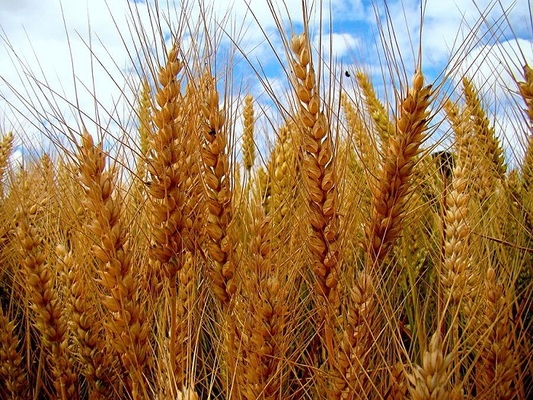
If a disease destroying barley plants in a field swept through an ecosystem, what would happen to the barley eating bird population in the the field ?
a)
The bird population would stay the same
b)
The bird population would infinitely increase
c)
The bird population would decrease
59.
What aquatic biome is characterized by flowing fresh water?
a)
Lakes/Ponds
b)
Mangroves Swamps
c)
Rivers/Streams
d)
Coral Reefs
60.
Which of the following is considered a wetland?
a)
Swamps
b)
Marshes
c)
Bogs
d)
All of the above.
61.
Which of the following is the best definition for estuary?
a)
Narrow band of coastline that exists between high and low tide.
b)
Areas along the coast where fresh water from rivers mixes with salt water from the ocean.
c)
Flowing fresh water containing rapids.
d)
Freshwater aquatic areas that are saturated by water for at least part of the year.
62.
Which biome features permanently frozen soil called permafrost?
a)
Coniferous Forest
b)
Deciduous Forest
c)
Desert
d)
Tundra
63.
The ability to conserve water is an important adaptation in which biome?
a)
Coniferous Forest
b)
Deciduous Forest
c)
Desert
d)
Tundra
64.

Which biome is represented by this food web?
a)
swamp
b)
pond
c)
ocean
d)
river
65.
The term "terrestrial" means
a)
land.
b)
water.
66.
The term "aquatic" means
a)
land.
b)
water.
67.
Which biome, because of its climate, has the largest number of species of plants and animals?
a)
tundra
b)
desert
c)
rain forest
d)
pine forest
68.

A aquatic biome classified as marine would have...
a)
Fresh Water
b)
Salt Water
c)
Either Fresh Water or Salt Water
d)
Neither Fresh Water or Salt Water
69.

Which biome contains cacti and small bushes?
a)
Grasslands
b)
Taiga
c)
Tundra
d)
Desert
70.
There are only two types of ecosystems
a)
Aquatic and terrestrial
b)
Ocean and land
71.

The picture describes what kind of ecosystem?
a)
Forest
b)
Grassland
c)
Ocean
d)
Estuary
72.

The picture describes what kind of ecosystem?
a)
Ocean
b)
Grassland
c)
Lake/pond
d)
Forest
73.
Area of land with many trees containing deer, rabbits, bears, ferns, and bushes
a)
Grassland
b)
Estuary
c)
Lake/pond
d)
Forest
74.
Land that contains fertile soil and tall grasses, and prairie dogs, buffalo, and grasshoppers
a)
Grassland
b)
Ocean
c)
Forest
d)
Lake/pond
75.
Freshwater surrounded by land with turtles, fish, frogs, algae, and tadpoles
a)
Ocean
b)
Forest
c)
Grassland
d)
Lake/pond
76.
Area where fresh water from rivers mixes with salt water from the ocean
a)
Estuary
b)
Grassland
c)
Ocean
d)
Forest
77.
Which of the following are terrestrial ecosystems?
a)
forest and pond
b)
forest and grassland
c)
ocean and pond
d)
estuary and grassland
78.
Which of the following are aquatic?
a)
Ocean, grassland, and lake/pond
b)
Ocean, forest, and grassland
c)
Ocean, estuary, and forest
d)
Ocean, lake/pond, and estuary
79.
Large body of saltwater that is divided by continents and contains fish, sharks, and coral reef
a)
Aquatic
b)
Terrestrial
80.
Area of land with many trees containing deer, rabbits, bears, ferns, and bushes
a)
Aquatic
b)
Terrestrial
100 %

