
 Worksheets
Spring Final reivew
Total questions: 84
Worksheet time: 1hrs 20mins
Name
Class
Date
1.
What percent of Earths water is fresh water?
a)
97%
b)
3%
c)
70%
d)
30%
2.
What percent of Earths water is salt water?
a)
97%
b)
3%
c)
70%
d)
30%
3.
What percent of Earths fresh water is frozen in ice caps and galciers?
a)
97%
b)
3%
c)
70%
d)
30%
4.
What percent of Earths fresh water is in ground water?
a)
97%
b)
3%
c)
70%
d)
30%
5.
What percent of Earths fresh water is in lakes and rivers?
a)
97%
b)
30%
c)
70%
d)
1%
6.

What part of the water cycle does this picture show?
a)
condensation
b)
precipitation
c)
evaporation
7.
Which of these is an example of precipitation?
a)
snow
b)
air
c)
clouds
d)
vapor
8.

What is it called when plants give off water vapor as a waste product?
a)
condensation
b)
evaporation
c)
sublimation
d)
transpiration
9.

What is A?
a)
Evaporation
b)
Condensation
c)
Precipitation
d)
Runoff
10.

What is B?
a)
Evaporation
b)
Condensation
c)
Precipitation
d)
Runoff
11.

What is C?
a)
Evaporation
b)
Condensation
c)
Precipitation
d)
Runoff
12.

What is D?
a)
Evaporation
b)
Condensation
c)
Precipitation
d)
Runoff
13.

This image shows sea floor spreading. What feature is created as a result?
a)
Trench
b)
Continental shelf
c)
Mid ocean ridge
d)
sea mount
14.

Label A
a)
continental slope
b)
continental shelf
c)
abyssal plain
d)
sea mount
15.

Label B
a)
continental slope
b)
continental shelf
c)
abyssal plain
d)
sea mount
16.

Label C
a)
continental slope
b)
continental shelf
c)
abyssal plain
d)
sea mount
17.

Label D
a)
continental slope
b)
continental shelf
c)
abyssal plain
d)
mid ocean ridge
18.

Label E
a)
continental slope
b)
volcanic island
c)
abyssal plain
d)
sea mount
19.

Label F
a)
continental slope
b)
continental shelf
c)
abyssal plain
d)
sea mount
20.

What happens at D
a)
continental slope
b)
continental shelf
c)
seafloor spreading
d)
sea mount
21.
The gravitational pull of the moon, earth and sun cause...
a)
gravity
b)
lunar phases
c)
tides
d)
dabbing
22.
A horizontal movement of ocean water that is caused by wind and that occurs at or near the ocean's surface.
a)
Gulf Stream
b)
Global Conveyor Belt
c)
Surface Current
d)
Gyre
23.
What causes ocean waves?
a)
Wind
b)
Density differences
c)
the gravitational pull of the moon
24.

The chocolate bunny and the blow dryer.
a)
conduction
b)
convection
c)
radiation
25.

The chocolate bunny and the iron.
a)
conduction
b)
convection
c)
radiation
26.
What causes deep ocean currents?
a)
Wind
b)
Density differences
c)
the gravitational pull of the moon
27.
What is the definition of CONDUCTION?
a)
When heat is transferred from objects like rays of light or electromagnetically.
b)
a hot liquid or air that expands, becomes less dense, and rises or becomes more dense, and sinks.
c)
When heat transfers from objects that are touching.
d)
When heat transfers through the heater or AC in your house.
28.
What is the definition of CONVECTION
a)
When heat transfers through waves.
b)
When heat transfers from objects that are touching.
c)
a hot liquid or air that expands, becomes less dense, and rises or becomes more dense, and sinks.
d)
Heat traveling from the sun
29.
What kind of heat transfer happens when the sun is heating your body?
a)
Conduction
b)
Radiation
c)
Convection
d)
Density
30.
Global winds that blow west to east are called...
a)
westerlies
b)
easterlies
c)
trade winds
d)
jet stream
31.
The unequal heating of land and water causes what to occur in our atmosphere?
a)
Humidity
b)
Wind
c)
Rain
d)
Snow
32.

Is this a land or a sea breeze?
a)
land breeze
b)
sea breeze
33.
In a sea breeze, the air is warmer above the _____.
a)
land
b)
ocean
c)
sky
d)
beach
34.

What kind of breeze is this & what time of day/night would it form?
a)
Land breeze - daytime
b)
Land breeze - nighttime
c)
Sea breeze - daytime
d)
Sea breeze - nighttime
35.
Low pressure systems create what kind of weather?
a)
clear, sunny
b)
stormy
c)
cloudy, sunny
d)
clear, rainy
36.

Observe the illustration. Which type of front does it represent?
a)
cold front
b)
warm front
c)
occluded front
d)
stationary front
37.

Observe the illustration. Which type of front does it represent?
a)
cold front
b)
warm front
c)
occluded front
d)
stationary front
38.

Observe the illustration. Which type of front does it represent?
a)
cold front
b)
warm front
c)
occluded front
d)
stationary front
39.

Observe the illustration. Which type of front does it represent?
a)
warm front
b)
cold front
c)
occluded front
d)
stationary front
40.
Which type of cloud can produce thunderstorms?
a)
cumulonimbus
b)
cirrus
c)
cumulus
d)
stratus
41.

This is the symbol for which type of front?
a)
cold front
b)
warm front
c)
occluded front
d)
stationary front
42.

This is the symbol for which type of front?
a)
cold front
b)
warm front
c)
occluded front
d)
stationary front
43.

This is the symbol for which type of front?
a)
cold front
b)
warm front
c)
occluded front
d)
stationary front
44.

This is the symbol for which type of front?
a)
cold front
b)
warm front
c)
stationary front
d)
occluded front
45.
In what areas of the world do hurricanes form?
a)
Warm ocean waters
b)
Polar ocean waters
c)
On lakes and rivers
d)
Over the central plains of the U.S
46.
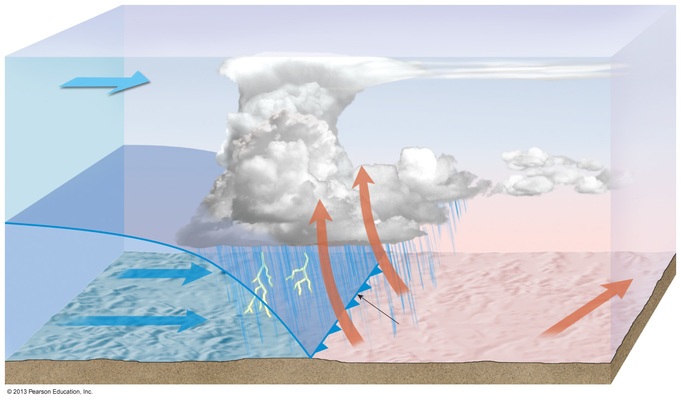
What type of storm front is this?
a)
warm front
b)
cold front
c)
stationary front
d)
occluded front
47.
When a warm air mass gently slides on top of a cold air mass, and you have drizzly rain and then warmer weather, what type of front is it?
a)
warm front
b)
cold front
c)
occluded front
d)
stationary front
48.
rapidly moving cold air mass runs into a warm air mass the cold air slides under the warm air. This is called a .....
a)
cold front
b)
warm front
c)
stationary front
49.
A front is
a)
where warm air is cooling at earth's surface
b)
a line where hot and cold air are separating
c)
a line where two different air masses meet
d)
where cold air is rising and forming rain clouds
50.
_____________ air is more dense and tends to sink
a)
cold
b)
warm
c)
moist
d)
dry
51.
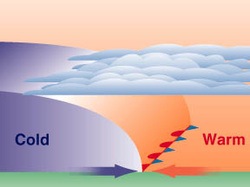
Which type of front is pictured?
a)
Cold front
b)
Warm front
c)
Occluded front
d)
Stationary front
52.
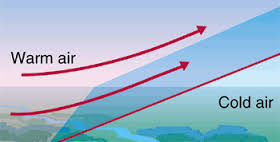
Which type of front is pictured?
a)
Cold front
b)
Warm front
c)
Occluded front
d)
Stationary front
53.
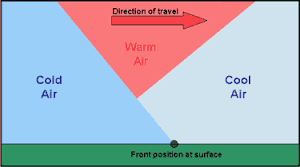
Which type of front is pictured?
a)
Cold front
b)
Warm front
c)
Occluded front
d)
Stationary front
54.
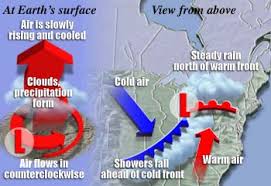
Which system results in rainy or stormy weather?
a)
high pressure
b)
low pressure
c)
hurricane
d)
weather system
55.
Critical for the formation of a hurricane?
a)
lower latitudes
b)
80 degrees or warmer water
c)
None of the above
d)
All of the above
56.
Measures a hurricane�s air pressure?
a)
hydrometer
b)
barometer
c)
anemometer
d)
thermometer
57.
What are underwater mountain ranges called?
a)
continental shelf
b)
mid-ocean ridges
c)
abyssal plains
d)
continental slopes
58.
What is the deepest part of the ocean basin?
a)
abyssal plains
b)
trenches
c)
rift zones
d)
mid-ocean ridge
59.
What is an underwater mountain formed by a volcano?
a)
trench
b)
rift zone
c)
seamount
d)
mid ocean ridge
60.
How much salt is in something is called_____________
a)
Salinity
b)
Evaporation
c)
Seamount
61.

As you go deeper in the ocean, the water is warmer and less salty.
a)
True
b)
False
62.

What happens to pressure as you go deeper into the ocean?
a)
increases
b)
decreases
c)
stays the same
d)
doubles
63.
In most locations along the shore, a high tide occurs twice each
a)
year
b)
month
c)
week
d)
day
64.
Which of the following factors has the greatest effect on surface currents?
a)
winds
b)
Earth's revolution
c)
differences in water salinity
d)
differences in water temperature
65.
The type of ocean currents caused by differences in density are
a)
surface currents
b)
deep currents
66.
What are two types of currents?
a)
local and global
b)
coastal and inland
c)
deep and surface
d)
deep and swift
67.

Define ocean currents.
a)
The movement of water caused by sea animals
b)
Trails left by boats
c)
Moving Streams of water within the ocean
68.
Dew drops seen in the leaves of some plants in the morning. This is an example of__________.
a)
Evaporation
b)
Condensation
69.
What must occur before clouds can form?
a)
Water vapor must get warmer.
b)
Water vapor must lose heat energy.
c)
Precipitation must begin to fall and run off.
d)
Transpiration must add water vapor to the atmosphere.
70.
Which most accurately explains the way clouds form?
a)
Warm water vapor hits warm air, changing the gas into a liquid, and forming a cloud.
b)
Warm water vapor hits cold air, changing the gas into a liquid, and forming a cloud.
c)
Warm water vapor hits warm air, changing the gas into a solid, and forming a cloud.
d)
Warm water vapor hits cold air, changing the gas into a solid, and forming a cloud.
71.
Which will most likely form during the condensation process?
a)
rain
b)
hail
c)
clouds
d)
runoff
72.
Where you will find the ozone layer.
a)
stratosphere
b)
thermosphere
c)
exosphere
d)
mesosphere
73.
Where weather occurs.
a)
stratosphere
b)
thermosphere
c)
troposphere
d)
mesosphere
74.
The hottest layer.
a)
troposphere
b)
thermosphere
c)
exosphere
d)
mesosphere
75.
Which order is correct from space to earth?
a)
thermosphere
troposphere
exosphere
mesosphere
stratosphere
b)
thermosphere
troposphere
stratosphere
exosphere
mesosphere
c)
exosphere
thermosphere
mesosphere
stratosphere
troposphere
d)
troposphere
thermosphere
troposphere
stratosphere
exosphere
mesosphere
76.
What two gases are found throughout all layers of the atmosphere?
a)
Nitrogen and carbon dioxide
b)
Nitrogen and oxygen
c)
Oxygen and carbon dioxide
d)
Trace gases and water vapor
77.
What does the earth's atmosphere do?
a)
help to regulate the temperature on Earth
b)
Help UV rays to reach the Earth's surface
c)
Creates meteors in the sky
d)
Keep ocean waters cold
78.
When the Earth is between the Moon and the Sun, it is most likeky a:
a)
Full Moon
b)
Half Moon
c)
3rd Quarter Moon
79.
Why does the Moon have different phases?
a)
It follows the Sun around the Earth.
b)
It moves around the Earth.
c)
It moves around the Sun.
80.
When the Moon is between the Earth and the Sun, it is most likely in what phase?
a)
New
b)
3rd Quarter
c)
Full
81.

What moon phase is this?
a)
waxing crescent
b)
waxing gibbous
c)
waning crescent
d)
waning gibbous
82.
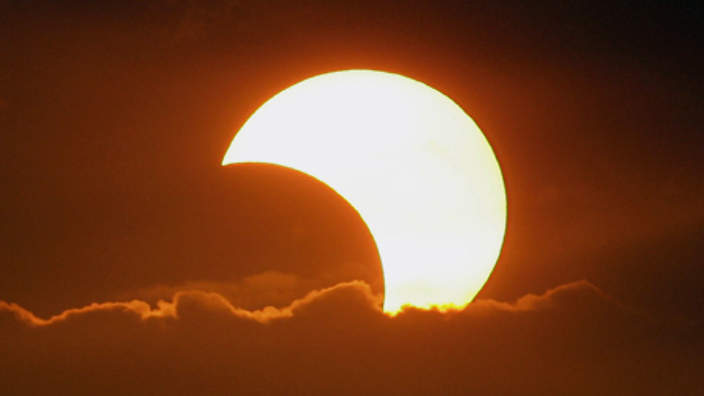
This image is an example of
a)
Lunar Eclipse
b)
Full Moon
c)
New Moon
d)
Solar Eclipse
83.
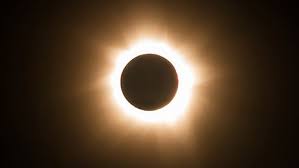
During a solar eclipse...
a)
The sun is blocked by the moon
b)
The Earth is blocked moon
c)
The moon is blocked by the sun
d)
You are blocked
84.
A lunar eclipse is caused by the shadow of the Earth.
a)
True
b)
False
100 %

