
 Worksheets
SOL Review #1
Total questions: 39
Worksheet time: 3hrs 57mins
Name
Class
Date
1.
"The insect in Container B has six appendages" is an example of what type of scientific observation?
a)
quanitative
b)
qualitative
c)
inference
d)
hypothesis
2.
A scientist is conducting research on mealworms. Which of the following pieces of equipment should be used by the scientist to determine the mass of each mealworm?
a)
electronic balance
b)
ruler
c)
graduated cylinder
d)
beaker
3.
The purpose of a controlled experiment is to allow a scientist to isolate and test-
a)
a single variable
b)
several variables
c)
many data
d)
a conclusion
4.
The main reason that diagrams, tables and graphs of data are used by scientists is to-
a)
organize data
b)
verify the conclusion
c)
test a hypothesis
d)
create an experiment
5.
Which of the following must be done for the results of an experiment to be considered valid?
a)
the experiment must be repeated numerous times and the same results are obtained
b)
the results must be published in a national journal
c)
the results must be shown in a graph
d)
the results must be only quantitative
6.
What is the best measurement to use when determining the width of a human hair?
a)
micrometer
b)
centimeter
c)
meter
d)
millimeter
7.
If your total magnification is 200x, what objective are you using?
a)
2000
b)
200
c)
20
d)
2
8.

What is the correct value?
a)
5 ml
b)
15 ml
c)
20 ml
d)
25 ml
9.
The maintenance of an organism’s internal environment is called:
a)
compensating
b)
homeostasis
c)
balancing
d)
routine
10.
Choose the correct order of organization from smallest to largest
a)
Species--> Population--> Community--> Ecosystem-->Biosphere
b)
Community--> Species--> Population--> Biosphere --> Ecosystem
c)
Ecosystem--> Community--> Species--> Population--> Biosphere
d)
Population-->Species--> Community--> Ecosystem-->Biosphere
11.

The chart shows four levels of organisms. Which statement correctly describes a level of organization in the human nervous system
a)
Nerve cells group to form nerve tissue.
b)
The brain is a group of nervous systems.
c)
The organs of the nervous system form a nerve cell.
d)
The nervous system has two groups of nerve tissues.
12.

What word describes when water is attracted to other substances?
a)
cohesion
b)
adhesion
c)
capillary action
d)
surface tension
13.

Attractions between water molecules are called
a)
Covalent bonds
b)
Ionic bonds
c)
Polar bonds
d)
Hydrogen bonds
14.

molecule in which opposite ends have opposite electric charges
a)
cohesion
b)
polar molecule
c)
hydrogen bond
d)
solution
15.

What property of water helps to moderate earth's temperature?
a)
adhesion
b)
chohesion
c)
Specific heat capacity
d)
Latent heat of vaporization
16.
Which of the following properties of water enables it to move from the roots to the leaves of plants showing capillary action?
a)
Water expands as it freezes.
b)
Water is an excellent solvent.
c)
Water exhibits cohesive behavior.
d)
Water moderates temperature.
17.

On day 11, the plant grown with 1 hour of sunlight is how tall?
a)
0 mm
b)
5 mm
c)
16 mm
d)
20 mm
18.

Which part of a plant is responsible for the majority of photosynthesis?
a)
leaves
b)
stem
c)
roots
d)
stomata
19.
Which part of a plant is responsible for transpiration?
a)
leaves
b)
stem
c)
roots
d)
flower
20.

Which conclusion best matches the trends shown on the graph?
a)
Bean plants produce more ATP than corn plants.
b)
Corn plants require more oxygen than bean plants.
c)
Corn plants release more carbon dioxide than bean plants.
d)
Corn plants produce sugars at a faster rate than bean plants.
21.
What molecule absorbs sunlight for photosynthesis?
a)
chloroplast
b)
thylakoid
c)
grana
d)
chlorophyll
22.

In this photo, what do the explosions represent?
a)
Glucose
b)
ATP
c)
Pyruvate
d)
Cleavage
23.
The main purpose of Cellular Respiration is to
a)
make carbon dioxide
b)
make water
c)
make glucose
d)
make ATP
24.
Energy flows into an ecosystem as _____ and leaves as ____.
a)
heat; sunlight
b)
sunlight; heat
c)
photosynthesis; respiration
d)
glucose; carbon dioxide
25.
What do monomers do?
a)
Bonds to make a Polymer
b)
Creates Protiens
c)
Stores energy
d)
Splits to make more cells
26.

This biomolecule would be used for
a)
Building enzymes
b)
Storing energy
c)
Key source of energy
d)
Storing genetic information
27.

Amino acids combine to form which of the following biomolecule?
a)
Carbohydrates
b)
Lipids
c)
Proteins
d)
Nucleic Acids
28.

All of the following are parts of a nucleotide except?
a)
Phosphate Group
b)
Nitrogen Base
c)
Amino Group
d)
Deoxyribose/Ribose sugar
29.

Identify the biomolecule
a)
monosaccharide
b)
disaccharide
c)
polysaccharide
d)
glycogen
30.
What is the primary role of enzymes inside of living cells?
a)
organizing the translation of proteins
b)
allowing cells to be motile
c)
absorbing ultraviolet rays
d)
speeding up chemical reactions
31.
Which of these is most likely an enzyme? (Based on the suffix)
a)
Sucrose
b)
Saccharide
c)
Fructose
d)
Amylase
32.
Why does enzyme activity decrease when it is in solution that has either a too high or too low pH?
a)
All enzymes only work in neutral solutions
b)
Enzyme activity remains unchanged in different pH's
c)
The shape of the active site changes
d)
The shape of the substrate changes
33.
Which of the following units are repeatedly joined together to form a strand of DNA?
a)
amino acids
b)
nucleotides
c)
fatty acids
d)
polysaccharides
34.
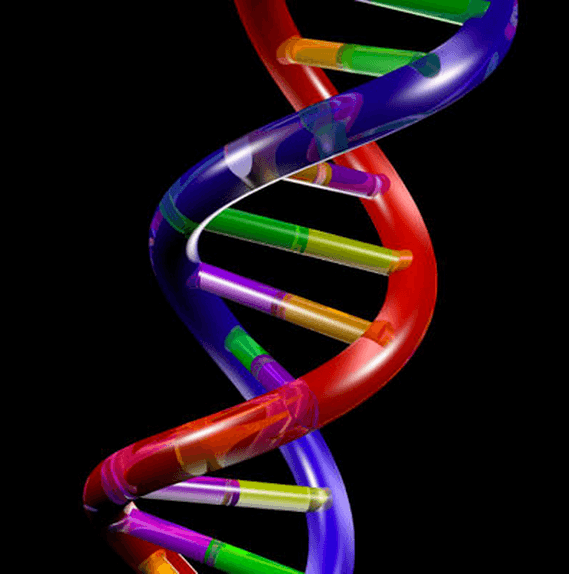
What determines the code, or information, of a DNA molecule?
a)
the shape (structure) of the nitrogen bases
b)
the order (sequence) of the nitrogen bases
c)
the color of the nitrogen bases
d)
the frequency (number) of nitrogen bases
35.

order of replication
a)
3, 2, 1, 4
b)
2, 1, 4, 3
c)
2, 3, 1, 4
d)
3, 4, 1, 2
36.
What is the correct complimentary strand for the following DNA?ATCGAG
a)
TACGAG
b)
ATCGAG
c)
TAGCTG
d)
TAGCTC
37.
A theory-
a)
may be revised based on new information or scientific data
b)
is always true
c)
is the same as hypothesis
d)
is a question to be answered
38.

A scientist performs an experiment to see if acids have an effect on the health of a particular type of plant. Three sets of plants were treated with acidic solutions of known pH while the control set was treated with a solution of neutral pH 7.Which is the best conclusion for this experiment?
a)
Acid has no effect on the health of this type of plant.
b)
B. High acidity is helpful to this type of plant.
c)
C. Low acidity is harmful to this type of plant.
d)
High acidity is harmful to this type of plant.
39.
Conclusions based on an experiment are most likely to be accepted when
a)
they are consistent with experimental data and observations
b)
they are derived from investigations having many experimental variables
c)
scientists agree that only one hypothesis has been tested
d)
hypotheses are based on one experimental design
100 %

