
 Worksheets
7th Grade Physical Science
Total questions: 48
Worksheet time: 1hrs 18mins
Name
Class
Date
1.
Objects that are changing their speed or their direction
a)
force
b)
energy
c)
acceleration
d)
friction
2.
two or more forces act upon an object in such a way as to exactly counteract each other
a)
friction
b)
balanced force
c)
unbalanced force
d)
force
3.
a force that causes a change in motion of an object
a)
friction
b)
balanced force
c)
unbalanced force
d)
force
4.
the ability to do work
a)
energy
b)
force
c)
friction
d)
inert
5.
the close interaction between two surfaces that are sliding across each other
a)
force
b)
friction
c)
centripetal force
d)
gravitational force
6.
a tendency of an object to resist change in its state of motion
a)
inertia
b)
kinetic energy
c)
potential energy
d)
force
7.
Any two objects with mass attract each other with a type of force
a)
kinetic energy
b)
potential energy
c)
inertia
d)
gravitational force
8.
the energy possessed by an object because of its motion
a)
force
b)
inertia
c)
kinetic energy
d)
potential energy
9.
the speed and direction in which it moves
a)
weight
b)
velocity
c)
speed
d)
energy
10.

The drawing shows a cup on a table. Which statement best describes the relationship between the cup and the table?
a)
The cup is accelerating faster than the table.
b)
The cup is pushing on the table.
c)
The cup is doing work on the table.
d)
The forces on the cup are unbalanced.
11.
Anna ran 100 meters in 20 seconds. What was her average speed?
a)
2 m/s
b)
5 m/s
c)
20 m/s
d)
25 m/s
12.
Motion
a)
speed with direction
b)
a change in an objects position based on time and place
13.
inertia
a)
the resistance of an object to change its motion
b)
when two forces acting on each other are not equal
14.
Unbalanced Force
a)
when two forces acting on each other are not equal
b)
the quantity of an object in motion
15.
Magnetism
a)
certain metals exert attractive and repulsive electrical charges (positive and negative)
b)
force exerted by the gravitational field of a massive object like the Earth and the Sun
16.
Gravity
a)
Force exerted by the gravitational field of a massive object like the Earth and the Sun
b)
the resistance of an object to change its motion
17.
Force
a)
a push or pull
b)
speed with direction
18.
When riding a roller coaster, an electric motor pulls the roller coaster to the top of the first hill. What force pulls the roller coaster down the hill?
a)
friction
b)
speed
c)
gravity
d)
mass
19.
What is the amount of force required to accelerate a 20 kg object to 5 m/s^2?
a)
0.25 N
b)
4 N
c)
15 N
d)
100 N
20.
Newton’s first law of motion states that an object at rest will stay at rest unless acted upon by an outside force. Which activity is an example of this law?
a)
a. A football is kicked off a tee.
b)
A baseball player slides into second base.
c)
a. A floating stick is carried over a waterfall.
d)
a. A bicycle travels faster as it goes downhill.
21.
A student walking quickly while carrying an orange on his lunch tray stops suddenly. The orange will most likely roll off the tray due to
a)
Inertia of the orange.
b)
Centripetal force of the orange.
c)
The friction acting on the orange.
d)
The balanced forces acting on the orange.
22.
During a collision, a seat belt slows the speed of a crash dummy. What is the direction of the net force exerted by the seat belt compared to the direction of the crash dummy’s motion?
a)
in the same direction
b)
in a vertical direction
c)
in a downward direction
d)
in the opposite direction
23.
Which statement best explains why a car that is rolling on a level surface will eventually come to a stop?
a)
Frictional forces oppose the motion of the car.
b)
Forward motion slowly runs out as energy is expended.
c)
the natural state of an object is to be at rest.
d)
Inertia acting on an object will dissipate.
24.

Two forces are applied to a wooden box as shown below. Which statement best describes the effect these forces have on the box?
a)
The box does not move.
b)
The box moves to the right.
c)
The box moves to the left.
d)
The box moves straight up.
25.

Two swimmers competed in a race. The graph shows how the position of both swimmers changed over time during the race. At what rate of speed did Swimmer 1 travel throughout the race?
a)
0.5 m/s
b)
1.0 m/s
c)
2.0 m/s
d)
4.0 m/s
26.

The motion of a toy car is shown in the graph below. In which sections of the graph is the car stopped?
a)
W and Z
b)
W and Y
c)
Y and X
d)
X and Z
27.
An airplane flies in a straight line between two cities that are separated by 840 kilometers. If it takes 4 hours for the airplane to make the trip, what is its average speed?
a)
84 km/h
b)
105 km/h
c)
180 km/h
d)
210 km/h
28.

The graph shows the motion of four cars. All four cars are moving east. Which car has a constant velocity?
a)
1
b)
2
c)
3
d)
4
29.
When you rub your hands together on a cold day, you use friction to convert
a)
mechanical energy into thermal energy
b)
thermal energy into nuclear energy.
c)
nuclear energy into electrical energy.
d)
electrical energy into electromagnetic energy.
30.
Unlike kinetic energy, potential energy is
a)
energy of motion.
b)
stored.
c)
conserved.
d)
not measurable.
31.
A large truck and a small car are moving at the same speed. The truck has greater kinetic energy because its ____________________ is greater.
a)
mass
b)
height
c)
engine
d)
color
32.

what type of energy is stored in a battery?
a)
electrical
b)
chemical
c)
thermal
d)
mechanical
33.
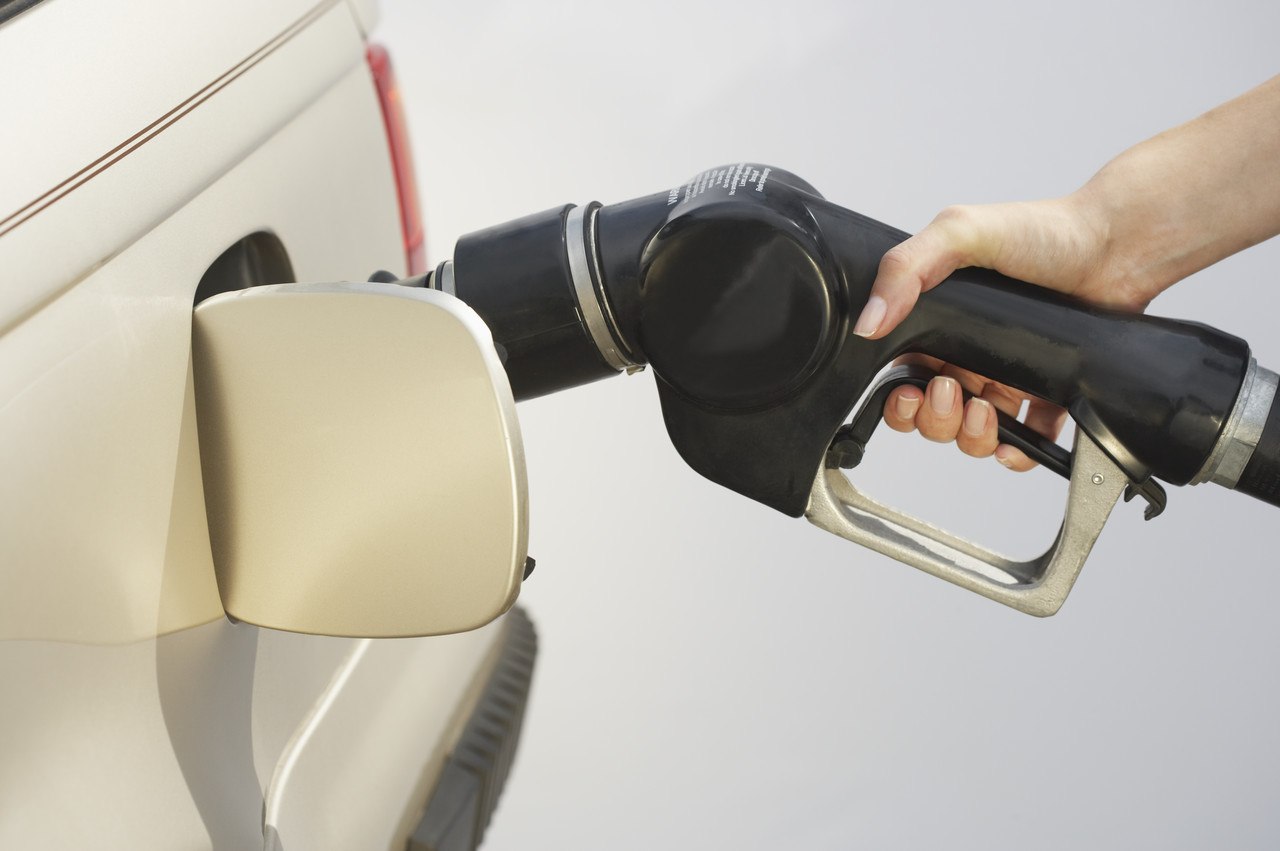
Which energy conversion is taking place when you put gasoline in a car?
a)
thermal -> electrical
b)
mechanical -> electrical
c)
chemical -> mechanical
d)
mechanical -> electromagnetic
34.
When a soccer ball is on a field, the energy it has just before being kicked is called
a)
kinetic energy
b)
potential energy
c)
mechanical energy
d)
chemical energy
35.

Electrical Energy is transferred to _____ Energy.
a)
Thermal
b)
Solar
c)
Electrical
d)
None
36.

A battery converts what type of energy to another?
a)
sound to kinetic
b)
light to heat
c)
mechanical to electrical
d)
chemical to electrical
37.
According to the Law of Conservation of Energy, energy cannot be _________ or ____________.
a)
destroyed, destroyed
b)
created, saved
c)
created, destroyed
d)
lost, found
38.
Energy transformations occur when...
a)
energy is created through conduction
b)
energy changes from one form to another
c)
two forces slide together that are touching
d)
a chemical reaction takes place
39.
Mechanical energy
a)
energy built up before being in motion
b)
energy released in a chemical reaction
c)
energy of motion
d)
sum of kinetic and potential energy
40.

The roller coaster cart has the most gravitational potential energy at position-
a)
W
b)
X
c)
Y
d)
Z
41.

The purpose of the panels is to change solar energy into ____________.
a)
light energy
b)
electrical energy
c)
chemical energy
d)
mechanical energy
42.
Which of the following is an example of potential energy?
a)
a ball rolling down a ramp
b)
a stretched rubber band
c)
a baseball flying into the outfield
d)
a snail moving across a rock
43.
Fossil fuels are classified as nonrenewable because they.......
a)
require expensive equipment
b)
take millions of years to replace
c)
can be found all over
d)
provide all the energy we use
44.
Water is renewable because it.......
a)
can be frozen
b)
important to all life
c)
can be replaced constantly
d)
can evaporate
45.
Which of the following is a nonrenewable resource?
a)
milk
b)
coal
c)
biomass
d)
water
46.
The cleanest burning fossil fuel is ______.
a)
coal
b)
oil
c)
wind
d)
natural gas
47.
Hydroelectric power produces electricity using.....
a)
Wind
b)
Sunlight
c)
Moving water
d)
Dung
48.
What characteristic do all renewable resources share?
a)
Produced by waste products
b)
Form underground from dead organisms.
c)
Replaced in a short period of time
d)
Allow energy to pass through them easily
100 %

