
Font size
S
M
L
XL
 Worksheets
Final exam review
Total questions: 91
Worksheet time: 1hrs 6mins
Name
Class
Date
1.
Why is the Inner Core solid?
a)
Extreme Heat
b)
High Pressure
c)
All the layers are solid
d)
It's made of rock
2.
What is the rigid layer of the Earth's surface made up of the crust and upper mantle called?
a)
asthenosphere
b)
lithosphere
c)
mesosphere
d)
continental crust
3.
Is the outer core a liquid or solid?
a)
liquid
b)
solid
4.
What is the top layer of the Earth's surface called?
a)
Mantle
b)
Innercore
c)
Outercore
d)
Crust
5.
Temperature _____________________ as you go deeper into the earth.
a)
increases
b)
decreases
c)
goes up and down depending on the layer
d)
stays the same
6.
Pressure ______________________ as you go deeper into the Earth
a)
increases
b)
decreases
c)
goes up or down depending on the layer
d)
stays the same
7.
Which layer of Earth is characterized by rock that is plastic, or soft enough to flow?
a)
asthenosphere
b)
crust
c)
lithosphere
d)
inner core
8.
Which of the following occurs because of convection currents?
a)
Tectonic plates on the crust move.
b)
The mantle increases in size.
c)
Pressure in the crust increases.
d)
Pressure in the crust decreases.
9.
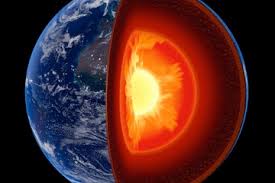
As you travel from the inner core to the crust, how would temperature, pressure and density of the material change?
a)
The would all increase
b)
The would all decrease.
c)
They would stay the same.
d)
Temperature would decrease, but pressure and density would increase.
10.
What does the theory of continental drift state?
a)
The continents were once joined in a super-continent and have moved over time
b)
Continents are stationary and do not move
c)
The Earth is broken into lithospheric plates that move due to convection currents
d)
none of the above
11.
During sea floor spreading, molten material rises up from the mantle...
a)
along the continents
b)
at the mid ocean ridges
c)
deep ocean trenches
d)
at north and south poles
12.
This layer of the Earth is found between the core and the crust.
a)
mantle
b)
outer core
c)
inner core
d)
crust
13.
The hottest layer
a)
crust
b)
inner core
c)
mantle
d)
outer core
14.
The thinest layer
a)
crust
b)
inner core
c)
mantle
d)
outer core
15.
The process for new oceanic lithosphere forming at mid ocean ridges
a)
Continental Drift
b)
Seafloor Spreading
c)
Plate Tectonics
d)
Pangaea
16.
The theory that states that the Earth is divided into plates that float and move in slow, constant motion.
a)
Continental Drift
b)
Seafloor Spreading
c)
Plate Tectonics
d)
Tectonic Plates
17.
The circular pattern of heating, rising, cooling, sinking of magma in the mantle causing tectonic plates to move.
a)
Plate Tectonics
b)
Convection Currents
c)
Pangaea
d)
Subduction
18.
Associated with transform boundaries.
a)
Volcanoes
b)
mountains
c)
trenches
d)
earthquakes
19.
Mountains form from ...
a)
plates sliding past one another
b)
collision of plates
c)
plates moving away from each other
20.
Created by a divergent boundary.
a)
Rocky Mountains
b)
Mariana Trench
c)
Mid Atlantic ridge
21.
This landform can occur at a divergent plate boundary.
a)
ocean trench
b)
mid-ocean ridge
c)
tall mountains
d)
transform fault
22.
Most volcanoes and earthquakes occur...
a)
along the coast
b)
along tectonic plate boundaries
c)
in the Arctic
d)
in the ocean
23.
The area where two tectonic plates meet.
a)
mantle
b)
focus
c)
plate boundary
d)
convection
24.

Name this type of boundary
a)
Convergent boundary
b)
Divergent Boundary
c)
Transform
d)
Volcanoes
25.

Name this Boundary type
a)
Convergent boundary
b)
Divergent Boundary
c)
Transform
d)
Equal Arm Balance
26.
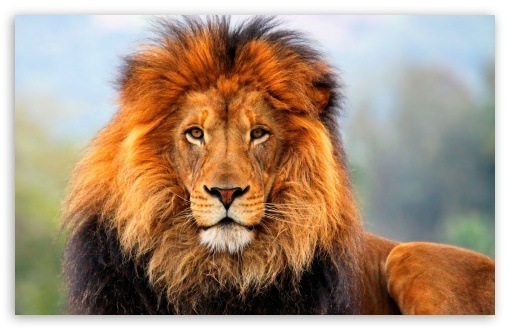
This sphere is composed of all the living things
a)
Hydrosphere
b)
Biosphere
c)
Atmosphere
d)
Geosphere
27.

Composed of all the water on or near the earth
a)
Hydrosphere
b)
Biosphere
c)
Atmosphere
d)
Geosphere
28.
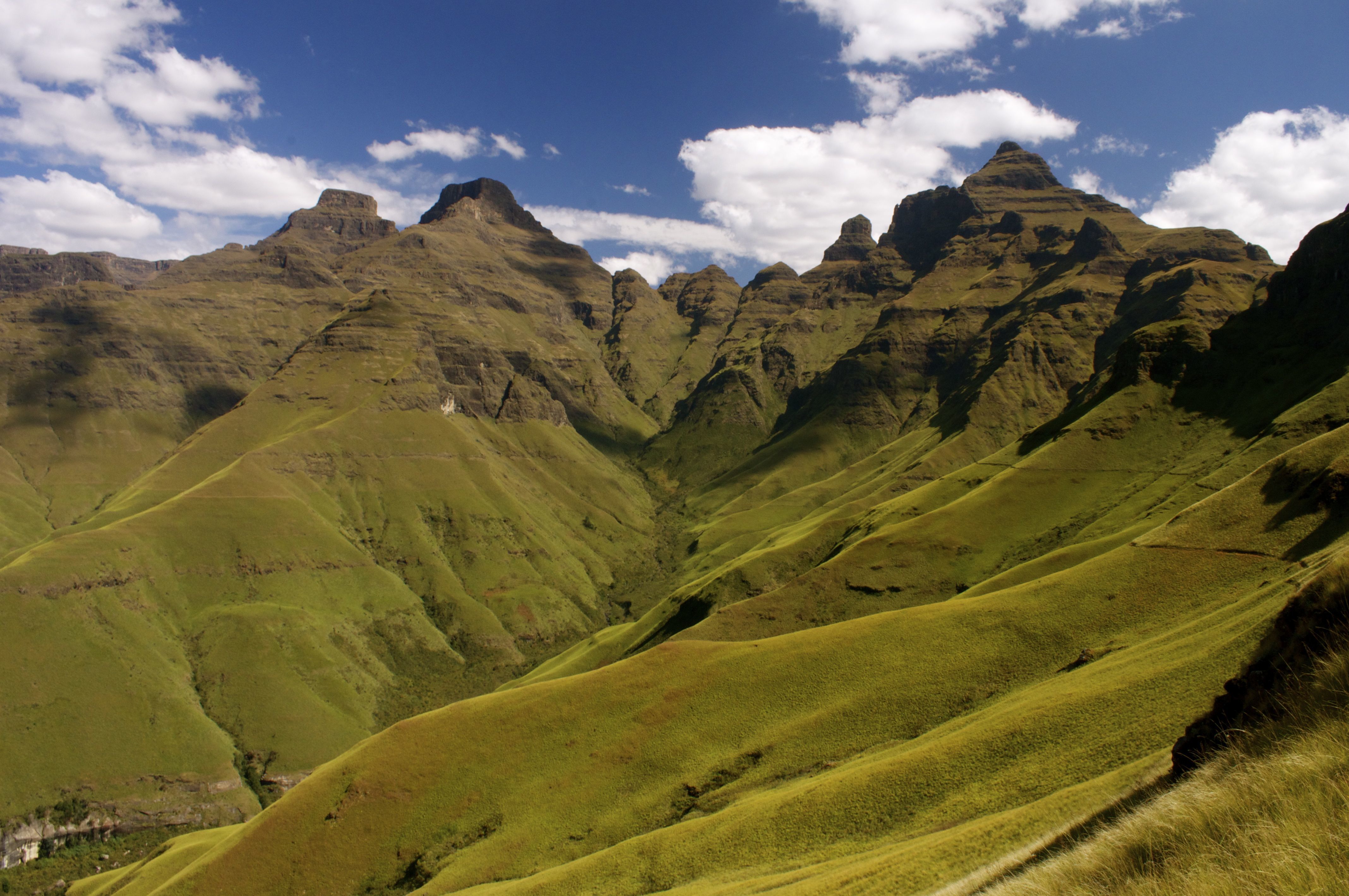
This sphere includes the continents, the ocean floor, all the rocks on the surface, and all of the sand in the deserts.
a)
Hydrosphere
b)
Biosphere
c)
Atmosphere
d)
Geosphere
29.

The body of air that surrounds planet Earth is called the ______________.
a)
Hydrosphere
b)
Biosphere
c)
Atmosphere
d)
Geosphere
30.
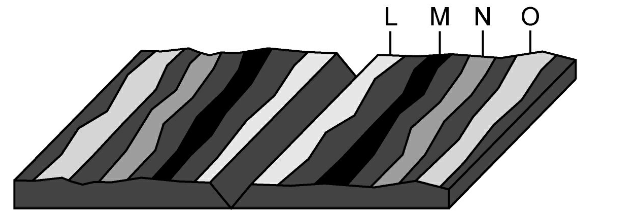
Where would the oldest rock be found?
a)
L
b)
M
c)
N
d)
O
31.

Which box has a higher density?
a)
Box A
b)
Box B
c)
cannot be determined
d)
they are the same
32.

What is this landform?
a)
valley
b)
hills
c)
river
d)
lake
33.

What is this physical feature?
a)
Plateau
b)
Mountain Range
c)
Canyon
d)
Hill
34.
A large, flat area of land at the mouth of a river formed by the deposition of sediments.
a)
Canyon
b)
Erosion
c)
Landslide
d)
Delta
35.
Which type of rock forms from extreme heat and pressure?
a)
Igneous
b)
Sedimentary
c)
Organic
d)
Metamorphic
36.
A metamorphic rock changes into an igneous rock by what two processes?
a)
Melting and cooling
b)
Extreme heat and pressure
c)
Compaction and cementation
d)
Weathering and erosion
37.
What is the MAIN way rocks are classified?
a)
Their color and shapes
b)
How they form
c)
Mineral bands
d)
Where they form
38.
Sediment being moved from one area to another is called
a)
erosion
b)
deposition
c)
weathering
d)
compaction
39.
Sediment being dropped off and laid to rest
a)
Deposition
b)
Erosion
c)
Weathering
d)
Lithification
40.

This rock was molten magma that slowly cooled under the ground. What type of rock is this?
a)
Sedimentar
b)
Igneous
c)
Metamorphic
41.

After lots of time, pressure, and heat, you get this kind of rock. What type of rock is this?
a)
Sedimentary
b)
Igneous
c)
Metamorphic
42.
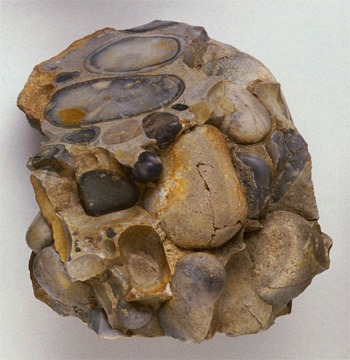
This rock was formed by smaller pieces of rock that settled at the bottom of a lake millions of years ago. What type of rock is this?
a)
Sedimentary
b)
Igneous
c)
Metamorphic
43.
Wind, water, and ice breaking down rock is called
a)
Erosion
b)
Deposition
c)
Compaction
d)
Weathering
44.
Which type of rock is most likely to contain fossils?
a)
Igneous
b)
Sedimentary
c)
Metamorphic
45.
A metamorphic rock can become ______.
a)
igneous
b)
metamorphic
c)
sedimentary
d)
all of these
46.

Wind abrasion (wind blowing sand against something) is an example of _______ weathering.
a)
Chemical
b)
Mechanical
47.

Salt water weathering rocks by dissolving pieces of it over time is an example of ....
a)
Chemical Weathering
b)
Mechanical Weathering
48.
How are rock and minerals related?
a)
they are the same
b)
rocks are in minerals
c)
minerals are in rocks
d)
they are not related
49.
Molten rock below the Earth's surface.
a)
magma
b)
lava
c)
rock
d)
erosion
50.

The pan heats food through direct contact. This is an example of
a)
convection
b)
conduction
c)
radiation
d)
transformation
51.

_________________ are observed in liquids and gases (air).
a)
convection currents
b)
radiation waves
c)
thermal conductivity
d)
conductors
52.

Heat transfer through electromagnetic waves is called
a)
conduction
b)
convection
c)
radiaton
d)
thermal
53.
Which has the SHORTEST wavelength and, therefore, the highest frequency/most energy
a)
Radio waves
b)
Ultraviolet Rays
c)
Gamma Rays
d)
X-rays
54.
Which section of the spectrum is the ONLY one we can see?
a)
X-rays
b)
Visible Light
c)
Gamma Rays
d)
Ultraviolet Rays
55.
Which of the following electromagnetic waves is given off as heat?
a)
Radio Waves
b)
Infrared Rays
c)
Visible Light
d)
Gamma Rays
56.
The _______________ determines the color of visible light.
a)
wavelength
b)
speed
c)
amplitude
d)
light
57.
How are electromagnetic waves different from other waves?
a)
They have very short wavelengths
b)
They transmit energy instead of matter
c)
They can travel through a vacuum
d)
They can change direction by reflection
58.
In an experiment the factor being tested or changed on purpose is called the -
a)
independent variable
b)
dependent variable
c)
constant
d)
experimental error
59.
How many variables can be tested in a controlled experiment?
a)
one
b)
two
c)
three
d)
as many as possible
60.
the variable that is kept the same to make sure results are caused by the thing being tested
a)
independent variable
b)
dependent variable
c)
control variable
61.
Molecules are closest together in a
a)
Solid
b)
Liquid
c)
Gas
d)
plasma
62.
In order for something to float, it must be...
a)
denser than water
b)
light
c)
less dense than water
d)
floatable
63.
Which of the following states of matter have particles that move fast in all directions?
a)
mass
b)
gas
c)
solid
d)
liquid
64.
What is the formula for density?
a)
density = mass x volume
b)
density = mass / volume
c)
density = mass + volume
d)
density = mass - volume
65.
When the temperature of matter decreases the particles ...
a)
speed up and move farther apart
b)
speed up and move closer together
c)
slow down and move farther apart
d)
slow down and move closer together
66.
Molecules are farthest apart in a
a)
Solid
b)
Liquid
c)
Gas
67.
A relationship between two organisms in which one organism benefits and the other is unharmed...
a)
Mutualism
b)
Competition
c)
Parasitsm
d)
Commensalism
68.
A relationship between two organisms in which both organisms benefit.
a)
Mutualism
b)
Competition
c)
Parasitsm
d)
Commensalism
69.
A relationship between two species where one benefits while the other is harmed.
a)
Mutualism
b)
Commensalism
c)
Parasitism
d)
Naturalism
70.
What type of organism breaks down dead and decaying matter and returns the nutrients to the soil?
a)
Producers
b)
Consumers
c)
Decomposers
71.

What does a food chain represent?
a)
How all living organisms within a habitat are connected.
b)
All of the things that a particular animal eats.
c)
How plants create their own food.
d)
A single path of energy transfer within a habitat.
72.
The arrows in a food chain or web represents what?
a)
They point to the organism that is being eaten.
b)
It shows how sunlight flows within an ecosystem.
c)
They show what direction the energy is flowing between organisms.
d)
They represent how water is transferred within a habitat.
73.

The rabbit in this food web would be considered a:
a)
Decomposer
b)
Producer
c)
Secondary Consumer
d)
Primary Consumer
74.
What does a Secondary Consumer eat?
a)
Tertiary Consumers
b)
Primary Consumers
c)
Producers
d)
Secondary Consumers
75.
What is another name for producer?
a)
consumer
b)
herbivore
c)
autotroph
d)
lichen
76.
The struggle between organisms to survive as they attempt to use the same resource
a)
Predator
b)
Prey
c)
Competition
d)
Adaptation
77.
The role of an organism in its habitat, or how it makes its living
a)
Niche
b)
Prey
c)
Competition
d)
Adaptation
78.
A behavior or physical characteristic that allows an organism to survive
a)
Niche
b)
Prey
c)
Competition
d)
Adaptation
79.
Temperature, light, air, water, and soil are all _____ parts of the environment
a)
alive
b)
biotic
c)
abiotic
d)
living
80.
If there is more food than usual in an ecosystem, then...
a)
Populations will stay the same
b)
Populations will decrease
c)
Populations will increase
81.

The number of individuals a habitat can sustain with the resources it has available
a)
Carrying capacity
b)
Limiting factors
c)
Resources
d)
Population
82.
Which of the following is NOT a limiting factor?
a)
Increase in predators
b)
Food shortage
c)
Natural Disasters
d)
Symbiosis
83.
Limiting factors which impact the size of a population no matter how large that population is
a)
Density Independent Limiting Factors
b)
Density Dependent Limiting Factors
84.
Factors within an ecosystem which decreases the growth within a population
a)
Limiting Factor
b)
Succession
c)
Logistic Factor
d)
Competitive Exclusion
85.
Which of the following is NOT a form of symbiosis?
a)
Mutualism
b)
Commensalism
c)
Parasitism
d)
Predation
86.
The weight of an object _________ as it moves away from the center of Earth.
a)
increases
b)
stays the same
c)
triples
d)
decreases
87.
A measure of how much matter an object has is--
a)
weight
b)
gravity
c)
mass
d)
volume
88.
What two main factors keep a planet in motion?
a)
mass and size
b)
weight and mass
c)
force and motion
d)
gravity and inertia
89.
What is the law of Universal Gravitation?
a)
Nothing has gravity
b)
Only big objects have gravity
c)
Only the sun has gravity
d)
Everything has gravity
90.
___________________ and _______________________ affect the strength of the gravitational pull on an object.
a)
Mass and gravity
b)
motion and distance
c)
mass and distance
d)
motion and gravity
91.
A person would weigh less on on the Moon than on the Earth because . . .
a)
Moon has more mass, and therefore more gravity
b)
Moon has less mass, and therefore more gravity
c)
Moon has more mass, and therefore less gravity
d)
Moon has less mass and therefore less gravity
Reset

