
 Worksheets
Diversity of Life
Total questions: 37
Worksheet time: 49mins
Name
Class
Date
1.

An illustration and a dichotomous key are given. What is the correct classification for this organism?
a)
Class Insecta
b)
Order Amblygygi
c)
Order Araneae
d)
Order Scorpiones
2.
The scientific name for an organism is made from the:
a)
class and family name
b)
genus and species name
c)
domain and kingdom name
d)
kingdom and phylum name
3.
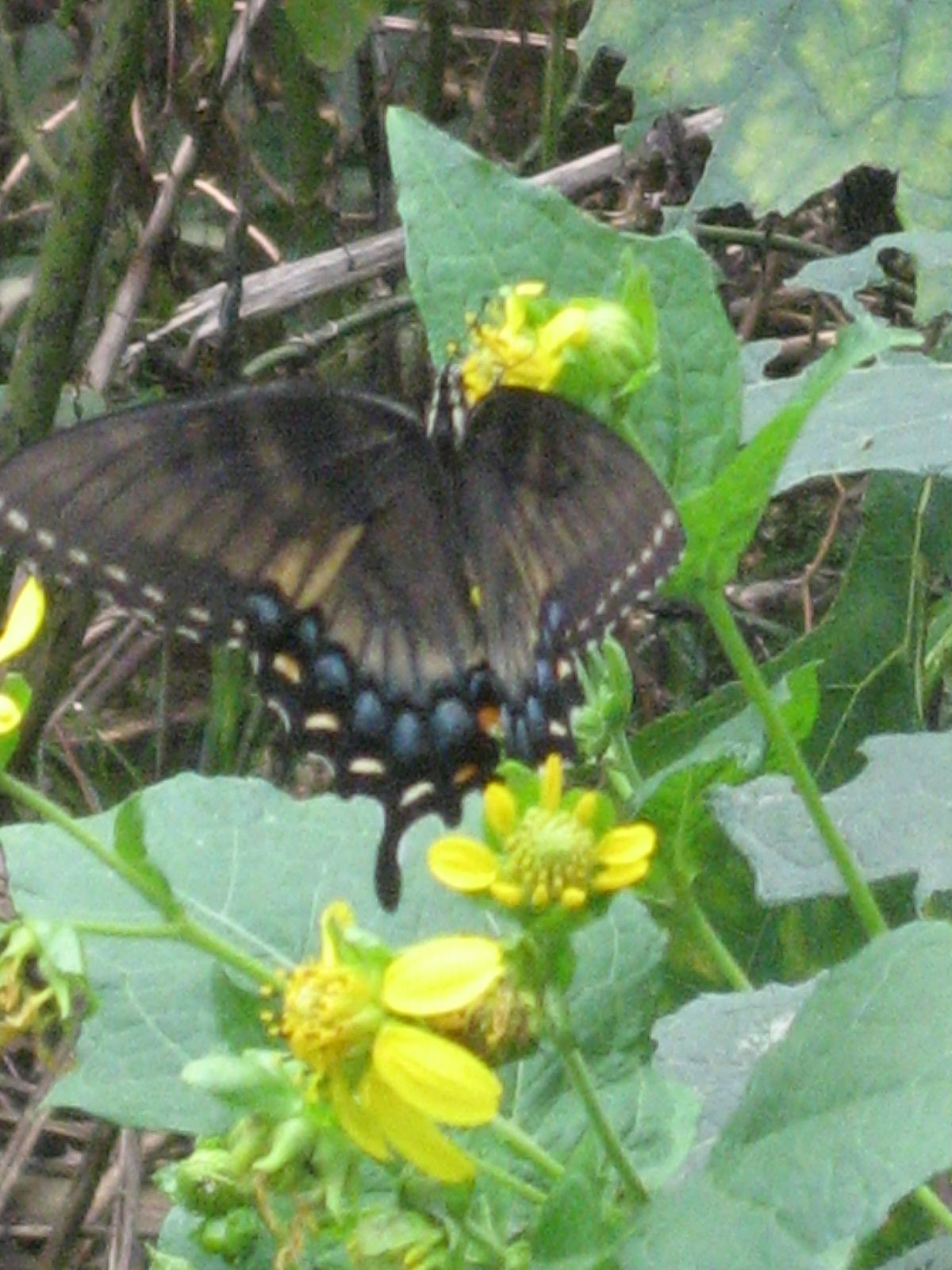
The 8 levels of classification, broadest to most specific.
a)
Domain, Genus, Family, Order, Class, Phylum, Kingdom, Species
b)
Domain, Species, Kingdom, Genus, Phylum, Family, Class, Order
c)
Domain, Kingdom, Phylum, Class, Order, Family, Genus, Species
d)
Order, Kingdom, Species, Domain, Phylum, Family, Class, Genus
4.
Members of this kingdom are multicellular and heterotrophic.
a)
Plantae
b)
Protista
c)
Animalia
d)
Achaebacteria
5.
This organism is multicellular, autotroph, that has a cell wall made of cellulose.
a)
animalia
b)
plantae
c)
fungi
d)
eubacteria
6.
Mushrooms are a type of fungus. What characteristic of fungi makes them different from plants?
a)
Fungal cells are eukaryotic.
b)
Fungi are multicellular.
c)
Fungi are heterotrophic.
d)
Fungi have cell walls.
7.

Based upon the information shown in the cladogram below, which trait would most likely be observed in ray-finned fish?
a)
amniotic egg
b)
bony skeleton
c)
four limbs
d)
hair
8.

Who developed the system of naming organisms with 2 names?
a)
Mendel
b)
Hooke
c)
Watson and Crick
d)
Linnaeus
9.
The domain Archaea:
a)
are multicellular
b)
Undergo photosynthesis
c)
have membrain bound organelles
d)
are able to tolerate extreme conditions
10.

Some characteristics of a recently discovered organism are listed in the following table.
Based on the given characteristics, this organism would be classified in which kindgom?
Based on the given characteristics, this organism would be classified in which kindgom?
a)
eubacteria
b)
fungi
c)
plantae
d)
protista
11.
Which scientific name is written correctly?
(was not able to italicize the names or underline)
(was not able to italicize the names or underline)
a)
Okapia Johnstoni
b)
Carcharodon carcharias
c)
balaenoptera Musculus
d)
panthera leo
12.
Antibiotics kill viruses
a)
True
b)
False
13.
Which viral life cycle allows viral genetic material to lay dormant while the host cell reproduces?
a)
lytic
b)
mitosis
c)
lysogenic
d)
S phase
14.
According to cell theory, why are viruses not considered living organisms?
a)
Viruses cannot reproduce outside a living organism
b)
Viruses do not contain genetic material
c)
Viruses cannot cause diseases in other organisms.
d)
Viruses do not contain organic compounds
15.
What structure is used for movement?
a)
ribosomes
b)
cytoplasm
c)
flagella
16.
Which shape is rod?
a)
cocci
b)
bacilli
c)
spirilla
17.
Sexual reproduction in bacteria resulting in genetically different offspring is known as:
a)
Binary Fission
b)
Conjugation
c)
Meiosis
d)
Fragmentation
18.
A _____ is a temporary projection of cytoplasm that is used for locomotion.
a)
pseudopod
b)
flagella
c)
cilia
d)
trichocyst
19.
fungus-like protists are called _________
a)
algae
b)
slime molds
c)
protozoa
d)
euglena
20.

This organism would be from the kingdom _______
a)
Bacteria
b)
Protista
c)
Archaebacteria
d)
Fungi
21.
animal-like protists are called _______
a)
protozoa
b)
algae
c)
slime molds
d)
phytoplankton
22.
What is the tangled, underground network of hyphae that makes up the largest portion of a fungus?
a)
Mycelium
b)
Basidia
c)
Gills
d)
Fruiting Body
23.
What is the above-ground, reproductive structure produced by fungi?
a)
Fruiting body
b)
Hyphae
c)
Mycelium
d)
Chitin
24.
The cells walls of fungi are made of a chemical compound known as ____________.
a)
Chitin
b)
Cellulose
c)
Phospholipid Bilayer
d)
Calcium Carbonate
25.
Which of the following best describes how fungi obtain their nutrition and energy?
a)
Digest --> Ingest
b)
Ingest --> Digest
c)
Photosynthesi
d)
Autotrophic
26.
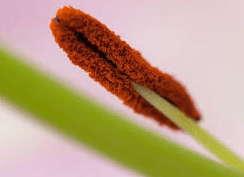
The part of a flower that produces the male reproductive cells.
a)
anther
b)
style
c)
stigma
d)
filament
27.
What is the function of the cuticle on a leaf?
a)
to keep water from entering the leaf
b)
to keep water from leaving the leaf
c)
to keep bacteria out of the leaf
d)
to keep oxygen in the leaf
28.
Which of the following is an example of a non-vascular plant?
a)
grass
b)
corn
c)
trees
d)
moss
29.
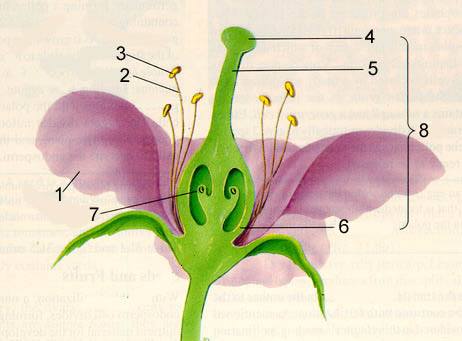
What is #4 pointing to?
a)
anther
b)
style
c)
stigma
d)
ovary
30.

The picture shows an example of a(n)
a)
echinoderm
b)
cnidarian
c)
mollusk
d)
annelid
31.
All arthropods have segmented bodies, jointed appendages, and ________________.
a)
tails
b)
lungs
c)
wings
d)
an exoskelton
32.

These all belong to the phylum _________.
a)
porifera
b)
annelida
c)
arthropoda
d)
cnidaria
33.
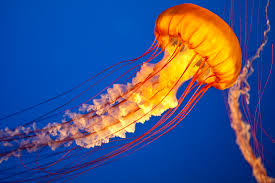
What type of symmetry does this organism have?
a)
Asymmetry
b)
Radial
c)
Bilateral
34.
"True body cavity"
a)
Acoelomate
b)
Pseudocoelomate
c)
Coelomate
35.
The purpose of the cardiovascular system is
a)
To distribute nutrients and oxygen throughout the body
b)
To control the functions of the other body systems
c)
To move and stabilize the body
d)
To take in oxygen into the body and release carbon dioxide
36.

What body system consists of the kidneys?
a)
Circulatory
b)
Excretory
c)
Digestive
d)
Muscular
37.
A blood vessel that carries blood TO the heart is called ...
a)
vein
b)
capillary
c)
blood vessel
d)
artery
100 %

