
 Worksheets
Variation in Species
Total questions: 95
Worksheet time: 59mins
Name
Class
Date
1.

Genotype refers to the ...
a)
physical expression of the genes
b)
the possible combination of alleles in a gene
c)
whether an allele is dominant or recessive
d)
how an organism will appear
2.

Squidward has light blue skin, and his genotype for this trait is Bb. Would Squidward be considered a purebred or hybrid for light blue skin?
a)
Purebred
b)
Hybrid
3.

An offspring will receive how many alleles from each parent to determine a specific trait?
a)
one
b)
two
c)
three
d)
five
4.
Which of the following is a phenotype?
a)
Homozygous Dominant
b)
Hybrid
c)
bb
d)
Blue eyes
5.
The passing of genetic traits from parent to offspring.
a)
heredity
b)
trait
c)
gene
d)
allele
6.
Having two of the same genes for the trait (sometimes called purebred).
a)
homozygous
b)
hetrozygous
c)
allele
d)
chromosome
7.
Having two different genes for a trait (sometimes called hybrid).
a)
phenotype
b)
homozygous
c)
heterozygous
d)
genotype
8.
Two brown eyed parents (Bb) have a baby. What is the chance the baby is blue eyed?
a)
0 %
b)
25%
c)
50%
d)
75%
9.
G = green, g = yellow
The genotype for a yellow plant is...
The genotype for a yellow plant is...
a)
GG
b)
Gg
c)
gg
d)
all of the choices result in yellow
10.
An allele whose trait only shows up when no dominant allele is present.
a)
hidden allele
b)
dominant allele
c)
recessive allele
d)
present allele
11.
Two heterozygous (Tt) tall pea plants are crossed. Which describes their offspring?
a)
50% tall and 50% short
b)
75%tall and 25% short
c)
100%short
12.
A homozygous dominant dog with brown fur is crossed with a heterozygous dog with brown fur. What are the percentages of the possible genotypes?
a)
100% BB
b)
75% BB and 25%Bb
c)
50 % BB and 50% Bb
d)
50% Bb and 50% bb
13.
What is the definition of phenotype?
a)
The physical expression of a trait
b)
The genetic combination of alleles
c)
A gene on the DNA strand
14.
What is the definition of genotype?
a)
The physical expression of a trait
b)
The genetic combination of alleles
c)
the genes on a DNA strand
15.
Where, in the eukaryotic cell, is DNA located?
a)
ribosomes
b)
nucleus
c)
E.R.
d)
cytoplasm
16.
Which of the following will only show if two alleles are present?
a)
a dominant trait
b)
a recessive trait
17.
Which of the following genotypes would be considered heterozygous?
a)
BB
b)
gg
c)
Ff
d)
TT
18.
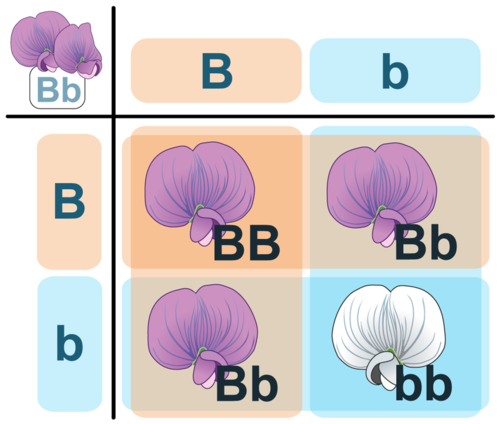
In this punnett square, which is the dominant trait?
The B stands for bud.
The B stands for bud.
a)
purple flower bud
b)
white flower bud
c)
dominant
d)
recessive
19.
Which of the following genotypes is a purebred?
a)
Bb
b)
Gg
c)
bb
d)
Dd
20.

If green is dominant over purple, then what is the genotype for this individual?
a)
Purple
b)
Green
c)
GG
d)
gg
21.

Brown fur color is dominant over black fur color. Which of the following is the actual genotype of ALL of the offspring in the next generation of this cross for fur color?
AA x aa
AA x aa
a)
AA
b)
Aa
c)
aa
d)
brown fur
22.

Which is the correct phenotype for this organism?
a)
BB
b)
blue
c)
green
d)
bb
23.

What is the genotype for this organism?
(E= 3 eyes, e= 1 eye)
(E= 3 eyes, e= 1 eye)
a)
EE
b)
Ee
c)
ee
d)
EE or Ee
24.
B - black, b - brown. Two black mice mate and have some black and some brown mice. What is the genotype of the parents?
a)
BB x Bb
b)
BB x bb
c)
Bb x Bb
d)
Bb x bb
25.
What does a Punnett Square help you do?
a)
Determine the ratio of phenotypes
b)
Determine the ratio of genotypes
c)
Predict possible traits the offspring will have
d)
All of the above
26.
Another word for homozygous is...
a)
purebred
b)
hybrid
c)
heterozygous
d)
dominant
27.
Dominant alleles are-
a)
capital
b)
lowercase
c)
both
d)
neither
28.
Recessive alleles are-
a)
capital
b)
lowercase
c)
both
d)
neither
29.
Tt is-
a)
homozygous dominant
b)
homozygous recessive
c)
heterozygous
d)
none of these
30.
Purple is dominant to white. A heterozygous purple flower is crossed with a white flower. What are the genotypes and phenotypes of the offspring?
a)
100% Pp (purple)
b)
50% Pp (purple); 50% pp (white)
c)
75% Pp (purple); 25% pp (white)
d)
25% PP, 50% Pp, 25% pp
75% purple, 25% white
75% purple, 25% white
31.
A cross between two tall garden pea plants produced 314 tall plants and 98 short plants. What genotypes are the parents?
a)
TT and tt
b)
TT and Tt
c)
Tt and Tt
d)
TT and TT
32.

In certain rats, black fur is dominant over white fur. If two rats, both heterozygous for fur color are mated, their offspring would be expected to have
a)
four different genotypes and two different colors
b)
two different genotypes and three different colors
c)
three different genotypes and two different colors
d)
three different genotypes and three different colors
33.

What is a gene?
a)
A bundle (like a hot dog bun) that the DNA is packed into
b)
something inside the nucleus
c)
a piece of DNA
d)
all of your DNA
34.

What is one of the advantages, why is it better to reproduce sexually versus asexually?
a)
survival of the fittest
b)
overproduction
c)
genetic variation
d)
cloning
35.
How many parents do you have in asexual reproduction?
a)
1
b)
3
c)
2
d)
4
36.
How many parents do you have in sexual reproduction
a)
1
b)
2
c)
3
d)
4
37.
How much DNA do you receive from one parent in asexual reproduction?
a)
25%
b)
50%
c)
75%
d)
100%
38.
How much DNA do you receive from one parent in sexual reproduction?
a)
25%
b)
50%
c)
75%
d)
100%
39.
In sexual reproduction offspring look___________from their parent.
a)
Identical
b)
different
c)
the opposite
d)
happy
40.
In asexual reproduction the offspring look ________ as their parent.
a)
identical
b)
different
c)
the opposite
d)
as happy
41.
Which of the following is an advantage of sexual reproduction for a species.
a)
It produces more offspring
b)
Offspring can better adapt to changing environments because they are diverse
c)
Off spring are more likely to die because they are all 100% identical to their parent.
d)
It produces fewer offspring
42.
What is a disadvantage of sexual reproduction?
a)
It produces fewer offspring
b)
it produces more offspring
c)
It generate genetically diverse offspring
d)
It generates identical offspring
43.
What is an advantage of asexual reproduction?
a)
It produces more offspring
b)
It produces fewer offspring
c)
It requires a mate
d)
It produces identical offspring
44.
What is a disadvantage to asexual reproduction?
a)
It produces more offspring
b)
It produces fewer offspring
c)
They are all the same and do not have diversity
d)
They are all different and have diversity
45.

What kind of cells do the domain classification of Bacteria contain?
a)
prokayotic
b)
eukaryotic
c)
exkaryotic
d)
semikaryotic
46.
Which is not a domain?
a)
Bacteria
b)
Eukarya
c)
Archaea
d)
Protista
47.
What characteristics distinguish organisms in the domain Archaea from organisms in other domains?
a)
can live in extreme conditions
b)
can be unicellular or multicellular
c)
can undergo photosynthesis
d)
can be classified as plant or animal
48.
Archaebacteria and Eubacteria are the only living organisms that do not have
a)
flagella
b)
cytoplasm
c)
a cell wall
d)
a nucleus
49.
The scientific name for an organism is made from the:
a)
class and family name
b)
genus and species name
c)
domain and kingdom name
d)
kingdom and phylum name
50.

What domain of classification includes plants, animals, fungi, protists, (all eukaryotes)?
a)
Archaea
b)
Bacteria
c)
Eukarya
d)
Plantae
51.

A dichotomous key for trees is provided. Hikers found a tree that has large brown cones and single sharp needles. What species of tree have the hikers found?
a)
Juniper
b)
Pine
c)
Spruce
d)
Fir
52.
The broadest or most general level of classification of living organisms is
a)
Domain
b)
Kingdom
c)
Phylum
d)
Family
53.
The most specific level of classification is
a)
Domain
b)
Kingdom
c)
Genus
d)
Species
54.
Cells that do not have a nucleus are called....
a)
eukaryote
b)
prokaryote
c)
unicellular
d)
multicellular
55.
Spiders, ticks, scorpions all belong to...
a)
Crustacean
b)
Arachanids
c)
Myriapod
d)
Insecta
56.
How many legs does an insect have?
a)
2
b)
3 pair
c)
4 pair
d)
8
57.
What are three main body parts of an insect?
a)
Head, chest, tail
b)
Head, antenna, abdomen
c)
Thorax, antenna, heart
d)
Head, thorax, abdomen
58.
An insect's wings and legs are attached to what body segment?
a)
head
b)
thorax
c)
cephalothorax
d)
abdomen
59.
Which organisms have two body segments and four pair of jointed appendages
a)
crustaceans
b)
insects
c)
arachnids
60.
How many legs does a spider have?
a)
Four
b)
Six
c)
Eight
d)
Ten
61.

Most insects have
a)
wings and antennae
b)
tongues and ears
c)
noses and teeth
d)
horns and claws
62.
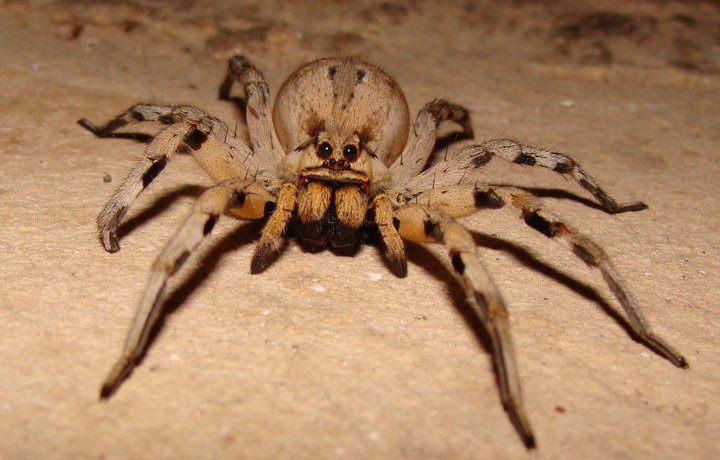
What is one reason why spiders are not classified as insects?
a)
Insects are vertebrates but spiders are not
b)
Insects have 6 legs but spiders have 8
c)
Insects have stingers but spiders have venom
d)
Insects are cold blooded but spiders are not
63.

?
a)
Myriapoda
b)
Insecta
c)
Arachnida
d)
Crustacea
64.

What is 1?
a)
eye stalk
b)
antennae
c)
telson
d)
cheliped
65.
Beetles, grasshoppers and moths are all examples of...
a)
Arachnids
b)
Crustaceans
c)
Insecta
d)
Diplopoda
66.

?
a)
Crustacea
b)
Arachnida
c)
Insecta
d)
Myriapoda
67.

?
a)
Arachnida
b)
Insecta
c)
Crustacea
d)
Myriapoda
68.
The stages of complete metamorphosis are
a)
egg, larva, pupa, adult
b)
egg, larva, nymph, adult
c)
egg, nymph, adult
d)
egg, larva, adult
69.
What is molting?
a)
The process in which arthropods reproduce
b)
The process in which arthropods shed their outer covering and grow a larger one.
c)
The process in which larval forms develop into adult forms
d)
The process in which arthropods breathe
70.
Insects have skeletons on the inside of their bodies like we do.
a)
True
b)
False
71.
Which is not a correct pair?
a)
insects - 2 antennae
b)
arachnids - 2 antennae
c)
crustaceans - 2 to 4 antennae
d)
arachnids - 0 antennae
72.
Insects get oxygen through
a)
gills
b)
book lungs
c)
lungs
d)
spiracles
73.
Which group contains the largest number of animal species?
a)
Arthropods
b)
fish
c)
vertebrates
d)
jellyfish
74.
Arthropod bodies are protected and supported by a(an)
a)
internal skeleton
b)
exoskeleton
c)
circulatory system
d)
vertebrae
75.

During the third stage of the life cycle, the caterpillar begins to spin a silky web. During this stage it is called a...
a)
Larvae
b)
Egg
c)
Pupa
d)
Butterfly
76.

About how long is the lifespan of an adult Painted Lady Butterfly?
a)
2 days
b)
2 weeks
c)
2 years
d)
2 hours
77.

On which continent are Painted Lady Butterflies not found?
a)
Antarctica
b)
Africa
c)
South America
d)
Asia
78.

Which is not a way that the chrysalides protect themselves from predators?
a)
Silky webbing
b)
Shaking
c)
Releasing an odor
79.
Butterflies drink using a tube-shaped tongue
called a ___________.
called a ___________.
a)
probe
b)
prius
c)
proboscis
80.
A new butterfly’s wings must be _________ before it can fly.
a)
Hard
b)
Soft
c)
Wet
d)
Dry
81.
Mutations are a change in what?
a)
DNA
b)
tRNA
c)
genotype
d)
phenotype
82.
Survival of the Fittest and Natural Selection were proposed by what scientist?
a)
Charles Darwin
b)
Albert Einstein
c)
Gregor Mendel
d)
Isaac Newton
83.
What is an adaptation?
a)
A feature or behavior that helps an animal survive
b)
The food that an animal eats
c)
How energy moves in a food web
d)
An animal's home
84.
Adaptations that help an animal blend in with its surroundings to avoid being seen is called
a)
habitat
b)
mimicry
c)
camouflage
d)
adaptations
85.
What did Charles Darwin observe when he went to the Galapagos Islands?
a)
Rabbits
b)
Finches
c)
Seagulls
d)
Monkeys
86.
What did Darwin notice about the finches?
a)
That they were all very different and were probably not related
b)
They were all very similar but with different beaks
c)
They were all the same
d)
Nothing, he observed moths
87.
What is the difference between camouflage and mimicry?
a)
Camouflage helps the organism hide while mimicry makes the organism seem dangerous
b)
Camouflage makes the organism seem dangerous and mimicry helps the organism hide
88.
Where the better adapted organisms survive to pass traits along to offspring.
a)
Selective Breeding
b)
Natural Selection
c)
Extinction
d)
Artifical Selection
89.
What is the advantage of having different shaped beaks?
a)
To look different from other species.
b)
To be able to eat the food readily available in the environment.
c)
To protect itself against predators.
d)
To protect itself against prey.
90.
Why are advantageous traits more likely to be passed onto offspring?
a)
Because they are more likely to survive and reproduce.
b)
Because they come from dominant alleles.
c)
Because they come from recessive alleles.
d)
Because the trait is an acquired phenotype.
91.
Snails and slugs belong to class
a)
Gastropod
b)
Bivalve
c)
Cephalopd
d)
Mollusk
92.
Which part of the Mollusk body is the tissue covering the body and secretes the shell?
a)
Mantle
b)
Radula
c)
Foot
d)
Visceral Mass
93.
What is the meaning of Gastropod?
a)
Soft-bodied
b)
Stomach foot
c)
Head-footed
d)
Two-shelled
94.
How do Gastropods eat?
a)
Tentacles
b)
Radula
c)
Mantle
d)
Filter feeder
95.
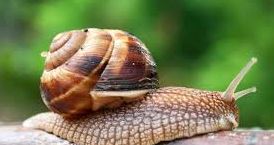
What Mollusk group does the picture belong to?
a)
Gastropod
b)
Bivalve
c)
Cephalopod
d)
Arthropod
100 %

