
 Worksheets
Final Exam Review #2- Rest of Life Science Topics
Total questions: 113
Worksheet time: 3hrs 34mins
Name
Class
Date
1.
Which classification category has many different types of organisms?
a)
kingdom
b)
phylum
c)
genus
d)
species
2.

You would find mushrooms in which kingdom?
a)
Plantae
b)
Protists
c)
Fungi
d)
Animalia
3.

Which kingdom do humans belong to?
a)
Plantae
b)
Fungi
c)
Animalia
d)
Protista
4.
The scientific name for an organism is made from the:
a)
class and family name
b)
genus and species name
c)
domain and kingdom name
d)
kingdom and phylum name
5.
Term given to describe the 2 name naming system is:
a)
dichotmous key
b)
binomial nomenclature
c)
2 scientific names
d)
binomial key
6.
What step do we always start with when using dichotomous keys?
a)
1
b)
2
c)
3
d)
4
7.
An organisms genotype is its what?
a)
Genetic makeup
b)
Recessive Trait
c)
Dominant trait
d)
Physical trait
8.
An organism that has two identical alleles for a trait is said to be what?
a)
Hybrid
b)
Co-dominant
c)
Homozygous
d)
Heterozygous
9.
An organism that has two different alleles for a trait is?
a)
Alleles
b)
Co-Dominant
c)
Homozygous
d)
Heterozygous
10.
Two brown eyed parents (Bb) have a baby. What is the chance the baby is blue eyed?
a)
0 %
b)
25%
c)
50%
d)
75%
11.
Which of the following is a phenotype?
a)
Aa
b)
red hair
c)
heterozygous
d)
DNA
12.
What is the only Genotype that shows the RECESSIVE Phenotype?
a)
GG
b)
Gg
c)
gg
13.
What are the two genotypes that show the DOMINANT Phenotype
a)
GG, gg
b)
GG, Gg
c)
Gg, gg
14.

What is bb
a)
Homozygous Dominant
b)
Heterozygous
c)
Homozygous Recessive
d)
Genes
15.

What is Bb
a)
Homozygous
b)
Heterozygous
c)
Recessive
d)
Dominant
16.

____________________ are used to make predictions about the genotypes and phenotypes of offspring.
a)
Dominant Squares
b)
Punnett Grids
c)
Punnett Squares
d)
Recessive Squares
17.
An organism's genes are determined by
a)
just the mother
b)
just the father
c)
BOTH parents
d)
environment
18.

What are the possible genotypes for this cross?
a)
TT = 25% Tt= 50% tt=25%
b)
all tall
c)
TT= 75% tt = 25%
d)
Tt = 100%
19.

Purple (P) is dominant to the white (p).
According to the Punnett Square, what is the probability of an offspring being purple?
According to the Punnett Square, what is the probability of an offspring being purple?
a)
25%
b)
0%
c)
100%
d)
50%
20.

In a certain species of plant, the color purple (P) is dominant to the color white (p).
According to the Punnett Square, what is the probability of an offspring being white?
According to the Punnett Square, what is the probability of an offspring being white?
a)
25%
b)
0%
c)
100%
d)
50%
21.

What is the yellow seed genotype?
a)
aa
b)
Aa
c)
AA
d)
AA or Aa
22.
Aa, DD, bB, yy are all examples of
a)
genotypes
b)
phenotypes
c)
dominant
d)
recessive
23.
What is diffusion?
a)
when molecules move from a low concentration to a high concentration
b)
when molecules move from a high concentration to a low concentration.
c)
no movement
d)
molecules move everywhere
24.
Osmosis is the movement of _____ across a membrane.
a)
food
b)
energy
c)
oxygen
d)
water
25.

Which way will the water molecules move during osmosis?
a)
Out of the cell, so the cell shrinks.
b)
Out of the cell, so the cell swells.
c)
Into the cell, so the cell shrinks.
d)
Into the cell, so the cell swells.
26.
In the given scenario what will happen? An egg is placed in pure water for 48 hours.
a)
The egg will gain water and swell.
b)
Water will move in and out of the cell equally, and the cell with neither shrink nor swell.
c)
The egg will lose water and shrink.
27.
This organelle takes food and turns it into ENERGY for plant and animal cells.
a)
Chloroplast
b)
Mitochondria
c)
Lysosome
d)
Ribosome
28.
The site of photosynthesis
a)
ribosome
b)
mitochondria
c)
chloroplast
d)
nucleus
29.
Which organelle is only found in a plant cell?
a)
nucleus
b)
chloroplast
c)
mitochondria
d)
cell membrane
30.

Directs all cell activities and contains genetic material.
a)
Lysosomes
b)
Nucleus
c)
ribosomes
d)
Mitochondria
31.
What is the gel-like substance inside of cells called?
a)
photoplasm
b)
photosynthesis
c)
cytoskeleton
d)
cytoplasm
32.
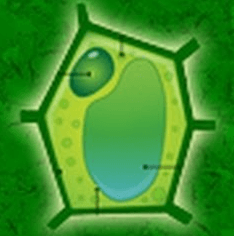
A rigid layer that lies outside the cell's membrane is...
a)
Cytoskeleton
b)
Cilia
c)
Cell Wall
d)
Flagella
33.
In a solution of water and salt, salt is considered the _______.
a)
solvent
b)
solute
c)
solution
34.
What does selectively-permeable mean?
a)
Only certain substances are able to pass through
b)
Nothing is able to pass through
c)
Everything is able to pass through
35.
The structure that allows materials to pass in and out of cells is called the...
a)
cell membrane
b)
nuclear membrane
c)
endoplasmic reticulum
d)
vacuole
36.
What organelle surrounds and supports plant cells and is not found in animal cells?
a)
Cell Membrane
b)
Cell Wall
c)
Nucleus
d)
Golgi Complex
37.
What organelle is located in both animal and plant cells and is called the "powerhouse" of a cell because cellular respiration takes place here to make energy?
a)
Endoplasmic Reticulum
b)
Nucleus
c)
Mitochondria
d)
Nucleolus
38.
The main source of energy for all life comes from ____.
a)
the Earth
b)
the moon
c)
the sun
d)
the food we eat/make
39.

Autotroph or heterotroph?
a)
Autotroph
b)
Heterotroph
40.

Autotroph or heterotroph?
a)
Autotroph
b)
Heterotroph
41.
Which of the following is the correct equation for PHOTOSYNTHESIS?
a)
6CO2 + 6H2O --> 6O2 + C6H12O6
b)
6CO2 + C6H12O6 + 6H2O --> O2
c)
6O2 + 6H2O --> 6CO2 + C6H12O6
d)
C6H12O6 + 6O2 ---> 6H2O + 6CO2
42.
Which gas is removed from the atmosphere during photosynthesis?
a)
hydrogen
b)
oxygen
c)
nitrogen
d)
carbon dioxide
43.
Why is photosynthesis important?
a)
creates oxygen for animals to breath
b)
creates energy for heterotrophs to use
c)
creates food for plants to use
d)
all of these are correct
44.
Which organisms perform Photosynthesis?
a)
Only Autotrophs
b)
Only Heterotrophs
c)
Autotrophs and Heterotrophs
45.
In which way are photosynthesis and cellular respiration different?
a)
Cellular respiration stores ATP, while photosynthesis releases ATP.
b)
Cellular respiration produces oxygen, while photosynthesis uses oxygen.
c)
Photosynthesis releases energy, while cellular respiration stores energy.
d)
Photosynthesis used carbon dioxide, while cellular respiration produces carbon dioxide.
46.

Which of the following structure is where cellular respiration occurs in the cell?
a)
nucleus
b)
cytoplasm
c)
mitochondria
d)
vacuoles
47.
What is the correct equation for cellular respiration?
a)
6O2 + C6H12O6 -> 6CO2 + 6H2O + Energy
b)
6O2 + C6H12O6 + Energy -> 6CO2 + 6H2O
c)
6CO2 + 6H2O -> 6O2 + C6H12O6 + Energy
d)
6CO2 + 6H2O + Energy -> 6O2 + C6H12O6
48.
In which organelle does photosynthesis occur?
a)
mitochondria
b)
stomata
c)
xylem
d)
chloroplast
49.
What is the primary purpose of cellular respiration?
a)
to release oxygen from air molecules
b)
To release energy from air milecules
c)
To release energy from food molecules
d)
to release Sirius Black from Azkaban
50.
What is the name of the simple sugar that is produced in photosynthesis?
a)
Sucrose
b)
Dextrose
c)
Glucose
d)
Lactose
51.
What gas is USED in Respiration?
a)
O2
b)
CO2
c)
H2O
d)
CHO2
52.
What are the products (what's made) during photosynthesis?
a)
glucose and oxygen
b)
water, light, and carbon dioxide
53.
What are the reactants (what's needed) for photosynthesis?
a)
glucose and oxygen
b)
light, water, and carbon dioxide
54.

What is the source of energy for photosynthesis?
a)
carbohydrates-chemical
b)
sunlight-radiant
c)
heat-thermal
d)
television-electrical
55.
What is the gas we breath out that plants use for photosynthesis?
a)
sulfur
b)
carbon dioxide
c)
oxygen
d)
hydrogen
56.
Which of the following is an example of a HETEROTROPH?
a)
Grass
b)
Algae
c)
Lemon Tree
d)
Bear
57.

What process is the diagram representing?
a)
Photosynthesis
b)
Soil development
c)
Plant reproduction
d)
Nitrogen Cycle
Nitrogen cycle
Nitrogen cycle
58.

The gradual change in species over time is...
a)
Evolution
b)
Nucleotide
c)
Adaptation
d)
Natural Selection
59.

Darwin wrote that organisms with traits that are best suited to the environment will ________________
a)
increase in number
b)
become extinct
60.
What characteristic did Darwin observe about the finches on the Galapagos Islands?
a)
Their feathers
b)
Genotypes
c)
Their beaks
d)
Their body sizes
61.
Which term refers to the process by which individuals that are better suited to the environment survive and reproduce therefore passing down their genes to their offspring?
a)
Evolution
b)
Variation
c)
Adaptation
d)
Natural Selection
62.
The white feathers of a snowy owl allow it to blend in with its environment during the winter months (snow). This is an example of ________________
a)
Species
b)
Environmental Change
c)
Adaptation
d)
Variation
63.
Genetic differences between organisms of the same species
a)
Variation
b)
Adaptation
c)
Behavior
d)
Environment
64.
What is the advantage of having different shaped beaks?
a)
To look different from other species.
b)
To be able to eat the food readily available in the environment.
c)
To protect itself against predators.
d)
To protect itself against prey.
65.
The struggle for existence against other members of an organisms species is
a)
Competition
b)
Natural Selection
c)
gene flow
d)
genetic drift
66.
Remains of ancient organisms are called
a)
Extinctions
b)
Fossils
c)
Mutations
d)
Variations
67.

Who was the naturalist that traveled the world to study plants and animals?
a)
Albert Einstein
b)
Charles Darwin
c)
Charles Barkley
d)
Isaac Newton
68.

What information does the image tell us about evolution?
a)
They do not have a common ancestor.
b)
They have a common ancestor.
c)
The porpoise evolved from a bat.
d)
The organisms evolved through punctuated equilibrium.
69.
The environment around Manchester, England, changed during the Industrial Revolution. How did this change affect peppered moths living in the area?
a)
Natural selection favored moths with dark wings because predators could not see them on the soot-colored trees.
b)
Natural selection favored moths with white wings that were easy for predators to see.
c)
Natural selection favored moths with white wings because predators could not see them on the soot-colored trees.
d)
Natural selection caused moths with white wings to become extinct.
70.
Which of the following statements about the individuals in a population that survive to reproduce is true?
a)
They have the same predators
b)
They are likely to pass traits to their offspring
c)
They live in different environments
d)
They are sterile
71.

Which types of peppered moths survived and reproduced the most during the Industrial Revolution?
a)
White Peppered Moths
b)
Black Peppered Moths
72.

What is this picture showing?
a)
Osmosis
b)
Diffusion
c)
Mitosis
d)
Passive Transport
73.
Maintaining a constant internal state in a changing environment.
a)
Homeostasis
b)
Active Transport
c)
Mitosis
d)
Photosynthesis
74.

What is this picture showing?
a)
Photosynthesis
b)
Diffusion
c)
Exocytosis
d)
Mitosis
75.

What is this picture showing?
a)
Active Transport
b)
Endocytosis
c)
Diffusion
d)
Osmosis
76.
The maintenance of an organism’s internal environment is called:
a)
compensating
b)
homeostasis
c)
balancing
d)
routine
77.
Who organized living things by creating binomial nomenclature?
a)
Carolus Linnaeus
b)
Robert Hooke
c)
Anton van Leeuwenhoek
d)
James Watson
78.
The scientific name for an organism is made from the:
a)
class and family name
b)
genus and species name
c)
domain and kingdom name
d)
kingdom and phylum name
79.
What is the most specific level of classification?
a)
Family
b)
Domain
c)
Species
d)
Carolus Linnaeus
80.

Which two kingdoms are entirely multicellular?
a)
Animalia and Plantae
b)
Animalia and Protista
c)
Protista and Plantae
81.

Almost all bacteria are...
a)
Unicellular
b)
Multicellular
82.
To say that an organism is heterotrophic means...
a)
it cannot reproduce asexually
b)
it cannot make its own food
c)
it cannot breathe oxygen gas
83.
What is the genus name here:
Canis lupus
Canis lupus
a)
Canis
b)
lupus
84.

Choose the correct way to write the scientific name for humans:
a)
homo sapiens
b)
Homosapiens
c)
Homo sapiens
d)
Homo Sapiens
85.

Mold, yeast, and mushrooms all belong to the Kingdom _______.
a)
Archaebacteria
b)
Fungi
c)
Eubacteria
d)
Protista
86.
Which sequence correctly shoes the levels of increasing organization of the human body?
a)
cell-tissue-organ-organ system-organism
b)
organism-organ system-organs-tissues-cells
c)
cells-organs-tissues-organ system-organism
d)
organism-cell-tissue-organs-organ system
87.

In mitosis, the two resulting cells are
a)
different from the starting cell and identical to each other.
b)
different from the starting cell and different from each other.
c)
identical to the starting cell and different from each other.
d)
identical to the starting cell and identical to each other.
88.

Fruit fly body cells have 8 chromosomes. After mitosis, you would expect a resulting fruit fly daughter cell to have ...
a)
16 chromosomes.
b)
46 chromosomes.
c)
8 chromosomes.
d)
4 chromosomes.
89.
In which type of cells will mitosis occur?
a)
egg cells
b)
sperm cells
c)
jail cells
d)
Body cells except the sperm and egg cells
90.
After meiosis is complete, the new cells:
a)
are all identical
b)
are all different
c)
are half identical and half different
d)
are all stretched out
91.
The female sex cell is called
a)
zygote
b)
sperm
c)
fertilization
d)
egg
92.
The male sex cell is called
a)
egg
b)
zygote
c)
sperm
d)
mitosis
93.
Most of the cells in the human body are produced by
a)
mitosis
b)
meiosis
94.

Name that process
a)
Mitosis
b)
Meiosis
c)
Mutation
d)
Cell Cycle
95.
Why do we need meiosis?
a)
To double the number of chromosomes going into sex cells
b)
To halve the number of chromosomes going into sex cells
c)
To triple the number of chromosomes going into sex cells
d)
To not change the number of chromosomes going into sex cells
96.
This produces cells for growth and repair.
a)
mitosis
b)
meiosis
97.
Cells produced during meiosis are genetically
a)
different
b)
identical
98.
Cells produced during mitosis are genetically
a)
different
b)
identical
99.
Which of these cells would undergo meiosis?
a)
skin cells
b)
liver cells
c)
brain cells
d)
sperm cells
100.

The stages of mitosis in order
a)
Metaphase, Interphase, Anaphase, Prophase, Telophase
b)
Interphase, Prophase, Anaphase, Metaphase, Telophase
c)
Interphase, Prophase, Metaphase, Anaphase, Telophase
d)
Anaphase, Prophase, Interphase, Telophase, Metaphase
101.
The purpose of meiosis is to form ________ cells.
a)
body
b)
sex
c)
somatic
d)
brain
102.
If a somatic (body) cell in a butterfly contains 24 chromosomes, a butterfly egg would contain
a)
3
b)
6
c)
12
d)
24
103.

Meiosis makes sperm and egg cells. In humans, sperm and egg cells each have _____ chromosomes. Therefore a fertilized human egg cell (sperm and egg cell combined) would create a cell with _____ chromosomes.
a)
23, 46
b)
46, 23
c)
2, 4
d)
50, 100
104.
Used to hold the slides in place
a)
Stage
b)
Stage Clips
c)
Diaphragm
d)
Arm
105.
Lenses consist of low 4X, medium 10X, and high 40X
a)
Eyepiece
b)
Ocular Lens
c)
Objective Lenses
d)
Illuminators
106.
What will be the total magnification if ocular lens is 10X and objective lens is 4X?
a)
4X
b)
40X
c)
10X
d)
100X
107.
What will be the total magnification if the ocular lens is 10X and the objective lens is 40X?
a)
40X
b)
10X
c)
100X
d)
400X
108.
What will be the total magnification if the ocular lens is 10X and the objective lens is 10X?
a)
10X
b)
100X
c)
1000X
d)
1X
109.

The last level of classification in the figure should be labeled -
a)
Order
b)
Class
c)
Family
d)
Species
110.

Using this dichotomous key, identity the name of the circled fish.
a)
band-tail puffer
b)
spotted goat fish
c)
peacock flounder
d)
trumpet fish
111.

A dichotomous key for trees is provided. Hikers found a tree that has large brown cones and single sharp needles. What species of tree have the hikers found?
a)
Juniper
b)
Pine
c)
Spruce
d)
Fir
112.

Take your time and read carefully! Timer is 3 minutes!
---------
An illustration and a dichotomous key are given. What is the correct classification for this organism?
---------
An illustration and a dichotomous key are given. What is the correct classification for this organism?
a)
Class Insecta
b)
Order Amblygygi
c)
Order Araneae
d)
Order Scorpiones
113.

Which organism is MOST closely related to the common chimpanzee?
a)
grey wolf
b)
human
c)
monarch butterfly
d)
tiger snake
100 %

