
 Worksheets
Year 8 EOY Biology Revision
Total questions: 103
Worksheet time: 1hrs 28mins
Name
Class
Date
1.
A green pigment that absorbs lights and converts its energy into a form that the plant can use:
a)
glucose
b)
photosynthesis
c)
carbon dioxide
d)
chlorophyll
2.
What is the measured indicator for the rate or amount of photosynthesis?
a)
Temperature
b)
Light intensity
c)
CO2 level
d)
Oxygen flow
3.
Which is NOT a reactant of photosynthesis?
a)
oxygen
b)
sunlight
c)
carbon dioxide
d)
water
4.
Which IS a product of photosynthesis?
a)
glucose
b)
sunlight
c)
carbon dioxide
d)
water
5.
What are the products of photosynthesis?
a)
water and carbon dioxide
b)
oxygen and glucose
c)
oxygen and carbon dioxide
d)
oxygen and water
6.
Take in water and nutrients from the soil.
a)
roots
b)
xylem
c)
stomata
d)
chlorophyll
7.
Place where plant gets nutrients from.
a)
roots
b)
xylem
c)
stomata
d)
soil
8.
Openings on the leaves to let CO2 in and O2 out.
a)
roots
b)
stem
c)
stomata
d)
xylem
9.
Transports water up from the soil.
a)
xylem
b)
roots
c)
soil
d)
stemata
10.
What is transpiration?
a)
Excess water being released from the leaves
b)
Excess sugar being released from the leaves
c)
The way a plant makes its food
d)
When the plant uses sugar for energy
11.

Name the structure labeled 8
a)
lungs
b)
trachea
c)
diaphragm
d)
alveoli
12.
Air moves into the lungs due to
a)
decreased air pressure in lungs
b)
pressure of diaphragm on lungs
c)
throat muscles contracting
d)
active transport
13.
What type of cells carries oxygen?
a)
red blood cells
b)
white blood cells
c)
neurons
14.

Where is the bronchi?
a)
A
b)
B
c)
C
d)
D
15.

What is #6?
a)
Aveoli
b)
Lung
c)
Vocal Cord
d)
Trachea
16.

When you take air in through your mouth or your nose, you....
a)
exhale
b)
cough
c)
inhale
17.
This organelle takes food and turns it into ENERGY for plant and animal cells.
a)
Chloroplast
b)
Mitochondria
c)
Lysosome
d)
Ribosome
18.
The site of photosynthesis
a)
ribosome
b)
mitochondria
c)
chloroplast
d)
nucleus
19.
The brain is a part of which organ system?
a)
nervous
b)
skeletal
c)
muscular
d)
digestive
20.
The lungs and the kidneys are examples of
a)
cells
b)
organs
c)
tissues
d)
organ systmes
21.
Which organelle is only found in a plant cell?
a)
nucleus
b)
chloroplast
c)
mitochondria
d)
cell membrane
22.

Directs all cell activities through the DNA located there.
a)
Lysosomes
b)
Nucleus
c)
ribosomes
d)
Mitochondria
23.

I am the outer most layer of an animal cell. What am I?
a)
cell wall
b)
nucleus
c)
cell membrane
d)
cell skin
24.
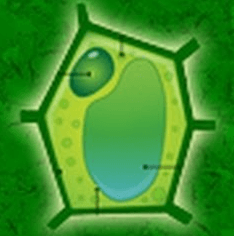
A rigid layer that lies outside the cell's membrane is...
a)
Cytoskeleton
b)
Cilia
c)
Cell Wall
d)
Flagella
25.
Xylem and Phloem are in what level of organization.
a)
organelle
b)
cell
c)
tissue
d)
organ
26.

An animal cell has the following except a/an...
a)
Centriole
b)
Lysosome
c)
Cell Wall
d)
Endoplasmic reticulum
27.

Which cell can change it's shape?
a)
Animal
b)
Plant
28.
Most viruses do not kill humans. Why not?
a)
Viruses can only kill bacterial cells
b)
Humans have 100 trillion cells; viruses can't infect enough to kill
c)
Our immune cells hunt and kill viruses
d)
We have vaccines for all viruses
29.

The ingredient in a vaccine that stimulates the immune system to develop antibodies is
a)
egg protein
b)
tobacco plant protein
c)
a dead or weakened form of the virus
d)
bacteriophages
30.

Antibiotics are used to treat
a)
viruses
b)
bacteria
c)
both viruses and bacteria
d)
fungal infections, only
31.

Antibiotics work by
a)
destroying the cell wall of bacteria
b)
destroying the protein coat of viruses
c)
destroying the DNA of the pathogen
d)
stimulating the immune system to produce antibodies
32.
Airborne transmission of viruses involves
a)
mosquitoes biting an infected person and flying to the next victim
b)
viral particles left on surfaces where they can picked up on people's hands
c)
viral particles are carried through the air in droplets when people sneeze
d)
bodily fluids containing virus are exchanged through skin-to-skin contact
33.

What do white blood cells do?
a)
Seek out and kill all living tissue
b)
Seek out and kill pathogens
c)
Transport food around the body
d)
Repair cuts and injuries
34.
Which of the following is NOT a nonspecific defense?
a)
mucus
b)
sweat
c)
antibodies
d)
tears
35.
What is the body's most important nonspecific defense?
a)
passive immunity provided by mom.
b)
skin
c)
active immunity provided by vaccines.
d)
inflammatory response
36.
The body’s nonspecific defenses against invading pathogens include
a)
antibiotics.
b)
mucus, sweat and tears.
c)
antibodies.
d)
Killer T cells.
37.
What is a pathogen?
a)
A small group of viruses
b)
The name given to colds and flu's
c)
A microorganism that causes disease
d)
A microbes that cause infectious diseases
38.

Which of the following is the body’s first line of defense against disease?
a)
vaccines
b)
white blood cells
c)
antibodies
d)
skin
39.
Antibodies...
a)
destroy body cells
b)
destroy toxins
c)
make pathogens stick together
d)
destroy particular viruses and bacteria
40.
How do vaccines help to fight infection?
a)
the body creates memory cells that stay in the blood to fight infection if they are exposed again
b)
the body creates brain cells that stay in the blood to fight infection if they are exposed again
c)
the body creates antibiotics that stay in the blood to fight infection if they are exposed again
41.
antibiotic resistance is caused by...
a)
too many drugs
b)
selection
c)
a mutation
d)
illness
42.
Cancer is what kind of disease?
a)
Infectious
b)
Non-infectious
43.
In which way are photosynthesis and cellular respiration different?
a)
Cellular respiration stores ATP, while photosynthesis releases ATP.
b)
Cellular respiration produces oxygen, while photosynthesis uses oxygen.
c)
Photosynthesis releases energy, while cellular respiration stores energy.
d)
Photosynthesis used carbon dioxide, while cellular respiration produces carbon dioxide.
44.
What is the correct equation for cellular respiration?
a)
6O2 + C6H12O6 -> 6CO2 + 6H2O + Energy
b)
6O2 + C6H12O6 + Energy -> 6CO2 + 6H2O
c)
6CO2 + 6H2O -> 6O2 + C6H12O6 + Energy
d)
6CO2 + 6H2O + Energy -> 6O2 + C6H12O6
45.

Which of the following structure is where cellular respiration occurs in the cell?
a)
nucleus
b)
cytoplasm
c)
mitochondria
d)
vacuoles
46.
All living things do which of the following?
a)
Chemosynthesis
b)
Respiration
c)
photosynthesis
d)
all of the answers
47.
What is one of the reactants of cellular respiration?
a)
energy
b)
glucose
c)
carbon dioxide
d)
water
48.
How do living things get rid of Carbon dioxide?
a)
it is excreted
b)
it is exhaled
49.
What does it mean for something to be anaerobic?
a)
It requires CO2
b)
It does not require CO2
c)
It requires oxygen
d)
It does not require oxygen
50.
What type of respiration requires oxygen?
a)
Aerobic
b)
Anaerobic
51.
What type of respiration does not require oxygen?
a)
Aerobic
b)
Anaerobic
52.
Which type of respiration is most efficient?
a)
Aerobic
b)
Anaerobic
53.
What happens to your breathing rate when you exercise?
a)
It increases
b)
It decreases
c)
It stays the same
54.
What happens to your pulse when you exercise?
a)
It increases
b)
It decreases
c)
It stays the same
55.
When animals exercise with a lack of oxygen their muscles can form
a)
lactic acid
b)
alcohol
c)
minions
d)
oxygen
56.
Which is not a product of cellular respiration?
a)
oxygen
b)
carbon dioxide
c)
water
d)
ATP
57.

Bread is a product that utilizes bubbles from a specific part of fermentation. These bubbles come from:
a)
Carbon Dioxide
b)
Lactic Acid
c)
Oxygen
d)
Water
58.
What are the products of aerobic respiration?
a)
Glucose and oxygen
b)
Carbon dioxide and water
c)
Lactic acid
d)
Carbon monoxide
59.
Friction wears away the treads on a tire after miles of driving. Physical or chemical change?
a)
Chemical change
b)
Physical change
60.
Is "sugar dissolves in water" a chemical or physical change?
a)
Chemical change
b)
Physical change
61.
Is "word burning in a fireplace" a chemical or physical change?
a)
Chemical change
b)
Physical change
62.
A brass door knob tarnishes. Physical or chemical change?
a)
Chemical change
b)
Physical change
63.
Which of the following is a sign that a chemical reaction has occurred?
a)
change in shape
b)
melting
c)
formation of a gas
d)
dissolving
64.

A combination of particles of one or more substance that are distributed uniformly throughout another substance is a/an
a)
Mixture
b)
Substance
c)
Solution
65.

A ___ is the substance being dissolved in a solution.
a)
solvent
b)
insolvent
c)
substrate
d)
solute
66.
7. An example of a solution is ___
a)
sugar and water
b)
sand and water
c)
milk
d)
whipped cream
67.
What is oxidation?
a)
A reaction involving oxygen
b)
A reaction involving non-metals
68.
Is the following equation an example of oxidation?
Cu + O2 ---> 2 CuO
Cu + O2 ---> 2 CuO
a)
Yes
b)
No
69.
Is the following equation an example of oxidation?
Na + Cl ----> NaCl
Na + Cl ----> NaCl
a)
Yes
b)
No
70.
Oxidation involves
a)
gaining electrons; gaining oxygen
b)
losing electrons; losing oxygen
c)
gaining electrons; losing oxygen
d)
losing electrons; gaining oxygen
71.
In the reaction
2Ca(s) + O2(g) --> 2CaO(s), calcium is __________
2Ca(s) + O2(g) --> 2CaO(s), calcium is __________
a)
Reduced
b)
Synthesized
c)
Oxidized
d)
None of the above
72.
Which layer of the Earth is the most dense?
a)
crust
b)
mantle
c)
inner core
d)
outer core
73.
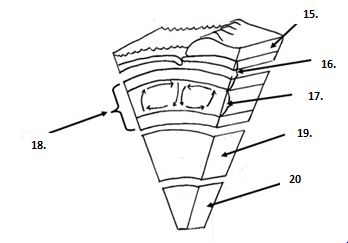
Identify each layer - #15.
a)
Lithosphere
b)
Mantle
c)
Crust
d)
Asthenosphere
74.
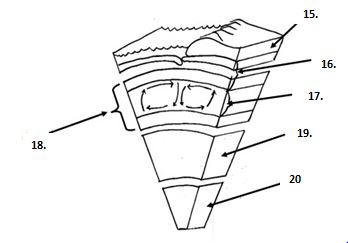
Identify each layer - #20.
a)
mantle
b)
asthenosphere
c)
inner core
d)
outer core
75.
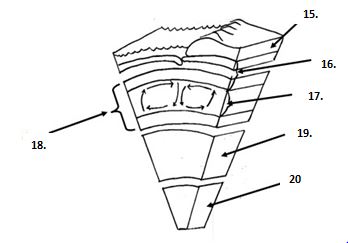
Identify each layer - #19.
a)
mantle
b)
lithosphere
c)
inner core
d)
outer core
76.
The central part of the Earth below the mantle
a)
Crust
b)
Asthenosphere
c)
Core
d)
Mantle
77.
The order of the earth’s compositional layers from most dense to least dense are
a)
Inner Core, Crust, Mantle and Outer Core
b)
Crust, Mantle, Outer Core and Inner Core
c)
Inner Core, Outer Core, Mantle and Crust
d)
Crust, Outer Core, Inner Core and Mantle.
78.
Temperature _____________________ as you go deeper into the earth.
a)
increases
b)
decreases
c)
goes up and down depending on the layer
d)
stays the same
79.

This rock formed when bits of other rocks became pressed into a solid. What type of rock is it?
a)
Sedimentary Rock
b)
Metamorphic Rock
c)
Igneous Rock
80.

This rock was formed when magma cooled very slowly inside the Earth. What specific type of rock is it?
a)
Intrusive Igneous Rock
b)
Extrusive Igneous Rock
c)
Foliated Metamorphic Rock
d)
Clastic Sedimentary Rock
81.
What are the 3 major types of rocks?
a)
Igneous, Metamorphic, Sedimentary
b)
Metamorphic, Igneous, Cementation
c)
Brown, Red, Gray
d)
Streak, Hardness, Breakage
82.
Two ways to describe types of igneous rocks are _____
a)
Extrusive and Intrusive
b)
Foliated and Non-Foliated
c)
Clastic and Biochemical
d)
Black and Gray
83.
What process is used to form sedimentary rocks?
a)
Lava cools and hardens to form a rock.
b)
Bits of sand and gravel form layers that turn into rock from pressure.
c)
Extreme heat and pressure from inside the Earth turn rocks into new rocks.
d)
Magma trapped under the Earth's surface cools and solidifies.
84.
Which of the words below describe mud, sand, and tiny bits of rocks that cement together to form a type of rock?
a)
stalactites
b)
magmas
c)
metamorphs
d)
sediments
85.
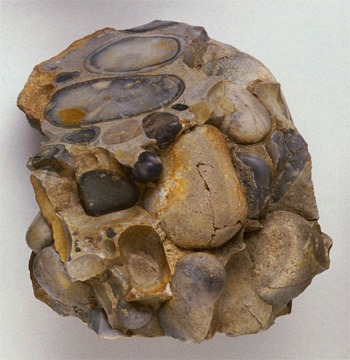
This rock was formed by smaller pieces of rock that settled at the bottom of a lake millions of years ago. What type of rock is this?
a)
Sedimentary
b)
Igneous
c)
Metamorphic
86.
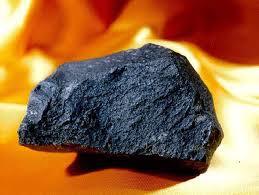
This rock was found near the mouth of a volcano. What type of rock is this?
a)
Sedimentary
b)
Igneous
c)
Metamorphic
87.
This rock was formed when molten rock cooled into a solid. What type of rock is it?
a)
Igneous Rock
b)
Metamorphic Rock
c)
Sedimentary Rock
88.

This rock started as lava that cooled and then was heated and put under pressure over time. What type of rock is this?
a)
Sedimentar
b)
Igneous
c)
Metamorphic
89.
One cup of water is left outside for two days when it was checked there was only half a cup left. What happened?
a)
evaporation; chemical change
b)
condensation; physical change
c)
evaporation; physical change
d)
condensation; chemical change
90.
A ___________ is an arrangement of elements in columns
a)
columns
b)
rows
c)
periodic table
d)
electron shell
91.
In the modern periodic table elements are arranged by:
a)
atomic mass
b)
atomic number
c)
valence electrons
d)
number of isotopes
92.
Each row in the periodic table is called a
a)
group
b)
period
c)
cluster
d)
unit
93.
Each column in the periodic table is called a
a)
period
b)
group
c)
cluster
d)
unit
94.
The atomic number tells you what?
a)
number of electrons
b)
number of protons
c)
number of neutrons
d)
both electrons and protons in an atom.
95.
Which group of the periodic table is composed of inert (not reactive) gases?
a)
alkali metals
b)
alkaline earth metals
c)
halogens
d)
noble gases
96.
Particles in an atom's nucleus that are neutral and have no charge are
a)
megatrons.
b)
electrons.
c)
neutrons.
d)
protons.
97.
A negatively charged particle that moves around the nucleus is a(n)
a)
proton
b)
neutron
c)
electron
d)
quark
98.

The atomic number of this pictured element is
a)
28
b)
58.6934
c)
Ni
d)
Nickel
99.
Elements which are shiny, conduct electricity and heat are called
a)
metal
b)
nonmetal
c)
metalloid
d)
nonexistent
100.

The yellow atoms are called
a)
metals
b)
nonmetals
c)
metalloids
d)
noble gases
101.
Which of the 4 major groups is the largest? (4.4)
a)
Metals
b)
Semimetals
c)
Nonmetals
d)
Inert/Noble Gases
102.
Which element is not a metal?
a)
H
b)
Re
c)
Al
d)
B
103.

The period for bromine is ___________.
a)
3
b)
2
c)
4
100 %

