
 Worksheets
Diffusion/Osmosis Cells
Total questions: 105
Worksheet time: 1hrs 29mins
Name
Class
Date
1.
What is diffusion?
a)
when molecules move from a low concentration to a high concentration
b)
when molecules move from a high concentration to a low concentration.
c)
no movement
2.

What is the definition of Selective Permeability?
a)
The movement of materials across the cell membrane that requires NO ENERGY from the cell.
b)
The movement of materials through (or across) the cell membrane
c)
The ability of the cell membrane to allow some things to pass through while preventing other things from passing through.
3.

Osmosis
a)
diffusion of water molecules through a semi-permeable mebrane from an area of low concentration to an area of high concentration
b)
the diffusion of particles from an area of high concentration to an area of low concentration
c)
diffusion of water molecules through a semi-permeable membrane from an area of high concentration to an area of low concentration
4.
Osmosis is the movement of _____ across a membrane.
a)
food
b)
energy
c)
oxygen
d)
water
5.

_______ regulates what enters and leaves a cell.
a)
Cell Membrane
b)
Nucleus
c)
Mitochondria
d)
Cytoplasm
6.

Equilibrium?
a)
a large amount of substance on side of the cell and a small amount on the other side
b)
a small amount of substance on side of the cell and a large amount on the otherside
c)
equal amount of substance on either side of the membrane
7.
In the given scenario what will happen to the organism: salt is poured onto eggplant.
a)
Water will move out of the eggplant cells and the cells will shrink.
b)
Water will move out of the eggplant cells and the cells will swell.
c)
Water will move into the eggplant cells and the cells will swell.
8.
In the given scenario what will happen? An egg is placed in pure water for 48 hours.
a)
The egg will gain water and swell.
b)
Water will move in and out of the cell equally, and the cell with neither shrink nor swell.
c)
The egg will lose water and shrink.
9.

How many diamond molecules need to move to reach equilibrium?
a)
A net of 2 molecules move inside the cell.
b)
A net of 2 molecules move outside the cell.
c)
There is no net movement because the molecules are at equilibrium.
d)
The molecules do not move.
10.

Which way will the water molecules move during osmosis?
a)
Out of the cell, so the cell shrinks.
b)
Out of the cell, so the cell swells.
c)
Into the cell, so the cell shrinks.
11.
Passive transport requires no
a)
concentration gradients
b)
osmosis
c)
motion
d)
energy
12.
What a cell needs to transport particles by active transport?
a)
Sun
b)
Wind
c)
Energy
d)
Channels
13.

A student put a few drops of lemon juice into an uninflated balloon.The student tied a knot in the balloon, placed it in a shoe box, and covered it with a lid. The following day, the student opened the box and was able to smell lemon in the box. Through what process were molecules able to pass through the balloon?
a)
respiration
b)
fermentation
c)
osmosis
d)
diffusion
14.

Which diagram best shows the end result of diffusion?
a)
F
b)
G
c)
H
d)
J
15.

Where is there a low concentration of dye?
a)
at the bottom of cup
b)
in the color
c)
at the top of cup
d)
no concenteraion gradient
16.
What does “high concentration area” mean?
a)
Spread out
b)
Tightly packed together
c)
Uncrowded
d)
Spacious
17.
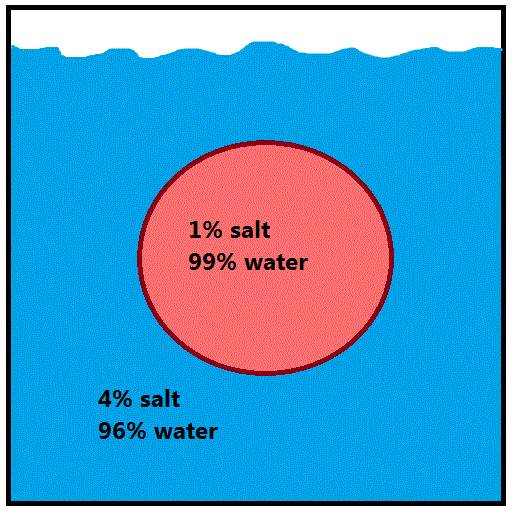
Where will the water go?
a)
Into the cell
b)
Out of the cell
c)
Equally in & out
18.
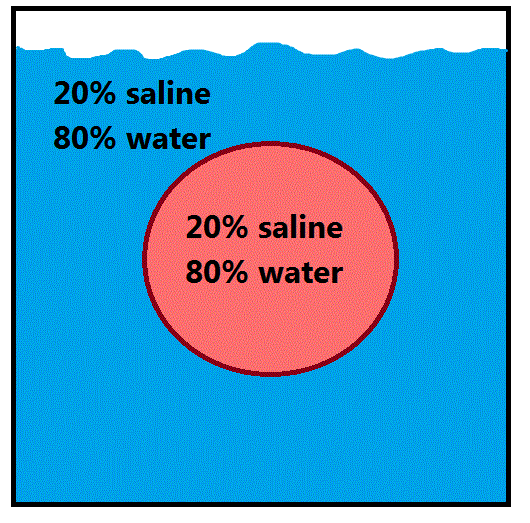
A blood cell is placed into the jar, as seen. Where will the water go?
a)
Into the cell
b)
Out of the cell
c)
Equally in & out
d)
The water is a lie
19.
Osmosis is an example of which type of cell transport...
a)
passive transport
b)
active transport
c)
endocytosis
d)
exocytosis
20.
Passive Transport is powered by the movement of molecules from a low concentration to a high concentration.
a)
True
b)
False
21.
Simple Diffusion is a type of Active Transport
a)
True
b)
False
22.
When there is an unequal concentration of something, it will create a
a)
concentration gradient
b)
an unequal diffusion
c)
equalibrium
23.
Passive Diffusion can be described as molecules moving DOWN the concentration gradient, from high to low, because it is powered by ATP.
a)
True
b)
False
24.

Which type of diffusion is being represented in this picture?
a)
Passive Diffusion
b)
Simple Diffusion
c)
Active Diffusion
d)
Facilitated Diffusion
25.

Why do the molecules stop moving across the membrane?
a)
There is still a homeostatic imbalance.
b)
The molecules grew into a larger size
c)
The concentration gradient is now gone
d)
The molecules are still moving
26.
Facilitated Diffusion is the movement of LARGE and POLAR molecules across the cell membrane with the help of Integral Proteins
a)
True
b)
False
27.
Is it possible to have a HIGH concentration of something INSIDE a cell with a LOW concentration OUTSIDE of the cell?
a)
Yes
b)
No
28.

Which type of Passive Transport is being represented in this picture?
a)
Passive Diffusion
b)
Simple Diffusion
c)
Active Diffusion
d)
Facilitated Diffusion
29.

The type of proteins seen in this picture are peripheral proteins
a)
True
b)
False
30.
Hypertonic is
a)
same
b)
lower
c)
higher
d)
equal
31.
A cell placed in a hypertonic solution will ___, while in hypotonic solution will ____.
a)
Shrink, swell
b)
Swell, shrink
c)
swell, Not change
d)
shrink, not change
32.
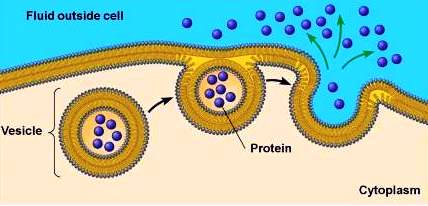
Which form of active transport is being shown?
a)
Pinocytosis
b)
Endocytosis
c)
Exocytosis
d)
Osmosis
33.
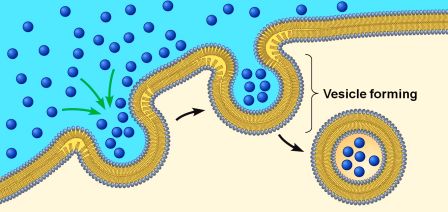
Which form of active transport is being shown?
a)
Facilitated Diffusion
b)
Exocytosis
c)
Endocytosis
d)
Protein Pumps
34.
The sodium-potassium pump usually pumps
a)
only potassium ions and sugar molecules
b)
potassium ions out of the cell
c)
sodium ions into the cell
d)
potassium ions into the cell
35.
When cells take in a liquid through active transport, what is it called?
a)
Exocytosis
b)
Phagocytosis
c)
Pinocytosis
d)
Osmosis
36.
What is the difference between active and passive transport?
a)
Active does not need energy and passive uses ATP (energy)
b)
Active uses ATP (energy) and passive does not need energy
c)
Active stores transport proteins and passive releases
d)
Active uses hormones and passive does not
37.
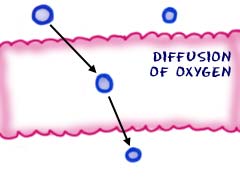
a)
Passive Transport
b)
Active Transport
38.

What is the definition of Selective Permeability?
a)
The movement of materials across the cell membrane that requires NO ENERGY from the cell.
b)
The movement of materials through (or across) the cell membrane
c)
The ability of the cell membrane to allow some things to pass through while preventing other things from passing through.
39.
During osmosis
a)
water moves from high to low concentration
b)
large or oddly shaped molecules move across a cell membrane
c)
water moves when energy is used
40.
Ideally, your cells should be in a(n) _______ solution
a)
Hypertonic
b)
Hypotonic
c)
Isotonic
d)
Cola
41.

The picture is an example of _________________.
a)
isotonic
b)
diffusion
c)
osmosis
42.
If a cell containing 5% salt is placed into a glass of water with 20% salt, the water is _______ .
a)
isotonic
b)
hypotonic
c)
hypertonic
43.
The movement of molecules against a concentration gradient
a)
simple diffusion
b)
facilitated diffusion
c)
active transport
44.

In the image, the water will move
a)
into the cell.
b)
out of the cell.
c)
both in and out of the cell.
45.

In the image, the water will move
a)
into the cell.
b)
out of the cell.
c)
both in and out of the cell.
46.
In what organelle is the genetic material found inside?
a)
Endoplasmic Reticulum
b)
Golgi Complex
c)
Nucleolus
d)
Nucleus
47.
What organelle is called the "powerhouse" of a cell?
a)
Endoplasmic Reticulum
b)
Nucleus
c)
Mitochondria
d)
Nucleolus
48.

Using this image, what organelle is C?
a)
Cell Wall
b)
Mitochondria
c)
Large Cell Vacuole
d)
Chloroplast
49.
What is the function of the mitochondria?
a)
Structure that manufactures ribosomes
b)
Structures that converts nutrients to energy
c)
Stack of membranes that packages chemicals
d)
Structure that contains DNA and directs the cell
50.
What is the function of the vacuole?
a)
Sac that stores water, nutrients, and waste products
b)
Sac filled with digestive chemicals
c)
Jelly-like substance within the plasma membrane
d)
stack of membranes that packages chemicals
51.
What is the function of nucleus?
a)
Structure that organizes motion of chromosomes.
b)
Structure that contains DNA and directs the cell
c)
Membrane that surrounds and protects the cell
d)
Stack of membranes that packages chemicals
52.
Where does photosynthesis occur?
a)
mitochondria
b)
stomata
c)
xylem
d)
chloroplast
53.

I store water in both plant and animal cells. What am I?
a)
cytoplasm
b)
ribosomes
c)
vacuole
d)
lysosomes
54.

I make proteins for the cell. What am I?
a)
ribosome
b)
mitochondria
c)
chloroplast
d)
lysosome
55.
What can only be found in plant cells?
a)
Cell membrane
b)
Vacuole
c)
Chloroplast
d)
Mitochondrion
56.
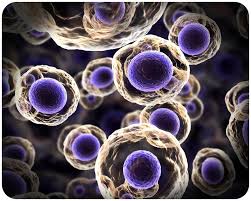
The two kinds of cells are Prokaryotes and Eukaryotes. How are they different?
a)
Prokaryotes have a nucleus.
b)
Eukaryotes have a nucleus.
c)
Prokaryotes are plant cells.
d)
There is no difference.
57.

What cell part is NOT found in all cells?
a)
Cell Wall
b)
Cell Membrane
c)
Cytoplasm
d)
Genetic Material
58.

Complex cell. Can be plant or animal. Contains membrane bound organelles.
a)
Eukaryotic Cell
b)
Prokaryotic Cell
c)
Bacteria
d)
Blood cell
59.
This organelle takes food and turns it into ENERGY for plant and animal cells.
a)
Chloroplast
b)
Mitochondria
c)
Lysosome
d)
Ribosome
60.
The site of photosynthesis
a)
ribosome
b)
mitochondria
c)
chloroplast
d)
nucleus
61.

Which part of the cell is often called "the brain of the cell"?
a)
nuclear membrane
b)
endoplasmic reticulum
c)
nucleus
d)
mitochondria
62.
Where are proteins made?
a)
Golgi body
b)
Mitoichondria
c)
Chromosomes
d)
Ribosomes
63.
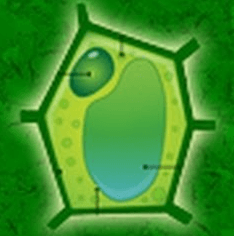
A rigid layer that lies outside the cell's membrane is...
a)
Cytoskeleton
b)
Cilia
c)
Cell Wall
d)
Flagella
64.
What organelle is called the "powerhouse" of a cell?
a)
Endoplasmic Reticulum
b)
Nucleus
c)
Mitochondria
d)
Nucleolus
65.
Main producer of ATP in all eukaryotes
a)
chloroplast
b)
mitochondria
c)
lysosome
d)
smooth er
66.
What is the function of the vacuole?
a)
Sac that stores water, nutrients, and waste products
b)
Sac filled with digestive chemicals
c)
Jelly-like substance within the plasma membrane
d)
stack of membranes that packages chemicals
67.

I store water in both plant and animal cells. What am I?
a)
cytoplasm
b)
ribosomes
c)
vacuole
d)
lysosomes
68.
What can only be found in plant cells?
a)
Cell membrane
b)
Vacuole
c)
Chloroplast
d)
Mitochondrion
69.
Only eukaryotic cells have....
a)
membrane-bound organelles
b)
DNA
c)
ribosomes
d)
cell membranes
70.

What does this organism use for movement?
a)
Pseudopod
b)
Cilia
c)
Flagella
d)
legs
71.

What does this organism use for movement?
a)
Pseudopod
b)
Cilia
c)
Flagella
d)
legs
72.
A nucleus is found in what type of cell?
a)
Prokaryotic
b)
Eukaryotic
c)
Both prokaryotic and eukaryotic
d)
Neither prokaryotic or eukaryotic
73.

The invention of the microscope made it possible for people to discover and learn about
a)
Plants
b)
Skin
c)
Animals
d)
Cells
74.

What is one way in which all living things on Earth are alike?
a)
All living things have hair.
b)
All living things are made of cells and come from other cells.
c)
The cells of all living things have chloroplast.
d)
All living things can move.
75.
What structures distinguish a plant cell from an animal cell?
a)
Plant cells have cell walls and ribosomes.
b)
Plant cells have cell walls and chloroplasts.
c)
Plant cells have chloroplasts and ribosomes.
d)
Plant cells have chloroplasts and mitochondria.
76.
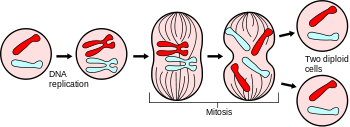
When cells are damaged, new cells are created by cell division. How does the cell theory support this fact?
a)
It states that all cells have a nucleus which divides.
b)
It states that all living things are made up of one or more cells.
c)
It states that cells come from previously existing cells.
d)
It states that the basic units of structure and function are cells.
77.

Which organism is made up of cells that have both a cell membrane and a cell wall?
a)
desert mouse
b)
human
c)
maple tree
d)
zebra
78.
Who looked at cork and named the cell?
a)
Robert Hooke
b)
Van Leeuwenhoek
c)
Robert Brown
d)
Francesco Redi
79.
The Cell Theory states...
a)
atoms create all matter
b)
living things evolve
c)
the cell is the backbone of all matter
d)
cells are the basic unit of structure and organization of organisms
80.
What tool do you use to view the cells?
a)
metric ruler
b)
centrifuge
c)
microscope
d)
pipette
81.
Has membrane bound organelles
a)
Prokaryote
b)
Eukaryote
c)
both
82.
Oldest type of cell
a)
Prokaryote
b)
Eukaryote
c)
both
83.
Smaller
a)
Prokaryote
b)
Eukaryote
c)
both
84.
Has Mitochondria
a)
Prokaryote
b)
Eukaryote
c)
both
85.
Which has ribosomes?
a)
Prokaryote
b)
Eukaryote
c)
both
86.
Has cytoplasm
a)
Prokaryote
b)
Eukaryote
c)
both
87.
Has nucleus
a)
Prokaryote
b)
Eukaryote
c)
both
88.
Bacteria
a)
Prokaryote
b)
Eukaryote
c)
both
89.
Has chloroplast
a)
Prokaryote
b)
Eukaryote
c)
both
90.
more complex
a)
Prokaryote
b)
Eukaryote
c)
both
d)
both
91.
multicellular
a)
Prokaryote
b)
Eukaryote
c)
both
92.
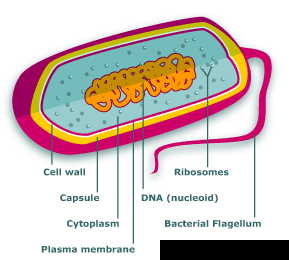
Which type of cell?
a)
Prokaryote
b)
Eukaryote
93.

Which type of cell?
a)
Prokaryote
b)
Eukaryote
94.

Which type of cell?
a)
Prokaryote
b)
Eukaryote
95.
Where is the DNA found in a prokaryotic cell?
a)
floating around in the cytoplasm
b)
in the nucleus
96.
Archaebacteria live in extreme environments
a)
True
b)
False
97.
A ______________ is composed of a phosphate and glycerol head and 2 fatty acid chain tails.
a)
phospholipid
b)
Carbohydrate
c)
Cholesterol
d)
Protein
98.
A phospholipid has 2 parts. What are they called?
a)
Hydrophilic Head, Hydrophobic Tail
b)
Hydrophobic Head, Hydrophilic Tail
99.
___________ have 2 functions in the cell membrane.
1.) They act like gatekeepers, only let certain things in.
2.) Enzyme receptors embedded in the membrane.
1.) They act like gatekeepers, only let certain things in.
2.) Enzyme receptors embedded in the membrane.
a)
Carbohydrates
b)
Proteins
c)
Phospholipids
d)
Cholesterol
100.
It forms a boundary between the inside of the cell and the outside of the cell.
a)
Cell Membrane
b)
Lipid Cleric Layer
c)
Membrane Gate
d)
Protein Receptors
101.
Something is ___________ ____________
when some molecules can cross the membrane while others cannot.
when some molecules can cross the membrane while others cannot.
a)
Selectively (or Semi) Permeable
b)
Totally Transparent
c)
Liquid Licorice
d)
Heavily Patrolled
102.
What is embedded in the phospholipid bilayer?
a)
proteins
b)
salt
c)
water
103.
How does a cell maintain homeostasis?
a)
Regulates what enters and leaves the cell
b)
Flexibility
c)
Protective barrier
d)
Structure and support
104.

Hydrophobic region of the cell membrane?
a)
E
b)
B
c)
C
d)
A
105.

Which letter indicates an integral protein?
a)
E
b)
F
c)
H
d)
I
100 %

