wayground logo

Free Printable Worksheets

NEW

Font size

S
M
L
XL
Worksheets

Chapter 1 Required Review

Total questions: 40

Worksheet time: 28mins

Name
Class
Date
1.
A possible explanation to a problem that has not yet been tested. 
a)
data
b)
theory
c)
hypothesis
d)
fact
2.

This variable in an experiment that is the one being deliberately changed by the scientist.

a)

dependent variable

b)

independent variable

c)

data

d)

control group

3.
There are two types of data. Which type of data involves numbers that are obtained by counting or measuring?
a)
quantitative
b)
qualitative
4.
There are two types of data. Which type of data involves descriptions that cannot be counted or measured?
a)
qualitative
b)
quantitative
5.
The summary at the end of an experiment that explains the results. 
a)
conclusion
b)
procedures
c)
materials
d)
responding variable
6.

The part of the experiment that remains the same for the control and experimental group.

a)

constants (control variables)

b)

control group

c)

independent variable

d)

dependents

7.

What is the part of the experiment that is left alone or “natural", and is used to compare results to?

a)

Independent Variable

b)

Dependent Variable

c)

Control Group

d)

Experimental Group

8.
You will want your experiment to have ____ independent variable(s) in it for the experiment to be valid.
a)
1
b)
2
c)
3
d)
4
9.
What is a factor that the experimenter has full control over and changes to see what happens?
a)
Dependent Variable
b)
Independent Variable
c)
Control group 
d)
Hypothesis
10.
What is a factor that changes because of what the experimenter does?
a)
Dependent Variable
b)
Independent Variable
c)
Control Group
d)
Hypothesis
11.
What skill is a scientist using when she listens to the sounds that an elephant makes?
a)
drawing conclusions
b)
making observations
c)
interpreting data
d)
making a hypothesis
12.
A scientist hypothesizes the the temperature at which an alligator's egg is incubated will determine whether the alligator will be male or female. The independent variable is
a)
the male alligators
b)
the incubator
c)
the gender of the alligator
d)
the temperature
13.
A scientist hypothesizes the the temperature at which an alligator's egg is incubated will determine whether the alligator will be male or female. The dependent variable is
a)
the size of the baby alligators
b)
the gender of the baby alligators
c)
the incubator
d)
the temperature
14.
When you decide whether or not the data supports the original hypothesis, you are
a)
drawing conclusions
b)
forming a hypothesis
c)
asking questions
d)
making observations
15.

In this graph, what is the independent variable?

a)

Population

b)

Day

c)

Species 5

16.
In this graph, what is the dependent variable? 
a)
Walla Walla Island
b)
Time
c)
Number of Deer
17.
A hypothesis is 
a)
a random guess
b)

a possible explanation that answers a question

c)
an experiment
18.
When wanting to have a side by side comparison of data you should use a 
a)
line graph 
b)
pie chart 
c)
bar graph 
19.
When wanting to look at trends and patterns of data you should use a 
a)
line graph
b)
pie chart
c)
bar graph 
20.
Explaining the color of a chemical would be what kind of observation?
a)
Qualitative 
b)
Quanitative
21.
An experiment is performed on plants to see how different liquids affect plant growth. Each plant in the experiment is given a different liquid; water, apple juice, or milk. Each plant has the same amount of soil, sunlight, and listens to the same music. In this investigation, the independent variable is ...
a)
The type of plant
b)
The amount of sunlight
c)
The type of music
d)
The type of liquid
22.
What is the scientific method
a)
Something in science
b)
Just a fun experiment
c)
Process that scientist use to study the world around them.
23.
When is it OK to eat or drink in the lab?
a)
Always
b)
Never
24.
If you break glassware in the lab, you should...
a)
Tell the teacher
b)
Clean it up quickly before the teacher notices
c)
Scream at the top of your lungs
25.
Before leaving the lab you should always wash your hands.
a)
True 
b)
False
26.
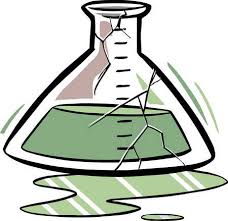
Chipped or cracked glassware is okay to use.
a)
True
b)
False
27.
True or False. It is a bad idea to horse play during lab activities.
a)
True
b)
False
28.
Which of the following best describes the motion of the squirrel between 5 s and 8 s? 
a)
The squirrel's speed increased.
b)
The squirrel's speed decreased.
c)
The squirrel's speed did not change.
d)
The squirrel moved backward.
29.
Which of the following would be considered quantitative data?
a)
Color
b)
Smell
c)
6.84 cm
d)
texture
30.

An inference is an idea based on

a)

scientific explanation

b)

variables that are changed in a lab

c)

previous knowledge

d)

what is observed during the lab

31.

The variable that is observed and data is recorded from during the lab is the

a)

independent variable

b)

control variable

c)

dependent variable

d)

constant variable

32.

Identify the statement as a question, hypothesis, data, or conclusion:

Angela's experiment supported her hypothesis that earthworms move away from light.

a)

Question

b)

Conclusion

c)

Data

d)

Hypothesis

33.

Identify the statement as a question, hypothesis, data, or conclusion:

Kevin said, "If the plants are in white light rather than red light, then they will grow faster".

a)

Question

b)

Conclusion

c)

Data

d)

Hypothesis

34.

Which variable is found on the x-axis of a graph?

a)

Independent variable

b)

Dependent variable

c)

Constant variable

35.

Which variable is found on the y-axis of the graph?

a)

Independent variable

b)

Dependent variable

c)

Constant variable

36.

Smithers predicts that a special juice will increase the number of papers workers can staple. He creates two groups of 50 workers. Group A drinks a special juice and group B does not. Both groups staple papers for one hour. Group A stapled 1, 587 papers. Group B stapled 2, 113 papers.

Which of the following are controlled variables for Smithers experiment?

a)

stapling task and one hour time

b)

Group A and Group B

c)

Number of papers stapled and number of workers

d)

special juice and group A

37.

Smithers predicts that a special juice will increase the number of papers workers can staple. He creates two groups of 50 workers. Group A drinks a special juice and group B does not. Both groups staple papers for one hour. Group A stapled 1, 587 papers. Group B stapled 2, 113 papers.

What is the independent variable in this experiment?

a)

Stapling task

b)

Number of workers

c)

Special juice

d)

Number of papers stapled

38.

Smithers predicts that a special juice will increase the number of papers workers can staple. He creates two groups of 50 workers. Group A drinks a special juice and group B does not. Both groups staple papers for one hour. Group A stapled 1, 587 papers. Group B stapled 2, 113 papers.

What is the dependent variable?

a)

Stapling task

b)

Number of workers

c)

Special juice

d)

Number of papers stapled

39.

Smithers predicts that a special juice will increase the number of papers workers can staple. He creates two groups of 50 workers. Group A drinks a special juice and group B does not. Both groups staple papers for one hour. Group A stapled 1, 587 papers. Group B stapled 2, 113 papers.

True of False: Group A that receives the special juice is the control group.

a)

True

b)

False

40.

Smithers predicts that a special juice will increase the number of papers workers can staple. He creates two groups of 50 workers. Group A drinks a special juice and group B does not. Both groups staple papers for one hour. Group A stapled 1, 587 papers. Group B stapled 2, 113 papers.

True or False: Smithers data supports his hypothesis.

a)

True

b)

False