
 Worksheets
Geography Forces Quiz Review
Total questions: 56
Worksheet time: 14hrs 46mins
Name
Class
Date
1.
What is Continental Drift?
a)
When 2 continental plates drift apart from eachother
b)
When an oceanic plate pulls apart from a continental plate
c)
When the Earth's gravitational pull is affected due to shifting continents
d)
The theory that the continents were once joined together and slowly drifted apart
2.
What is the movement of soil from one place to another?
a)
weathering
b)
deposition
c)
discharge
d)
erosion
3.
Flood water pounding against a canyon wall and wearing it down
a)
Weathering
b)
Erosion
c)
Deposition
4.
Rain washing away soil from a hillside
a)
Weathering
b)
Erosion
c)
Deposition
5.
Caves being formed by acid rain dissolving underground limestone
a)
Weathering
b)
Erosion
c)
Deposition
6.
Water getting into cracks, freezing, and breaking the rocks or pavement apart
a)
Weathering
b)
Erosion
c)
Deposition
7.
Wind blowing sand from one location to another
a)
Weathering
b)
Erosion
c)
Deposition
8.
Wind blasting sand at rock and carving out arches
a)
Weathering
b)
Erosion
c)
Deposition
9.
Glaciers scraping rocks across the earth’s surface
a)
Weathering
b)
Erosion
c)
Deposition
10.
Muddy water being carried away by a fast-moving river
a)
Weathering
b)
Erosion
c)
Deposition
11.
Rocks being made smooth by tumbling across a streambed
a)
Weathering
b)
Erosion
c)
Deposition
12.
Flood waters moving soil from one location to another
a)
Weathering
b)
Erosion
c)
Deposition
13.
All of the following are causes of physical weathering except...
a)
plant growth
b)
wind
c)
acid rain
d)
running water
14.
What is the major cause of weathering and erosion?
a)
wind
b)
ice
c)
glaciers
d)
moving water
15.
The process by which small pieces of rocks and soil are carried away to new locations is called...
a)
deposition
b)
erosion
c)
weathering
d)
faults
16.
The process of breaking up rocks on Earth's surface is called...
a)
sediment
b)
erosion
c)
weathering
d)
deposition
17.
How does freezing water cause the weathering of rocks? The freezing water—
a)
keeps the rocks in place
b)
makes the rocks last longer
c)
expands cracks and breaks rocks
d)
causes rocks to fall in landslides
18.
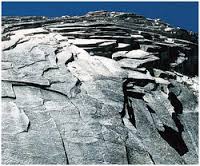
What is mechanical weathering?
a)
Process through which rocks are physically broken into smaller pieces.
b)
Rocks are broken down through chemical changes.
c)
Rocks are worn away from acid in plant roots.
d)
Rocks broken down by machinery.
19.

Acid rain is an example of chemical weathering because
a)
pollution is in the sky
b)
rain connected to dust falls and hits rocks so hard they break.
c)
there is friction between rain and rocks.
d)
pollution gets dissolved in water and falls as rain dissolving rocks over time.
20.
Ice wedging is best described as
a)
a tectonic process
b)
a depositional process
c)
chemical weathering
d)
mechanical weathering
21.
Which layer of Earth is the source of lava that erupts from volcanoes?
a)
inner core
b)
outer core
c)
asthenosphere
d)
lithosphere
22.

The inner core is solid due to _.
a)
the rapidly flowing outer core
b)
the fact it is composed of iron and nickel
c)
the great pressure from the rest of Earth above it
d)
the fact it is spinning so rapidly
23.
This process occurs when a denser oceanic plate sinks beneath a less dense plate.
a)
rifting or seafloor spreading
b)
subduction
c)
shearing
d)
uplift
24.
Most earthquakes and volcanoes occur _.
a)
at plate boundaries
b)
randomly over Earth's surface
c)
in the middle of tectonic plates
d)
along transform boundaries
25.
Boundaries like the San Andreas Fault where plates slide past each other are _.
a)
subduction zones
b)
divergent boundaries
c)
convergent boundaries
d)
transform boundaries
26.
Which type of boundary has plate moving apart?
a)
Divergent
b)
Convergent
c)
Transform
27.
Which type of boundary has plate moving together?
a)
Divergent
b)
Convergent
c)
Transform
28.
Which type of boundary has plate moving past each other?
a)
Divergent
b)
Convergent
c)
Transform
29.
An ocean trench occurs when...
a)
plates divide and magma rises up
b)
oceanic crust subducts below continental crust
c)
we dig a hole in the ocean
d)
when plates slide past each other
30.
What would you be most likely to find at a convergent boundary between two pieces of continental crust?
a)
Volcanos
b)
Mountains
c)
Rift valley
d)
Island Arc (chain of islands)
31.
What was the name given to all the continents when they were joined as one super continent?
a)
Supreme Continent
b)
Eurasia
c)
Plate tectonics
d)
Pangea
32.
Which of these layers is ALL solid iron and nickle?
a)
inner core
b)
outer core
c)
lithosphere
d)
mesosphere
33.
Mountains form from ...
a)
plates sliding past one another
b)
collision of plates
c)
plates moving away from each other
34.
What are the two types of crust
a)
continental and oceanic
b)
ocean and upper
c)
lower and upper
d)
pizza and subway
35.
This layer of Earth is the thickest part
a)
crust
b)
outer core
c)
mantle
d)
inner core
36.
New crust forms at
a)
divergent plate boundaries
b)
convergent plate boundaries
c)
transform fault boundaries
d)
all of the above
37.
All of the following were known to Alfred Wegener as support for his Hypothesis of Continental Drift EXCEPT
a)
fossils found on different continents
b)
fit of the continents
c)
rock type similarities
d)
weather patterns in Greenland
38.
Which ocean is surrounded by the "Ring of Fire"?
a)
Atlantic
b)
Pacific
c)
Indian
d)
Antartic
39.
Before lava reaches the surface it is called
a)
rock
b)
magma
c)
volcanic ash
d)
liquid fire
40.
Small rocky, iron, or icy debris flying in space
a)
meteoroid
b)
asteroid
c)
fireball
d)
bolide
41.
A boundary where two plates move away from each other.
a)
convergent boundary
b)
divergent boundary
c)
transform boundary
d)
sergent boundary
42.
A boundary where two plates slide past each other.
a)
convergent boundary
b)
convergent boundary
c)
transform boundary
d)
sergent boundary
43.
A boundary where two plates collide into each other.
a)
convergent boundary
b)
divergent boundary
c)
transform boundary
d)
sergent boundary
44.
A boundary where two plates collide into each other.
a)
convergent boundary
b)
divergent boundary
c)
transform boundary
d)
sergent boundary
45.
A place where two plates meet; a break in Earth's crust
a)
plate
b)
fault
c)
fold
d)
crack
46.

Name the boundary
a)
convergent boundary
b)
divergent boundary
c)
transform boundary
d)
sergent boundary
47.

Name the boundary
a)
convergent boundary
b)
divergent boundary
c)
transform boundary
d)
sergent boundary
48.

Name the boundary
a)
convergent boundary
b)
divergent boundary
c)
transform boundary
d)
sergent boundary
49.
The theory that pieces of Earth's lithosphere are in constant motion, driven by convection currents in the mantle.
a)
Plate tectonics
b)
Continental drift
c)
convection currents
d)
subduction zone
50.
What is the Mid-Ocean Ridge?
a)
a tall single mountain
b)
a force of water pulling down
c)
a volcanic island
d)
a under water mountain
51.
Which is the largest object in our solar system?
a)
Sun
b)
Jupiter
c)
Earth
d)
Pluto
52.
Which planet is third from the sun?
a)
Mars
b)
Pluto
c)
Venus
d)
Earth
53.
The thinnest layer of the Earth is?
a)
Mantle
b)
Lithosphere
c)
Athenosphere
d)
Crust
54.
This layer of Earth is solid Iron and Nickel
a)
Outer Core
b)
Mantle
c)
Inner Core
d)
Crust
55.
What are the two types of crust
a)
continental and oceanic
b)
ocean and upper
c)
lower and upper
d)
pizza and subway
56.
What is the correct order (starting from the surface) of Earth's layers?
a)
crust, outer core, inner core, mantle
b)
mantle, outer core, inner core, crust
c)
crust, mantle, outer core, inner core
d)
outer core, inner core, crust, mantle
100 %

