
 Worksheets
Scientific Invesigation
Total questions: 45
Worksheet time: 26mins
Name
Class
Date
1.
What is the 5th step of the Scientific Method?
a)
Purpose
b)
Conclusion
c)
Analysis
d)
Hypothesis
2.
There are two types of data. Which type of data involves numbers that are obtained by counting or measuring?
a)
quantitative
b)
qualitative
c)
inference
3.
The summary at the end of an experiment that explains the results.
a)
conclusion
b)
procedures
c)
materials
d)
responding variable
4.
A series of steps used by scientists to solve a problem or answer a question.
a)
scientific method
b)
recipe
c)
data collection
d)
metric system
5.

Which statement is an inference about this picture?
a)
The van is tan.
b)
The van ran into KFC.
c)
The driver was hungry.
d)
Red and white are part of the KFC building.
6.
Mr. S sets up an experiment to see how the mass of a ball affects the distance it rolls off a ramp. Identify the independent variable.
a)
distance traveled by the ball
b)
height of the ramp
c)
mass of the ball
d)
weight of the ball
7.
Mr. S sets up an experiment to see how the mass of a ball affects the distance it rolls off a ramp. Identify the dependent variable.
a)
height of the ramp
b)
distance traveled by the ball
c)
mass of the ball
d)
weight of the ball
8.
When experimenting with the growth of a plant, a scientist uses three (of the same type of) plants, two different fertilizers, equal light, and equal water. What type of variable is the fertilizer?
a)
Dependent
b)
Independent
c)
Control
d)
Compound
9.
Qualitative data relies on numbers.
a)
False
b)
True
10.
What is a hypothesis?
a)
A hypothesis is the right answer to an experiment.
b)
A hypothesis is the wrong answer to an experiment.
c)
A hypothesis is an educated guess.
d)
I don't know.
11.
Which is NOT a step in the scientific method?
a)
Make observation
b)
Form a theory
c)
Collect data
d)
Form a hypothesis
12.
What step does every scientific experiment begin with?
a)
hypothesis
b)
question/problem
c)
procedures
d)
conclusion
13.
Which of these contains steps in the right order?
a)
Ask a question, state your hypothesis, research, experiment, analyze, make a conclusion
b)
State your hypothesis, ask a question, research, experiment, analyze, make a conclusion
c)
Ask a question, research, state your hypothesis, experiment, analyze, make a conclusion
d)
State your hypothesis, ask a question, research, make a conclusion, experiment, analyze
14.
Should experiments be repeated over and over to see if the results are the same each time?
a)
yes
b)
no
15.
Dependent variable means
a)
the scientist controls what to test
b)
educated guess
c)
ask a question
d)
what is being measured
16.

What is being kept constant?
a)
ramp height
b)
speed of the ball rolling
c)
type of ball
17.
What is a constant in an experiment?
a)
Things that do not change in an experiment. It's the variable that stays the same. You can have many variables stay the same.
b)
It's the variables that the scientist changes in the experiment
c)
It's the variables that are being measured in an experiment
18.
The independent variable is the ONE thing you _____.
a)
change on purpose
b)
control or keep constant
c)
measure
19.
Which of the following would be considered quantitative data?
a)
Color
b)
Smell
c)
6.84 cm
d)
texture
20.
What is the part of the experiment that is left alone or “natural", and is used to compare back to?
a)
Independent Variable
b)
Dependent Variable
c)
Control Group
d)
Experimental Group
21.
The amount of space taken up by an object
a)
Mass
b)
Volume
c)
Density
d)
Weight
22.
The curve of the liquid
a)
Mass
b)
Meniscus
c)
Density
d)
Weight
23.
Standard measurement system based on the number 10
a)
Metric System
b)
International System of Units (SI)
c)
Density
d)
Weight
24.
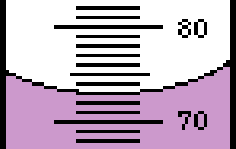
Measure to the nearest milliliter.
a)
73 mL
b)
73.0 mL
c)
76 mL
d)
76.1 mL
25.
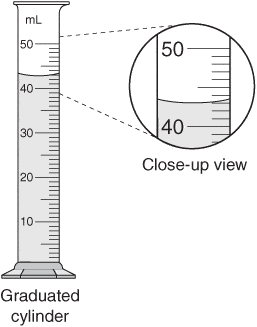
What measurement is taken with this instrument?
a)
weight
b)
mass
c)
volume
d)
distance
26.
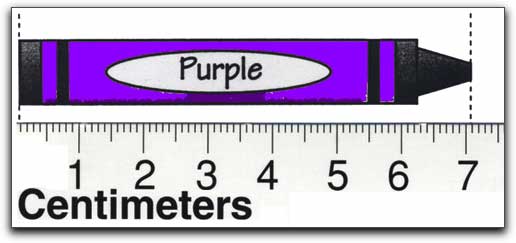
What type of measurement is used with this instrument?
a)
volume
b)
length
c)
mass
d)
weight
27.
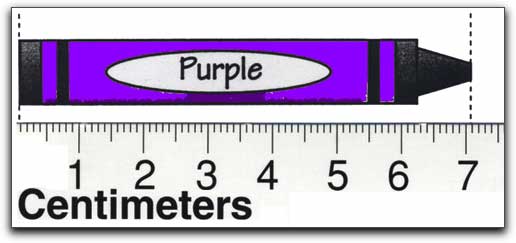
Read this scientific tool to the nearest millimeter.
a)
7.1 mm
b)
7.0 cm
c)
71 mm
d)
71 cm
28.
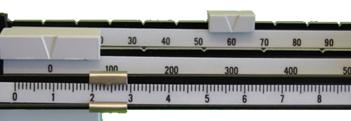
Read this instrument and include the appropriate unit.
a)
62 g
b)
62.4 grams
c)
63 grams
d)
63.0 g
29.
What is the abbreviation for grams?
a)
g
b)
gr
c)
G
d)
Gr
30.
What instrument should be used if the directions tell you to measure to the nearest gram?
a)
triple beam balance
b)
beaker
c)
graduated cylinder
d)
metric ruler
31.
What instrument should be used if the lab directions ask you to measure to the nearest milliliter?
a)
graduated cylinder
b)
triple beam balance
c)
Erlenmeyer flask
d)
meter stick
32.
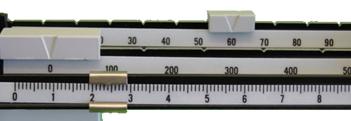
What is the name of this scientific instrument?
a)
graduated balance
b)
triple beam balance
c)
triple beam scale
d)
graduated scale
33.
What would you use to weigh a large dog?
a)
gram
b)
centimeter
c)
cup
d)
kilogram
34.

1. The base unit for the length in metric system is:
a)
centimeters
b)
meters
c)
inches
d)
yards
35.
This tool can measure in Celsius or Fahrenheit....
a)
speed gauge
b)
ruler
c)
glassware
d)
thermometer
36.

It is 95 degrees today
a)
Qualitative Observation
b)
Quantitative Observation
c)
Inference
37.

The grass is wet. It must have rained
a)
Qualitative Observation
b)
Quantitative Observation
c)
Inference
38.

It is sunny today
a)
Qualitative Observation
b)
Quantitative Observation
c)
Inference
39.
How many millimeters are in a meter?
a)
100
b)
1000
c)
10,000
d)
10
40.
What is an inference?
a)
a question
b)
an observation
c)
conclusion or deduction based on observations
d)
unit of measurement for mass
41.

What is the volume of the rock? Note: 1 mL = 1 cm3
a)
20 cm3
b)
10 cm3
c)
10.3 cm3
d)
30 cm3
42.
What is the 3rd step of the scientific method?
a)
Analysis
b)
Hypothesis
c)
Conclusion
d)
Research
43.
What step of the Scientific Method is where you would use google, textbooks, or prior knowledge to gather background information?
a)
Conclusion
b)
Experiment
c)
Hypothesis
d)
Research
44.

What is the temperature of this thermometer?
a)
17°C
b)
63°C
c)
17°F
d)
63°F
45.

At what position should you read the volume of the water in the graduated cylinder?
a)
1
b)
2
c)
3
d)
4
100 %

