
 Worksheets
Rocks, Weathering and Erosion
Total questions: 51
Worksheet time: 48mins
Name
Class
Date
1.
Extreme Heat and Pressure creates a _________ rock.
a)
Igneous
b)
Metamorphic
c)
Sedimentary
d)
Mineral
2.
True or False: Once a rock is sedimentary, it cannot become an igneous rock.
a)
True
b)
False
3.

This rock started as lava that cooled and then was heated and put under pressure over time. What type of rock is this?
a)
Sedimentar
b)
Igneous
c)
Metamorphic
4.

This rock was molten magma that slowly cooled under the ground. What type of rock is this?
a)
Sedimentary
b)
Igneous
c)
Metamorphic
5.
The three groups of rocks are classified by
a)
How they form
b)
Color
c)
Grain size
d)
Chemical Composition
6.
Fossils are only found in
a)
Sedimentary rocks
b)
Foliated Metamorphic rocks
c)
Igneous Rocks
d)
Nonfoliated Metamorphic rocks
7.

This rock formed when bits of other rocks became pressed into a solid. What type of rock is it?
a)
Sedimentary Rock
b)
Metamorphic Rock
c)
Igneous Rock
8.

This rock was formed when magma cooled very slowly inside the Earth. What specific type of rock is it?
a)
Intrusive Igneous Rock
b)
Extrusive Igneous Rock
c)
Foliated Metamorphic Rock
d)
Clastic Sedimentary Rock
9.

This rock formed when lava cooled very quickly on Earth's surface. What specific type of rock is it?
a)
Extrusive Igneous Rock
b)
Intrusive Igneous Rock
c)
Non-Foliated Metamorphic Rock
d)
Biochemical Sedimentary Rock
10.
What are the 3 major types of rocks?
a)
Igneous, Metamorphic, Sedimentary
b)
Metamorphic, Igneous, Cementation
c)
Brown, Red, Gray
d)
Streak, Hardness, Breakage
11.
Two ways to describe types of igneous rocks are _____
a)
Extrusive and Intrusive
b)
Foliated and Non-Foliated
c)
Clastic and Biochemical
d)
Black and Gray
12.
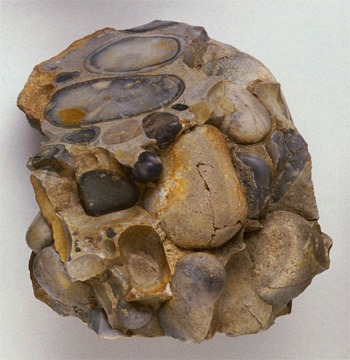
This rock was formed by smaller pieces of rock that settled at the bottom of a lake millions of years ago. What type of rock is this?
a)
Sedimentary
b)
Igneous
c)
Metamorphic
13.
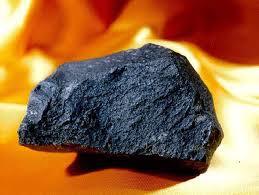
This rock was found near the mouth of a volcano. What type of rock is this?
a)
Sedimentary
b)
Igneous
c)
Metamorphic
14.

The process when rocks break into smaller pieces due to exposure to natural elements is called
a)
erosion
b)
weathering
c)
sediments
15.
The movement of weathered material (sediment) is called?
a)
weathering
b)
erosion
c)
deposition
16.
This rock was formed when molten rock cooled into a solid. What type of rock is it?
a)
Igneous Rock
b)
Metamorphic Rock
c)
Sedimentary Rock
17.

Each rock type can follow only one pathway of the rock cycle.
a)
True
b)
False
18.
The movement of weathered material (sediment) is called?
a)
weathering
b)
erosion
c)
deposition
19.
What has to increase for metamorphism to occur?
a)
weathering and erosion
b)
temperature and pressure
c)
melting and cooling
d)
compaction ad cementation
20.
What is erosion?
a)
The breaking down of rocks
b)
The movement of broken down rocks
c)
Where water expands and contracts
21.
What is weathering?
a)
The breaking down of rocks
b)
The movement of broken down rocks
c)
The weather
22.
An igneous rock can become ______.
a)
metamorphic
b)
sedimentary
c)
igneous
d)
all of these
23.

Which two processes result in the formation of igneous rock?
a)
Burial and cementing
b)
Weathering, erosion, and deposition
c)
Recrystallization and cementation
d)
Melting and solidification
24.
What is process in which water, wind, and heat break down rock?
a)
weathering
b)
exfoliation
c)
cementation
d)
composition
25.
When magma cools quickly, what kind of texture does rock have?
a)
coarse grained
b)
large grained
c)
medium grained
d)
fine grained
26.
process by which new rock is made from old rock
a)
rock
b)
texture
c)
rock cycle
d)
composition
27.
When rocks are broken down into smaller pieces
a)
erosion
b)
weathering
c)
sediment
28.
Particles of rock, sand, soil, plant and animal remains
a)
erosion
b)
sediment
c)
weathering
29.
When water, ice and wind move particles of rock and soil from one place to another
a)
sediment
b)
weathering
c)
erosion
30.
Erosion caused by _______________ changes beaches and lakes
a)
glaciers
b)
ice
c)
waves
31.
Weathering happens when _____________ are broken down into smaller pieces
a)
Rocks
b)
Plants
c)
Grass
32.
Water, wind, gravity, ice, plants are all part of this kind of weathering
a)
Chemical
b)
Mechanical
c)
Humid
33.
Most soil erosion occurs when rainwater
a)
soaks into the ground
b)
Lies in a puddle in a field
c)
Flows across the ground
34.
Which event is an example of erosion?
a)
Snow falls during a storm
b)
Rocks slide down a hill slide
c)
A plant grows on a sandy beach
35.
Sand dunes normally shift position through the action of
a)
Wind
b)
Rivers
c)
Earthquakes
36.
"Mountains are constantly being washed into the sea" ... this statement refers to the effects of
a)
Weathering and erosion
b)
Folding and faulting
c)
Fossil formation
37.
Which size rock will weather the fastest
a)
A large rock
b)
A small rock
c)
A medium sized rock
38.
Roots break apart a side walk
a)
Chemical weathering
b)
Physical weathering
39.
Carbon dioxide in rainwater dissolves limestone
a)
Chemical weathering
b)
Mechanical weathering
40.
Rain washing away soil from a hillside
a)
Weathering
b)
Erosion
41.
Water getting into cracks, freezing, and breaking the rocks or pavement apart
a)
Weathering
b)
Erosion
42.
Wind blowing sand from one location to another
a)
Weathering
b)
Erosion
43.
Wind blasting sand at rock and carving out arches
a)
Weathering
b)
Erosion
44.
Flood waters moving soil from one location to another
a)
Weathering
b)
Erosion
45.
What is sediment?
a)
the process of rocks being broken down and carried away
b)
bits of rock and sand caused by the weathering of rocks
c)
the top layer of the soil
d)
decaying plant or animal material
46.
The process by which small pieces of rocks and soil are carried away to new locations is called...
a)
weathering
b)
erosion
47.
How does freezing water cause the weathering of rocks? The freezing water—
a)
keeps the rocks in place
b)
makes the rocks last longer
c)
expands cracks and breaks rocks
d)
causes rocks to fall in landslides
48.
Flood water pounding against a canyon wall and wearing it down
a)
Weathering
b)
Erosion
49.
Which of the following is NOT a type of chemical weathering?
a)
water
b)
carbon dioxide
c)
ice wedging
d)
living organisms secreting acid to break down rocks
50.
What is erosion?
a)
The process by which
water, ice, wind or gravity
moves fragments of rock
and soil.
water, ice, wind or gravity
moves fragments of rock
and soil.
b)
The process by which
water, ice, wind or gravity
deposit rock sediments
and soil in a new place.
water, ice, wind or gravity
deposit rock sediments
and soil in a new place.
c)
The breaking down of
Earth’s crust into smaller
and smaller pieces.
Earth’s crust into smaller
and smaller pieces.
51.
Which of the following is NOT a type of physical weathering?
a)
burrowing plants
b)
ice wedging
c)
plant roots
d)
acid rain
100 %

