
 Worksheets
PS benchmark review
Total questions: 109
Worksheet time: 1hrs 22mins
Name
Class
Date
1.
A possible explanation to a problem that has not yet been tested.
a)
data
b)
theory
c)
hypothesis
d)
fact
2.
This variable in an experiment is the one being deliberately changed by the scientist.
a)
dependent variable
b)
independent variable
c)
data
d)
control group
3.
An experiment is performed on plants to see how different liquids affect plant growth. Each plant in the experiment is given a different liquid; water, apple juice, or milk. Each plant has the same amount of soil, sunlight, and listens to the same music. In this investigation, what is the dependent variable?
a)
Type of plant
b)
Water, apple juice, milk
c)
Plant growth
d)
Color of the plant's leaves
4.
Which axis does the independent variable go on?
a)
X-axis
b)
Y-axis
c)
Both the X-axis and Y-axis
d)
neither the X-axis or Y-axis
5.
When collecting data, where do we put it first?
a)
data table
b)
graph
c)
anywhere on the paper
d)
we just memorize it
6.
If I study for my scientific method quiz, then I will have a better test score. What is the dependent variable?
a)
Scientific Method
b)
Studying
c)
Independent variable
d)
Test score
7.

What is the volume of Object X?
a)
10.0 cm3
b)
15.0 cm3
c)
20.0 cm3
d)
25.0 cm3
8.

What is the independent variable?
a)
cost of mowing
b)
Moe's Mowing Service
c)
$18
d)
Mowing Time
9.
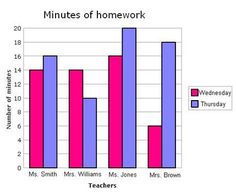
Which day had more minutes of homework?
a)
Wednesday
b)
Thursday
c)
Friday
d)
Ms. Jones
10.
What is the mode of this set of numbers?
{10, 20, 35, 35, 55}
{10, 20, 35, 35, 55}
a)
31
b)
35
c)
155
d)
52
11.
What is the median of this set of numbers?
{10, 20, 35, 35, 55}
{10, 20, 35, 35, 55}
a)
31
b)
35
c)
155
d)
52
12.
What is the mean of this set of numbers?
{10, 20, 35, 35, 55}
{10, 20, 35, 35, 55}
a)
31
b)
35
c)
155
d)
52
13.
Blue Color
a)
Physical Property
b)
Chemical Property
14.
Density
a)
Physical Property
b)
Chemical Property
15.
Flammability (burns)
a)
Physical Property
b)
Chemical Property
16.
Solubility (dissolves)
a)
Physical Proeprty
b)
Chemical Property
17.
Reacts with acid
a)
Physical Property
b)
Chemical Property
18.
Reacts with acid
a)
Physical Property
b)
Chemical Property
19.
Supports combustion
a)
Physical Property
b)
Chemical Property
20.
Reacts with water
a)
Physical Property
b)
Chemical Property
21.
Hardness
a)
Physical Property
b)
Chemical Property
22.
Your friend decides to toast a piece of bread, but leaves it in the toaster too long. The bread is black and the kitchen if full of smoke.
a)
Physical Change
b)
Chemical Change
23.
A student removes a loaf of bread hot from the oven. The student cuts a slice off the loaf and spreads butter on it.
a)
Physical Change
b)
Chemical Change
24.
You forgot to dry the bread knife when you washed it and reddish brown spots appeared on it.
a)
Physical Change
b)
Chemical Change
25.
You blow dry your wet hair.
a)
Physical Change
b)
Chemical Change
26.
In baking biscuits and other quick breads, the baking powder reacts to release carbon dioxide bubbles. The carbon dioxide bubbles cause the dough to rise.
a)
Physical Change
b)
Chemical Change
27.
You take out your best silver spoons and notice that they are very dull and have some black spots.
a)
Physical Change
b)
Chemical Change
28.
A straight piece of wire is coiled to form a spring.
a)
Physical Change
b)
Chemical Change
29.
Food color is dropped into water to give it color.
a)
Physical Change
b)
Chemical Change
30.
In a fireworks show, the fireworks explode giving off heat and light.
a)
Physical Change
b)
Chemical Change
31.
Chewing food to break it down into smaller particles represents a _________ change, but the changing of starch into sugars by enzymes in the digestive system represents a ___________change.
a)
Chemical then Physical
b)
Physical then Chemical
c)
Both Physical
d)
Both Chemical
32.
If an acid is combined with a base of equal strength, the result will most likely be
a)
a neutral solution.
b)
a stronger acid.
c)
impossible to tell without testing the pH.
d)
a stronger base
33.
Holly has an unknown substance in a beaker. She wants to determine the relative pH of the unknown substance. She places a piece of blue litmus paper into the substance, and the litmus paper stays blue.
The substance in the beaker
The substance in the beaker
a)
is a base.
b)
has a neutral pH.
c)
is an acid.
d)
does not have a pH.
34.
Which of the following is a base?
a)
orange juice
b)
water
c)
vinegar
d)
dishwashing detergent
35.
The pH of a solution is tested, and it is found to be a basic solution. Of the following choices, what could the pH have been?
a)
3
b)
9
c)
7
d)
5
36.
Which of the following is an acid?
a)
shampoo
b)
baking soda
c)
orange juice
d)
water
37.
Human blood has a pH between 7.35 and 7.45. Which of the following best describes human blood?
a)
strongly acidic
b)
slightly acidic
c)
strongly basic
d)
slightly basic
38.
What would be considered the weakest base?
a)
8
b)
14
c)
7.8
d)
11.6
39.
Many cleaning solutions are bases. Which of the following is a property of most bases?
a)
feels slippery
b)
white color
c)
can only be liquid
d)
tastes sour
40.
Pure water has a pH of 7. Pure water _______.
a)
is a base
b)
is a neutral substance
c)
could be either an acid or a base
d)
is an acid
41.
Which of the following word pairs correctly completes the sentence below?
_______ are corrosive substances characterized as having a strong smell, a sour taste, and a _______.
_______ are corrosive substances characterized as having a strong smell, a sour taste, and a _______.
a)
Acids; pH less than 7
b)
Acids; pH greater than 7
c)
Bases; pH greater than 7
d)
Bases; pH less than 7
42.

Which form of matter has a definite shape and takes up space (has definite volume)?
a)
liquid
b)
solid
c)
gas
d)
clay
43.

Which form of matter take the shape of a container like this juice?
a)
liquid
b)
solid
c)
glass
d)
gas
44.

Which form of matter fills the space like it has in the balloon?
a)
liquid
b)
string
c)
solid
d)
gas
45.
What is happening when my ice cream changes from a solid to a liquid?
a)
freezing
b)
melting
c)
burning
d)
evaporation
46.
What is happening when my water bottle in the freezer goes from a liquid state to a solid state?
a)
melting
b)
evaporating
c)
freezing
d)
cutting
47.
Which form of matter does not take the shape of its container?
a)
liquid
b)
gas
c)
solid
d)
air
48.

What is this tool called?
a)
Beaker
b)
Flask
c)
Graduated Cylinder
d)
Measuring Cup
49.
The base unit of metric length.
a)
Meter
b)
Liter
c)
Kilogram
d)
milligram
50.
The correct abbreviation for milliliter is..
a)
ML
b)
Ml
c)
mL
d)
ml
51.
How many cm's is in a meter?
a)
1000
b)
10
c)
100
d)
1
52.
The width of a kernel of corn would be about...
a)
4 cm
b)
4 mm
c)
4 m
53.
m stands for....
a)
millimeter
b)
meter
c)
centimeter
d)
Liter
54.

What is the volume?
a)
50.0 mL
b)
53.0 mL
c)
54.0 mL
55.

What is the length of the eraser?
a)
3 cm
b)
2 cm
c)
5 cm
d)
7 cm
56.

What is this scientific tool?
a)
beaker
b)
tube
c)
graduated cylinder
d)
balance
57.

What is the volume of liquid in this graduated cylinder?
a)
40.0 mL
b)
40.3 mL
c)
43.0 mL
d)
44.0 mL
58.

At which point should your eyes be when you read a graduated cylinder? (Hint: see the letter next to the eye)
a)
A
b)
B
c)
C
59.

Calculate the volume of the rock
a)
10.0 cm3
b)
16.0 cm3
c)
30.0 cm3
d)
40.0 cm3
60.

What is the volume of the fish?
a)
18.0 cm3
b)
6.0 cm3
c)
38.0 cm3
61.

How much water should be added to raise the volume to 20mL?
a)
1.0 mL
b)
2.0 mL
c)
3.0 mL
d)
4.0 mL
62.
Which type(s) of substances are considered pure substances?
a)
Elements only
b)
Compounds only
c)
Mixtures only
d)
Elements and compounds
63.
This type of substance is made up of one type of atom.
a)
Element
b)
Compound
c)
Mixture
64.
Which of the following requires a physical change to separate?
a)
Element
b)
Compound
c)
Mixture
65.
This is the smallest substance that can make up a substance while keeping its identity.
a)
Atom
b)
Molecule
c)
Element
d)
Compound
66.
What type of substance is being represented: O2?
a)
Element
b)
Compound
c)
Mixture
67.
Max combines water and hydrogen to form water. What type of substance was formed?
a)
Element
b)
Compound
c)
Mixture
68.
This type of substance is formed through a chemical change.
a)
Element
b)
Compound
c)
Mixture
69.
Which option shows only elements?
a)
NaCl, MgO, OH
b)
O, He, H,
c)
OH, He, Al
d)
O+H, He+Al
70.
What type of substance is the atmosphere?
a)
Element
b)
Compound
c)
Mixture
71.
Jay combines water, sugar, and lemon juice to form lemonade. What type of substance was made?
a)
Element
b)
Compound
c)
Mixture
72.
Which type of substance cannot be broken down into simpler substances?
a)
Element
b)
Compound
c)
Mixture
73.
Which of the following is NOT considered a pure substance?
a)
Element
b)
Compound
c)
Mixture
74.
Which of the following lists only elements?
a)
H2O + OH, MgCl2
b)
H2O, KF, Ne
c)
KCl, Ag, Au
d)
K, Cl, N
75.
Which of the following makes up air, water, and gold?
a)
Protons
b)
Neutrons
c)
Electrons
d)
Atoms
76.
Can oxygen be broken down to a simpler substance?
a)
Yes
b)
No
77.

What is the atomic number of Chlorine (Cl)?
a)
17
b)
Cl
c)
35.453
d)
Chlorine
78.

The number of protons and electrons are the same as
a)
Neutrons
b)
Atomic number
c)
atomic mass
d)
Electron shells
79.

The section labeled D is known as the?
a)
Electron cloud
b)
Neutron
c)
Nucleus
d)
Electron
80.

Letter A Is positively charged particle called?
a)
Neutron
b)
Proton
c)
Electron
d)
Atom
81.

The smallest unit of matter is called?
a)
An electron
b)
An element
c)
An atom
d)
A solid
82.
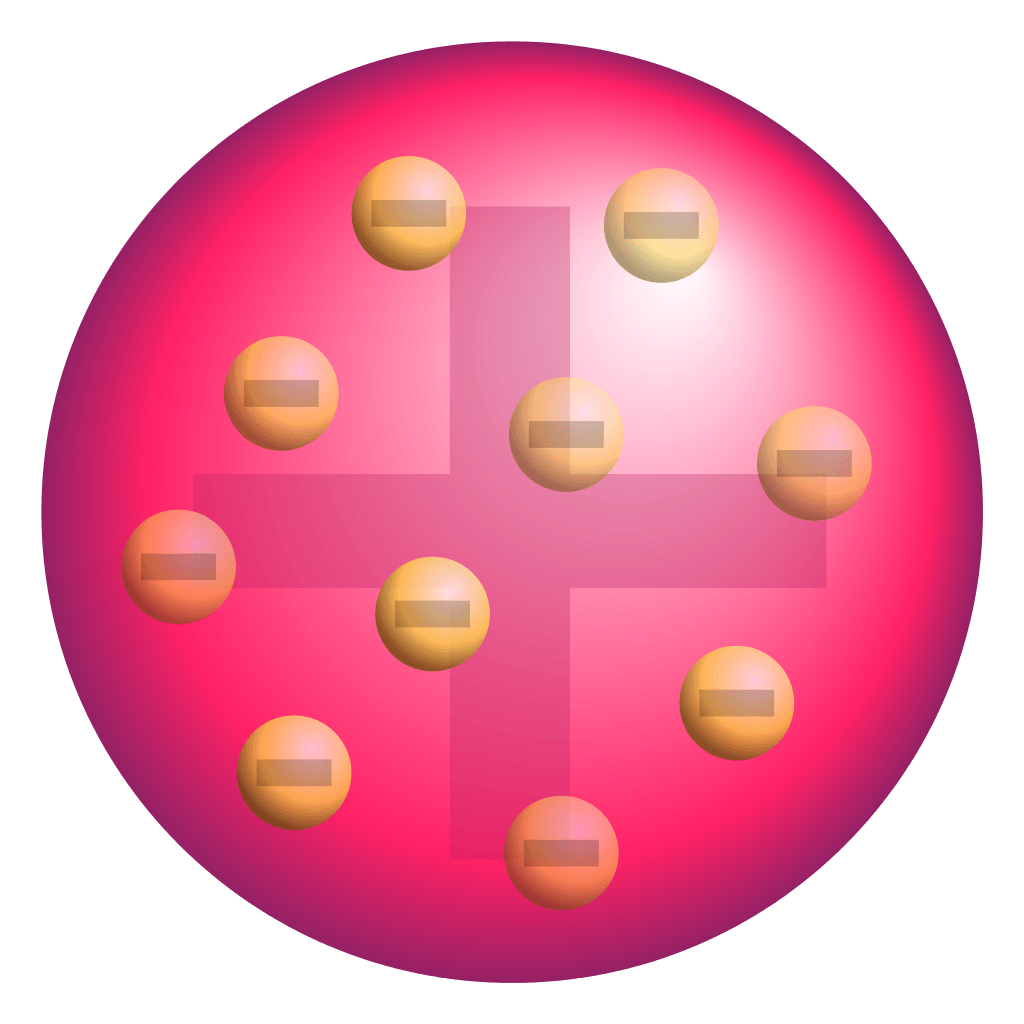
This model was developed after J.J. Thompson discovered electrons, a particle smaller than an atom. Is shows electrons floating freely in a positive space.
a)
The "Plum Pudding Model" of the atom
b)
The "Rutherford Model" of the atom
c)
Democritus's model of the atom
d)
The "Quantum Mechanical Model" of the atom
83.

How many protons are in this element?
a)
79
b)
196
c)
117
d)
Cannot be determined
84.
His atomic model included a dense positive core in an atom, surrounded by negatively charged particles
a)
Joseph Thomson
b)
Niels Bohr
c)
Ernest Rutherford
85.
In the modern periodic table elements are arranged by:
a)
atomic mass
b)
atomic number
c)
valence electrons
d)
number of isotopes
86.
Each column in the periodic table is called a
a)
period
b)
group
c)
cluster
d)
unit
87.
The atomic number tells you what?
a)
number of electrons
b)
number of protons
c)
number of neutrons
d)
both electrons and protons in an atom.
88.
Which group of the periodic table is composed of inert (not reactive) gases?
a)
alkali metals
b)
alkaline earth metals
c)
halogens
d)
noble gases
89.
Elements which are shiny, conduct electricity and heat are called
a)
metal
b)
nonmetal
c)
metalloid
d)
nonexistent
90.
Which element is not a metal?
a)
H
b)
Re
c)
Al
d)
B
91.

The atoms along the staircase are called
a)
metals
b)
nonmetals
c)
metalloids
d)
noble gases
92.
Which is a halogen?
a)
Helium
b)
Chlorine
c)
Oxygen
d)
Neptune
93.
Which is an alkali metal?
a)
Magnesium
b)
Iron
c)
Sodium
d)
Europium
94.
If an atom had the same properties as fluorine (F), it would probably be located in
a)
period 1.
b)
period 2.
c)
group 2.
d)
group 17.
95.

How many protons are in Beryllium?
a)
4
b)
9
c)
5
d)
2
96.
Ionic Bonding involves...
a)
The transfer of protons
b)
The transfer of nuetrons
c)
The transfer of electrons
d)
None Of the above
97.

What elements generally make an ionic bond?
a)
metal and nonmetal
b)
2 or more nonmetals
c)
metal
d)
none of the above
98.

What elements generally make a covalent bond?
a)
metal and nonmetal
b)
2 or more nonmetals
c)
metal
d)
none of the above
99.
Energy due to motion is ____________ energy.
a)
Potential
b)
Energy
c)
Kinetic
d)
Friction
100.
The faster an object moves, the ________ kinetic energy it has.
a)
more
b)
less
c)
none of the above
d)
all of the above
101.
__________ is stored energy.
a)
Potential
b)
Kinetic
c)
None of the above
d)
All of the above
102.
Gravitational potential energy depends on the ________ and ________ of the object.
a)
Height and mass
b)
Friction and movement
c)
Mass and Movement
d)
Height and Friction
103.
When you stretch a rubber band, you are storing __________ energy.
a)
kinetic
b)
potential
c)
none of the above
d)
all of the above
104.

which point has the most potential energy
a)
G
b)
f
c)
b
d)
a
105.
can energy be changed
a)
yes
b)
no
106.

What kind of energy is in a moving skateboard?
a)
Potential
b)
Kinetic
107.

What kind of energy is in a rock at the edge of a cliff?
a)
Potential
b)
Kinetic
108.
What is the Law of Conservation of mass?
a)
Mass is created in a chemical reaction
b)
Mass is created in a physical change
c)
New chemicals formed from a chemical reaction have a larger overall mass than the original reactants
d)
Mass is never created or destroyed
109.
____________ is the ability to cause change.
a)
Energy
b)
Force
c)
Friction
d)
Motion
100 %

