
 Worksheets
Unit 4&5 Test Review
Total questions: 80
Worksheet time: 1hrs 3mins
Name
Class
Date
1.
all matter is made of what
a)
energy
b)
atoms
c)
electrons
d)
compounds
2.
The positive particles of an atom are
a)
electrons
b)
positrons
c)
neutrons
d)
protons
3.
the central region of an atom where its neutrons and protons are is its
a)
nucleus
b)
electron cloud
c)
core
d)
center
4.
an atom with atomic number 6 would have how many protons
a)
6
b)
12
c)
3
d)
cannot be determined
5.
Particles in an atom that are neutral and have no charge are
a)
negatrons
b)
electrons
c)
neutrons
d)
protons
6.
True or False? Neutrons have a negative charge
a)
True
b)
False
7.
What is the atomic number for an element with three protons?
a)
2
b)
1
c)
3
d)
6
8.
A particle that moves around the nucleus is a(n)...
a)
Proton
b)
Neutron
c)
Electron
d)
Quark
9.

What does the 1.00794 stand for?
a)
Hydrogen
b)
atomic number
c)
atomic mass
d)
atomic explosion
10.
In the modern periodic table elements are arranged by:
a)
atomic mass
b)
atomic number
c)
valence electrons
d)
number of isotopes
11.
Which of the following is a negatively charged subatomic particle?
a)
Electron
b)
Proton
c)
Neutron
d)
Quark
12.
The particles that are found in the nucleus of an atom are
a)
neutrons and electrons
b)
electrons only
c)
protons and neutrons
d)
protons and electrons
13.
Which of the following is a positively charged subatomic particle found in the nucleus of an atom?
a)
Electron
b)
Proton
c)
Neutron
d)
Quark
14.
Which of the following is a subatomic particle with no charge that is found in the nucleus of an atom?
a)
Electron
b)
Proton
c)
Neutron
d)
Quark
15.
Where are electrons of an atom found?
a)
Nucleus
b)
Electron Cloud
c)
Some are in the nucleus and some in the electron cloud.
d)
They are moving everywhere.
16.
"C" is the element symbol for which element?
a)
calcium
b)
carbon
c)
chlorine
d)
cadmium
17.
What is the atomic symbol for sodium?
a)
Na
b)
So
c)
NaCl
d)
S
18.
A particle that moves around the nucleus is a(n)...
a)
Proton
b)
Neutron
c)
Electron
d)
Quark
19.
Most of the mass in an atom is concentrated in the...
a)
electrons
b)
nucleus
c)
protons
d)
empty space
20.
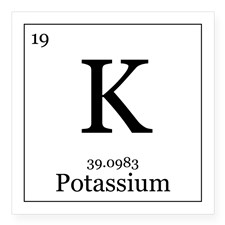
How many neutron are in the atom "K"?
a)
7
b)
2
c)
39
d)
12
21.
What does the nucleus consist of?
a)
Protons + Electrons
b)
Neutrons + Electrons
c)
Atoms
d)
Protons + Neutrons
22.

What is the number of protons that the element in this image contain?
a)
14
b)
7
c)
15
d)
18
23.
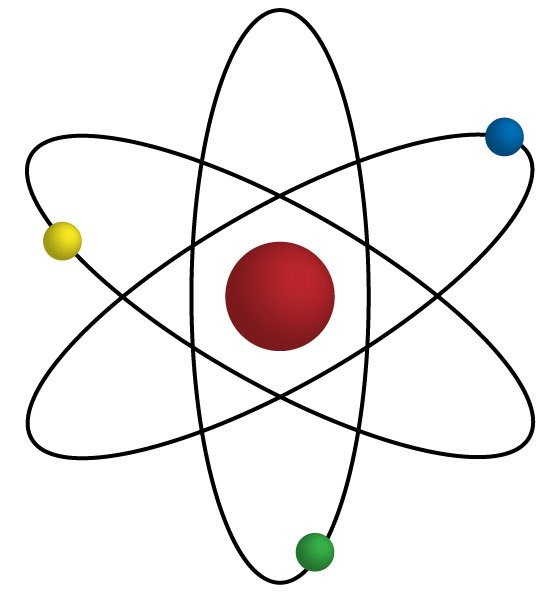
What are the 3 particles that make-up the atom?
a)
protons, neutrons, and isotopes
b)
neutrons, isotopes, and electrons
c)
positives, negatives, and electrons
d)
protons, neutrons, and electrons
24.
What is the mass number?
a)
the number of protons
b)
the number of protons and neutrons
c)
the number of neutrons
d)
the number of protons and electrons
25.
What is the atomic number?
a)
the number of protons
b)
the number of protons and neutrons
c)
the number of neutrons
d)
the number of protons and electrons
26.
If an atom has 10 protons, 10 neutrons, and 10 electrons, what is the mass of the atom?
a)
10
b)
20
c)
30
27.
Which one of these is NOT located in the element square on the Periodic Table?
a)
Atomic Number
b)
Atomic Mass
c)
Room Temperature
d)
Chemical Symbol
28.

What is the atomic mass of "F"
a)
9
b)
18
c)
17
d)
19
29.
Which statement best describes an electron?
a)
Smaller mass than a proton and a negative charge
b)
Smaller mass than a proton and a positive charge
c)
Greater mass than a proton and a negative charge
d)
Greater mass than a proton and a positive charge
30.
Anything that has mass and takes up space is called
a)
heterogeneous
b)
homogeneous
c)
matter
d)
density
31.

What element is this?
a)
Helium
b)
Hydrogen
c)
Argon
d)
Silver
32.
Which of the following neutral element has 18 electrons?
a)
Flourine
b)
Helium
c)
Argon
d)
Chlorine
33.

Sodium has an atomic number of 11, how many protons does this atom have?
a)
22
b)
11
c)
12
d)
2
34.
Valence electrons are:
a)
Electrons farthest away from the nucleus
b)
Electrons closest to the nucleus
c)
Electrons that just come and go - they don't stay with the atom
35.
How many neutrons are in Phosphorus (P) ?
a)
15
b)
31
c)
16
d)
14
36.
How many electrons are in neutral Manganese (Mn) ?
a)
12
b)
25
c)
55
d)
30
37.
How many protons are in Boron (B) ?
a)
3
b)
5
c)
10
d)
11
38.

Beryllium has how many protons?
a)
4
b)
9.0122
c)
2
d)
13.0122
39.

The symbol for Carbon is
a)
6
b)
12.011
c)
C
d)
Ca
40.
Who was the first scientist to name atoms?
a)
Aristotle
b)
Democritus
c)
JJ Thomson
d)
Rutherford
41.
What is the mass of an atom if it has 11 protons, 12 neutrons, and 11 electrons?
a)
22
b)
11
c)
34
d)
23
42.
The smallest particle of any type of matter is known by which of the following terms?
a)
Element
b)
Compound
c)
Atom
d)
Chemical
43.

How many protons are in this element?
a)
79
b)
196
c)
117
d)
Cannot be determined
44.
Which of the following has a full valence shell?
a)
Oxygen
b)
Neon
c)
Barium
d)
Carbon
45.

What is the atomic mass of Neon?
a)
10
b)
20.18
c)
10.18
d)
20.18
46.

How many protons are in Beryllium?
a)
4
b)
9
c)
5
d)
2
47.

How many neutrons are in a Gold atom?
a)
79
b)
196
c)
118
d)
275
48.

What element is represented in this Bohr Model?
a)
Carbon
b)
Hydrogen
c)
Aluminum
d)
Lithium
49.

What's a valence electron?
a)
electrons in the second energy level
b)
electrons in the outermost energy level
c)
the atomic number
d)
electrons in the first level
50.
How many electrons do atoms need to be stable?
a)
1
b)
2
c)
6
d)
8
51.

In the Bohr model of the atom, what is the maximum number of electrons in the first shell?
a)
1
b)
2
c)
6
d)
8
52.

What is the mass number of this atom?
a)
1
b)
3
c)
4
d)
7
53.

What is the atomic number of this atom?
a)
2
b)
4
c)
6
d)
none of the above
54.

a)
2
b)
3
c)
5
55.
What element is this?
a)
Helium
b)
Hydrogen
c)
Argon
d)
Silver
56.

Remember to use your Periodic Table of Elements to help you identify which Bohr Model is pictured...
a)
carbon
b)
nickel
c)
neon
d)
zinc
57.

Remember to use your Periodic Table of Elements to help you identify which Bohr Model is pictured...
a)
calcium
b)
sulfur
c)
aluminum
d)
boron
58.

Remember to use your Periodic Table of Elements to help you identify which Bohr Model is pictured...
a)
carbon
b)
magnesium
c)
neon
d)
zinc
59.

Remember to use your Periodic Table of Elements to help you identify which Bohr Model is pictured...
a)
calcium
b)
magnesium
c)
bromine
d)
neon
60.
How are electrons arranged in an atom?
a)
In groups of five
b)
In energy levels
c)
By color
d)
By shape
61.
An element with five valence electrons is
a)
phosphorus
b)
oxygen
c)
beryllium
d)
rubidium
62.
Rows on the period table are called _____ while columns are called _____.
a)
groups, families
b)
groups, periods
c)
periods, groups
d)
families, groups
63.

How many electrons are in the outer (valence) shell of Chlorine (Cl)?
a)
1
b)
3
c)
6
d)
7
64.
An element with five valence electrons is
a)
phosphorus
b)
oxygen
c)
beryllium
d)
rubidium
65.
What is the name of the group that never reacts--ever ever they are stable with a full outermost ring!!!
a)
noble gases
b)
transition
c)
halogens
d)
borons
66.

The period for Bromine is ___________.
a)
3
b)
2
c)
4
67.
How many Valance electrons does Iodine Have?
a)
6
b)
16
c)
7
d)
17
68.

How many electrons does Si contain? (click to see image)
a)
14
b)
28
c)
2
d)
None of these
69.

What element is this?
a)
Beryllium
b)
Boron
c)
Barium
d)
Bromine
70.
Which of the following is not a property of metals?
a)
brittle
b)
malleable
c)
lustrous
d)
conductive
71.

How many electrons are in the outer shell of Sodium (Na)?
a)
3
b)
1
c)
2
d)
4
72.

What group does this element belong to?
a)
Group 1: Alkali metals
b)
Group 18: Noble Gases
c)
Group 2: Alkaline-Earth Metals
d)
Group 17: Halogens
73.
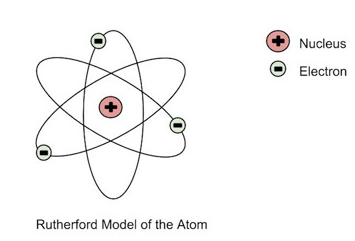
Rutherford's gold foil experiment provided evidence that...
a)
negative and positive charges are spread evenly throughout the atom.
b)
alpha particles have a positive charge.
c)
gold is not a dense as previously thought.
d)
there is a dense positively charged nucleus at the center of an atom.
74.

Where are the nonmetals located on the periodic table?
a)
Blue
b)
Red
c)
Green
75.

Where are metals located on the periodic table?
a)
Blue
b)
Green
c)
Red
76.

Where are the metalloids located on the periodic table?
a)
Blue
b)
Red
c)
Green
77.

A model of an atom that shows all of the electrons in their energy levels (shells) is called
a)
electron dot diagram
b)
valence electrons
c)
Bohr Model
78.

What element is this?
a)
Lithium
b)
Boron
c)
Carbon
d)
Neon
79.

What element is this?
a)
Helium
b)
Oxygen
c)
Sodium
d)
Phosphorous
80.

What element is this?
a)
Beryllium
b)
Boron
c)
Barium
d)
Bromine
100 %

