wayground logo

Free Printable Worksheets

NEW

Font size

S
M
L
XL
Worksheets

DPM for Chemistry Fall 2019

Total questions: 75

Worksheet time: 2hrs 11mins
Name
Class
Date
1.
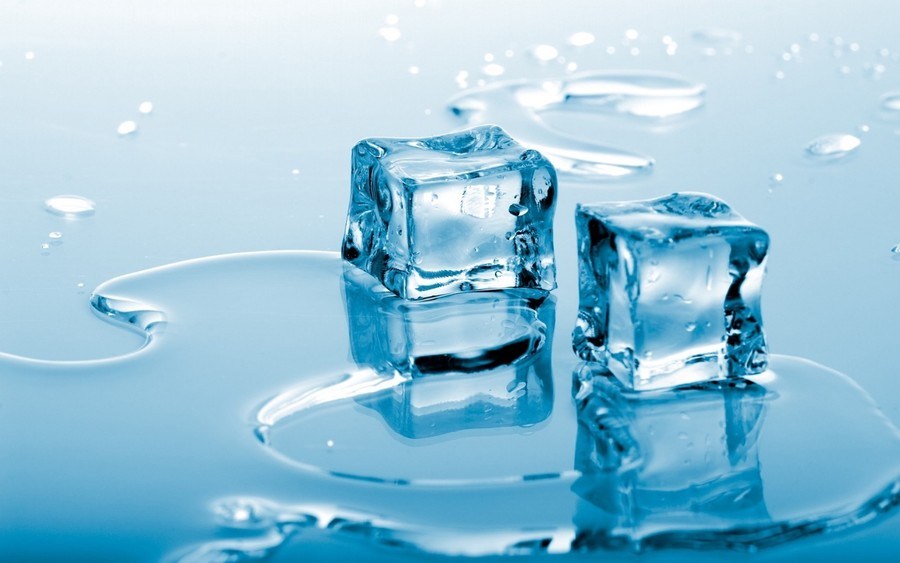
Water freezing into ice is an example of a...
a)
Physical Change
b)
Chemical Change
2.
Which of the following indicates a chemical change?
a)
Change in state of matter
b)
Temperature change
c)
Change in size 
d)
Change in shape
3.
A change in matter that forms one or more new substances with new chemical properties is a/an...
a)
Physical Change
b)
Chemical Change
4.
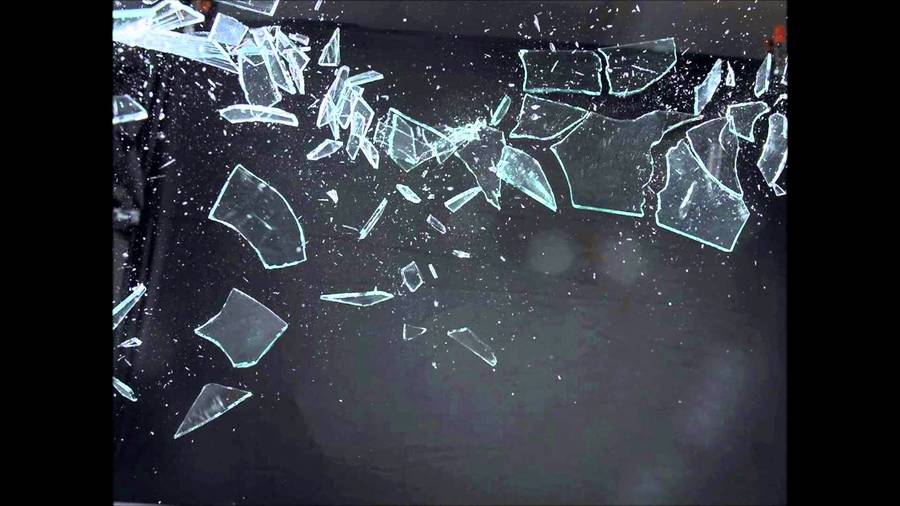
Chemical or Physical?  Glass breaking into tiny shards
a)
Chemical Change
b)
Physical Change
5.
Physical or Chemical Change?  Iron rusts
a)
Physical Change
b)
Chemical Change
6.
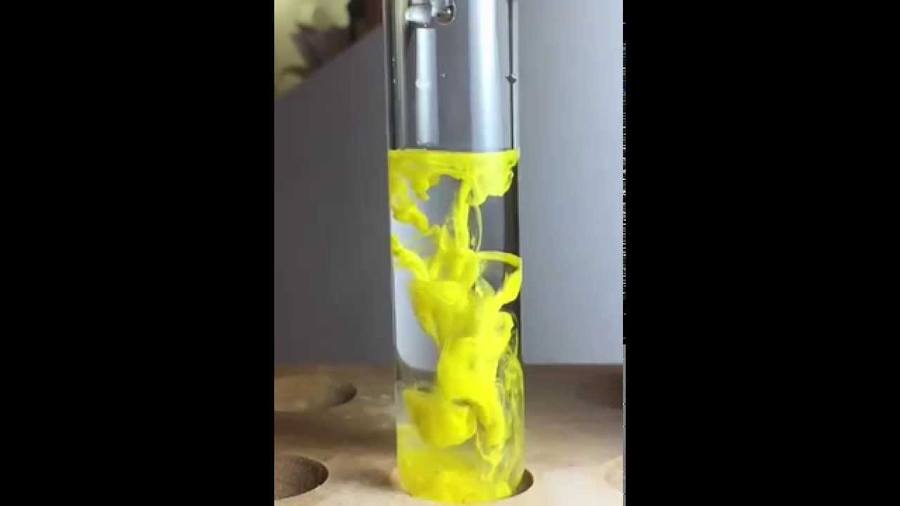
Physical or Chemical Change? 
a)
Physical Change
b)
Chemical Change
7.
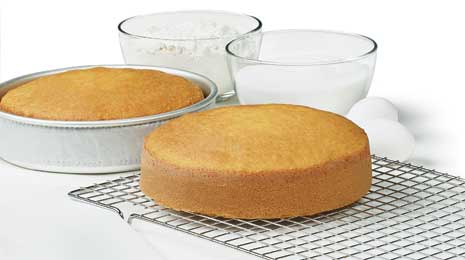
Physical or Chemical Change?  Baking a cake.
a)
Chemical Change
b)
Physical Change
8.

A mixture of sand and gravel can be separated by putting it in a container with holes that only the sand can pass through. This method works to separate the mixture because sand and gravel differ in which physical property?

a)

texture

b)

state of matter

c)

color

d)

size

9.
Which of the following is NOT a clue that a chemical change has occurred? 
a)
change of state of matter
b)
color change
c)
production of a gas
d)
production of heat
10.
A physical change occurs when a substance _____. 
a)
breaks into individual elements
b)
becomes a new substance
c)
changes from an acid to a base
d)
changes shape, size, and form
11.
A chemical change creates a _________. 
a)
change in volume
b)
new substance
c)
mixture
d)
solution
12.

A gas is heated to a temperature of 500K and has a volume of 5 L. The gas eventually cools to room temperature (about 300K), what is the new volume?

a)

0.59 L

b)

3 L

c)

42 L

d)

Latm

13.

A gas at 23 oC occupies a volume of 250 L, if the gas is heated to a temperature of 46 oC, what is the new volume?

a)

4.23 L

b)

269 L

c)

500 L

d)

447 L

14.

How does the mass of a particle affect its rate of diffusion?

a)

Heavier particles diffuse more rapidly

b)

heavier particles diffuse more slowly

c)

lighter particles diffuse more slowly

d)

There is no relationship between mass and rate of diffusion

15.

CH4 and CH3CH2CH2CH2CH3 are both in a room at 100.0 degrees celsius. How do the average kinetic energy between the two particle compare?

a)

CH4 has less average KE because it is smaller

b)

CH4 has more average KE because it is smaller

c)

The average KEs are the same because they are at the same temperature

d)

CH3CH2CH2CH2CH3 has greater average KE because it is bigger

16.

What is the molar mass of Cl2?

a)

17 g/mol

b)

35.5 g/mo;

c)

71.0 g/mol

d)

89 g/mol

17.

Calculate the molar mass of water (H2O).

a)

10 g/mol

b)

17 g/mol

c)

18 g/mol

d)

34 g/mol

18.
Molar mass is in units of ________.
a)
grams
b)
grams/mole
c)
mole
d)
moles/gram
19.
Which would have more atoms?
a)
1 mole of Li
b)
1 mole of Au
c)
1 mole of Si
d)
None, all are equal
20.
How many moles are present in 32.3 grams of carbon dioxide (CO2)?
a)
44.01 moles
b)
1421.52 moles
c)
32.3 moles
d)
0.73 moles
21.
What is the mass of 2.50 mol of oxygen gas O2?
a)
40 g
b)
80 g
c)
16 g
d)
32 g
22.

A pot of water boils at 1000C at the same temperature as a cup of water. Is this intensive or extensive?

a)

Intensive

b)

Extensive

23.

Properties that DO depend on the amount of matter present.

a)

Mass

b)

Hardness

c)

Extensive

d)

Intensive

24.

Properties that depend on the identity of substance.

a)

Mass

b)

Hardness

c)

Extensive

d)

Intensive

25.

Which of the following is an intensive property?

a)

Color

b)

Mass

c)

Volume

d)

Weight

26.

Able to be drawn into wire is

a)

malleable

b)

insulator

c)

lustre

d)

ductile

27.

Able to be beaten or hammered into shapes

a)

lustre

b)

malleable

c)

brittle

d)

insulator

28.
How would this element be classified?
a)
Metal
b)
Nonmetal
c)
Metalloid
d)
Metamorphic
29.
Silicon is a semiconductor and has properties of both metals and nonmetals. What type of element is Silicon? 
a)
Metal
b)
Nonmetal
c)
Metalloid
d)
Pretty
30.
The elements argon, krypton, and xenon are all non-metals. What property would these elements have in common?
a)
Good conductor of thermal energy
b)
Poor conductor of electricity
c)
Shiny, lustrous surface
d)
Soft and malleable
31.
Which of the following is not a property of nonmetals?
a)
Dull
b)
Brittle
c)
High Density
d)
Nonconductor
32.
Brittle
a)
Metal
b)
Nonmetal
33.
All of the following would classify an element as a metal except?
a)
Dull
b)
Luster
c)
Malleable
d)
Hard
34.
A student is given a sample of an unknown substance. He is asked to determine if it is classified as a metal, a metalloid, or a nonmetal. He discovered that the unknown element conducted some heat and electricity, had a shiny luster, and broke easily. This element is most likely a 
a)
metal
b)
nonmetal
c)
metalloid
d)
cannot be determined
35.
In which segment is the kinetic energy remaining constant?
a)
A-B
b)
B-C
c)
C-D
d)
E-F
36.
What line segment represents only the solid state?
a)
A-B
b)
B-C
c)
C-D
d)
D-E
37.
True or false: melting and freezing occur at the same temperature!
a)
True
b)
False
c)
I don't know
38.
A substance's heating curve is shown in the graph.  What is its boiling point?
a)
100 C
b)
60 C
c)
80 C
d)
20 C
39.
Which of the following terms identifies the change from a liquid to gas?
a)
Vaporization
b)
Condensation
c)
Deposition
d)
Sublimation
40.
When the temperature of matter increases the particles...
a)
speed up and move closer
b)
speed up and move farther apart
c)
slow down and move closer together
d)
slow down and move farther apart
41.

From point A to point E, the sample is going through an

a)

exothermic process by releasing heat to the surroundings

b)

exothermic process by absorbing heat from the surroundings

c)

endothermic process by releasing heat to the surroundings

d)

endothermic process by absorbing heat from the surroundings

42.

The melting point of the sample is

a)

-60 ºC

b)

-100 ºC

c)

60 ºC

d)

100 ºC

43.
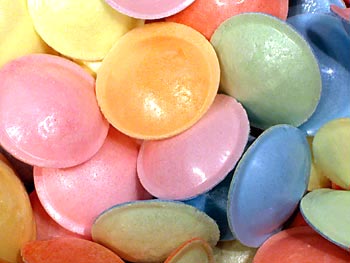
Have you ever eaten sherbet sweets candy? They fizz in your mouth and your tongue feels cold. Why do you think that is?
a)
It is an exothermic reaction
b)
It is an endothermic reaction
c)
It is made of ice
d)
It is dissolving your mouth
44.
What would be the effect on the particles if more heat is supplied to the system?
a)
They would slow down
b)
They would stop moving
c)
They would speed up
d)
There would be no effect
45.

If the specific heat of water is 4.18 J/g∙°C, how much heat is required to increase the temperature of 1.2 kg of water from 23 °C to 39 °C? (show your work)

a)

-80,256 J

b)

80.256 J

c)

80,256 J

d)

-80.256 J

46.
A sample of iron receives 50.J of heat energy that raises the temperature of the iron by 25.0°C. If iron has a specific heat of 0.10 J/g°C, what is the mass of the iron sample?  (show your work)
a)
25g
b)
30g
c)
20g
d)
50g
47.
A metal cube at temperature of 10°C immersed in a liquid at temperature of 70°C.
What is the temperature of the metal cube when thermal equilibrium is achieved between the cube and the liquid?
a)
Between 10°C and 70°C
b)
More than 70°C
c)
Less than 10°C
d)
Same as the room temperature
48.

What does "ΔT" mean?

a)

A change in health

b)

A change in heat

c)

A change in height

d)

A change in temperature

49.

A silver block is heated to 100 C and placed in contact with an aluminum block of equal mass at 23 C. Assuming no heat is lost to the environment, what will happen to the temperatures of the two metals?

a)

They will both end at 100C

b)

They will come to a thermal equilibrium somewhere between 100 and 23 C

c)

They will both end at 23 C

d)

they will come to a thermal equilibrium at whatever the temperature of the room is.

50.
What are the two types of Mixtures
a)
Elements and Subatomic Particles
b)
Protons and Electrons
c)
Atoms and Compounds
d)
Homogenous and Heterogeneous
51.
Cookies and cream ice cream would be classified as
a)
A homogenous mixture
b)
A heterogenous mixture
c)
An element
d)
A compound
52.
Two elements chemically combined defines
a)
A homogeneous mixture
b)
A heterogeneous mixture
c)
An element
d)
A compound
53.

What mixture could you use this tool to best separate that mixture?

a)

Sugar and Salt

b)

Sand and rocks

c)

Apples and grapes

54.
A mixtures is a combination of two or more____________ in which no new kinds of matter are formed.
a)
 subtances
b)
parts
c)
leaves
d)
pebbles
55.
Coffee is a 
a)
solution
b)
mixture
56.
Type of mixture that has the SAME COMPOSITION in every part.
a)
Homogenous
b)
Heterogeneous
57.
Type of mixture that DOESN'T HAVE the same composition in every part.
a)
Homogeneous
b)
Heterogeneous
58.
How many liters would you need to make a 1 M solution if you have 6 mol of Sodium Hydroxide? 
a)
2
b)
3
c)
4
d)
59.
What is the molarity of 4 g of NaCl (MM=58.45) in 3,800 mL of solution?
a)
0.018 M
b)
0.0011 M
c)
1.052 M
d)
0.062 M
60.

The term molar, which describes a solution's concentration, is written as?

a)

M

b)

mol

c)

g

d)

g/L

61.

A dilution is when

a)

solute is added to the volume of stock solution

b)

water is added to the volume of stock solution

c)

solute is removed from the volume of stock solution

d)

water is removed from the volume of stock solution

62.

Calculate the Molarity in a solution containing 40.0 g of NaCl dissolved in 500.0 ml of H2O.

a)

0.08 M

b)

12.5 M

c)

1.37 M

d)

0.74 M

63.

What is a concentrated solution?

a)

a solution that has a large amount of solute in a large volume of solvent

b)

a solution that has an equal amount of solute in the same volume of solvent

c)

a solution that has a small amount of solute in a large volume of solvent

d)

a solution that has a large amount of solute in a small volume of solvent

64.

Calculate the moles in 1500 mL of a 2 M solution of BaI2

a)

1.33 moles

b)

2.25 moles

c)

3.00 moles

d)

3000 moles

65.
When the temperature of matter increases the particles...
a)
speed up and move closer
b)
speed up and move farther apart
c)
slow down and move closer together
d)
slow down and move farther apart
66.
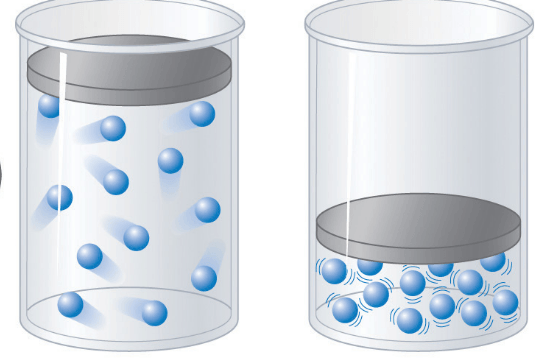
Which container will have a lower pressure?
a)
left
b)
right
c)
they both have the same pressure
d)
I don't know
67.
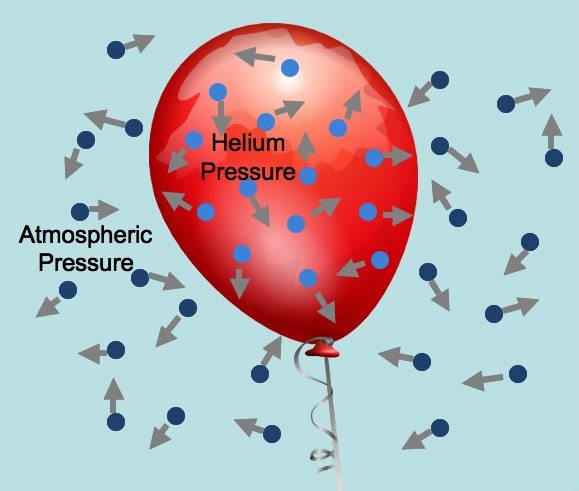
What causes pressure?
a)
The walls of the container
b)
The vacuum in the container
c)
The collisions of the particles
d)
Atmospheric pressure acting on the outside walls
68.

A sample of gas containing 9.2 moles is transferred from an 13 L tank to a 23 L tank. What is the new number of moles that can be stored in the tank?

a)

10.2 mol

b)

13.7 mol

c)

19.1 mol

d)

16.3 mol

69.

If a hairspray can is heated, what can be expected of the pressure of the gas inside the can?

a)

The pressure will increase

b)

The pressure will decrease

c)

The pressure will remain constant

d)

The pressure will equalize

70.

How much KNO3 solute is saturated at 40 degrees?

a)

75

b)

55

c)

65

d)

85

71.

How much C12H22O11 solute is saturated at 40 degrees?

a)

240

b)

220

c)

230

d)

250

72.

Which solute is MOST likely a gas?

a)

KNO3

b)

NaNO3

c)

KCl

d)

Ce2(SO4)3

73.

At what temperature can you fully dissolve 120g of NaBr?

a)

70

b)

20

c)

100

d)

You cannot determine this

74.
Which solute is the least soluble at 90 ⁰C?
a)
SO2
b)
KClO3
c)
KI
d)
HCl
75.
Water and Kool-Aid are mixed together. Hot water, coffee and sugar are mixed together. Which substance is the solvent in both?
a)
Water
b)
Coffee
c)
Kool-aid
d)
Sugar