
 Worksheets
Sci 8 Unit A 2.0: Pure, Mixtures, Solutions, Particle Model
Total questions: 105
Worksheet time: 2hrs 40mins
The substance that dissolves the solute is called (a) .
If 5g of ink is dissolved in 20 mL of alcohol, then what is the alcohol known as?
the solute
the solution
the solvent
the mixture
Coca-Cola pop is a (a)

Oil and vinegar salad dressing needs to be shaken before use, and is considered to be ..
a solution
a suspension
a colloid
pure
Which of the following are mixtures?
suspension
solution
colloid
all the above
This is a type of cloudy mixture that does not separate very easily on its own.
solution
colloid
suspension
mechanical
Salt water is a (a) mixture.
substance?

Granola bar

Aiden, Emily, and Mia are in a science class. Their teacher gave them a can of Pepsi and asked them to determine its nature. What should they classify Pepsi as?
Heterogeneous mixture
homogeneous mixture

An alloy is a special type of which of the following mixtures?
mechanical
emulsion
solution
suspension
'amount of solute that can dissolve in a given amount of solvent at a given temperature' is called the substance's...
dilution
solubility
agitation
concentration
This is a type of clear, homogeneous mixture that doesn't separate on its own...
solution
colloid
suspension
pure substance
An example of an aqueous solution is ...
salt water
water and oil
ink and alcohol
yogurt
Which of the following would have the fastest rate of dissolving?
a sugar cube in hot water
a sugar cube in cool water
powdered sugar in hot water
powdered sugar in cool water
Water can dissolve many things so it is called the .....
aqueous solution
pure solvent
dissolving liquid
universal solvent
The amount of solute dissolved in a given amount of solvent is called ...
dilution
concentration
saturation
agitation
You can make a solution more dilute by adding __________.
more solute
more solvent
less solute
A solution where more solute can still be dissolved at the given temperature is called ...
Saturated
Unsaturated
Supersaturated
Homogeneous solution
When warm water is returned back to a river, lake or stream it is called:
thermal pollution
air pollution
land pollution
universal pollution
When sugar is mixed with water in a glass, and it starts to pile up at the bottom of the glass, the solution is
Thermal pollution causes
increased oxygen in the water
decreased oxygen in the water
When a solid dissolves in a liquid, an increase in temperature of the liquid results in...
When a gas dissolves in a liquid mixture, an increase in temperature results in...
Large surface area of the solute means that it will dissolve slowly in a solvent.

Which point of the particle theory is best depicted by this picture?
all matter is made of particles
particles are in constant, random motion
particles speed up as heat is added and slow down as heat is removed
different substances are made of different types of particles


BONUS: Which state of matter has particles that slide past each other but stay close together and do not form a regular pattern?
Sharla is using powdered mix to make hot chocolate. She will boil some water and then stir in the mix.
What is the best way to make the powdered mix dissolve more quickly?

Nelson put some water and cooking oil in a measuring cup. He stirred to mix the two liquids. When he came back later, the oil and water had separated into two layers.
Why did the liquid separate into two layers?
It was not stirred enough.
There was not enough water.
Oil particles are not attracted to water particles.
The oil and water were not the same temperature.
The higher the temperature of the water, the more dissolved oxygen there is in the water.
When heating up a substance, the particles begin to ________________________ and _______________________.
expand, move slower
spread apart, move faster
contract, move faster
move closer together, move slower
Matter that contains only one kind of particle is called ...
Mixture
Natural
Raw
Pure
A mixture with visibly different substances mixed together that are easy to separate is called ...
Homogeneous
Solution
Heterogeneous
Pure
How can parts of a solution be separated?
you cannot separate a solution

How can you increase the concentration of a solution?

Ink solution can be separated by a method called ....
distillation
filtration
chromatography
sedimentation

Trail mix is which type of matter?
mechanical
suspension
colloid
pure

Which of the following is a pure substance?
Flour
Salt
Tap water
Maple syrup
Carbon Dioxide (CO2) is which category of matter?
A mixture of two different metals is a special solution called
an Alloy
a Metalloid
a Composite
The substance dissolved in a solution is called ...
concentration
solute
solvent
solution
BONUS: If you spilled nails in a sandbox, what separation tool/method could you use to clean out the sandbox so it would be safe for children to play in?
Contains 2 or more substances that do not dissolve when put together and can easily be separated:
Colloid
Solution
Mechanical Mixture
Pure
Molly made a solution using 10 g of salt in 100 mL of water. What should Molly do to the original solution to make it less concentrated?
Which of the following solutions has the highest concentration?
5g/25mL
5g/50mL
5g/100mL
If 8g of sugar is dissolved in 25mL of water, what is the concentration in g/100mL?
Type the number on the line.
(a)
If 15g of sugar is dissolved in 250mL of water, what is the concentration in g/100mL?
6g
7.5g
15g
30g
If 28g of potassium chloride is dissolved in 200mL of water, what is the concentration in g/100mL?
Type the number on the line.
(a)

Look at the graph.
How much sugar will dissolve at 20⁰C?

Which size of solute peices would dissolve faster in a solvent?
solute with large surface area
solute with small surface area

If the solute is broken into smaller pieces, it will ....
decrease surface area, and dissolve faster
increase surface area, and dissolve faster
decrease surface area, and dissolve slower
increase surface area, and dissolve slower
Another word for 'stirring' is ...
dissolving
alloy
agitation
saturation
Thermal pollution is the increase in water _________ , caused by human activity, and can cause aquatic life to suffer or die from lack of oxygen.
litter
solids
acidity
temperature
Thermal pollution is harmful because it causes ...
more carbon dioxide to dissolve in the water
more oxygen to dissolve in the water
less nitrogen to dissolve in the water
less oxygen to dissolve in the water
Salt dissolves in water because salt and water particles ...
do not mix
are attracted to each other
are not soluble
are repelled from each other
You have 20 ml of solute particles and 20 mL of solvent particles. The particles are the same size.
When mixed together, the result would be ...
39 mL
40 mL
41 mL
You have 20 ml of solute particles and 20 mL of solvent particles. The particles are very different sizes. When mixed together, the result would be ...
39 mL
40 mL
41 mL
When you measure how fast a solute dissolves in a solvent, you are measuring the
A solution that contains all of the solute it can hold at a given temperature is ____.
supersaturated
diluted
saturated
unsaturated
Increasing the surface area of a solid ____.
speeds the rate of dissolving
has no effect on the rate of dissolving
slows the rate of dissolving
means larger pieces of solute

Three 10 g samples of sugar are represented below.
Sample A dissolves in water more slowly than sample B.
Sample B dissolves more slowly than sample C.
Which of the following best explains why sample A dissolves more slowly than the other two?
It has the most volume.
It has the smallest surface area and most space between the particles
It has the largest number of sugar particles.
Sugar is less attracted to water when the pieces are bigger.
A solution that is able to dissolve additional solute is best described as
supersaturated.
concentrated.
saturated
unsaturated.
When Koolaid is mixed into water, and causes the solution to become dark in color and very sweet, it is a __________ solution.
You are given a small beaker of solution at room temp. You add a bit of solute to the solution and it dissolves. The solution was:
saturated
unsaturated
concentrated
warm
Is water the only solvent that can dissolve solutes?
Yes
No

Which diagram shows the least surface area?
left diagram
middle diagram
right diagram
Which of the following is a pure substance?
Coins
Milk
Sugar
Apple Juice
You can make a solution more diluted by adding __________.
more solute
more solvent
less solute
Which solution has higher concentration?
9g/25ml
or
60g/200mL
9g/25mL
60g/200mL
Which of the following solutions has the highest concentration?
10g/25mL
5g/50mL
15g/100mL

Which substance in the table does not dissolve in 200mL of water at 0oC?
ammonia
calcium carbonate
hydrogen
oxygen
The table shows solubility of substances in g/100mL of water at 0oC.
How much baking soda will dissolve in 200mL at 0oC?
Type your answer on the line.
(a)
Which of the following solutions has the lowest concentration?
5g/25mL
10g/50mL
15g/100mL
Which of the following solutions has the highest concentration?
15g/25mL
10g/50mL
50g/200mL
Concentration and solubility are the same thing.
True
False
For gases:
solubility increases as temperature increases
solubility decreases as temperature increases
solubility is not affected by temperature
All of the following are part of the particle model of matter EXCEPT:
the particles are always in motion
there are attractions between particles which is how substances are held together
The particles have spaces between them
the states of matter are solids, liquids and gases
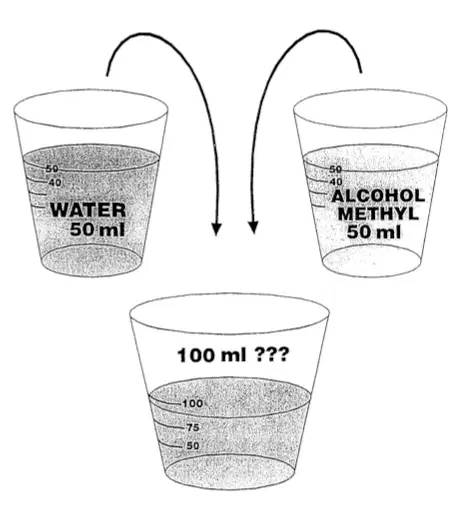
When 50 mL of alcohol methyl are mixed with 50 mL of water, the resulting solution is less than 100 mL.
Which statement of the particle model of matter best explains the reason.
the particles are always in motion
there are attractions between particles which is how substances are held together
The particles have spaces between them
Different substances are made of different particles.

The solution has been stirred for 2 minutes and solute remains at the bottom of the beaker.
Is this solution saturated or unsaturated?
saturated
unsaturated

How many grams of KNO3 are soluble in 100 mL of water at 100 ºC?
300 grams
250 grams
100 grams
50 grams

Based on the solubility curve, how many grams of sugar will dissolve in a 100 mL of water at 20°C?
100 g
150 g
200 g
250 g
According to the Particle Model of Matter, particles...
are always far apart
are always attracted to one another
always slide past one another
always have space between them
3 Factors that Affect SOLUBILITY (dissolving)
1) Type of Solute 2) Type of Solvent 3) Temperature
1) Stirring 2) Size of Pieces 3) Temperature
1) Type of Solute 2) Size of Pieces 3) Temperature
1) Stirring 2) Type of Solvent 3) Temperature
Which image shows particles in a solid?


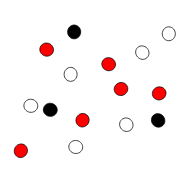
This particle picture represents:
Pure susbstance
Mixture
If I dissolve carbon dioxide in water, what is the solvent?
Carbon Dioxide
There is no solvent
Oxygen
Water
According to the particle model of matter, sugar is soluble in water because
sugar particles are very attracted to water particles
sugar particles are very attracted to each other
water particles are very attracted to each other
sugar particles repel water particles
If you put some sugar into cold water and leave it without stirring, the sugar will eventually dissolve and mix with the water. This happens because:
particles are extremely small.
water particles are moving quiclly.
water particles are bigger than sugar particles.
sugar particles are bigger than water particles.
Calculate the grams in 100 mL solution, if there is 100 g of sugar in 400 mL of water
30
25
20
4
What is the concentration, in g/100 mL, if 10 g of solute dissolved in 250 mL of solution?
2 g
2.5 g
4 g
5 g

Look at the pictures.
Hana put the same amount of salt into these two beakers of water. She stirred them into the same amount of water.
What is the manipulated variable?
amount of stirring
amount of water
temperature of water
rate of dissolving
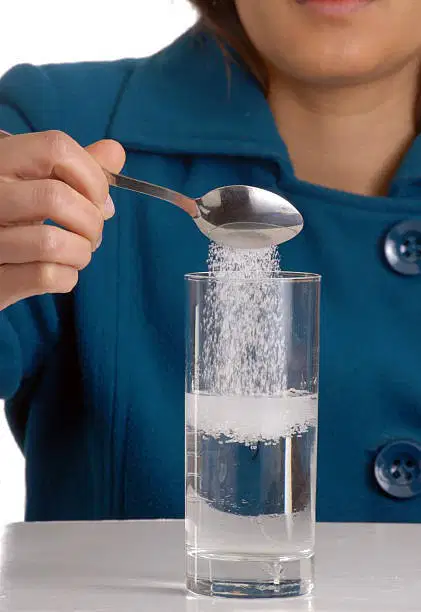
When sugar is added to hot water, more sugar can be dissolved in hot water than in the same amount of cold water.
The reason is because sugar is
a gas
a solid
melting
evaporating
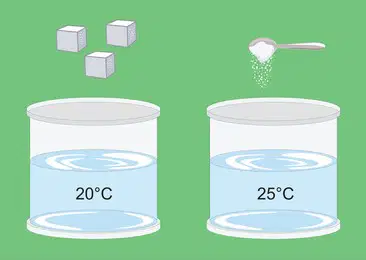
Which will dissolve faster in the water?
sugar cubes at 20C
crushed sugar at 25C
When oxygen is added to hot water, less oxygen can be dissolved in hot water than in the same amount of cold water.
The reason is because oxygen is
a gas
a solid
condensing
evaporating
Thermal pollution decreases the amount of (a) gas in lake or river water.
Thermal pollution affects aquatic organisms, like fish, because there is a decrease in the solubility of (a) gas in the water.

