
 Worksheets
Weather
Total questions: 65
Worksheet time: 42mins
Name
Class
Date
1.
The boundary between two air masses is known as:
a)
front
b)
storm
c)
climate
d)
flood
2.
When severe weather conditions are present, a _______ is issued
a)
watch
b)
warning
3.
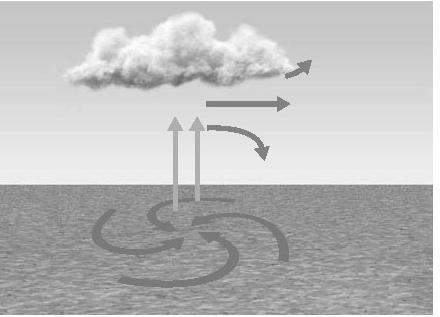
Which type of pressure system is pictured?
a)
high
b)
low
c)
medium
d)
none
4.

What type of weather would you expect with the pressure system pictured?
a)
clear
b)
cloudy
c)
severe storms
d)
hot
5.
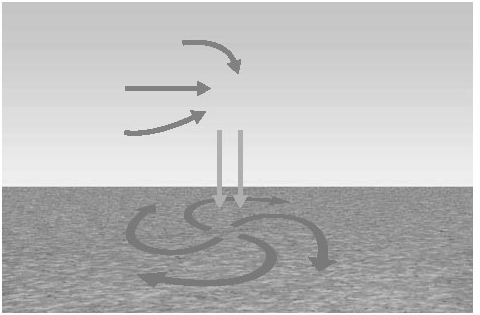
Which type of pressure system is pictured?
a)
high
b)
low
c)
medium
d)
none
6.

What type of weather would you expect from the pressure system pictured?
a)
clear
b)
cloudy
c)
hot
d)
stormy
7.
The temperature at which air is saturated and condensation forms is the:
a)
dew point
b)
rain point
c)
wind point
d)
relative humidity
8.
Cold air traveling south from Canada is:
a)
continental tropical
b)
continental polar
c)
maritime tropical
d)
maritime polar
9.
Warm air moving upwards from the Gulf of Mexico is:
a)
continental tropical
b)
continental polar
c)
maritime tropical
d)
maritime polar
10.
Warm air mass that does not carry water:
a)
continental tropical
b)
continental polar
c)
maritime tropical
d)
maritime polar
11.
Cold air mass that is carrying water is:
a)
continental tropical
b)
continental polar
c)
maritime tropical
d)
maritime polar
12.
In _________ pressure systems, air sinks:
a)
high
b)
low
c)
medium
d)
none
13.
In _______ pressure systems, air rises
a)
high
b)
low
c)
medium
d)
none
14.
These can be produced by thunderstorms
a)
stationary fronts
b)
tornadoes
c)
volcanoes
d)
tsunamis
15.
This type of front can bring strong storms
a)
cold
b)
warm
c)
stationary
d)
occluded
16.
This type of front results in the same weather for several days
a)
warm
b)
cold
c)
stationary
d)
occluded
17.

Which option pictured describes how rain is formed?
a)
A
b)
B
c)
C
d)
D
18.
This weather tool measures wind speed and direction
a)
thermometer
b)
barometer
c)
anemometer
d)
psychrometer
19.
Which weather tool measures the amount of kinetic energy in molecules?
a)
thermometer
b)
barometer
c)
psychrometer
d)
anememeter
20.
Which weather tool measures air pressure?
a)
thermometer
b)
barometer
c)
anemometer
d)
psychrometer
21.

Which option pictured shows how sleet forms?
a)
A
b)
B
c)
C
d)
D
22.
Where the warm and cold air meet and stall, clouds and fog form, and it may rain or snow. It could bring many days of clouds and precipitation.
a)
Warm Front
b)
Cold Front
c)
Occluded Front
d)
Stationary Front
23.
When a cold front overtakes a warm front, the temperature drops as the warm air mass is cut off from the ground and pushed upward. It can bring strong winds and heavy precipitation.
a)
Warm Front
b)
Cold Front
c)
Occluded Front
d)
Stationary Front
24.

This is the symbol for a...
a)
Cold Front
b)
Warm Front
c)
Stationary Front
d)
Occluded Front
25.

This is the symbol for a...
a)
Occluded Front
b)
Stationary Front
c)
Warm Front
d)
Cold Front
26.

This is the symbol for a...
a)
Stationary Front
b)
Occluded Front
c)
Cold Front
d)
Warm Front
27.

This is the symbol for a...
a)
Stationary Front
b)
Occluded Front
c)
Cold Front
d)
Warm Front
28.

Identify the type of front that is shown in the image.
a)
Occluded Front
b)
Cold Front
c)
Stationary Front
d)
Warm Front
29.

Identify the type of front that is shown in the image.
a)
Occluded Front
b)
Cold Front
c)
Stationary Front
d)
Warm Front
30.

Identify the type of front that is shown in the image.
a)
Occluded Front
b)
Cold Front
c)
Stationary Front
d)
Warm Front
31.

Identify the type of front that is shown in the image.
a)
Occluded Front
b)
Cold Front
c)
Stationary Front
d)
Warm Front
32.
Located at the leading edge of a temperature drop off. Bring heavy thunderstorms, rain, and hail. Cool, fair weather is likely to follow.
a)
Warm Front
b)
Cold Front
c)
Occluded Front
d)
Stationary Front
33.
Located at the leading edge of a warm air mass. Brings gentle rain or light snow, followed by warmer, milder weather.
a)
Warm Front
b)
Cold Front
c)
Occluded Front
d)
Stationary Front
34.

An anemometer is used to measure...
a)
air pressure
b)
humidity
c)
precipitation
d)
wind speed
35.

the amount of water vapor in the air
a)
warm front
b)
precipitation
c)
humidity
d)
air pressure
36.
An instrument used to measure how hot or cold something is
a)
barometer
b)
thermometer
c)
wind sock
d)
rain guage
37.

An instrument that measures air pressure
a)
thermometer
b)
barometer
c)
rain guage
d)
wind sock
38.
_____________ has the same temperature and moisture content throughout.
a)
convection current
b)
front
c)
air mass
39.
Which term describes a circulation of air or water that is caused by uneven heating?
a)
convection current
b)
conduction current
c)
radiation current
d)
emission current
40.
Which statement describe parts of the water cycle and how clouds form? 1. Water evaporates from the earth's surface as it changes from a liquid to a gas. 2. Water vapor rises with rising, warm air. 3. At higher altitudes, where temperatures are cool, vapor (along with dust particles) condenses into drops of water that form clouds. 4. Low-pressure conditions also help clouds form.
a)
1 and 2
b)
1, 2, 4
c)
1 and 3
d)
all of the above
41.
Every few years, an event occurs in which the waters in the eastern Pacific Ocean become warmer. This event changes weather patterns worldwide, causing drought, floods, blizzards, hurricanes and tornadoes. What is the name of this event?
a)
Kuroshio Current
b)
Global conveyor
c)
El Nino
d)
Typhoon
42.
Which of the following are used to study and forecast most weather-related events?
a)
Doppler radar
b)
satellites and satellite images
c)
weather maps
d)
all of the above
43.

Which statement best describes the difference between weather and climate?
a)
Weather is the conditions when you look outside while climate is the conditions you can expect for the next 6 months.
b)
Climate is the current condition outside while weather is what you can expect for the next 6 months.
44.
Rain, sleet, hail, and freezing rain are all...
a)
precipitation
b)
condensation
c)
evaporation
d)
perspiration
45.
Which of the following will heat the fastest?
a)
water
b)
land
c)
both heat at equal rates
46.
____________ air sinks/falls because it is ____________dense.
a)
Cold, More
b)
Warm, Less
c)
Cold, Less
d)
Warm, More
47.
____________ air rises because it is ____________dense.
a)
Cool, Less
b)
Warm, Less
c)
Cold, More
d)
Warm, More
48.
The weight of air as it presses down on Earth's surface
a)
front
b)
air pressure
c)
air mass
d)
evaporation
49.
The conditions of the atmosphere at a certain time and place.
a)
weather
b)
climate
c)
precipitation
d)
atmosphere
50.

A(n) _____ is a large body of air that has properties similar to the part of Earth's surface over which it depends.
a)
tornado
b)
pressure system
c)
front
d)
air mass
51.

When two air masses meet, there is a _____, or boundary.
a)
thunderstorm
b)
watch
c)
front
d)
cloud
52.

name this front
a)
warm front
b)
cold front
c)
stationary front
d)
occluded front
53.

name this front
a)
warm front
b)
cold front
c)
stationary front
d)
occluded front
54.
Which condition usually means cloudy, stormy weather?
a)
high pressure
b)
low pressure
55.

What part of the illustration shows Evaporation?
a)
1
b)
2
c)
3
d)
4
56.

Which number illustrates Condensation?
a)
1
b)
2
c)
3
d)
4
57.
Which number illustrates Condensation?
a)
1
b)
2
c)
3
d)
4
58.
What kind of weather is usually associated with a high pressure system?
a)
Sunny weather
b)
Precipitation (rain, snow, etc.)
59.

What does this symbol on a weather map indicate?
a)
High pressure system
b)
Low pressure system
c)
Cold front
d)
Warm front
60.
What is the most abundant gas found in the atmosphere?
a)
Carbon Dioxide
b)
Nitrogen
c)
Oxygen
d)
Water Vapor
61.
Humidity is the...
a)
Amount of Water Vapor in the Air
b)
Amount of Wind in the Air
c)
Amount of Precipitation in the Air
d)
Amount of Pressure in the Air
62.
Because the earth is spinning on its axis, the global winds appear to curve. This is known as the __________ ________.
a)
Coriolis Effect
b)
Greenhouse Effect
c)
Climate Effect
d)
Atmosphere Effect
63.
What kind of weather is usually associated with a low pressure system?
a)
Sunny weather
b)
Precipitation (rain, snow, etc.)
64.
What kind of weather is usually associated with a high pressure system?
a)
Sunny weather
b)
Precipitation (rain, snow, etc.)
65.
In what direction do winds always blow?
a)
From areas of high pressure to areas of low pressure
b)
From areas of low pressure to areas of high pressure
100 %

