
 Worksheets
Chapter 4 Review: Animal Adaptations and Relationships
Total questions: 68
Worksheet time: 1hrs 13mins
Name
Class
Date
1.
A tick and a dog have this type of relationship.
a)
mutualism
b)
commensalism
c)
neutralism
d)
parasitism
2.
Red-billed oxpeckers are birds that feed on parasites found on an impala. The impala gets rid of parasites and the red-billed oxpeckers get a yummy dinner. This is an example of _______.
a)
commensalism
b)
mutualism
c)
neutralism
d)
competition
3.
Cattle egrets are birds that forage in fields among cattle. The egrets get easy access to food and the cattle don't care if they are there or not.
a)
mutualism
b)
commensalism
c)
competition
d)
parasitism
4.
A relationship between two organisms in which one organism benefits and the other is harmed.
a)
Mutualism
b)
Competition
c)
Parasitsm
d)
Commensalism
5.
A relationship between two organisms in which one organism benefits and the other is unharmed
a)
Mutualism
b)
Competition
c)
Parasitsm
d)
Commensalism
6.
A relationship between two organisms in which both organisms benefit.
a)
Mutualism
b)
Competition
c)
Parasitsm
d)
Commensalism
7.
Barnacles create home sites by attaching themselves to whales. This neither harms nor benefits the whales.
a)
Mutualsim
b)
Parasitism
c)
Commensalism
8.
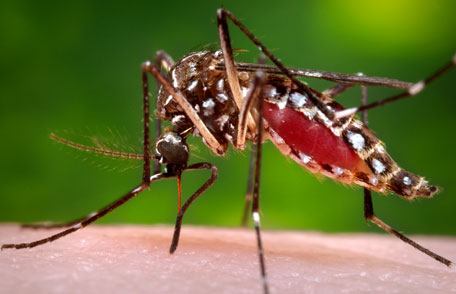
When a mosquito bites you, you are the __________ and the mosquito is the ____________.
a)
host, hostess
b)
parasite, host
c)
host, parasite
d)
prey, predator
9.
A ________ is made up of the community and all of the non-living factors in the environment.
a)
ecosystem
b)
biosphere
c)
population
d)
biome
10.
A close relationship where two or more organisms from different species live together. (Mutualism, commensalist, and parasitism are all types of this.)
a)
competition
b)
host
c)
symbiosis
d)
niche
11.
Leopards, lions, and cheetahs all eat spring hares. This shows what relationship?
a)
competition
b)
host
c)
symbiosis
d)
niche
12.
An oak tree provides food, shelter, and oxygen. What relationship does this show?
a)
competition
b)
host
c)
symbiosis
d)
niche
13.
A tick attaches itself to you while you are on a walk in the woods. What are you?
a)
competition
b)
host
c)
niche
d)
parasite
14.

What is this called?
a)
Food Web
b)
Food Chain
c)
Abiotic Factors
15.

What is this called?
a)
Food Web
b)
Food Chain
c)
Abiotic Factors
16.
What does a Primary Consumer eat?
a)
Tertiary Consumers
b)
Secondary Consumers
c)
Producers
17.

An organism that lives by breaking apart dead organic matter into simpler parts is...
a)
scavenger
b)
consumer
c)
decomposer
d)
carnivore
18.
What is missing from this food chain?
Grass > Grasshopper > Bird > Snake
Grass > Grasshopper > Bird > Snake
a)
Producer
b)
Primary Consumer
c)
Secondary Consumer
d)
Decomposer
19.
Which is a producer?
a)
deer
b)
tall grass
c)
lion
d)
worm
20.
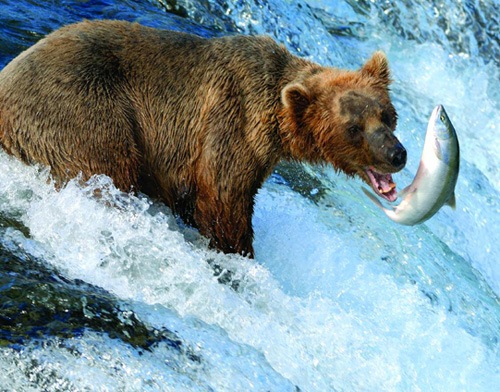
An organism that needs to eat other organisms to obtain energy is known as a:
a)
Autotroph
b)
Producer
c)
Consumer
d)
Mutualist
21.
In a food web, arrows point at:
a)
who gets energy.
b)
who gets eaten.
22.

What does a food web represent?
a)
All connections of energy flow throughout all organisms in a ecosystem.
b)
The specific ways that mutualism is carried out.
c)
A single pathway or energy flow between organisms.
d)
How carnivores get their food.
23.
Bacteria, fungi, and earthworms are examples of:
a)
scavengers
b)
predators
c)
prey
d)
decomposers
24.

Which organism do the owl and the weasel compete for in the food web?
a)
Hawk
b)
Spider
c)
Grasshopper
d)
Shrew
25.
Grass is considered a ...
a)
consumer
b)
producer
c)
decomposer
d)
composers
26.
Which of the following would have a negative impact on an ecosystem
a)
constructing highways
b)
planting trees
c)
recycling paper
27.

An organism that gets energy from eating other organisms is a ______________.
a)
producer
b)
consumer
c)
decomposer
d)
prey
28.

An organism that gets energy from breaking down dead organisms, non-living material or waste is a(an) ___________.
a)
producer
b)
consumer
c)
decomposer
d)
autotroph
29.

An animal that is hunted and eaten for food is a __________.
a)
predator
b)
prey
c)
population
30.

A connection of food chains with many food energy paths in an ecosystem is a ____________.
a)
ecosystem
b)
food web
c)
environment
d)
population
31.

Which of the following is NOT a consumer?
a)
grass
b)
dog
c)
shark
d)
fish
32.

The shrew provides energy for the _______.
a)
cricket
b)
grasshopper
c)
frog
d)
snake
33.

Water is an example of _________.
a)
biotic factor
b)
abiotic factor
c)
heterotroph
d)
autotroph
34.

Where do all life forms get their energy?
a)
Earth's Core
b)
Water
c)
Plants
d)
The Sun
35.
Which represents the largest group in a food web?
a)
carnivores
b)
omnivores
c)
herbivores
d)
producers
36.
This is the unique way an organism survives or its
"job" within the environment
"job" within the environment
a)
Niche
b)
Habitat
c)
Population
d)
Predation
37.
This is the close relationship between species
a)
Mutualism
b)
Commensalism
c)
Symbiosis
d)
Parasitism
38.
While swimming in a pond, a boy finds a leech attached to his leg. Leeches need to consume the blood of another organism in order to survive. Which of the following terms best describes the boy?
a)
Host
b)
Parasite
c)
Decomposer
d)
Predator
39.
In the arctic, polar bears hunt seals. which of the following terms best describes the polar bear?
a)
Producer
b)
Predator
c)
Prey
d)
Host
40.
A flea needs to consume the blood of an organism in order to survive. Which of the following terms best describes the flea?
a)
Host
b)
Decomposer
c)
Prey
d)
Parasite
41.
Mushrooms break down dead and decaying wood in the forest. Which of the following terms best describes the mushroom?
a)
Mold
b)
Algae
c)
Parasite
d)
Decomposer
42.
Markings of a butterfly that resemble a predator is an example of what?
a)
camouflage
b)
mimicry
c)
conservation
d)
niche
43.
The white fur on a snowshoe hare is an example of what?
a)
niche
b)
symbiosis
c)
mimicry
d)
camouflage
44.
Which of the following return nutrients to the soil?
a)
producers
b)
decomposers
c)
primary consumers
d)
secondary consumers
45.
What is the scientific term for the ability to blend in with the surroundings?
a)
invisibility
b)
conservation
c)
ninja skills
d)
camouflage
46.
How do adaptations help animals?
a)
To escape animals
b)
to hunt for food
c)
to survive in their habitats
d)
All of these are correct
47.
An example of a physical adaptation is...
a)
a turtle hiding inside its shell
b)
The spikes on a porcupine fish
c)
a rabbit burrowing underground
d)
a viper biting when threatened
48.

a)
stream pollution
b)
noise pollution
c)
light pollution
d)
cutting trees
49.

a)
thick fur
b)
large ears
c)
cotton tail
d)
sharp teeth
50.

Where does the energy start in this food chain?
a)
Plant
b)
Sun
c)
Deer
d)
Wolf
51.

Which of the following is a producer?
a)
Maple tree
b)
Sunfish
c)
Bunny
d)
Bear
52.

Which of these organisms would receive energy from the snake?
a)
Plant
b)
Rabbit
c)
Mouse
d)
Hawk
53.

What's the role of consumers in a food chain?
a)
Use sunlight to make food
b)
Eat other species and keep them from overpopulating
c)
Break down dead stuff
d)
Add nutrients to the soil
54.

What is the role of a producer?
a)
Use sunlight to make food
b)
Gain energy from eating other organisms
c)
Keep other species from overpopulating
d)
Breaking down dead stuff
55.

In the food web shown, the snail would be considered...
a)
primary consumer
b)
secondary consumer
c)
tertiary consumer
d)
producer
56.
Recently, a family of bobcats moved into an area with a large rabbit population. What changes may occur in the ecosystem?
a)
The rabbit population may increase
b)
The rabbit population may decrease
c)
The rabbit population may increase first, then decrease
d)
The rabbit population will remain the same
57.

A fox is an example of...
a)
Biotic Factor
b)
Abiotic Factor
58.
Where do all life forms get their energy?
a)
Earth's Core
b)
Water
c)
Plants
d)
The Sun
59.
When a species completely dies off.
a)
extinct
b)
producer
60.

If the grasshopper were to be removed completely from the food web, what organism would be most effected?
a)
The squirrel
b)
The shrew
c)
The deer
d)
The rabbit
61.

When a living thing copies the appearance of another living thing as a means of protection
a)
mimicry
b)
a behavioral adaptation
c)
mockery
d)
natural selection
62.

This animal is using
a)
hibernation
b)
camouflage
c)
mimicry
63.

The colors & patterns on a turtles shell help it blend in with the forest floor. This is:
a)
hibernation.
b)
behavior.
c)
migration.
d)
camouflage.
64.
a physical feature or behavior that helps an organism survive
a)
adaptation
b)
migrate
65.
What is a niche?
a)
a physical feature that helps an animal survive
b)
the role a plant or animal plays in its habitat
66.

What does this animal use?
a)
mimcry
b)
camouflage
67.

What does this animal use?
a)
camouflage
b)
mimicry
68.
Why do some animals become extinct?
a)
People hunt them until they are gone
b)
they eat too much food
100 %

