wayground logo

Free Printable Worksheets

NEW

Font size

S
M
L
XL
Worksheets

Autonomic & Somatic Nervous System

Total questions: 64

Worksheet time: 46mins

Name
Class
Date
1.

If Jessica accidentally touches the stove while cooking and she immediately pulls her hand back, this is an example of the autonomic nervous system.

a)

True

b)

False

2.

Alexa is presenting a project in front of her class. She starts sweating and her heart rate increases. This is an example of the autonomic nervous system, sympathetic division.

a)

True

b)

False

3.

The function of the somatic nervous system is to

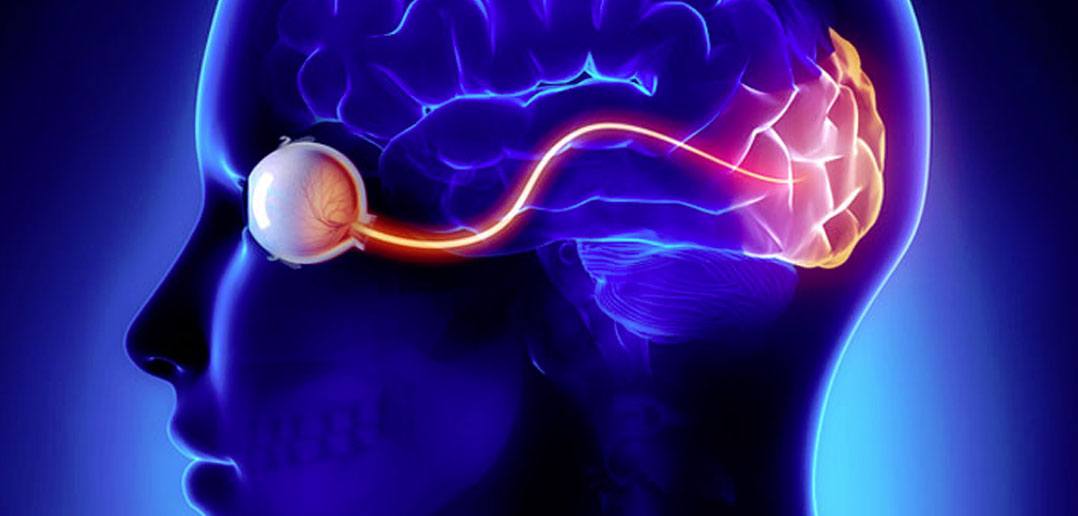
a)

convey information from the skin and muscles to the CNS about conditions such as pain and temperature

b)

take messages to and from the body’s internal organs, monitoring such processes as breathing, heart rate, and digestion.

c)

Arouse the body, mobilize its energy during physical exercise and in stressful situations, and activate the adrenal gland to release epinephrine into the bloodstream.

d)

Calm the body down and conserve and replenish energy.

4.

The function of the autonomic system is to

a)

Calm the body down and conserve and replenish energy.

b)

take messages to and from the body’s internal organs, monitoring such processes as breathing, heart rate, and digestion.

c)

convey information from the skin and muscles to the CNS about conditions such as pain and temperature.

d)

Arouse the body, mobilize its energy during physical exercise and in stressful situations, and activate the adrenal gland to release epinephrine into the bloodstream.

5.

The following picture represents the

a)

Autonomic Nervous System

b)

Sympathetic Division

c)

Parasympathetic division

d)

Somatic nervous system

6.

The following picture represents the

a)

Autonomic Nervous System

b)

Sympathetic Division

c)

Somatic nervous system

d)

Parasympathetic division

7.
Division of the ANS that is fight or flight
a)
sympathetic
b)
parasympathetic
8.
Division of the ANS that's rest & digest
a)
sympathetic
b)
parasympathetic
9.
Lack of salivation
a)
sympathethic
b)
parasympathetic
10.
increased heart rate
a)
sympathetic
b)
parasympathetic
11.
If you just ate a big meal
a)
sympathetic
b)
parasympathetic
12.
You're giving a speech in front of the class (most of you would feel this)
a)
sympathetic
b)
parasympathetic
13.
laying in a hammock reading a book
a)
sympathetic
b)
parasympathetic
14.
experience a broken bone or other injury
a)
sympathetic
b)
parasympathetic
15.
pupils constricted
a)
parasympathetic
b)
sympathetic
16.
active digestion
a)
sympathetic
b)
parasympathetic
17.

The autonomic nervous system is a branch of your ... nervous system.

a)

central

b)

peripheral

18.

The parasympathetic division is responsible for...

a)

fight

b)

flight

c)

stress

d)

relaxation

19.

The sympathetic division is responsible for...

a)

stress

b)

relaxation

c)

digestion

d)

resting

20.

They relax airways.

a)

sympathetic nerves

b)

parasympathetic nerves

21.

They stimulate the activity of the intestines.

a)

sympathetic nerves

b)

parasympathetic nerves

22.

They slow heartbeat.

a)

sympathetic nerves

b)

parasympathetic nerves

23.
Which is true of the parasympathetic nervous system?
a)
Short preganglionic neuron / Long postganglionic neuron
b)
Synapse near the spinal cord
c)
Long preganglionic neuron / Short postganglionic neuron
d)
Arises from C1-C6
24.
Which neuron is non-myelinated?
a)
Parasympathetic, postganglionic neuron
b)
sympathetic preganglionic neuron
c)
somatic neuron
d)
parasympathetic preganglionic neuron
25.

What does ANS stand for?

a)

Automatic Nervous Sympathetic

b)

Autonomic Neurotransmitters System

c)

Autonomic Nervous System

d)

Autonomic Nervous Sympathetic

26.
The white portion of the eye (In Humans).
a)
Pupil
b)
Sclera
c)
Dyslexia
d)
Retina
27.
Which layer is a blood vessel-rich layer with a dark brown membrane? 
a)
Choroid
b)
Sclera
c)
Retina
d)
Cornea
28.
Which part of the eye contracts and dilates based on the environment? 
a)
Pupil
b)
Cornea
c)
Sclera
d)
Iris
29.
Which nerve transmits information from the eye to the brain?
a)
Optic
b)
Olfactory
c)
Occulomotor
d)
Trigeminal
30.
Opens and closes to adjust the total amount of light entering the eye.
a)
Iris
b)
Scelera
c)
Cornea
d)
Human lens
31.
What part of the eye holds the lens in place?
a)
cornea
b)
ciliary muscles
c)
pupil
d)
retina
32.

When you enter a dark room, what does the pupil do

a)

get larger

b)

get smaller

33.
This part of the eye has photoreceptors called rods and cones.  They help us to see color and see at night.  It is called:
a)
optic nerve
b)
brain
c)
retina
d)
cornea
34.
This part protects the eye, especially the iris, pupil and lens.
a)
rods
b)
cornea
c)
optic nerve
d)
retina
35.
Transparent jelly like tissue that fills the eyeball behind the lens.
a)
Vitreous humor
b)
Plasma
c)
Optic nerve
d)
Eyeball juice
36.
What supports the eyeball and provides attachment for muscles? 
a)
Cornea 
b)
Optic Nerve
c)
Sclera
d)
Lens
37.
These photoreceptors have three different pigments.  Each receptor is associated with its own neuron resulting in crisp, clear color vision
a)
hair cells
b)
rods
c)
cones
d)
lens
38.
What part of your eye sends the messages to and from your brain?
a)
retina
b)
optic nerve
c)
iris
d)
vitreous humor
39.
The part of the eye that sees black, white, and gray and has the lowest threshold for activation
a)
cones
b)
pupil
c)
optic nerve
d)
rods
40.
Light entering the eye is focused behind the retina instead of directly on it, objects close to the eye look blurry
a)
Iris
b)
Near Sighted
c)
Astigmatism
d)
Far Sighted
41.
Which layer is a blood vessel-rich layer with a dark brown membrane? 
a)
Choroid
b)
Sclera
c)
Retina
d)
Cornea
42.
The ___  attaches the lens. 
a)
Cillia
b)
Suspensory ligaments
c)
Vitreous humor
d)
Aqueous humor
43.
Your ear drum is also known as the:
a)
Tympanic Membrane
b)
Tempanic Membrane
c)
Timpanic Membrane
d)
Tompanic Membrane
44.
The main inner ear structure that enables one to hear is called the: 
a)
Cochlea
b)
Pinna
c)
Eustachian Tube
d)
Auricle
45.
The auditory cortex of the brains is located in the
a)
Thalamus
b)
temporal lobe
c)
the frontal lobe
d)
the occipital lobe
46.
Hearing receptors within the organ of Corti are called:
a)
rod cells
b)
cone cells
c)
hair cells
d)
corti cells
47.
What happens to the eardrum when sound hits, causing transmission of sound to the inner ear?
a)
it opens
b)
it grows hair
c)
it refracts the sound
d)
it vibrates
48.
In what part of the ear can damage occur to hair cells and nerve endings causing deafness?
a)
cochlea
b)
outer ear
c)
stirrup
d)
ear canal
49.
What is the object that holds the fluid of the ear and helps us maintain our balance
a)
Semicircular Canals
b)
Eardrum
c)
Pinna
50.
The ear functions for ___________.
a)
balance
b)
hearing
c)
both balance and hearing
51.
What is the outer portion of your ear called?
a)
Pinna
b)
Auricle
c)
Both pinna and auricle are correct
d)
Neither Pinna nor auricle are correct 
52.
Eustachian tubes connect: 
a)
Outer ear to the surface
b)
Middle ear to the pharynx
c)
Middle ear to the tympanic membrane
d)
Inner ear to the middle ear
53.
These are the smallest bones in the body that help transmit and amplify sound waves. 
a)
Ossicles
b)
Fossils
c)
Oracles
d)
Spectacles
54.
The malleus, incus, and stapes are collectively called the
a)
maculae
b)
otoliths
c)
semicircular canals
d)
ossicles
55.
Which ossicle gets it vibrations directly from the Tympanic Membrane?
a)
Malleus
b)
Incus
c)
Stapes
d)
Cochlea
56.
What is the correct order of the ossicles?
a)
Malleus, Incus Stapes
b)
Incus, Malleus, Stapes
c)
Stapes, Incus, Malleus
d)
Stapes, Malleus, Incus
57.
The purpose of the ossicle bones is to transmit sound vibrations to the cochlea.
a)
True
b)
False
58.
The hairs in the cochlea determine
a)
protect the membrane
b)
the pitch that your brain hears
c)
are made out of bone
d)
deal with perception not sensation
59.
The auditory cortex of the brains is located in the
a)
Thalamus
b)
temporal lobe
c)
the frontal lobe
d)
the occipital lobe
60.
The hearing system determines where a sound comes from by
a)
randomly attributing location
b)
how high or low the sound is in pitch
c)
by how much sound waves enter each ear
d)
looking in the direction you think  the sound is coming from
61.
When the eyeball is too short, causing Farsightedness
a)
Hyperopia
b)
Myopia
c)
Glaucoma
d)
Astigmatism
62.
When the eyeball is too long causing Nearsightedness
a)
Myopia
b)
Hyperopia
c)
Asigmatism
d)
Presbyopia
63.
What does farsighted mean?
a)
You can see far away well.
b)
You can see close up well.
c)
You have perfect sight.
d)
You are blind.
64.

This lobe of the brain contains the visual cortex that processes information from the eyes.

a)

Temporal Lobe

b)

Frontal Lobe

c)

Occipital Lobe

d)

Parietal Lobe