
 Worksheets
Chemical Reactions Review
Total questions: 51
Worksheet time: 2hrs 37mins
Name
Class
Date
1.
Is this balanced?...
Fe + S --> FeS
Fe + S --> FeS
a)
YES!
b)
NO!
2.
Is this balanced?...
Al + O2 --> 2Al2O3
Al + O2 --> 2Al2O3
a)
Yes!
b)
NO!
3.
Name this reaction, Cl2 + 2KI --> I2 + 2KCl
a)
Synthesis
b)
Single Replacement
c)
Double Replacement
d)
Decomposition
4.
How many atoms of carbon (C) are in C6H12O6?
a)
3
b)
6
c)
12
d)
24
5.
The substances at the beginning of a chemical equation are called the ____
a)
product
b)
yield
c)
chemical symbol
d)
reactants
6.
How many O's are in Al₂(SO₄)₃
a)
4
b)
12
c)
7
d)
24
7.
Mg + ___ HCl → MgCl2 + H2
a)
1
b)
2
c)
3
d)
4
8.

The red numbers in the image below represent ________
a)
subscripts
b)
coefficients
c)
I don't know, and don't want to try
d)
None of the answers are correct
9.

The blue numbers in the image below represent ________
a)
I don't know, and don't want to try
b)
coefficients
c)
subscripts
d)
none of the answers are correct
10.
In the equation, 2Mg + O2 ---> 2MgO, which are the reactants?
a)
Mg and O
b)
MgO
c)
Mg and MgO
d)
O and MgO
11.

When balancing equations, you can change...
a)
Subscripts only
b)
Coefficients only
c)
Both subscripts & coefficients
d)
None of the above
12.
The Law of Conservation of Mass states
a)
that matter exists in all states and reacts the same
b)
that matter can only be changed into new substances by introducing a catalyst
c)
that matter exists in the same state throughout any chemical change
d)
that matter cannot be created or destroyed and that the mass of the products must equal the mass of the reactants
13.
Compounds break down into simpler substances in this type of reaction.....
a)
Double Replacement
b)
Single Replacement
c)
Synthesis
d)
Decomposition
14.
What are Chemical Reactions?
a)
It's when you mix substances.
b)
a process in which atoms rearrange to form new substances
c)
When something bubbles.
d)
letter and numbers showing the types and number of atoms
15.
What are the correct coefficients when this equation is balanced?
KClO3 --> KCl + O2
KClO3 --> KCl + O2
a)
2,2,2
b)
2,2,3
c)
1,2,3
d)
3,3,3
16.
Which type of reaction takes place in the presence of oxygen and produces carbon dioxide and water?
__ +__ --> CO2 + H2O
__ +__ --> CO2 + H2O
a)
double replacement
b)
decomposition
c)
combustion
d)
single replacement
17.
How many atoms in 2CaCO3?
a)
5
b)
7
c)
10
d)
12
18.
If a chemical reaction is EXOTHERMIC, the temperature would....
a)
Stay the same
b)
Increase
c)
Decrease
19.

What type of reaction involves one element replacing another element in a compound?
a)
Single Displacement Reaction
b)
Double Displacement Reaction
c)
Synthesis Reaction
d)
Decomposition Reaction
20.

What type of reaction involves the breaking down of a substance into simpler substances?
a)
Single Displacement Reaction
b)
Double Displacement Reaction
c)
Synthesis Reaction
d)
Decomposition Reaction
21.

What type of reaction involves 2 substances combining to form 1 new compound?
a)
Decomposition Reaction
b)
Single Displacement Reaction
c)
Double Displacement Reaction
d)
Synthesis Reaction
22.
What is the probable product of a double-replacement reaction?
a)
A new compound and the replaced metal
b)
A new compound and the replaced nonmetal
c)
Two different compounds
d)
A single compound
23.
Which types of reactions are essentially opposites of one another?
a)
synthesis and decomposition
b)
combustion and synthesis
c)
single replacement and double replacement
d)
synthesis and single replacement
24.
3Ca + 2AlCl3 --> 3CaCl2 + 2Al
a)
Synthesis
b)
Decomposition
c)
Single Displacement
d)
Double Displacement
25.
3KOH + H3PO4 --> K3PO4 + 3H2O
a)
Synthesis
b)
Decomposition
c)
Single displacement
d)
Double displacement
26.
C4H12 + O2 → CO2 + H2O
a)
Synthesis
b)
Combustion
c)
Single Replacement
d)
Double Replacement
27.
2Pb(NO3)2 --> 2PbO + 4NO2 + O2
a)
Synthesis
b)
Decomposition
c)
Single Displacement
d)
Combustion
28.
Identify the reaction type:
C2H5OH(l) + O2(g) --> CO2(g) + H2O(g)
C2H5OH(l) + O2(g) --> CO2(g) + H2O(g)
a)
Double displacement
b)
Synthesis
c)
Acid base
d)
Combustion
29.
Classify the reaction:
Zn + CuCl2 → ZnCl2 + Cu
Zn + CuCl2 → ZnCl2 + Cu
a)
Single Replacement
b)
Double Replacement
c)
Decomposition
d)
Synthesis
30.
Classify the reaction:
HBr + KOH → KBr + H2O
HBr + KOH → KBr + H2O
a)
Single Replacement
b)
Double Replacement
c)
Decomposition
d)
Synthesis
31.
Write a balanced equation for this DR reaction.
NaOH + Fe(NO3)3 -->
NaOH + Fe(NO3)3 -->
a)
NaFe + OH(NO3)3
b)
2NaNO3 + 3Fe(OH)3
c)
NR
d)
3NaNO3 + Fe(OH)3
32.
Write a balanced reaction for this SR reaction
Sn(s) + NaNO3(aq) -->
Sn(s) + NaNO3(aq) -->
a)
NaSn + NO3
b)
SnNO3 + Na
c)
NR
d)
SnN3O3 + Na
33.
Why does a higher temperature increase the rate of a reaction?
a)
it increases both the frequency and energy of particle collisions
b)
it only increases the frequency of particle collisions
c)
it only increases the energy of particle collisions
d)
it reduces the activation energy of the reaction
34.
Why does a higher concentration increase the rate of reaction?
a)
it increases the amount of reactants
b)
it lowers the activation energy
c)
it increases the energy of particle collisions
d)
it increases the frequency of particle collisions
35.
Which of these will NOT speed up the rate of reaction between a strip of magnesium and hydrochloric acid?
a)
coil up the strip of magnesium
b)
cut up the strip of magnesium
c)
increase the concentration of the hydrocholoric acid
d)
increase the temperature of the hydrocholoric acid
36.
Products will form faster if____________
a)
the particle size of the reactants are larger.
b)
temperature is decreased.
c)
concentration of the reactants are increased.
d)
the reaction is not stirred.
37.
Explosions can happen when there is a large amount of powdered substance because of a large
a)
temperature
b)
surface area
c)
concentration
d)
pressure
38.
Exothermic reactions...
a)
Absorb energy
b)
Release energy
c)
Release Color
d)
Absorb Color
39.
Smaller particle size allows for a _________ surface area to be exposed for the reaction.
a)
larger
b)
smaller
40.
Increasing the concentration of the reactants will slow down the reaction.
a)
false
b)
true
41.
Which factors increase the rate of a reaction.
a)
increasing temperature
b)
increasing concentration
c)
increasing surface area
d)
all of these
42.
Grinding a seltzer tablet into powder increases the rate of reaction due to increased
a)
concentration
b)
surface area
c)
temperature
d)
reactants
43.
Increase in temperature of the reactants can do one of the following
a)
Slow collision frequency
b)
Allow less effective collision between the particles
c)
Cause particles to lose speed
d)
Increase collision between the particles thus increasing the rate.
44.
Activation energy is required to start a chemical reaction. What is activation energy?
a)
The energy needed for a reaction to occur
b)
The minimum amount of energy needed for a reaction to potentially occur
c)
The energy added by a catalyst
d)
The energy possessed by the products
45.
Collision theory states that
a)
particles collide at random and react
b)
collisions between particles often result in a reaction
c)
collision between molecules are sometimes needed before a reaction occurs
d)
reacting particles must collide with enough energy in order to react
46.
Rate of chemical reaction means
a)
amount of product formed
b)
speed of reaction
c)
concentration of reacting particles
d)
combining reactants with products
47.

B represents
a)
energy absorbed
b)
energy released
c)
activation energy
48.

C represents
a)
energy absorbed
b)
energy released
c)
activation energy
49.
Catalysts permit reactions to proceed along a ___________energy path.
a)
lower
b)
higher
50.
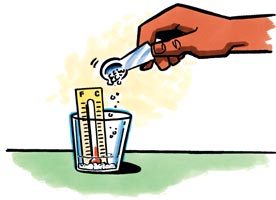
In an endothermic reaction, heat is ...
a)
taken in or absorbed
b)
given out or released
51.
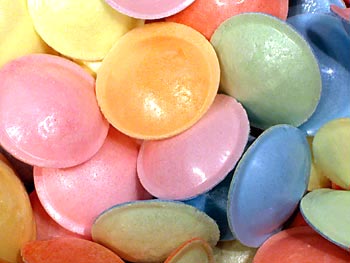
Have you ever eaten sherbet sweets candy? They fizz in your mouth and your tongue feels cold. Why do you think that is?
a)
It is an exothermic reaction
b)
It is an endothermic reaction
c)
It is made of ice
d)
It is dissolving your mouth
100 %

