
NEW
Font size
S
M
L
XL
 Worksheets
Ch 5 Cell Division, Reproduction, and Protein Synthesis
Total questions: 61
Worksheet time: 1hrs 9mins
Name
Class
Date
1.
more genetic diversity among offspring.
a)
sexual
b)
asexual
2.
one parent needed.
a)
sexual
b)
asexual
3.
offspring are identical to the parent.
a)
sexual
b)
asexual
4.
occurs in more simple organisms.
a)
sexual
b)
asexual
5.
occurs in more complex organisms.
a)
sexual
b)
asexual
6.
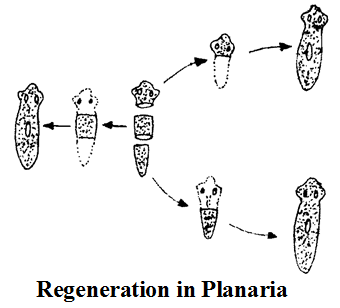
a)
sexual
b)
asexual
7.
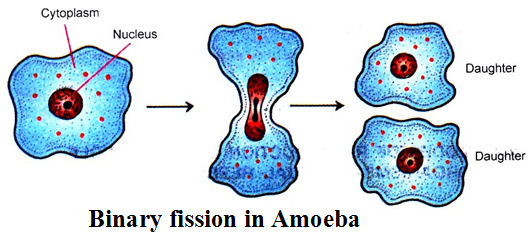
a)
sexual
b)
asexual
8.
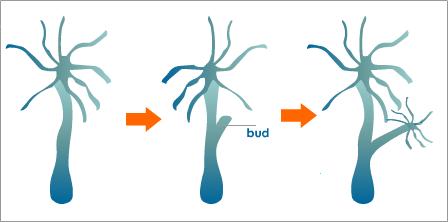
a)
sexual
b)
asexual
9.

Identify the phase of mitosis
a)
prophase
b)
metaphase
c)
anaphase
d)
telophase
10.
The process by which the nuclear material is divided equally between two new cells
a)
mitosis
b)
cancer
c)
spindle
d)
centromere
11.
the uncontrolled division of cells that results in malignant growth
a)
tissues
b)
cancer
c)
mitosis
d)
anaphase
12.
the two halves of the doubled chromosome structure
a)
centromeres
b)
sister chromatids
c)
spindle
d)
tissues
13.
the sequence of growth and division of a cell
a)
cell cycle
b)
mitosis
c)
anaphase
d)
cancer
14.

Which is Metaphase?
a)
A
b)
E
c)
C
d)
F
15.
the phase of mitosis in which the sister chromatids separate from each other
a)
prophase
b)
metaphase
c)
anaphase
d)
telophase
16.
What phase is a cell in if the chromosomes are all lined up down the middle?
a)
Anaphase
b)
Metaphase
c)
Prophase
d)
Telophase
17.
What phase is a cell in if the chromosomes are moving away to opposite ends of the cell?
a)
Anaphase
b)
Metaphase
c)
Prophase
d)
Telophase
18.
A cell spends most of its life in
a)
Anaphase
b)
Interphase
c)
Metaphase
d)
Prophase
19.
Which of the following terms means cytoplasmic division?
a)
interphase
b)
mitosis
c)
cytokinesis
d)
cell cycle
20.
When cells divide they make two ____ cells.
a)
daughter
b)
son
c)
Mom
d)
Dad
21.
During cytokinesis of an animal cell...
a)
a cell plate will form
b)
the cell will pinch in to divide
22.

What phase is represented by letter A?
a)
Anaphase
b)
Metaphase
c)
Prophase
d)
Telophase
23.

What phase is represented by letter C?
a)
Anaphase
b)
Metaphase
c)
Prophase
d)
Telophase
24.

What phase is represented by letter D?
a)
Anaphase
b)
Metaphase
c)
Prophase
d)
Telophase
25.

What phase is this?
a)
prophase
b)
metaphase
c)
anaphase
d)
telophase
26.
the phase in mitosis where chromosomes line up in the middle of the cell and the nucleus disapears.
a)
prophase
b)
metaphase
c)
anaphase
d)
telephase
27.
The stage where chromosomes condese and the nucleus is visible
a)
Prophase
b)
metaphase
c)
anaphase
d)
Telephase
28.
the stage in the cell cycle where cells spend the majority of their life.
a)
mitosis
b)
meoisis
c)
interphase
d)
anaphase
29.

In mitosis, the two resulting cells are
a)
different from the starting cell and identical to each other.
b)
different from the starting cell and different from each other.
c)
identical to the starting cell and different from each other.
d)
identical to the starting cell and identical to each other.
30.
Where is DNA located in the cell?
a)
golgi body
b)
lysosomes
c)
Nucleus
d)
Mitochondria
31.
The longest phase of the cell cycle
a)
prophase
b)
interphase
c)
metaphase
d)
mitosis
32.
Which of these lists presents the stages of the cell cycle in the correct order?
a)
interphase, mitosis, cytokinesis
b)
cytokinesis, mitosis, interphase
c)
mitosis, interphase, cytokinesis
d)
interphase, cytokinesis, mitosis
33.
During interphase, the DNA is in the form of
a)
chromatin
b)
chromosomes
c)
chromatids
d)
centromeres
34.
What process does a multi-cellular organism use to replace its damaged body cells?
a)
mitosis
b)
meiosis
c)
replication
d)
transcription
35.
Which is a disadvantage of sexual reproduction?
a)
Sexually reproducing organisms reproduce too quickly
b)
Sexually reproducing animals must find a mate
c)
Sexual reproduction does not allow organisms to adapt
d)
Sexually reproducing organisms are identical to their parents
36.

Fruit fly body cells have 8 chromosomes. After mitosis, you would expect a resulting fruit fly daughter cell to have ...
a)
16 chromosomes.
b)
46 chromosomes.
c)
8 chromosomes.
d)
4 chromosomes.
37.

Structure (b) is a ____.
a)
chromosome
b)
chromatid
c)
centromere
38.
What is the name of the process in which DNA (genetic information) is exchanged during meiosis?
a)
crossing under
b)
crossing over
c)
melding
d)
blending
39.
When you start with 1 cell, at the end of mitosis, how many identical cells will you have?
a)
1
b)
2
c)
3
d)
4
40.
After meiosis is complete how many cells will there be?
a)
1
b)
2
c)
3
d)
4
41.
Chromosomes that have corresponding traits from the opposite sex parent are called:
a)
Heterogeneous chromosomes
b)
homologous chromosomes
c)
Mother and Father chromosomes
d)
Grandmother and grandfather chromosomes
42.
After meiosis is complete, the new cells:
a)
are all identical
b)
are all different
c)
are half identical and half different
d)
are all stretched out
43.
Humans have how may chromosomes ?
a)
112
b)
46
c)
8
d)
67
44.
Most of the cells in the human body are produced by
a)
mitosis
b)
meiosis
45.
products of meiosis are genetically
a)
different
b)
identical
46.
You get one homologous chromosome from your ________ and one from your _______.
a)
dad, mom
b)
brother, sister
c)
grandmother, grandfather
d)
the stork, the stork
47.

Name that process
a)
Mitosis
b)
Meiosis
c)
Mutation
d)
Cell Cycle
48.
Where is the 'code' to produce proteins permanently stored?
a)
In your DNA
b)
In your Mitochondria
c)
In your mRNA
d)
In your Golgi Apparatus
49.
The result of transcription is ....
a)
A mRNA molecule
b)
An amino acid chain
c)
A fully functional protein
d)
An exact copy of DNA
50.
What is responsible for bringing amino acids to the ribosome?
a)
tRNA
b)
pRNA
c)
mRNA
d)
RNA Polymerase
51.
Protein Synthesis begins in which cell location?
a)
Ribosome
b)
Golgi Apparatus
c)
Rough ER
d)
Nucleus
52.
Proteins are essentially long chains of _______ that fold into a functional product.
a)
Ribosomes
b)
Amino acids
c)
tRNA
d)
mRNA
53.

What is shown in the diagram shown?
a)
DAN
b)
RAN
c)
DNA
d)
RNA
54.
What mutation has occurred here?
T-G-A-C-C-A - ORIGINAL
T-G-A-G-C-A - MUTATED
T-G-A-C-C-A - ORIGINAL
T-G-A-G-C-A - MUTATED
a)
Substitution
b)
Deletion
c)
Addition
d)
Frameshift
55.
ATTTGAGCC- Original
ATTGAGCC - Mutated
The example above is an example of a
ATTGAGCC - Mutated
The example above is an example of a
a)
Addition
b)
Substitution
c)
Deletion
d)
All of the above
56.
Are all mutations bad?
a)
Yes
b)
No
57.
DNA molecule segment is : TTACGCAAG
The mutated DNA segment is TTCGCAAG. This is an example of ___ mutation.
The mutated DNA segment is TTCGCAAG. This is an example of ___ mutation.
a)
Substitution
b)
Deletion
c)
Addition
d)
Inversion
58.
DNA molecule segment is : TTACGCAAG
The mutated DNA segment is TTACGCAAC. This is an example of ___ mutation.
The mutated DNA segment is TTACGCAAC. This is an example of ___ mutation.
a)
Substitution
b)
Addition
c)
Deletion
d)
Translocation
59.
DNA molecule segment is : TTACGCAAG
The mutated DNA segment is TTCGCAAG. This is an example of ___ mutation.
The mutated DNA segment is TTCGCAAG. This is an example of ___ mutation.
a)
Substitution
b)
Deletion
c)
Addition
d)
Inversion
60.
ATTTGAGCC - Original
ATTGAGCC - Mutated
The example above is an example of a
ATTGAGCC - Mutated
The example above is an example of a
a)
Addition
b)
Substitution
c)
Deletion
d)
All of the above
61.
Any change in the sequence of DNA is...
a)
transgenic shift
b)
Single Genotype
c)
Monohybrid Trait
d)
Mutation
Reset

