
 Worksheets
Hydrosphere
Total questions: 44
Worksheet time: 20mins
Name
Class
Date
1.

Study the graph below. Where is most of the Earth's water located?
a)
Rivers and Lakes
b)
Glaciers and Icecaps
c)
oceans
d)
groundwater
2.

Why is MOST of the freshwater on Earth not available for our use?
a)
All freshwater on Earth is easily accessible for use.
b)
It is frozen in the icecaps and glaciers.
c)
It is surface water.
d)
It is underground.
3.

Landform D in the diagram below was formed at a divergent boundary (where plates pull apart) as magma seeped up and solidified to form a series of mountains. What is this landform?
a)
mid-ocean ridge
b)
volcanic island
c)
continental slope
d)
abyssal plain
4.

Landform C in the diagram below is a flat area at the bottom of the ocean where sediments settle. What is landform C?
a)
continental slope
b)
abyssal plain
c)
continental shelf
d)
mid-ocean ridge
5.

According to the graph below, what happens to the density of a substance as its salinity increases (as you move up on the y-axis)? (Helpful tip: pick at least 2 salinities and find their densities on the graph. Compare.)
a)
As salinity increases, density stays the same.
b)
As salinity increases, density decreases.
c)
As salinity increases, density also increases.
6.

Which of the following is caused by the gravitational pull of the moon and sun?
a)
ocean waves
b)
ocean tides
c)
ocean currents
7.

Certain stages of the water cycle are most likely occurring under certain weather conditions. Which stage is most likely going to occur on a warm, sunny day?
a)
precipitation
b)
condensation
c)
evaporation
8.

Hurricanes form over the ocean. Which type of ocean water are hurricanes likely to gain strength?
a)
cooler water where less evaporation is occurring
b)
warmer water where more evaporation is occurring
c)
hurricanes ONLY occur over land
9.

The ability of a material to transmit water through interconnected pores is called
a)
capacity
b)
competence
c)
permeability
d)
porosity
10.
Which is most likely an example of point source pollution?
a)
fertilizer sprayed onto a field
b)
water runoff from a city street
c)
a pipe flowing into a river
11.
A new golf course is built next to a river. Over the past several months,
the nitrate levels of the water in the river have been increasing. Which
best explains the cause of the increasing nitrate levels?
the nitrate levels of the water in the river have been increasing. Which
best explains the cause of the increasing nitrate levels?
a)
increased growth of algae
b)
decreased biodiversity
c)
runoff from fertilizer
12.
Where does most fresh water exist?
a)
ice caps, lakes, and streams
b)
glaciers, rivers, and oceans
c)
aquifers, ice caps, and glaciers
13.
Which best explains what happens to nutrients in the ocean as a result
of upwelling?
of upwelling?
a)
Upwelling carries nutrients to coral reefs.
b)
Upwelling carries nutrients to the ocean bottom.
c)
Upwelling carries nutrients to the intertidal zone.
d)
Upwelling carries nutrients to the surface of the ocean.
14.
An area of land that drains into a body of water.
a)
mouth
b)
point-source pollution
c)
watershed
d)
headwaters
15.
The change of water from a liquid to a gas.
a)
evaporation
b)
precipitation
c)
condensation
d)
transpiration
16.
How much of the earth's water is freshwater?
a)
50 %
b)
3 %
c)
97 %
d)
93 %
17.
Aquifers store ____ water.
a)
ground
b)
lake
c)
ocean
d)
glacier
18.
Which of the following is not a permeable surface?
a)
soil
b)
sand
c)
pavement
d)
moss
19.
What is Point-Source pollution?
a)
pollution coming from a specific one site
b)
unsure of the places the pollution is coming from
c)
Oil spills in to the ocean
d)
None of the above
20.
How much of Earth's water is unavailable for humans to consume due to its high salinity?
a)
3%
b)
23%
c)
77%
d)
97%
21.
Why must humans clean water before using it?
a)
Humans are unable to digest untreated river water
b)
River water is free of any contaminant or pollutants
c)
Untreated river water is brown and humans prefer clear water
d)
Clear water may contain contaminants that could harm humans
22.
How does the amount of water circulating in the water cycle change?
a)
The amount of water remains constant
b)
The amount of water increases each time it rains
c)
he amount of water decreases and then increases each day
d)
The amount of water decreases every time evaporation occurs
23.
How is freshwater treatment different from wastewater treatment?
a)
Freshwater contains oils and vitamins needed for health
b)
Freshwater is treated after use to protect the environment
c)
Freshwater is treated after use to protect the environment
d)
Wastewater removes pollution to make potable water
24.
Which organism would be considered the best bio-indicator?
a)
Hawk that eats fish from the lake
b)
Lake fish that can live in a wide range of pH levels
c)
Crab lives in warm, shallow lake waters and sleeps in winter
d)
Bacteria in lake that can tolerate only small changes in pH
25.
Why is such a small amount of freshwater available for humans to readily use?
a)
Majority of freshwater is mixed in with the ocean water
b)
Most of fresh water is frozen in glaciers and polar ice caps
c)
Most of freshwater found in the gas form in the atmosphere
d)
Most of freshwater is liquid in lakes, rivers , & aquifers
26.
What is NOT an example of freshwater?
a)
Rivers
b)
Lakes
c)
Oceans
d)
Groundwater
27.
When water goes from being a gas (water vapor) to a liquid, that process is called
a)
Condensation
b)
Evaporation
c)
Transpiration
d)
Precipitation
28.
The scientific name for water in its gas phase
a)
Precipitation
b)
Evaporation
c)
Water Vapor
d)
Transpiration
29.
An area of seabed around a large landmass where the sea is shallow.
a)
continental shelf
b)
continental rise
c)
continental slope
d)
none of the above
30.
The steep slope where the continental shelf drops to the bottom of the ocean floor
a)
continental shelf
b)
continental slope
c)
continental rise
31.
The alternate rising and falling of the sea is called a what?
a)
river
b)
estuary
c)
tide
d)
wave
32.
The large, circular surface-current pattern found in each ocean.
a)
California Current
b)
Surface Current
c)
Gyre
d)
Global Conveyor Belt
33.
Two types of water currents are
a)
local and global
b)
sea and land
c)
surface and deep
d)
warm and cold
34.

A river starts very small before getting larger. What is the name given to a small river that joins a larger river?
a)
Confluence
b)
Tribunal
c)
Tributary
d)
Joiner
35.

What is the name of the point where a river ends?
a)
Tributary
b)
Water Shed
c)
Confluence
d)
Mouth
36.
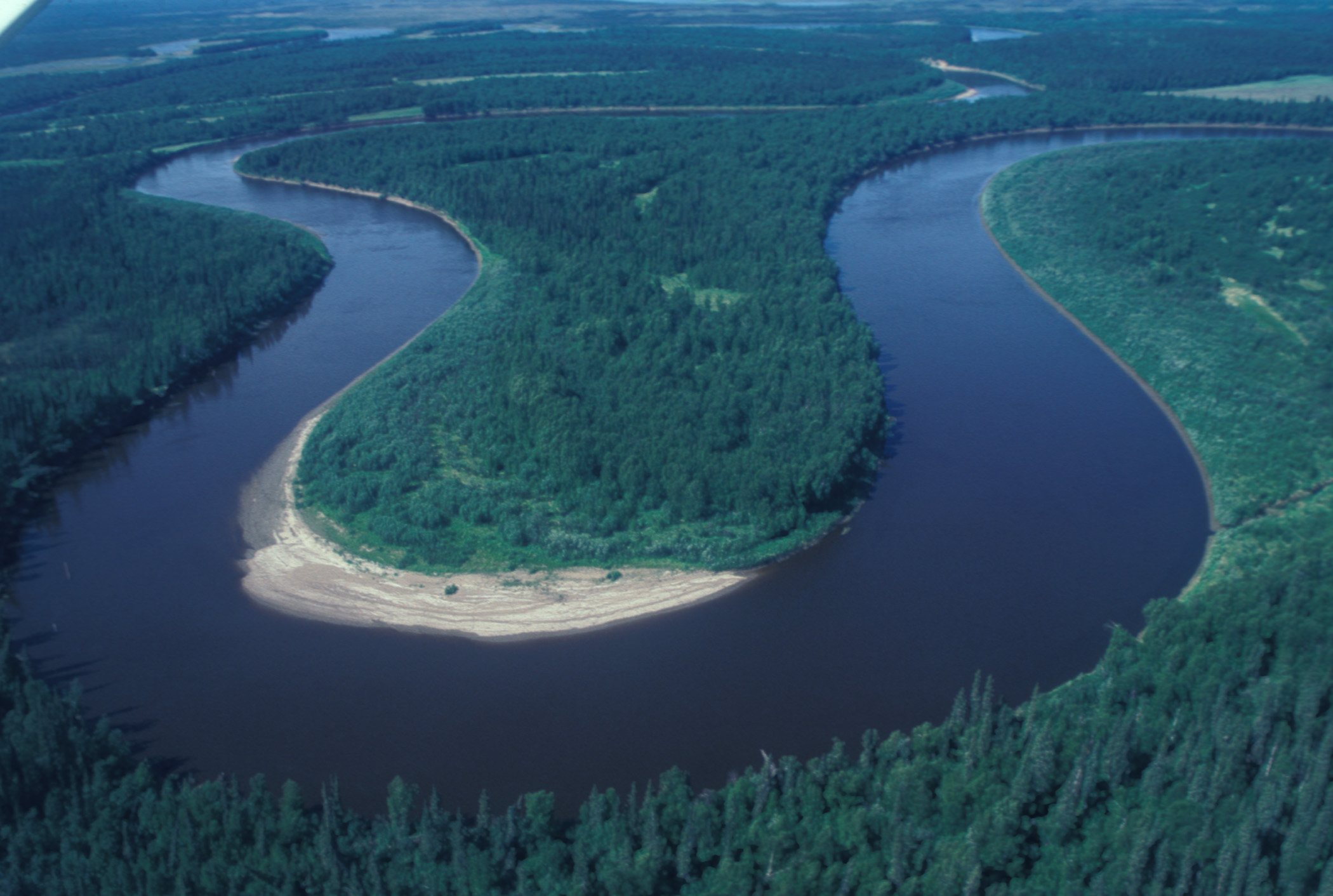
What river feature does this picture show?
a)
Oxbow Lake
b)
Meander
c)
Estuary
d)
Tributary
37.
How can a change in the pH of water affect the ecosystem
a)
Higher pH levels suffocates fish and causes them to die
b)
Lower pH levels creates a healthier environment for fish
c)
Change in pH affect which biological &chemical process occur
d)
pH levels changes the temperature of water
38.
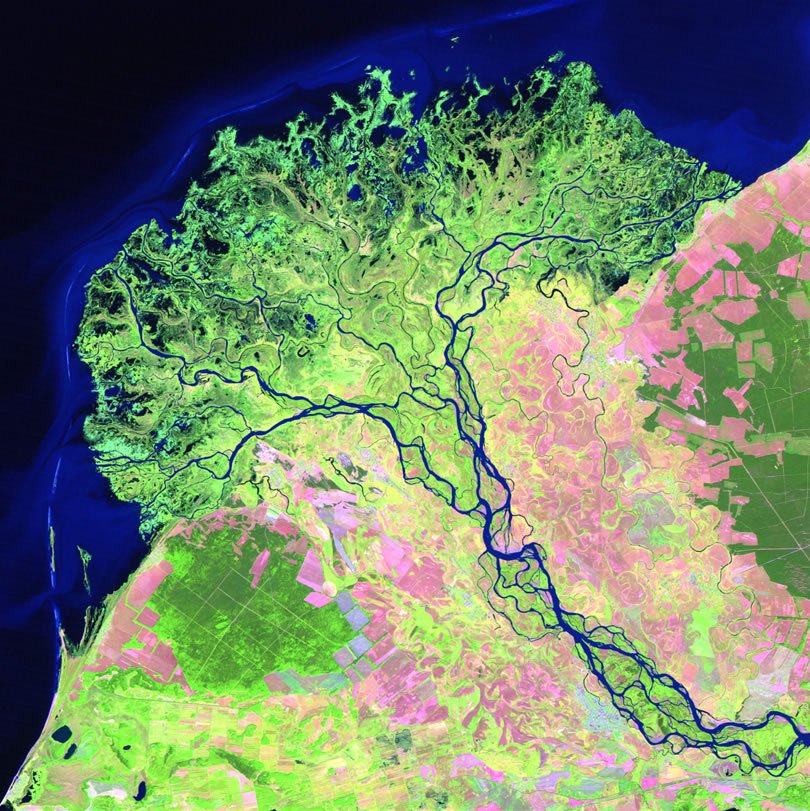
What does this image show?
a)
Oxbow Lake
b)
Headwaters
c)
Runoff
d)
Delta
39.
Floods can occur when ground water levels are
a)
level
b)
average
c)
high
d)
low
40.
The ___________________ the grain size, the faster the water will move through the soil.
a)
more mixed
b)
smaller
c)
larger
41.
During a portion of the water cycle, water falls to Earth’s surface as precipitation. Some of this water runs off into channels and keeps moving until it ends up in the ocean.
Which BEST describes the water in the channels?
Which BEST describes the water in the channels?
a)
lake
b)
river
c)
aquifer
d)
wetland
42.
The water cycle has no beginning or end, but it has an order. Which of the following are the MOST likely ways that water would move through the water cycle?
1) ocean to river to lake to atmosphere
2) aquifer to ice cap to ocean to atmosphere
3) atmosphere to watershed to river to ocean
4) atmosphere to ocean to atmosphere to ocean
1) ocean to river to lake to atmosphere
2) aquifer to ice cap to ocean to atmosphere
3) atmosphere to watershed to river to ocean
4) atmosphere to ocean to atmosphere to ocean
a)
1 and 2
b)
2 and 3
c)
3 and 4
d)
4 and 1
43.
Which would most negatively impact local water availability?
a)
floods
b)
droughts
c)
hurricanes
d)
thunderstorms
44.
Which most likely causes the rate of ground water movement to change?
a)
the rock material through which the water is moving
b)
the type of plants under which the water is moving
c)
the time of day
d)
the speed of the wind
100 %

