
 Worksheets
Test - Plate Tectonics
Total questions: 60
Worksheet time: 37mins
Name
Class
Date
1.
At what boundary do plates pull apart or divide?
a)
divergent
b)
convergent
c)
transform
2.
At what boundary do plates collide?
a)
divergent
b)
convergent
c)
transform
3.
What type of boundary formed the Himalaya mountains?
a)
divergent
b)
convergent
c)
transform
4.
What is the best explanation for why oceanic crust is subducted by continental crust?
a)
The oceanic crust is cooler than continental crust.
b)
Continental crust is denser than oceanic crust.
c)
Oceanic crust is denser than continental crust.
d)
The oceanic crust is hotter than continental crust.
5.
What creates the magma that erupts from volcanoes in subduction zones?
a)
Tears in the crust allow magma to rise to the surface.
b)
Materials on the oceanic plate (such as plants+seawater) melt and evaporate and rise to the surface of the crust.
c)
The heat from friction between the two plates causes the continental plate to melt.
d)
None of the above.
6.
Which feature does not form at a subduction boundary?
a)
A trench
b)
A rift
c)
Volcanoes
d)
Mountains
7.
Continental to continental plate collisions produce ________.
a)
island arcs
b)
rift valleys
c)
very tall mountain ranges
d)
deep-sea trenches
8.
_________________ are vast, underwater mountain chains.
a)
Deep-sea trenches
b)
Mid-ocean ridges
c)
Faults
d)
Trasnform bounderies
9.
_______________is a process that occurs at convergent boundaries
a)
slab pull
b)
paleomagnetism
c)
ridge push
d)
transform boundaries
10.
Wegener's hypothesis that Earth's continents once was one landmass
a)
ridge push
b)
continental drift
c)
paleomagnetism
d)
convection
11.
The Theory___________ of states that Earth's crust and mantle are broken into slabs
a)
plate tectonics
b)
slab pull
c)
magnetic reversal
d)
seafloor spreading
12.
The place where plates slide horizontally past each other
a)
subduction
b)
divergent boundary
c)
transform boundaries
d)
ridge push
13.
the weight of an uplifted ocean ridge pushes an oceanic plate
a)
slab pull
b)
ridge push
c)
continental drift
d)
Pangaea
14.
name of the single landmass
a)
Pangaea
b)
convergent boundary
c)
magnetic reversal
d)
subduction
15.
explains how new ocean crust is created at ridges and destroyed at deep-sea-trenches
a)
seafloor spreading
b)
divergent boundary
c)
ridge push
d)
earthquakes
16.

The diagram given best represents what type of tectonic plate boundary?
a)
Collision
b)
Divergent
c)
Subduction
d)
Transform
17.

The diagram given best represents what type of tectonic plate boundary?
a)
Collision
b)
Divergent
c)
Subduction
d)
Transform
18.

The diagram given best represents what type of tectonic plate boundary?
a)
Collision
b)
Divergent
c)
Subduction
d)
Transform
19.

The diagram given best represents what type of tectonic plate boundary?
a)
Collision
b)
Divergent
c)
Subduction
d)
Transform
20.
Who was the German scientist who first developed the idea that the continents were once joined in a single landmass that broke apart?
a)
Albert Einstein
b)
Alfred Wegener
c)
Charles Darwin
d)
Dmitri Meneleev
21.
What types of fossils were used to develop the idea of continental drift?
a)
Anthodon
b)
Mesosaurus
c)
Tyrannosaurus Rex
d)
Velociraptor
22.
If I found a sea creature fossil on top of a mountain, how do you suggest it appeared there?
a)
Magic
b)
The water pushed the fossil up the mountain.
c)
The ocean floor was pushed up to form a mountain with the fossil in it.
d)
The ocean floor was separated and caused the fossil to appear on top of the mountain.
23.
Which of the following causes Earth's tectonic plates to move?
a)
Energy from the Sun
b)
Magnetic Pole Reversal
c)
Convection currents in the mantle
d)
Faults in Mountain Ranges
24.
Which of the following is NOT evidence to support the theory of plate tectonics?
a)
Fossils
b)
Mountains
c)
Glaciers
d)
Sand Erosion
25.
Where does the heat come from that drives this convection current in the mantle?
a)
The sun
b)
The crust
c)
the mantle
d)
the core
26.
What type of boundary creates mountains?
a)
Convergent with subduction
b)
Convergent without subduction
c)
Divergent
d)
Transform
27.
What process adds more crust to the ocean floor?
a)
suction
b)
sea-floor spreading
c)
subduction
d)
magnetic stripe
28.
Where does subduction occur?
a)
along the middle of some ocean floors
b)
down the middle of mountain ranges
c)
on continents
d)
at deep ocean trenches
29.
The farther from a mid-ocean ridge a rock sample is taken the ______________ the rock is.
a)
hotter
b)
softer
c)
younger
d)
older
30.
Which ocean is getting bigger?
a)
Atlantic
b)
Pacific
c)
Arctic
d)
Indian
31.

Which letter represents a mid ocean ridge?
a)
A
b)
B
c)
c
d)
Y
32.

Which letter represents the deep ocean trench?
a)
A
b)
B
c)
C
d)
Y
33.
Whenever a subduction zone is formed a ______ is formed.
a)
Mountain
b)
Island Arc
c)
Rift
d)
Volcano
34.
What does the theory of continental drift state?
a)
The continents were once joined in a super-continent and have moved over time
b)
Continents are stationary and do not move
c)
The Earth is broken into lithospheric plates that move due to convection currents
d)
none of the above
35.
What is an ancient organism that is preserved in rock?
a)
A rock
b)
A fossil
36.
True or False : Sea-floor Spreading adds new material to the ocean floor?
a)
True
b)
False
37.
The oceanic crust _________ when it reaches the continental crust.
a)
sinks
b)
rises
c)
expands
38.
If there are more subduction zones than mid-ocean ridges, what happens to the ocean?
a)
It gets bigger
b)
It gets smaller
c)
It sinks and rises
39.
Which is NOT used to map the ocean floor?
a)
GIS
b)
Rocks
c)
GPS
d)
Sonar
40.
What is one real world example of seafloor spreading?
a)
Pacific Ocean
b)
Arctic Ocean
c)
Atlantic Ocean
41.
Who proposed the theory of Sea-Floor Spreading?
a)
Harry Hess
b)
Alfred Wegener
c)
Harry Humphrey
d)
Alfred Williams
42.
What is an ancient organism that is preserved in rock?
a)
A rock
b)
A fossil
43.
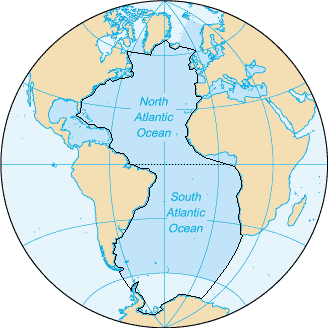
In the Atlantic ocean, where is the youngest seafloor located?
a)
Towards the edges, near the eastern and western continents
b)
Towards the middle of the ocean
c)
Towards the north and south poles
d)
Young seafloor is located randomly throughout the ocean
44.

True or False: Our continents will eventually become a supercontinent (like Pangaea) again, far in the future
a)
True
b)
False
45.

What are the remains of organism noticed by Wegener that are found the same in two continents?
a)
Leaves and flowers
b)
Ice and mountains
c)
Plants and animals
d)
Dinosaurs and reptiles
46.
Where did Wegener find plant fossils that today would not be able to survive on that type of land?
a)
North America
b)
Antarctica
c)
China
d)
India
47.
Evidence exists to support Pangaea. Fossils of warm-weather plants have been found in the Arctic region.
a)
True
b)
False
48.
Associated with transform boundaries.
a)
Volcanoes
b)
mountains
c)
trenches
d)
earthquakes
49.
Oceanic crust is
a)
Younger and less dense than continental crust
b)
Thinner, younger and more dense than continental crust
c)
Older, thicker and less dense that continental crust
d)
Bigger and younger than continental crust
50.
Earth's plates are...
a)
constantly moving and changing the face of the earth
b)
Never moves
c)
Moves seldom and very fast
d)
Moves when it feels like it
51.

What type of boundary creates a volcano?
a)
convergent ocean ocean
b)
convergent ocean continental
c)
convergent continental continental
d)
divergent
52.

What type of boundary creates an island arc?
a)
convergent ocean ocean
b)
convergent ocean continental
c)
convergent continental continental
d)
divergent
53.
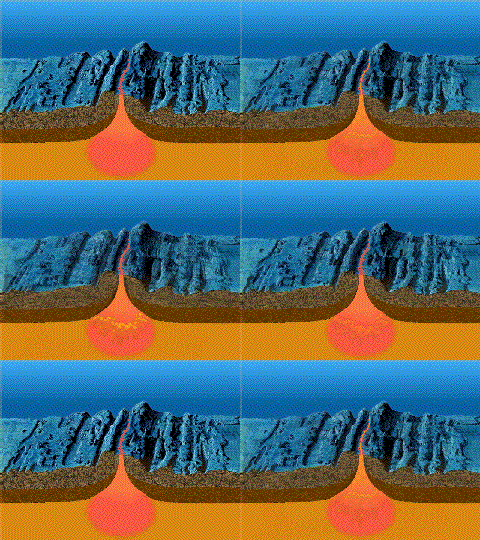
What type of boundary creates new seafloor?
a)
convergent ocean ocean
b)
convergent ocean continental
c)
convergent continental continental
d)
divergent
54.

Two rock samples were taken from the ocean floor. Rock A was taken close to the mid-ocean ridge. Rock B was taken 500 miles away from the mid-ocean ridge. What statement is most likely true
a)
Rock A is older than Rock B
b)
B. Rock B is older than Rock A
c)
Rock A and Rock B are about the same age
d)
The ages of the rocks cannot be determined
55.
What causes convection currents to move
a)
heat
b)
wind
c)
fire
d)
cold air
56.
When one tectonic plate __________ under another at a convergent boundary it sinks back in the mantle.
a)
subducts
b)
falls
c)
sinks
57.
The primary force responsible for plate tectonics is ___________ in the mantle.
a)
Conduction
b)
Convection
c)
Radiation
58.
A deep valley along the ocean floor is called a __________.
a)
Mid-ocean ridge
b)
Deep sea cave
c)
Deep ocean trench
59.
Which of the following objects best represents the movement that occurs during sea-floor spreading?
a)
Elevator
b)
Conveyor belt
c)
Rollercoaster
d)
Hot air balloon
60.

Why does the ocean floor sink beneath the continent at Z?
a)
The ocean floor is less dense than the continent.
b)
The ocean floor is more dense than the continent.
c)
The ocean floor is moving faster than the continent.
d)
The ocean floor is moving slower than the continent.
100 %

