Wayground logo

Free Printable Worksheets

Font size

S
M
L
XL
Worksheets

2nd 9 wks review

Total questions: 90

Worksheet time: 45mins

Name
Class
Date
1.

Hunter/gather, made and used fire, created cave art: These characteristics of what era?

a)

Neolithic

b)

Bronze

c)

Paleolithic

d)

Iron

2.
Created woven clothing, made and used pottery, domesticated plants, advanced tools: These characteristics are what era?
a)
Paleolithic
b)
Neolithic
c)
Bronze
d)
Mesolithic
3.
From which continent did Homo sapiens emerge?
a)
Australia
b)
Americas
c)
Africa
d)
Asia
4.
What is the location of Aleppo and Jericho?
a)
Fertile Crescent
b)
Arabian Peninsula
c)
Egypt
d)
Persian Empire
5.
Besides Stonehenge, what other archaeological sites provide information of early human life in the the Fertile Crescent?
a)
Athens and Sparta
b)
Jericho and Aleppo
c)
Rome and Carthage
d)
Alexandria and Memphis
6.
The map depicts the sea trade routes of which civilization?
a)
Egyptian
b)
Phoenician
c)
Roman
d)
Greek
7.
Nile River Valley
Tigris and Euphrates River Valley
Indus River Valley
Huang He River Valley
What is the best title for this list?
a)
Origins of Democracy
b)
Phoenician Empire
c)
Cradles of Civilization
d)
Origins of city-states
8.
Expert sailors
Purple dye
developed the alphabet
Which civilization matches this list?
a)
Phoenicia
b)
Greece
c)
Rome
d)
Egypt
9.
Brahmin
Kshatriya
Vaishya
Shudra
Pariah
Which is the priest class?
a)
Brahmin
b)
Kshatriya
c)
Vaishya
d)
Shudra
10.
What was the Code of Hammurabi?
a)
First major set of written laws
b)
Religious beliefs of the Babylonians
c)
Concept of "innicent until proven guilty"
d)
Set of laws that treated men and women as equals
11.

Doric

Ionic

Corinthian

This list refers to

a)

Greek vases

b)

Greek columns

c)

Greek plays

d)

Greek architecture

12.
Who was the founder of Buddhism?
a)
Muhammad
b)
Abraham
c)
Siddhartha Gautama
d)
Zoroaster
13.

The Four Noble Truths and the Eightfold Path to Enlightenment refers to what religion?

a)

Hinduism

b)

Zoroastrianism

c)

Buddhism

d)

Judaism

14.
Who was the "Father of History" and wrote The History of the Persian Wars?
a)
Pericles
b)
Thucydides
c)
Pythagoras
d)
Herodotus
15.
In Athens, Democracy was extended to more males and male citizens were given an equal voice during which time period?
a)
Golden Age of Classical China
b)
Golden Age of Pericles
c)
Hellenistic Age
d)
Greco-Roman Era
16.
What was a negative impact of military conquests of the Roman Republic?
a)
More resources became available for trade
b)
Roman culture began to disappear
c)
Small farmers became unemployed
d)
Roman culture increased its influence around the Mediterranean
17.
What does Alexander the Great's Hellenistic Age refer to the blending of?
a)
Roman and Greek culture
b)
Greek and Macedonian culture
c)
Greek, Middle eastern and Oriental culture
d)
Greek, Egyptian and European culture
18.
Civil war over Julius Caesar
Devaluation of Roman currency
First triumvirate
These are a few reasons for
a)
Decline of trade in the Roman Empire
b)
Decline of the Roman Republic
c)
Decline of the Roman Empire
d)
Growth of the Roman Empire
19.
Which two city-states on the map led the two opposing leagues in the Peloponnesian War?
a)
H and 3
b)
G and J
c)
F and D
d)
A and B
20.
What type of society did Sparta have?
a)
democratic
b)
militaristic
c)
individualistic
d)
artistic
21.
Asoka's reign included:
Hospitals, roads, veterinary clinics and___________
a)
spread of Buddhism
b)
Zoroastrianism
c)
end of slavery
d)
origin of Hinduism
22.
From what civilization did this writing system develop?
a)
Mesopotamia (Sumer)
b)
Egypt
c)
Indus
d)
China
23.
From what area did this writing system develop?
a)
Mesopotamia (Sumer)
b)
China
c)
Phoenicia
d)
Indus Valley
24.
From what area did this writing system develop?
a)
Phoenicia 
b)
China
c)
Egypt
d)
Indus valley
25.
From what area did this writing system develop?
a)
Egypt
b)
Indus Valley
c)
Mesopotamia (Sumer)
d)
China
26.
 How did the geography of Greece influence its development?
a)
It helped unify Greece.
b)
It isolated Greece from the rest of Europe.
c)
It allowed for the creation of a powerful empire.
d)
It allowed for the creation of separate city-states.
27.
What is a basic belief of Hinduism?
a)
Reincarnation
b)
Yin and Yang
c)
Ancestor worship
d)
Mandate of Heaven
28.
How would people know if there ruler had lost the Mandate of Heaven?
a)
Priests would lead an uprising.
b)
Natural disasters and political conflicts would result in an overthrow.
c)
The oldest son would take over at his father's death.
d)
Apeaceful transition would take place.
29.
What is one result of the Persian Wars?
a)
Macedonia conquered the Greek city-states.
b)
Persia dominated the Aegean basin.
c)
Athens continued to flourish and entered its golden age.
d)
Persia gained control of the aegean Sea
30.
Which Indian dynasty spread Buddhism?
a)
Qin
b)
Han
c)
Mauryan
d)
Gupta
31.
What did Rome gain control of as a result of the Punic Wars?
a)
western Mediterranean Sea
b)
Italian Peninsula
c)
Europe and Africa
d)
Fertile Crescent
32.
How was Hannibal able to invade Italy?
a)
Sailing across the Aegean Sea
b)
Sailing across the Mediterranean Sea
c)
Crossing the Apennines Mountains
d)
Crossing the Alps Mountains
33.
Who were the two elected officials of the executive branch of the Roman Republic?
a)
Senators
b)
Tribunes
c)
Consuls
d)
judges
34.
Who was at the top of the social class in Roman society?
a)
Senators
b)
Caesars
c)
Plebeians
d)
Patricians
35.
What was the religion of the Persian Empire?
a)
Polytheism
b)
Hinduism
c)
Zoroastrianism
d)
Judaism
36.
Roman mythology was influenced by
a)
Macedonia
b)
Persia
c)
Carthage
d)
Greece
37.
Which was a flaw in the structure of Imperial Rome?
a)
Term limits of public office
b)
Senators voted for the next emperor.
c)
No plan of succession of emperors
d)
Lack of a stable economic system
38.
Yahweh
Torah
Abraham
Monotheism
The list above refers to what religion?
a)
Christianity
b)
Islam
c)
Judaism
d)
Zoroastrianism
39.
Socrates
Plato
Aristotle
The individuals above are Greek
a)
playwrights
b)
historians
c)
mathematicians
d)
philosophers
40.
Geographic size
Political problems
Germanic invasions
Epidemic diseases
The list above refers to
a)
Fall of the Roman Republic
b)
Collapse of Alexander the Great's Empire
c)
Fall of the Roman Empire
d)
End of the Greco-Roman Era
41.
Who was named "dictator for life" in the Roman Republic?
a)
Augustus Caesar
b)
Pompey
c)
Romulus Augustulus
d)
Julius Caesar
42.
The Diaspora refers to the exile and spread of what group of people?
a)
Romans 
b)
Greeks
c)
Jews
d)
Buddhists
43.
Created a common coinage
Created secure network of roads
Created a civil service system
What time period is the list above refer to?
a)
Golden Age of Pericles
b)
Pax Romana
c)
Pax Sinica
d)
Gupta Empire
44.
Identify this architecture.
a)
Hagia Sophia
b)
Dome of the Rock
c)
Pantheon
d)
Parthenon
45.
Identify this architecture.
a)
bridge
b)
aqueduct
c)
Roman arch
d)
Roman road
46.
Identidy this architecture.
a)
Circus Maximus
b)
Agora
c)
Parthenon
d)
Forum
47.
Identify this architecture.
a)
Pantheon
b)
Colosseum
c)
Parthenon
d)
Forum
48.
Identify this architecture.
a)
Colosseum
b)
Aqueduct
c)
Trevi fountain
d)
Circus Maximus
49.
After emerging from East Africa, where did Homo sapiens migrate to? 
a)
Australia
b)
Antarctica
c)
Americas
d)
Eurasia
50.
Identify the era of this image
a)
Neolithic
b)
Bronze
c)
Mesolithic
d)
paleolithic
51.
Identify the era of this image.
a)
Paleolithic
b)
Neolithic
c)
Iron
d)
Bronze
52.
Identify the era of this image.
a)
Mesolithic
b)
Neolithic
c)
Paleolithic
d)
Bronze
53.
a)
Mesolithic
b)
Paleolithic
c)
Iron
d)
Neolithic
54.
Identify the era of this image.
a)
Neolithic
b)
Mesolithic
c)
Paleolithic
d)
Bronze
55.
What ruler was responsible for the spread of Buddhism form India to East and Southeast Asia?
a)
Chandra Gupta
b)
Asoka
c)
Siddhartha Gautama
d)
unkown
56.
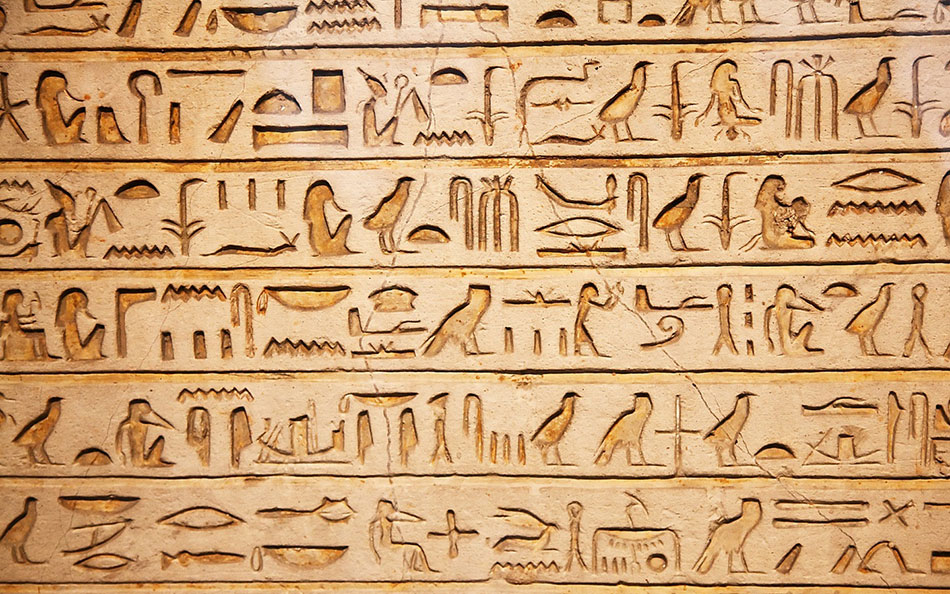
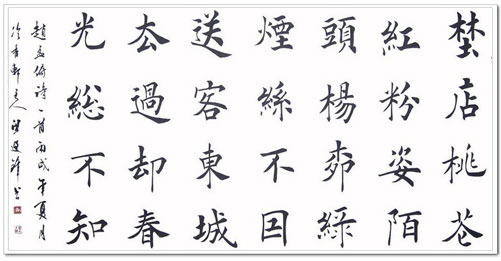
Identify this writing system.
a)
Sanskrit
b)
Cuneiform
c)
Phoenician alphabet
d)
hieroglyphics
57.
Identify this writing system.
a)
Phoenician alphabet
b)
Chinese pictographs
c)
Sanskrit
d)
hieroglyphics
58.
Identify this writing system
a)
Chinese pictographs
b)
Hieroglyphics
c)
Phoenician alphabet
d)
Sanskrit
59.
Identify this writing system.
a)
Phoenician alphabet
b)
Sanskrit
c)
Hieroglyphics
d)
Chinese pictographs
60.
What is the symbol for the Greek goddess Aphrodite?
a)
the apple
b)
the shield
c)
the dove
d)
the owl
61.
Which of the following is a characteristic of Confucianism?
a)
Balance and harmony
b)
live a humble life
c)
follow the middle way
d)
importance of education
62.
The Parthenon was a temple to honor
a)
all the ancient Roman gods.
b)
the Greek goddess Athena.
c)
the chief god Zeus.
d)
all the ancient Greek gods.
63.
What event occurred in A.D. 476?
a)
The fall of the Roman Republic
b)
the fall of the western Roman Empire
c)
The fall of Carthage in the Punic Wars
d)
The end of the Pax Romana
64.
Who was a member of the first triumvirate and assassinated in 44 B.C.?
a)
Augustus Caesar
b)
Crassus
c)
Pompey
d)
Julius Caesar
65.
The term "Cradles of Civilizations" refers to____
a)
origin of man
b)
the first river valley civilizations
c)
the first law codes
d)
the origins of government
66.
Athens was a______
a)
direct democracy
b)
representative democracy
c)
republic
d)
autocracy
67.
What was a result of Greece's limited availability of arable land?
a)
colonization
b)
invasion
c)
migration
d)
isolation
68.

What is the holy texts of Hinduism?

a)

Four Noble Truths and Eightfold Path

b)

Torah

c)

Vedas and Upanishads

d)

Avesta

69.

What empire was defeated by an alliance between Sparta and Athens?

a)

Macedonian

b)

Roman

c)

Egyptian

d)

Persian

70.

What is the correct order of governments in Athens from first to last?

a)

Tyranny-Democracy-Theocracy-Aristocracy

b)

Autocracy-Monarchy-Theocracy-Democracy

c)

Monarchy-Aristocracy-Tyranny-Democracy

d)

Democracy-Oligarchy-Monarchy-Autocracy

71.

This site was constructed in

a)

Asia Minor

b)

Catalhoyuk

c)

Egypt

d)

England

72.

What environmental factor had the biggest impact on the human need for shelter?

a)

water

b)

climate

c)

landforms

d)

altitude

73.

Early civilization arose along rivers because they--

a)

provided water needed for agriculture

b)

provided easy access for invasion

c)

provided building materials for villages

d)

none of these

74.

What sea is east of the Italian Peninsula?

a)

Adriatic Sea

b)

Black Sea

c)

Aegean Sea

d)

Mediterranean Sea

75.

which answer shows the locations of Rome and Carthage?

a)

6 and 4

b)

7 and 3

c)

6 and 3

d)

3 and 4

76.

What common characteristic do these civilizations have in common?

a)

their similarity in climate

b)

they traded with each other

c)

Near major rivers

d)

they developed in isolation from each other

77.

What does this image imply about the Egyptian civilization?

a)

It practiced hereditary rule.

b)

It had a rigid class system.

c)

It used slave labor.

d)

It was polytheistic.

78.

Which characteristic distinguished the Neolithic Era from the Paleolithic Era?

a)

job specialization

b)

religious worship

c)

permanent settlements

d)

elected officials

79.

What most influenced the migration of Homo sapiens during the Paleolithic Era?

a)

creation of simple weapons

b)

development of language

c)

search for life's basic needs

d)

creation of simple tools

80.

What characteristic distinguished the Hebrews from other ancient civilizations?

a)

codified laws

b)

monotheistic religion

c)

hereditary rule

d)

written language

81.

Which image shows an advancement of the Neolithic Era?

a)
b)
c)
d)
82.

What statement best ex[plains the success of the unity of the Persian Empire?

a)

everyone practiced the Persian religion

b)

everyone was allowed to practice their own customs and traditions

c)

everyone could vote and hold public office

d)

everyone could serve in the military

83.

What do the archaeological sites of Stonehenge and Catalhoyuk have in common?

a)

They are Neolithic Era settlements

b)

they are near rivers

c)

they are located in England

d)

people developed advanced tools

84.

What characteristic of ancient Greece is represented in this image?

a)

Religion

b)

Military

c)

Government

d)

Society

85.

daughter of Zeus

goddess of wisdom

Parthenon built in her honor


Identify this image

a)

Demeter

b)

Athena

c)

Aphrodite

d)

Artemis

86.

Who extended democracy among male Athenians and rebuilt Athens after the Persian Wars?

a)

Pericles

b)

Draco

c)

Themistocles

d)

Solon

87.

Carthaginian general

Rome's greatest enemy

Invaded northern Italy


Identify this person

a)

Alexander

b)

Pompey

c)

Philip II

d)

Hannibal

88.

This model was the contribution of-

a)

Hippocrates

b)

Archimedes

c)

Ptolemy

d)

Euclid

89.

The principle "innocent until proven guilty" came from the-

a)

Aeneid

b)

Code of Hammurabi

c)

Ten commandments

d)

Twelve Tables

90.

Ancient Rome was located on what peninsula?

a)

Balkan

b)

Iberian

c)

Italian

d)

Peloponnesus