
 Worksheets
Seventh Eighth Science Review
Total questions: 86
Worksheet time: 1hrs 5mins
Name
Class
Date
1.
The highest point of a wave is?
a)
crest
b)
trough
c)
point of origin
d)
comppression point
2.
Force exerted between the surfaces of two objects.
a)
Friction
b)
Inertia
c)
Force
d)
Gravity
3.

When you step on a Lego. You push on the Lego and the Lego pushes back on you.
a)
Newton's 1st Law
b)
Newton's 2nd Law
c)
Newton's 3rd Law
4.
For every action there is an equal and opposite reaction; equal in force and opposite in direction.
a)
Newton’s first law of motion
b)
Newton’s second law of motion
c)
Newton’s third law of motion
5.
If you exert a net force of 8 N on a 2-kg object, what will its acceleration be?
a)
2 m/s2
b)
4 m/s2
c)
16 m/s2
d)
10 m/s2
6.
Without any force to change it, an object at rest stays at rest and an object in motion stays in motion
a)
Newton’s first law of motion
b)
Newton’s second law of motion
c)
Newton’s third law of motion
7.

After the train passed, the pitch of the train whistle became lower. This change in sound would be represented by what change in the diagram above?
a)
The distance represented by C would increase.
b)
The distance represented by C would decrease.
c)
The distance represented by D would increase.
d)
The distance represented by D would decrease.
8.
Sound is able to travel faster in solids than in air because the molecules in a solid are
a)
closer together than air molecules
b)
more easily moved than air molecules
c)
moving faster than air moleculesmoving faster than air molecules
d)
larger than air molecules
9.
A reflected sound wave
a)
frequency
b)
pitch
c)
echo
d)
rarefaction
10.
This particle determines what element you have - the elements identity.
a)
electron
b)
proton
c)
neutron
d)
valence shell
11.
What are valence electrons?
a)
electrons on the first orbital always
b)
nucleus
c)
the outermost shell
d)
the number of electrons on the outermost orbital
12.
What is the mass number and name of an element with 8 protons and 8 neutrons?
a)
16 - Carbon
b)
16 - Oxygen
c)
24 - Oxygen
d)
8 - Neon
13.
An element with a mass number of 11 and an atomic number of 5 has how many neutrons?
a)
11
b)
5
c)
6
d)
16
14.
Which particles make up the nucleus of an atom?
a)
protons and neutrons
b)
electrons and protons
c)
electrons, protons, and neutrons
d)
electrons and neutrons
15.

Changing the number of neutrons in an atom changes its...
a)
element type.
b)
mass (weight).
c)
charge.
d)
atom type.
16.
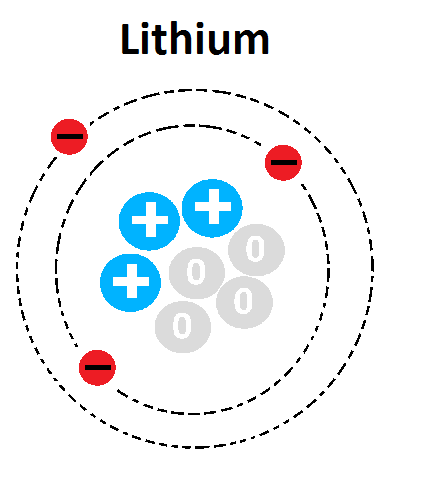
What is the atomic number of this atom?
a)
1
b)
3
c)
4
d)
7
17.
Wind turbines and windmills convert what energy to another?
a)
Kinetic to electric
b)
Gravitational potential to electric
c)
Mechanical to potential
d)
Thermal to sound
18.
On a roller coaster, where is maximum potential energy?
a)
At the bottom of a big hill
b)
When going around a corner
c)
When going upside down
d)
At the top of a big hill
19.
The formula for work is:
a)
d = r x t
b)
p = m x v
c)
f = m x a
d)
w = d x f
20.
Energy of motion is which type of energy?
a)
Potential
b)
Kinetic
c)
Sound
d)
Gravitational
21.
When a hot object touches a cooler object, heat energy is transferred from the warmer object to the cooler object through:
a)
radiation
b)
electrical energy
c)
conduction
d)
solar heating
22.
You and your family are sitting around a campfire. You can feel the heat on your face, even when you back your seat away from the fire. The heat energy from the fire warms your face through:
a)
light energy from the fire
b)
conduction
c)
chemical reactions in the fire
d)
radiation
23.
Which of the following is an example of potential energy?
a)
a ball rolling down a ramp
b)
a stretched rubber band
c)
a baseball flying into the outfield
d)
a snail moving across a rock
24.
Warm air rises and cool air sinks due to...
a)
Radiation
b)
Convection
c)
Conduction
25.
According to the Law of Conservation of Energy, energy can...
a)
Change from one form to another
b)
Be created
c)
Be destroyed
26.
Two roller coaster cars are traveling at the same speed. One car has 5 adults in it, and the other car has two children in it. Which car has more kinetic energy?
a)
Car with 5 adults
b)
Car with 2 children
27.
As the mass of an object increases...
a)
Both kinetic and potential energy increase
b)
Kinetic energy increases while potential energy decreases
c)
Potential energy increases, Kinetic energy decreases
d)
The potential and kinetic energies stay the same
28.
Two apples of the same mass are on the same tree at the same height. What is true about their potential energy?
a)
The potential energy of one apple is greater than the other
b)
The potential energy of one apple is less than the other
c)
The potential energies of the apples are equal
29.
Vertical (up and down) columns in the periodic table are called _________ of elements and have similar properties.
a)
groups
b)
periods
30.
The horizontal (left to right) rows on the periodic table are known as
a)
periods.
b)
atoms.
c)
groups or families.
d)
valence electrons.
31.
What group on the periodic table is completely nonreactive?
a)
Alkali
b)
Noble Gases
c)
Halogens
d)
Transition metals
32.
a substance made of 2 or more elements that are chemically joined in a specific combination
a)
compound
b)
molecule
c)
atoms
d)
element
33.
One way to find the number of valence electrons in an element is to look at the
a)
Family or Group
b)
period
c)
atomic number
d)
atomic mass
34.
Which element is found in period 3 group 2?
a)
Sodium (Na)
b)
Magnesium (Mg)
c)
Yttrium (Y)
d)
Boron (B)
35.
_________are not good conductors of heat or electricity
a)
Metals
b)
Metalloids
c)
Nonmetals
d)
gold
36.
At room temperature, the phase or state of matter that most elements on the periodic table of elements are in is
a)
liquids
b)
gas
c)
solids
37.
When socks get stuck to towels in your dryer, this is an example of________________
a)
current electricity
b)
static electricity
38.

A pathway for electricity to travel is called___________
a)
current
b)
static electrcity
c)
circuit
d)
circle
39.

A continuous flow of electricity is called_____________
a)
series
b)
circuit
c)
static
d)
current
40.
What converts nitrogen gas into a useable form for plants and animals?
a)
bacteria
b)
fungi
c)
rain
d)
car exhaust
41.

What kind of circuit is this?
a)
series
b)
parallel
42.
In a parallel circuit if one light bulb goes OUT; then they ALL go out. TRUE OR FALSE?
a)
TRUE
b)
FALSE
43.

What is this?
a)
magnet
b)
electromagnet
c)
series circuit
d)
parallel circuit
44.
What is a conductor?
a)
A material that stops electric current from flowing
b)
A material that allows electric current to flow easily
45.
Which is an example of a conductor?
a)
Glass
b)
Plastic
c)
Copper
d)
Wood
46.
What is an insulator?
a)
A material that DOES NOT allow electric current to flow
b)
A material that DOES allow electric current to flow
47.
Which is an example of an insulator?
a)
Rubber
b)
Copper
c)
Iron
d)
Steel
48.

How do you increase the strength of an electromagnet?
a)
Decrease the number of batteries and increase the number of coils
b)
Increase the electric current and decrease the batteries
c)
You cannot strengthen an electromagnet
d)
Increase the electric current and increase the number of coils
49.
What is the process of combining nitrogen gas with other elements to make nitrogen into usable compounds?
a)
nitrogen composition
b)
ammonia
c)
nitrogen fixation
d)
denitrification
50.
Stores food and water for the cell.
a)
Cytoplasm
b)
Cell Wall
c)
Vacuole
d)
Nucleus
51.

According to cell theory, where did this cell come from?
a)
another living cell
b)
energy from sun
c)
a multicellular organism
d)
the nonliving environment
52.
This organelle takes food and turns it into ENERGY for plant and animal cells.
a)
Chloroplast
b)
Mitochondria
c)
Lysosome
d)
Ribosome
53.
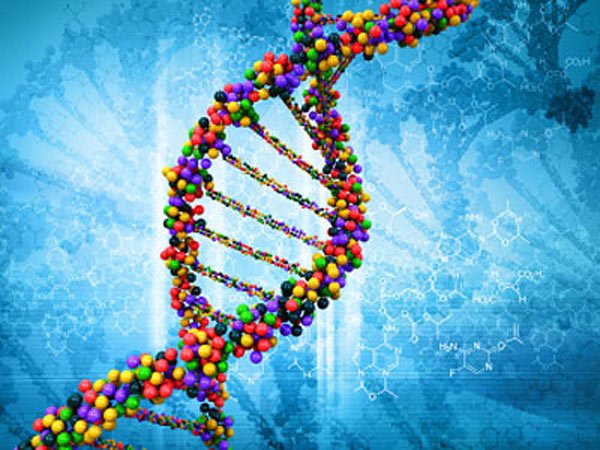
What is the name of the genetic material that is inside the nucleus?
a)
ER
b)
ATP
c)
YOLO
d)
DNA
54.
A group of tissues that work together to perform a similar function is called_____. (Examples include the heart, lungs or stomach)
a)
cells
b)
tissues
c)
organs
d)
organ system
55.
Organs that work together to perform a related function is called _____________?
a)
cells
b)
tissues
c)
organ system
d)
organs
56.

A student conducted an experiment about the movement of a marble through four different liquid substances. Looking at the figure designed by the student, what is an error in his experiment?
a)
The amount of liquid substances used is not consistent.
b)
The type of liquid substances are not labeled correctly.
c)
The type of marble used is not consistent.
d)
The marbles are not dropped from the same distance.
57.
Which scientist saw the atom as mostly empty space with electrons orbiting around the nucleus?
a)
Niels Bohr
b)
John Dalton
c)
Ernest Rutherford
d)
J.J. Thomson
58.

The dependent variable in this experiment is -
a)
Number of Bacteria
b)
Time of Incubation
c)
Culture Number
d)
Type of Bacteria
59.

What can you infer about the temperature for E.coli bacterial growth?
a)
E. coli does not grow well at low and high temperatures.
b)
E coli will continue to grow at very high temperatures.
c)
E.coli grows best at very low temperatures
d)
E.coli grows best at very high temperatures.
60.
The transition zone between dry areas of land and bodies of water are called:
a)
Wetlands
b)
Watersheds
c)
Divides
d)
Estuaries
61.
Where would you find brackish water?
a)
Wetlands
b)
Aquifers
c)
Glaciers
d)
Estuaries
62.
Plants, water, solar energy are all examples of what kind of resources?
a)
renewable
b)
soil and land
c)
nonrenewable
d)
biosphere
63.
What are the products of photosynthesis?
a)
water and carbon dioxide
b)
oxygen and glucose
c)
oxygen and carbon dioxide
d)
oxygen and water
64.

The reactants of photosynthesis are
a)
sugar and water.
b)
sugar and oxygen.
c)
carbon dioxide and water.
d)
carbon dioxide and oxygen.
65.

Which of the following is the correct equation for PHOTOSYNTHESIS?
a)
6CO2 + 6H2O --> 6O2 + C6H12O6
b)
6CO2 + C6H12O6 + 6H2O --> O2
c)
6O2 + 6H2O --> 6CO2 + C6H12O6
d)
C6H12O6 + 6O2 ---> 6H2O + 6CO2
66.
Term given to describe the 2 name naming system is:
a)
dichotmous key
b)
binomial nomenclature
c)
2 scientific names
d)
binomial key
67.
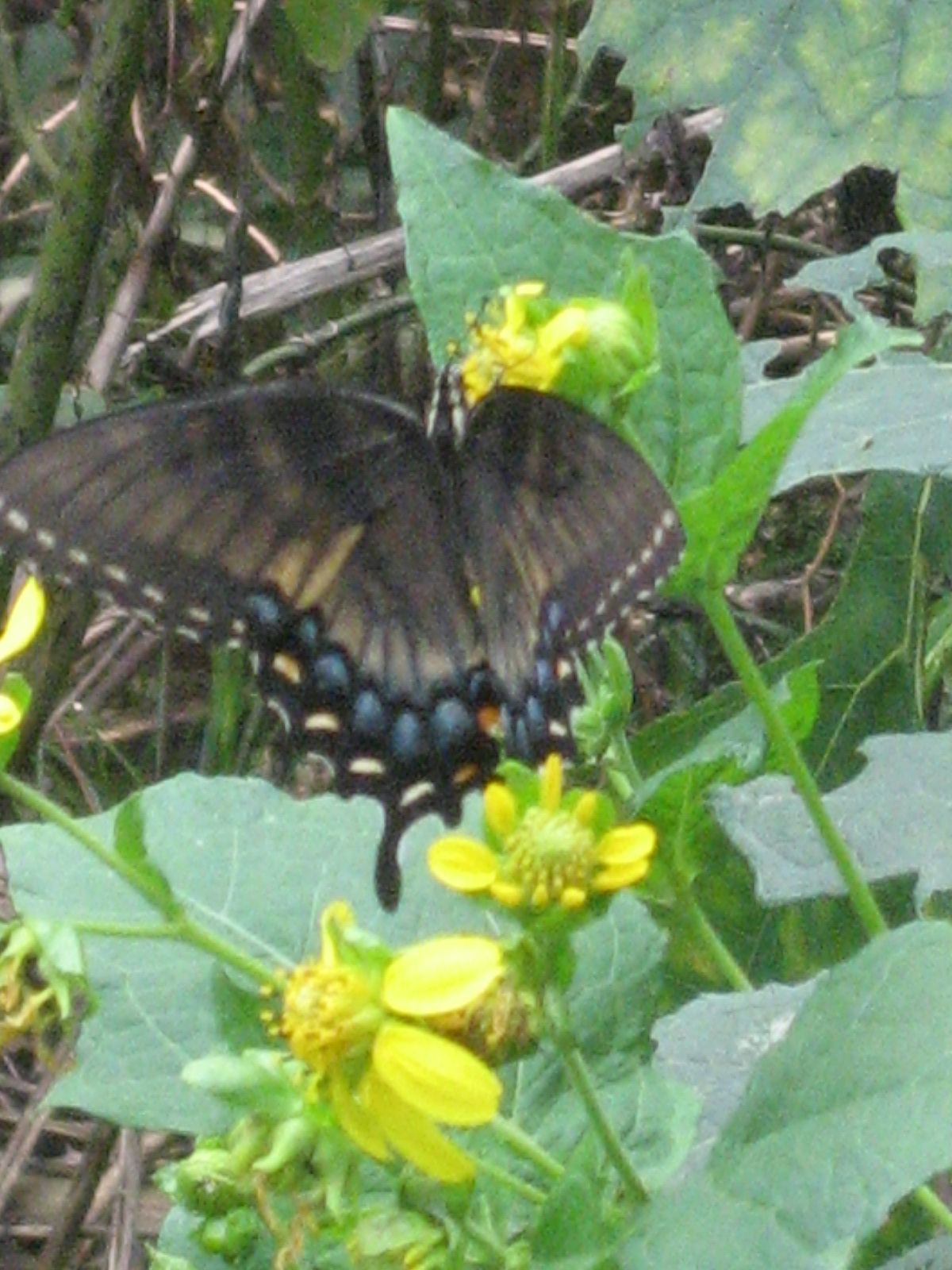
The 8 levels of classification, most broad to most specific.
a)
Domain, Genus, Family, Order, Class, Phylum, Kingdom, Species
b)
Domain, Species, Kingdom, Genus, Phylum, Family, Class, Order
c)
Domain, Kingdom, Phylum, Class, Order, Family, Genus, Species
d)
Order, Kingdom, Species, Domain, Phylum, Family, Class, Genus
68.

A dichotomous key for trees is provided. Hikers found a tree that has large brown cones and single sharp needles. What species of tree have the hikers found?
a)
Juniper
b)
Pine
c)
Spruce
d)
Fir
69.
All organisms that do not fit into plant, fungi, and animal kingdoms but have a nucleus are:
a)
archaebacteria
b)
eubacteria
c)
protists
d)
fungus
70.

This domain is characterized by ancient bacteria that can live in extreme environments, such as hot springs.
a)
Archaea
b)
Bacteria
c)
Eukarya
d)
Prokarya
71.
The group of invertebrates that has spiny skin for protection, arms that radiate out from a central body, and tube feet is _______.
a)
echinoderms
b)
sponges
c)
arthropods
72.

Which animal is most different?
a)
coral
b)
sea anemone
c)
sponge
73.

Squidward has light blue skin, and his genotype for this trait is Bb. Would Squidward be considered a purebred or hybrid for light blue skin?
a)
Purebred
b)
Hybrid
74.
G = green, g = yellow
The genotype for a yellow plant is...
The genotype for a yellow plant is...
a)
GG
b)
Gg
c)
gg
d)
all of the choices result in yellow
75.
What does not produce carbon dioxide?
a)
Photosynthesis
b)
Burning Fossil Fuels
c)
Animal respiration
d)
Plants decaying
76.
Ionic compounds are formed when one or more valence electrons are transferred from _____
a)
a nonmetal atom to a metal atom
b)
a nonmetal atom to a nonmetal atom
c)
a metal atom to a nonmetal atom
d)
a metal atom to a metal atom
77.
What two types of atoms make a covalent bond?
a)
2 Nonmetals
b)
1 Nonmetal and 1 Metal
c)
2 Metals
d)
2 Noble Gases
78.
How are covalent bonds explained?
a)
When one atom takes the other atom's electron
b)
When the atom shares an electron with an another atom
c)
When the two nucleus merge
d)
When the neutrons leave the nucleus
79.
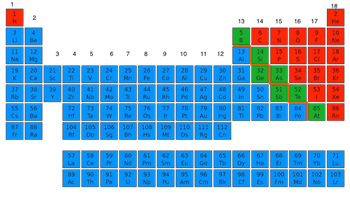
Where are the nonmetals located on the periodic table?
a)
Blue
b)
Red
c)
Green
80.
Ionic or covalent?
NaBr
NaBr
a)
Ionic
b)
Covalent
81.
Noble gases will form chemical bonds with other elements
a)
True
b)
False
c)
Sometimes
82.
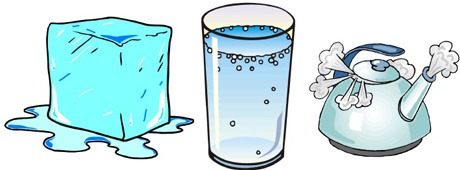
The principle that states that all mass stays the same even though a change in the matter occurs is called __________________________ ____ ____________________.
a)
Matter of fact
b)
Consistency of matter
c)
Conservation of matter
d)
Conversation of liquids
83.
Is the following equation balanced or unbalanced?
Fe + S --> FeS
Fe + S --> FeS
a)
balanced
b)
unbalanced
84.
How many atoms of aluminum are on each side of the following equation: 4Al + 3O2 --> 2Al2 O3
a)
2
b)
6
c)
1
d)
4
85.

Who discovered the principles of heredity while studying pea plants?
a)
Charles Darwin
b)
Anton Von Leewenhook
c)
Gregor Mendel
d)
Carolus Linnaeus
86.

In the energy pyramid below, which organism has the least amount of energy available?
a)
Producers
b)
Herbivores
c)
Carnivores
d)
Top Predator
100 %

