
NEW
Font size
S
M
L
XL
 Worksheets
6 Mollusks
Total questions: 66
Worksheet time: 34mins
Name
Class
Date
1.
In what type of environment do MOST mollusks live?
a)
Soil
b)
Freshwater
c)
Marine
d)
Terrestrial
2.
Which part of the Mollusk body is specialized for burrowing, feeding, and movement?
a)
trochophores
b)
visceral mass
c)
mantle
d)
foot
3.
Which class of Mollusks include clams, oysters, and mussels?
a)
Gastropoda
b)
Bivalvia
c)
Cephalopoda
d)
Polyplacophora
4.
Which class of Mollusks include squid, cuttlefish and octopus?
a)
Gastropoda
b)
Bivalvia
c)
Cephalopoda
d)
Polyplacophora
5.
Which class of Mollusks includes snails, slugs, or nudibranches?
a)
Cephalopoda
b)
Bivalvia
c)
Gastropoda
d)
Polyplacophora
6.
Which part of the Mollusk body is the tissue covering the body and secretes the shell?
a)
Mantle
b)
Trochophore
c)
Foot
d)
Visceral Mass
7.
Which class of Mollusks include organisms that have camera-like eyes similar to humans?
a)
Gastropoda
b)
Bivalvia
c)
Cephalopoda
d)
Polyplacophora
8.
Which class of Mollusks have the most advanced nervous system?
a)
Gastropoda
b)
Bivalvia
c)
Cephalopoda
d)
Polyplacophora
9.
Which of the following is the kidney-like structure used by Mollusks for excretion?
a)
gills
b)
nephridia
c)
mantle
d)
visceral mass
10.
Which class of Mollusks have a closed circulatory system?
a)
Gastropoda
b)
Bivalvia
c)
Cephalopoda
d)
All of the classes
11.
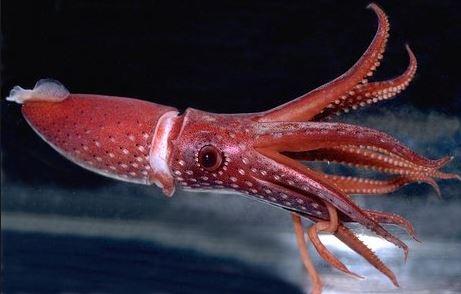
What Mollusk group does the picture belong to?
a)
Gastropoda
b)
Bivalvia
c)
Cephalopoda
d)
Polyplacophora
12.
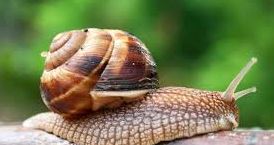
What Mollusk group does the picture belong to?
a)
Gastropoda
b)
Bivalvia
c)
Cephalopoda
d)
Polyplacophora
13.

What Mollusk group does this picture belong to?
a)
Bivalvia
b)
Gastropoda
c)
Cephalopoda
d)
Polyplacophora
14.
What is the meaning of Mollusks?
a)
soft-bodied
b)
filter feeder
c)
porus
d)
stomach foot
15.

Mollusk's tongue-like strip covered with teeth that point backward is called the ____
a)
mantle
b)
radula
c)
gills
d)
visceral mass
16.
The phylum_____________ includes many soft bodied organisms such as snails, slugs, squids, clams, and octopods.
a)
Porifera
b)
Cnidaria
c)
Mollusca
d)
Ctenophora
17.
The small body cavity found in mollusks that surround the heart, gonads, and nephridia is called a ______
a)
coelom
b)
gastrovascular cavity
c)
triploblast
d)
radula
18.
What are the 2 main regions of a mollusks body?
a)
head-foot and visceral mass
b)
visceral mass and shell
c)
mantle and head-foot
d)
visceral mass and mantle
19.
The _____ of mollusks is responsible for secreting the shell.
a)
mantle
b)
radula
c)
visceral mass
d)
veliger
20.
Which of the following is NOT a layer found in the molluscan shell?
a)
nacreous
b)
prismatic
c)
periostracum
d)
epidermis
21.
The smooth and shiny inner layer of the molluscan shell is called the
a)
nacreous
b)
periostracum
c)
primatic
d)
ectostracum
22.
The space between the mantle and the foot of a mollusk is called the
a)
mantle cavity
b)
gastrovascular cavity
c)
coelom
d)
radula
23.
The rasping structure used for feeding in mollusks is called the
a)
veliger
b)
radula
c)
odontophore
d)
protostyle
24.

What structure is labeled F?
a)
lungs
b)
heart
c)
gills
d)
mantle cavity
25.
What structure is labeled B?
a)
fin
b)
tentacles
c)
arms
d)
mantle cavity
26.
What structure is labeled N?
a)
mantle
b)
tentacles
c)
heart
d)
mantle cavity
27.
What structure is labeled H?
a)
funnel
b)
head
c)
tentacles
d)
fin
28.
What structure is labeled E?
a)
branchial heart
b)
systemic heart
c)
brain
d)
mantle cavity
29.
What structure is labeled J?
a)
arms
b)
brains
c)
antennae
d)
feet
30.
What structure is labeled K?
a)
ocelli
b)
complex eye
c)
brain
d)
tentacles
31.
What structure is labeled G?
a)
ink sac
b)
chromatophores
c)
brain
d)
kidney
32.
Eels, Dolphins, and sharks are octopuses main _______.
a)
Diet
b)
Prey
c)
Friends
d)
Predators
33.
Octopuses, squid, and cuttlefish can change colors to match their environment.
a)
True
b)
False
34.

Why do octopuses have the name octopus?
a)
they have 8 eyes
b)
they have 3 hearts
c)
they have suckers
d)
they have 8 tentacles
35.

Octopuses use their suckers on their tentacles to
a)
Smell, taste, grab thing, and crawl.
b)
see under water
c)
change directions
d)
grow back
36.
What is one thing octopuses do to protect themselves from predators?
a)
Octopuses pretend like they are sleep.
b)
Octopuses use their heads to fight.
c)
Octopuses do not protect themselves.
d)
Octopuses squirt ink into the water to blind other animals.
37.

About how many suction cups are on an octopuses tentacle?
a)
800
b)
200
c)
500
d)
100
38.

About how many different types of octopuses are there?
a)
1,000
b)
800
c)
2,000
d)
200
39.

Which octopus is very dangerous?
a)
The blue ringed octopus
b)
The mimic octopus
c)
The pacific octopus
d)
The sand octopus
40.

How many eggs can an octopus lay?
a)
500,000
b)
100,000
c)
400,000
d)
200,000
41.

Where do octopuses live?
a)
Alone in dens
b)
In a colony of other octopuses
c)
On the ocean floor
d)
On the ocean's surface
42.

Some octopuses can change color if an enemy spots them.
a)
True
b)
False
43.

To escape a predator an octopus might
a)
smack it with a tentacle
b)
shoot out an inky liquid
c)
swim quickly
d)
hide behind a shark
44.

What does an octopus use to help it eat food like clams, crabs, and lobsters?
a)
a rock
b)
it eats them whole
c)
its tentacles
d)
its beak
45.

An octopus uses its siphon (aka funnel) to
a)
force water out so it can take off like a rocket
b)
filter food from the water
c)
pick up clams and lobsters
d)
hide
46.
How many arms does a squid have?
a)
one
b)
eight
c)
three
d)
ten
47.
What structure connects to the stomach?
a)
lungs
b)
heart
c)
esophagus
d)
brain
48.
What are the color cells located on the dorsal side of a squid?
a)
COLOR CELLS
b)
CHROMATOPHORES
c)
BROWN CELLS
d)
CAMOUFLAGE
49.
WHAT IS ANOTHER NAME FOR THE REPRODUCTIVE SQUID ORGANS?
a)
CELLS
b)
EGGS
c)
POLLEN
d)
GONADS
50.
HOW MANY TENTACLES DOES A SQUID HAVE?
a)
ONE
b)
TWO
c)
THREE
d)
FOUR
51.
SQUID USE _______ TO BREATHE.
a)
LUNGS
b)
SKIN
c)
HANDS
d)
GILLS
52.
WHAT IS LOCATED INSIDE THE SQUID'S MOUTH?
a)
TEETH
b)
BEAK
c)
TONGUE
d)
RADULA
53.
WHERE DOES THE SQUID DIGEST FOOD?
a)
HEART
b)
STOMACH
c)
MOUTH
d)
SIPHON
54.
WHAT HELPS A SQUID MOVE?
a)
FINS
b)
ARMS
c)
TENTACLES
d)
MANTLE
55.
WHAT DO SQUID USE TO MOVE QUICKLY?
a)
ARMS
b)
EYES
c)
SIPHON
d)
TENTACLES
56.
In squid, the water jet is responsible for
a)
Locomotion
b)
Reproduction
c)
Feeding
d)
Paralyzing prey
57.

# 1 is pointing to the squid's
a)
Mantle
b)
Fins
c)
Water Jet
d)
Nose
58.

# 2 is pointing to the squid's
a)
Mantle
b)
Water Jet
c)
Eye
d)
Fins
59.

# 4 is pointing to the squid's
a)
Arms
b)
Tentacles
c)
Clubs with toothed suckers
d)
Legs
60.
Which of these cephalopods has an external shell?
a)
cuttlefish
b)
squid
c)
octopus
d)
nautilus
61.
Which group of cephalopods bites prey in the head?
a)
Cuttlefish
b)
Nautilus
c)
Squid
d)
Octopus
62.
Among mollusks, which is a special characteristic of cephalopods?
a)
an open circulatory system.
b)
a two way digestive system.
c)
the only mollusk class with gills.
d)
a closed circulatory system.
63.
What does Cephalopod mean?
a)
means "2-shells"
b)
means "head-foot"
c)
means "stomach-foot"
d)
means "soft bodied"
64.
Which group of cephalopods is nocturnal?
a)
Cuttlefish
b)
Nautilus
c)
Squid
d)
Octopuses
65.

The cells in skin of cephalopods that allow them to change colors are called
a)
pigmentocytes
b)
chromatophores
c)
dermatophores
d)
branchiocytes
66.
Which group of cephalopods has ability to flatten body to fit in small spaces and change skin to blend with surroundings?
a)
Cuttlefish
b)
Nautilus
c)
Squid
d)
Octopuses
Reset

