
 Worksheets
Unit 3 Review - Earth in the Universe
Total questions: 82
Worksheet time: 3575secs
Name
Class
Date
1.
What portion of the moon is lit by sunlight unless a lunar eclipse is occurring?
a)
1/4
b)
1/3
c)
1/2
d)
none
2.
What is a waxing moon?
a)
The lit portion is getting bigger
b)
The lit portion is getting smaller
c)
There is no lit portion
d)
The moon is completely lit
3.
What is a waning moon?
a)
The lit portion is getting bigger
b)
The lit portion is getting smaller
c)
There is no lit portion
d)
The moon is completely lit
4.
Why is just one side of the moon visible from Earth?
a)
The moon does not rotate on its axis as it orbits Earth
b)
Half the moon is always unlit by the sun
c)
Half the moon does not reflect light from the sun
d)
The moon rotates once in the same amount of time it revolves around Earth
5.
Tides are mainly caused by...
a)
Earth's rotation
b)
The sun
c)
The moon
d)
Strong winds
6.
During what moon phases do we have neap tides?
a)
Full/new moon
b)
1st/3rd quarter moon
7.
During what moon phases do we have spring tides?
a)
Full/new moon
b)
1st/3rd quarter moon
8.
Tides are the rise and fall of sea levels due to...
a)
Sun's gravitational pull
b)
Earth's rotation on its axis
c)
Moon's gravitational pull
d)
Earth's revolution around the sun
9.
What is a gibbous moon?
a)
More than half of the lit portion is visible on Earth
b)
All of the lit portion is visible on earth
c)
Less than half of the lit portion is visible on Earth
d)
None of the lit portion is visible on Earth
10.
What is a crescent moon?
a)
More than half of the lit portion is visible on Earth
b)
All of the lit portion is visible on earth
c)
Less than half of the lit portion is visible on Earth
d)
None of the lit portion is visible on Earth
11.
During which phases can a lunar eclipse occur?
a)
first quarter
b)
new moon
c)
third quarter
d)
full moon
12.
During a total solar eclipse only the people on Earth that are under the ____ of the moon’s shadow will be able to see a total solar eclipse.
a)
waxing shadow
b)
penumbra
c)
umbra
d)
waning shadow
13.
During a total lunar eclipse, the moon is ____.
a)
in Earth's umbra
b)
in Earth's penumbra
c)
between Earth and the sun
d)
casting a shadow on Earth
14.
During a total solar eclipse, the moon is ____.
a)
in Earth's umbra
b)
in Earth's penumbra
c)
between Earth and the sun
15.
To have a partial lunar eclipse, the moon must be in the ___.
a)
umbra
b)
penumbra
c)
the penumbra and the umbra
d)
past the focal point of the umbra
16.
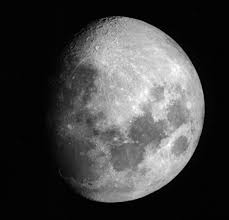
Name the moon phase
a)
waning crescent
b)
waxing crescent
c)
waning gibbous
d)
waxing gibbous
17.
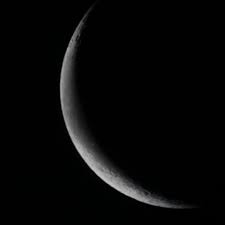
Name the moon phase
a)
waning crescent
b)
waxing crescent
c)
waning gibbous
d)
waxing gibbous
18.
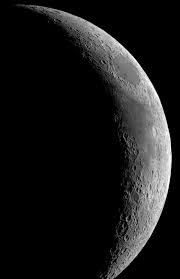
Name the moon phase
a)
waning crescent
b)
waxing crescent
c)
waning gibbous
d)
waxing gibbous
19.
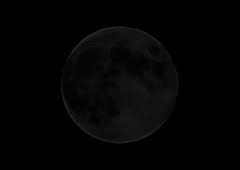
Name the moon phase
a)
First Quarter
b)
Last Quarter
c)
New Moon
d)
Full Moon
20.
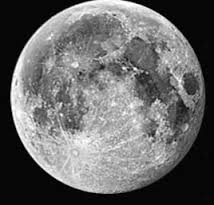
Name the moon phase
a)
First Quarter
b)
Last Quarter
c)
New Moon
d)
Full Moon
21.
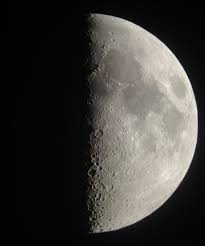
Name the moon phase
a)
First Quarter
b)
Last Quarter
c)
New Moon
d)
Full Moon
22.
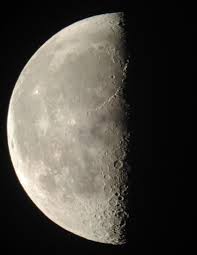
Name the moon phase
a)
First Quarter
b)
Third Quarter
c)
New Moon
d)
Full Moon
23.

Name the moon phase that would come AFTER this moon.
a)
waning crescent
b)
waxing crescent
c)
waning gibbous
d)
waxing gibbous
24.
What are meteoroids?
a)
Pieces of planets
b)
Pieces of the sun
c)
Pieces of comets
d)
Pieces of asteroids
25.
What are asteroids?
a)
Smaller celestial objects that are mostly made of rock
b)
Smaller celestial objects mostly made of ice and other particles
26.
What kind of objects do we send into space because it's too far for us to go?
a)
satellite
b)
space probe
c)
telescope
d)
space shuttle
27.
What does the revolution of a planet imply?
a)
Planets traveling around the sun.
b)
Planets spinning on its axis.
c)
Planets traveling through the asteroid belt.
d)
Planets spinning through the galaxy.
28.
The International Space Station is one of these because we put it into orbit around the Earth to gather information from it.
a)
space probe
b)
satellite
c)
meteoroid
d)
telescope
29.
Our galaxy is a ________ galaxy.
a)
Irregular
b)
Elliptical
c)
Spiral
d)
Twirl
30.

What type of galaxy is this?
a)
Spiral
b)
Elliptical
c)
Irregular
d)
Irrational
31.
What are the three types of galaxies?
a)
Spiral, irregular, boxed
b)
Spiral, elliptical, spherical
c)
Spiral, elliptical, square
d)
Spiral, irregular, elliptical
32.
What is not a galaxy?
a)
Optical Galaxy
b)
Spiral Galaxy
c)
Elliptical Galaxy
d)
Irregular Galaxy
33.

What type of galaxy is this?
a)
Spiral
b)
Odd Shaped
c)
Irregular
d)
Elliptical
34.
What is the name of our galaxy?
a)
Snickers
b)
Andromeda
c)
Local Group
d)
Milky Way
35.
A light year is...
a)
The speed light travels
b)
How long it takes light to get to you from the sun
c)
The distance light can travel in a year
d)
How many years it takes light to be emitted
36.
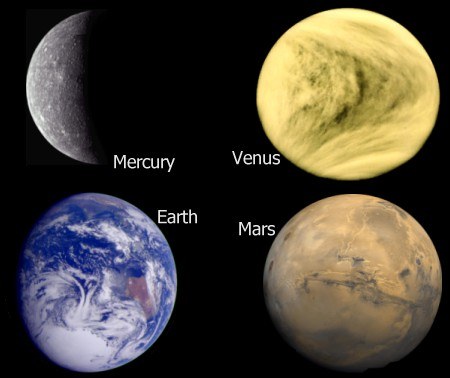
Earth and the other planets closest to the Sun are made mostly of _______
a)
gas
b)
metal
c)
water
d)
rock
37.

Earth's ________ on its axis causes day and night.
a)
rotation
b)
revolution
c)
phase
d)
comet
38.

One full orbit of an object around another object is called a ________.
a)
axis
b)
rotation
c)
revolution
d)
satellite
39.

The __________ has planets, moons, comets, and asteroids.
a)
solar system
b)
earth
c)
rotation
d)
United States
40.
One of the main differences between the outer and inner planets is __________.
a)
The inner planets all have water
b)
the inner planets are much bigger than the outer planets
c)
the outer planets are gas planets
d)
the outer planets have rings, and the inner planets don't
41.
Where is the asteroid belt found?
a)
between earth and mars
b)
Between Uranus and Neptune
c)
Between Mercury and Venus
d)
Between Mars and Jupiter
42.
Select the order from smallest to largest.
a)
Sun, Milky Way, solar system, universe
b)
Sun, Milky Way, universe, solar system
c)
Sun, solar system, Milky Way, universe
d)
Sun, solar system, universe, Milky Way
43.
Why does Earth have different seasons?
a)
because of the distance between Earth and the sun
b)
because of the speed of Earth as it rotates on its axis
c)
because of the amount of light blocked by the moon on its axis
d)
because of the tilt of Earth on its axis as it moves around the sun
44.
When a comet nears the sun, the “tail” always points away from the sun due to the ___________________.
a)
solar winds
b)
solar energy
c)
solar flares
45.

What is the composition of most comets?
a)
rock, ice, salt carbon
b)
rock, ice magma, frozen gases
c)
ice, dust, rock, frozen gases
d)
ice, dust, rock, soil
46.
How does a meteor compare to a meteorite?
a)
A meteor is moving through Earth's atmosphere and the meteorite actually lands on Earth
b)
A meteorite is moving through the Earth's atmosphere and the meteor actually lands on Earth
c)
Meteors are made up of Carbon and meteorites are made of ice
d)
They are the same thing
47.

Which of the following describes a Meteor?
a)
Found between Mars and Jupiter
b)
Orbit the sun like a planet
c)
Have an elliptical orbit of the sun
d)
Burn up as they enter the atmosphere
48.
What is the composition of an asteroid?
a)
Ice, dust, rock, frozen gases
b)
Rock, ice, salt, carbon
c)
Metals and rocky material
d)
Rock, ice, magma, frozen gases
49.
Two factors effecting the magnitude of the force of gravity between 2 objects are...
a)
mass and distance
b)
mass and matter
c)
distance and weight
d)
weight and mass
50.
As distance between two objects increase the pull of gravity
a)
Increases
b)
Decreases
c)
Stays the same
51.
The equator divides what two hemispheres?
a)
East and West
b)
North and South
52.
If it is summer in the northern hemisphere, which statement is true?
a)
Earth has changed the tilt of its axis by 20 degrees due to its revolution.
b)
It is winter in the southern hemisphere due to the tilt of Earth's axis.
c)
It is summer in the southern hemisphere due to the tilt of Earth's axis.
d)
Earth has reached its closest point to the sun due to its revolution.
53.
Day and night is caused by the _____________ of earth on its axis.
a)
revolution
b)
orbit
c)
rotation
54.
How long does it take the Earth to make one REVOLUTION around the Sun?
a)
12 hours
b)
24 hours
c)
365 days
d)
29.5 days
55.
How does distance affect gravity?
a)
Gravity decreases as distance increases.
b)
Distance decreases as gravity decreases
c)
Distance increases as gravity increases
d)
None of the above
56.
How long does Earth take to make a complete rotation?
a)
365 days
b)
24 hours
57.
The path that Earth takes around the sun is called its
a)
Rotation
b)
Revolution
c)
Axis
d)
Orbit
58.
A ______ telescope uses a mirror to focus light onto a small area.
a)
reflecting
b)
refracting
c)
radio
d)
spectrum
59.
A device that detects radio waves from objects in space is called a(n)
a)
radio telescope.
b)
reflecting telescope.
c)
refracting telescope.
d)
electromagnetic telescope.
60.
A spectrograph breaks the light from an object into a(n) ____________, or range of different colors, and produces an image of it.
a)
spectrum
b)
spectragraph
c)
visible light
d)
prism
61.
Reflecting telescopes differ from refracting telescopes in having
a)
no eyepiece lens.
b)
two large objective lenses.
c)
a mirror instead of an objective lens.
d)
one large objective lens.
62.
Both reflecting and refracting telescopes are designed to
a)
break visible light into colors of the spectrum.
b)
separate visible light from ultraviolet and radio waves.
c)
gather and focus visible light.
d)
work better with short-wavelength radiation.
63.
telescopes or other instruments that have been launched into outer space to collect data on distant planets, galaxies, and other celestial bodies.
a)
Spectroscope
b)
Space Observatory
c)
Observatory
d)
Space Probe
64.
contains instruments to collect data and travel out of Earth’s orbit to explore places that would be too dangerous for astronomers.
a)
Spectroscope
b)
Space Observatory
c)
Observatory
d)
Space Probe
65.
placed in Earth’s orbit with special instruments and telescopes that collect information from space which is sent back to Earth where it is interpreted.
a)
Space Probe
b)
Satellite
66.
Which planet has the most moons?
a)
Jupiter
b)
Earth
c)
Saturn
d)
Mercury
67.
Which inner planet rotates slower than it revolves? (Day is longer than year)
a)
Mercury
b)
Neptune
c)
Venus
d)
Uranus
68.
Which inner planet rotates backwards?
a)
Mars
b)
Jupiter
c)
Neptune
d)
Venus
69.
Which planet has the largest volcano on it in our solar system?
a)
Mars
b)
Earth
c)
Jupiter
d)
Saturn
70.
Which planet has life on it?
a)
Earth
b)
Mars
c)
Venus
d)
Mercury
71.
Which correctly lists the planets that have rings?
a)
Jupiter, Saturn, Venus, Mars
b)
Jupiter, Saturn, Uranus, Neptune
c)
Saturn, Uranus, Earth, Mars
d)
Neptune, Mars, Venus, Earthy
72.
What is the largest planet in our solar system?
a)
Saturn
b)
Uranus
c)
Mars
d)
Jupiter
73.
What planet has water in all three states of matter?
a)
Mercury
b)
Venus
c)
Mars
d)
Earth
74.
What is the smallest planet in our solar system?
a)
Earth
b)
Mars
c)
Venus
d)
Mercury
75.
What is the only planet that would float in water?
a)
Venus
b)
Saturn
c)
Jupiter
d)
Uranus
76.
What is the only planet with its own heat source?
a)
Uranus
b)
Earth
c)
Mars
d)
Neptune
77.
What outer planet spins differently than the others?
a)
Jupiter
b)
Saturn
c)
Uranus
d)
Neptune
78.
What does everything in our solar system revolve around?
a)
comets
b)
asteroids
c)
the earth
d)
the sun
79.
Why do you only ever see the same side of the sun?
a)
Half the moon does not reflect light from the sun.
b)
Half the moon is always unlit by the sun
c)
The moon rotates once in the same amount of time it revolves around Earth.
d)
The moon does not rotate on its axis as it orbits Earth.
80.
Why does the moon seem to change shape from week to week?
a)
Clouds block part of the moon
b)
The moon moves through Earth’s shadow.
c)
The moon is lit in different ways.
d)
Different amounts of the illuminated side of the moon face Earth.
81.
From new moon phase to full moon phase you see ___.
a)
an increasing amount of the lighted side of the moon.
b)
a decreasing amount if the lighted side of the moon.
c)
the same amount of the lighted side of the moon.
d)
more of the lighted side, then less of the lighted side of the moon.
82.
Why does the sun appear to move across the sky each day?
a)
The sun is orbiting the Earth.
b)
The Earth is orbiting the sun.
c)
The sun is rotating on its axis.
d)
The Earth is rotating on its axis.
100 %

