
 Worksheets
S1 Review - Unit 1 - Bio
Total questions: 80
Worksheet time: 2hrs 53mins
Name
Class
Date
1.
Baleen whales eat zooplankton by taking a large amount of water into their mouth. These whales use special structures in their mouth to separate zooplankton from the water. Because baleen whales eat zooplankton, they are classified as —
a)
producers
b)
predators
c)
parasites
d)
hosts
2.

Which of the following best summarizes the effect of saltwater on these plant species?
a)
Species 1 can sprout only in freshwater, and Species 2 can sprout only in saltwater.
b)
Both species can sprout in freshwater and saltwater, but Species 2 can sprout in a higher salt concentration than Species 1.
c)
Both species need salt in their water, but Species 2 needs more salt than Species 1
d)
Species 1 can sprout only in water with a low salt concentration, but Species 2 is not affected by the salt concentration
3.
Temperature, light, air, water, and soil are all _____ parts of the environment
a)
alive
b)
biotic
c)
abiotic
d)
living
4.
Which of the fallowing has only abiotic factors?
a)
Sunlight, algae, and temperature
b)
Guppy, crab, oxygen
c)
Sunlight, soil, and weather
d)
Algae, temperature, and dog
5.
Which of the following is an example of a community?
a)
All the tiger sharks in the ocean.
b)
All the oak trees in a forest.
c)
All the cows on a farm.
d)
The plants and animals in a rainforest.
6.
The correct order of ecological organization from the smallest to the largest is _______________.
a)
organism, community, population, ecosystem, biosphere, biome
b)
biosphere, biome, ecosystem, community, population, organism
c)
organism, population, community, ecosystem, biome, biosphere
d)
population, organism, biosphere, community, ecosystem, biome
7.

What are the biotic factors in this image?
a)
sunlight, elephants, and trees
b)
sunlight, water, and air
c)
elephants, plants, trees
d)
clouds, mountains, and dirt
8.
What is the end result of ecological succession?
a)
Pioneer species
b)
Top soil
c)
Climax community
d)
Disturbance
9.

The shrew provides energy for the _______.
a)
cricket
b)
grasshopper
c)
frog
d)
snake
10.

How many herbivores are in this web?
a)
1
b)
2
c)
3
d)
4
11.

Which of the following is a herbivore?
a)
cricket
b)
frog
c)
hawk
d)
shrew
12.

An organism that gets energy from eating other organisms is a ______________
a)
producer
b)
consumer
c)
decomposer
d)
prey
13.

Use the diagram to answer the question.
The Mayfly is a food source for which 3 organisms?
The Mayfly is a food source for which 3 organisms?
a)
Frog, Dragon Fly and snake
b)
Frog, trout and dragon fly
c)
Frog, salamander and trout
d)
Frog and phytoplankton
14.

Letter D is...
a)
Autotroph
b)
Omnivore
c)
Herbivore
d)
Carnivore
15.
Letter E is...
a)
Autotroph
b)
Heterotroph
c)
Herbivore
d)
Carnivore
16.

Mushroom
a)
Decomposer
b)
Producer
c)
Consumer
d)
Autotroph
17.

Orange Tree
a)
Producer
b)
Consumer
c)
Decomposer
d)
Heterotroph
18.

What is the order of succession shown in this figure?
a)
A, B, C, D
b)
B, A, D, C
c)
C, D, A, B
d)
D, A, B, C
19.
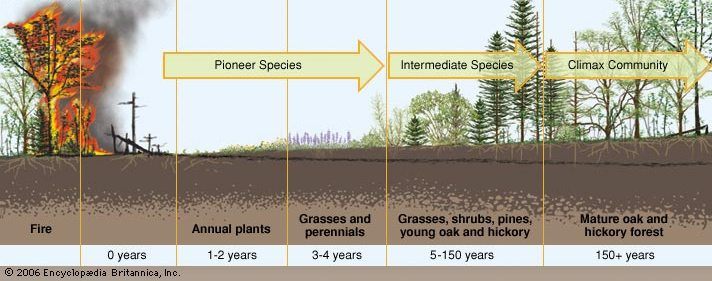
The picture shows what type of succession?
a)
primary
b)
secondary
c)
tertiary
d)
climax
20.
After a volcanic eruption, lava covers the land. What is the order that plants grow to repopulate the area?
a)
Lichens → Shrubs → Grasses → Trees
b)
Lichens → tree → shrubs→Grasses
c)
Grasses → Lichens → Shrubs → Trees
d)
Lichens → Grasses → Shrubs → Trees
21.
The first organisms that appear in an ecological community just after a disturbance are known as -
a)
climax species
b)
primary species
c)
invasive species
d)
pioneer species
22.

If the grasshopper were to be removed completely from the food web, what organism would be most affected?
a)
The squirrel
b)
The shrew
c)
The deer
d)
The rabbit
23.

Which of the following is an accurate food chain found within this farmland food web?
a)
Owl, Grasshopper, Grain
b)
Bird, Fox, Rabbit
c)
Carrot, Rabbit, Fox
d)
Grass, Mice, Bird
24.
How much energy is passed onto the next trophic level in an energy pyramid? AND how much is lost as heat?
a)
10%, 90%
b)
1%, 99%
c)
50%, 50%
d)
90%, 10%
25.
An ecological model comparing the total amount of dried mass of each trophic level is call a pyramid of -
a)
Energy
b)
Organisms
c)
Biomass
d)
Numbers
26.

I eat fruit, nuts and insects...I am also a
a)
Carnivore
b)
Producer
c)
Herbivore
d)
Omnivore
27.
An organism that only eats plants is called a -
a)
primary consumer; autotroph; herbivore
b)
secondary consumer; heterotroph; herbivore
c)
primary consumer; heterotroph; herbivore
d)
secondary consumer; heterotroph; omnivore
28.

A population of an organism will only grow exponentially if -
a)
The resources are unlimited
b)
They want to
c)
The resources are limited
d)
They do not like to compete
29.

The field mouse population in Australia has grown so fast that they eat an average of $4 billion of wheat every year. Their fast growth is caused by -
a)
A. The mice are mammals
b)
B. A lack of a native species to eat the field mouse
c)
C. Abundant food supply
d)
Both B and C
30.
What is the characteristic shape of a curve illustrating logistic growth?
a)
A. J-shaped
b)
B. U-shaped
c)
C. S-shaped
d)
D. L-shaped
31.
________get energy they need by breaking down dead or decaying matter.
a)
consumers
b)
decomposers
c)
organisms
d)
producers
32.
If the population of predators increases, the population of prey will _______
a)
decrease
b)
increase as well
c)
stay the same
d)
stay the same, then increase.
33.

What type of relationship is shown in this picture? (HINT: it's a tapeworm inside a human intestine)
a)
Predator/Prey
b)
Commensalism
c)
Mutualism
d)
Parasitism
34.

What happens to the populations as you move up a pyramid of numbers?
a)
Populations increase
b)
Populations decrease
c)
Populations remain the same
d)
Populations fluctuate
35.

Which point on the graph represents carrying capacity?
a)
A
b)
B
c)
C
d)
D
36.

Which conclusion best supports the data in the graphics above?
a)
Not all producers provide 100% energy to an ecosystem.
b)
Biomass is a measurement of living tissue that provides a source of food.
c)
One tree can provide enough food energy to support many organisms.
d)
Larger populations of organisms always have more biomass.
37.
Which change would most likely reduce the rate at which carbon dioxide is increasing in the atmosphere?
a)
A decrease in the combustion of fossil fuels
b)
A decrease in total photosynthesis among Earth's plants and algae
c)
An increase in the population of denitrifying bacteria
d)
An increase in the population of denitrifying bacteria
38.
Which pathway shows how atmospheric nitrogen is converted into the nitrogen compounds that plants need?
a)
atmospheric nitrogen --> denitrifying bacteria -> plants
b)
atmospheric nitrogen --> plants
c)
atmospheric nitrogen --> nitrogen-fixing bacteria and other soil bacteria --> plants
d)
atmospheric nitrogen --> animals --> denitrifying bacteria --> plants
39.

The diagram below illustrates the feeding relationships within an ecosystem. Approximately what percentage of the original amount of energy from producers is stored in the tissues of the rabbit?
a)
0.1%
b)
1%
c)
10%
d)
100%
40.
A snake that eats a frog that has eaten an insect that fed on a plant is considered a -
a)
first-level producer
b)
first-level consumer
c)
second-level producer
d)
third-level consumer
41.

The diagram to the right represents different levels of a marine food pyramid. Between which two levels is the greatest amount of energy transferred?
a)
R and Q
b)
S and R
c)
T and S
d)
U and T
42.
A wildlife preserve reports that its population of red foxes has increased while the coyote population has decreased. Which relationship between foxes and coyotes would help explain this observation?
a)
Coyotes and red foxes live near one another, but do not compete for resources.
b)
Coyotes and red foxes fill exactly the same niche in the forest
c)
Coyotes are predators of red foxes.
d)
Red foxes parasitize coyotes.
43.
A new invasive beetle has been discovered in a farmland community. The beetle bores into and destroys the roots of entire fields of crops. The beetle was accidentally imported form abroad, and does not have predators in its new habitat. To control the destructive beetle, a group of researchers has proposed the use of nematodes that burrow into the soil and feed exclusively on the larvae of the beetle. Which best describes the beetle control method suggested by the researchers?
a)
Allowing the beetle population to crash as a result of density-independent limiting factors
b)
Using predation as density-dependent limiting factor
c)
Allowing the nematode population to reach carry capacity
d)
Enabling the beetle population to grow exponentially
44.
A field on which corn was grown for many years is abandoned. How will the species diversity of the field most likely change over time as a result of ecological succession?
a)
Species diversity will decrease.
b)
Species diversity will remain the same.
c)
Species will increase and then decrease in a ten-year cycle.
d)
Species diversity will increase.
45.
A population of deer belongs to the forest community. Which change to the community would most likely cause the deer population to increase?
a)
A new disease strikes mountain lions, a predator of deer
b)
A new beetle arrives that lives in the bark of trees, food supply for the deer
c)
Human activities divert water away from the forest
d)
Human activities reduce the size of the forest
46.
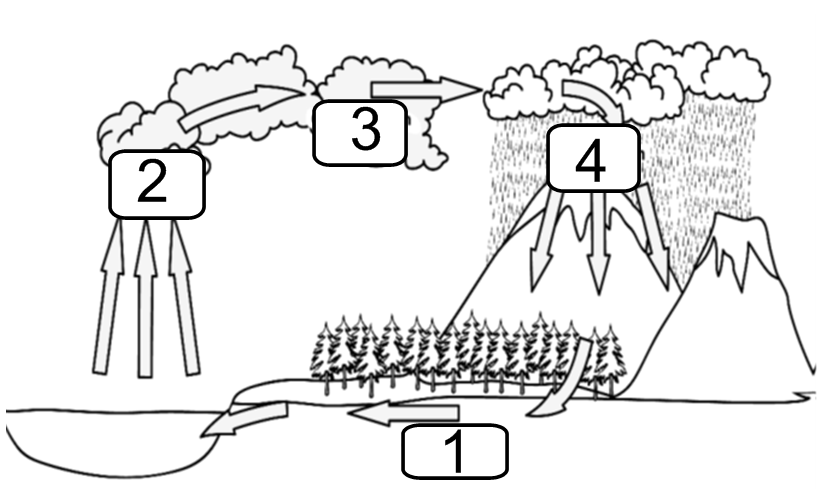
Which stage does the #4 show in the diagram?
a)
condensation
b)
evaporation
c)
precipitation
d)
run off
47.
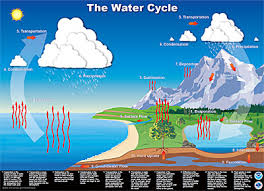
During which stage do clouds form?
a)
condensation
b)
evaporation
c)
precipitation
d)
run-off
48.

What is it called when plants give off water vapor as a waste product?
a)
condensation
b)
evaporation
c)
sublimation
d)
transpiration
49.
Carbon dioxide is produced by the burning of fossil fuels
a)
True
b)
False
50.

What is the name of the process when carbon moves from the geosphere to the atmosphere naturally?
a)
Eruption
b)
Respiration
c)
Photosynthesis
d)
Erosion
51.
What is the name of the process when carbon moves from the atmosphere to the biosphere?
a)
Photosynthesis
b)
Combustion
c)
Cellular respiration
d)
Erosion
52.
Which process removes carbon from the atmosphere?
a)
Photosynthesis
b)
Respiration
c)
Sedimentation
d)
Erosion
53.

What does a food web represent?
a)
All connections of energy flow throughout all organisms in a habitat.
b)
The specific ways that mutualism is carried out.
c)
The pathway minerals follow in an ecosystem
d)
The relationships between abiotic and biotic factors
54.

The most important abiotic factors when studying biomes are...
a)
Food and Water
b)
Water and Sunlight
c)
Temperature and Oxygen
d)
Water and Temperature
55.
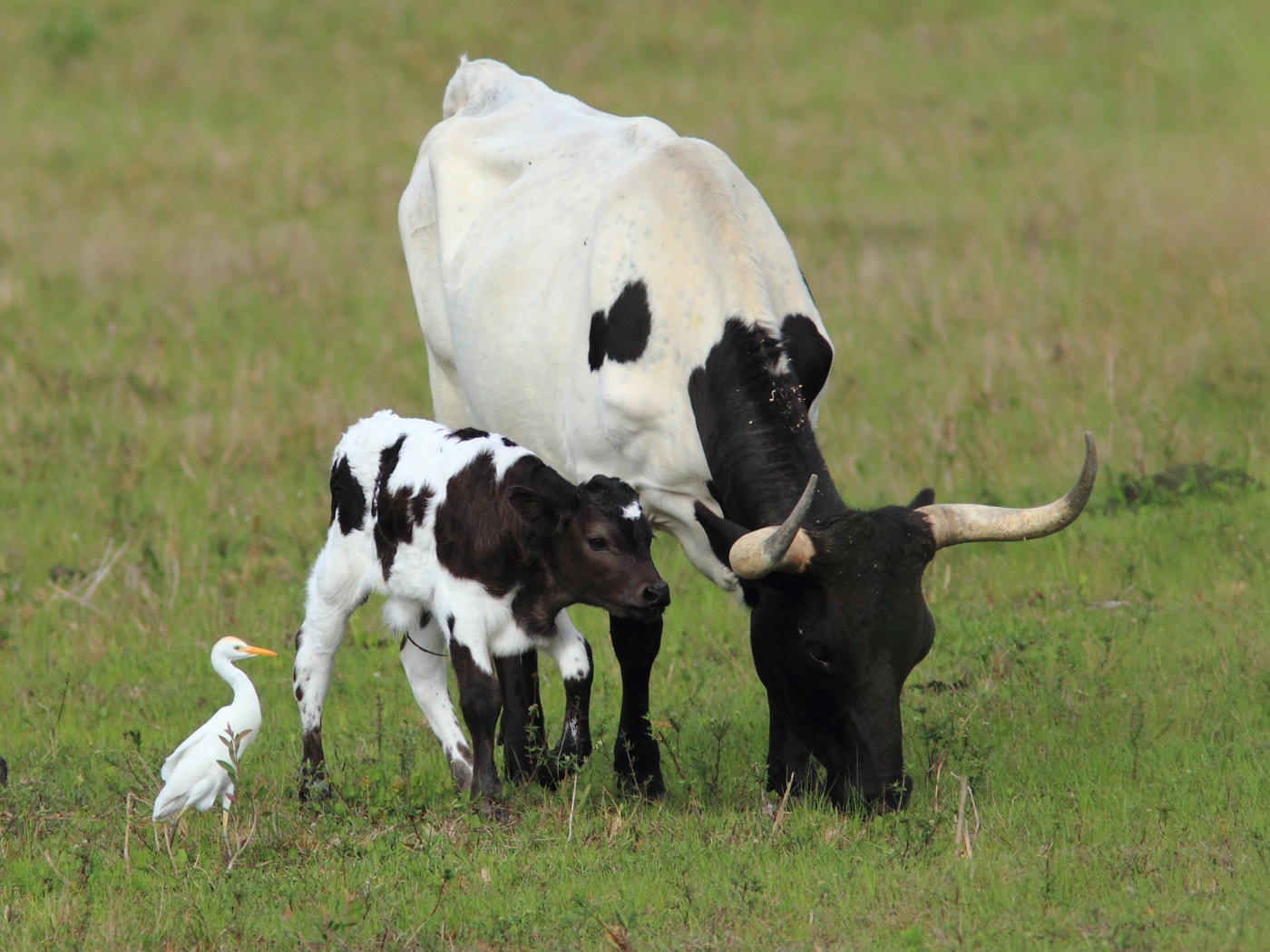
Cattle egrets forage (feed) in fields among cattle. The egret gets easy access to flying insects stirred up by the cattle, and the cattle don't care if they are there or not.
This is an example of -
This is an example of -
a)
mutualism
b)
commensalism
c)
competition
d)
parasitism
56.
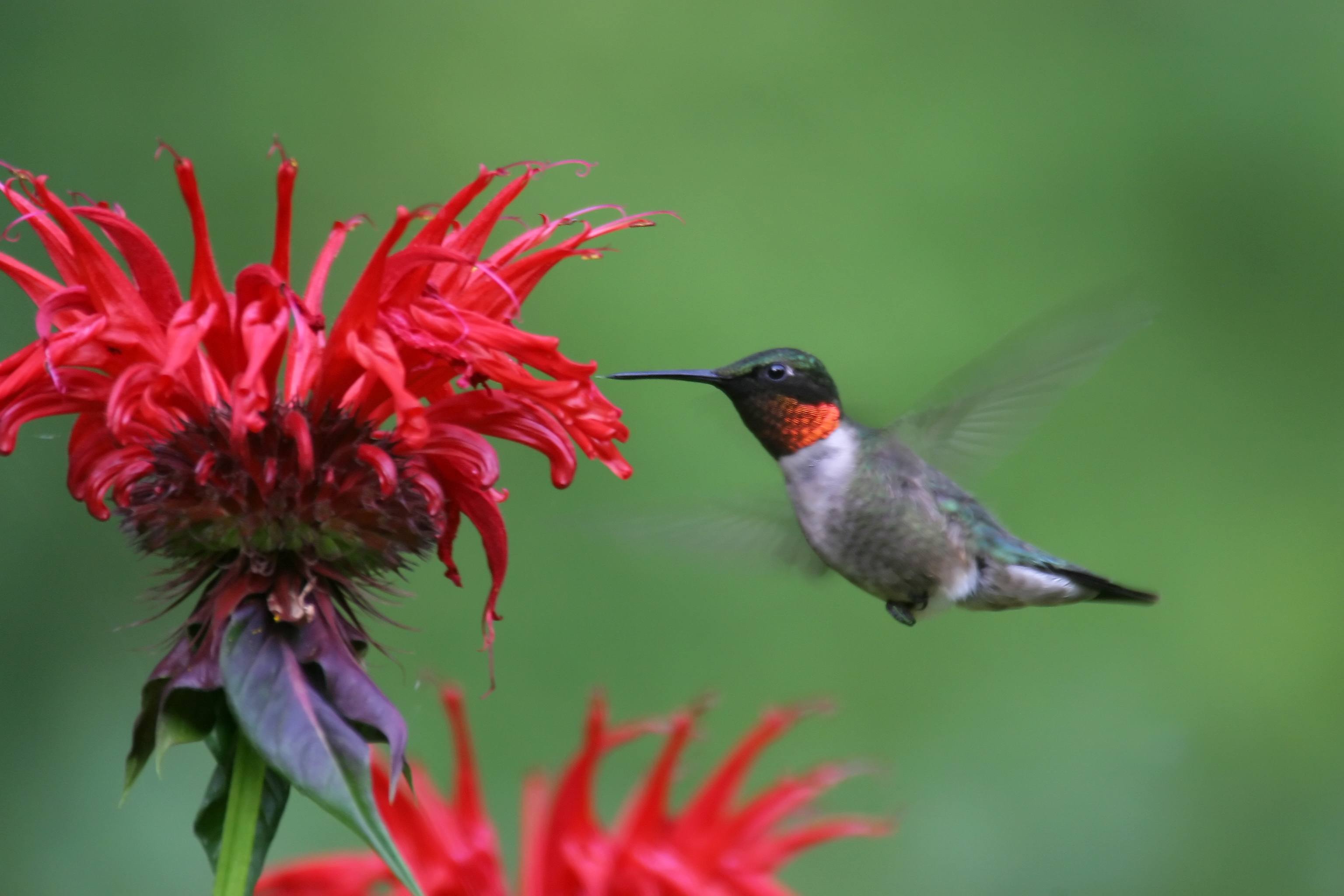
What type of symbiosis? Hummingbirds feed on nectar from flowers. The flowers are pollinated by hummingbirds as they move from flower to flower.
a)
commensalism
b)
mutualism
c)
parasitism
d)
predation
57.
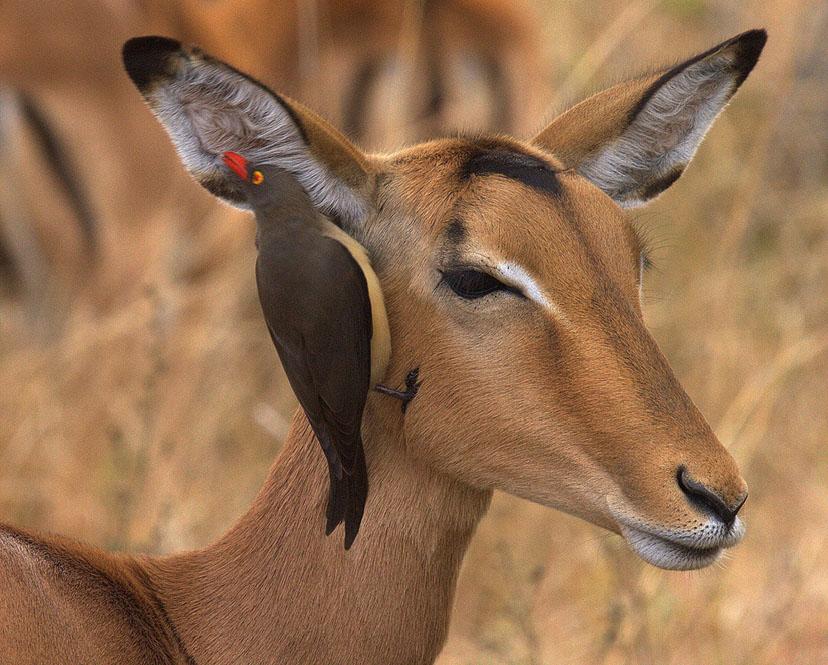
Red-billed oxpeckers are birds that often feed on parasites that infest impala gazelles. This is an example of _______.
a)
commensalism
b)
mutualism
c)
saprotrophism
d)
competition
58.

A sparrow will build its nest under the nest of an eagle. The smaller birds get protection because other predators will not mess with the eagle. The eagle are not helped nor harmed by the sparrow.
This is an example of -
This is an example of -
a)
parasitism
b)
commensalism
c)
mutualism
d)
amensalism
59.
Individuals of a population who exit an area.
a)
Immigration
b)
Emigration
c)
Mitigation
d)
Population
60.
If the birth rate is greater than the death rate, what will happen to the size of the population?
(birthrate > death rate)
(birthrate > death rate)
a)
It will increase
b)
It will decrease
c)
It will stay the same
d)
It will take over the world
61.

Which habitat shows a population in uniform pattern?
a)
1
b)
2
c)
3
d)
None of them
62.

What type of population growth does this graph represent?
a)
Abiotic growth
b)
Logistic growth
c)
Maximum growth
d)
Exponential growth
63.
Which of the following is a density-dependent factor?
a)
Rainfall
b)
Flood
c)
Disease
d)
Natural Disasters
64.

When a population grows past the ecosystem's carrying capacity, what happens to the population?
a)
Continues to grow
b)
The population starts to die off to return to carrying capcity
c)
The population will go extinct due to lack of resources
d)
The population grows then finds a new carrying capacity
65.

Will competition increase or decrease the carrying capacity of an ecosystem for the animal in competition?
a)
Decrease
b)
Increase
66.

If the amount of food or resources available increases, the carrying capacity for an animal -
a)
Stays the same
b)
Increases
c)
Decreases
d)
Fluctuates
67.

If a disease destroying barley plants in a field swept through an ecosystem, what would happen to the barley eating bird population in the the field ?
a)
The bird population would stay the same
b)
The bird population would infinitely increase
c)
The bird population would decrease
68.

What is the carrying capacity of this population?
a)
100
b)
200
c)
300
d)
400
69.

What type of growth curve is pictured?
a)
exponential
b)
logistic
c)
predator-prey
d)
invasive
70.

What is the approximate carrying capacity of Paramecium aurelia cultured alone?
a)
150
b)
400
c)
450
d)
500
71.
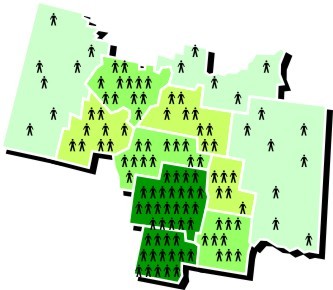
The average number of organisms living in an area
a)
population distribution
b)
population density
c)
urbanization
d)
population rate
72.
Competition, disease, predation, and parasitism are considered ___________ ____________ factors
a)
Density-dependent
b)
Density-independent
73.
Natural disasters and weather patterns like earthquakes, floods, and tornadoes, blizzards, and heatwaves are considered ___________ ____________ factors
a)
Density-dependent
b)
Density-independent
74.

Which organism is a primary producer?
a)
phytoplankton
b)
krill
c)
copepods
d)
zooplankton
75.
Plants and animals that live on the ocean floor are...
a)
benthos
b)
nekton
c)
plankton
d)
diatoms
76.
This is the zone of the shore between high-tide and low-tide in which abiotic conditions are constantly and periodically changing.
a)
Twilight Zone
b)
Neretic Zone
c)
Open-ocean Zone
d)
Intertidal Zone
77.

Which term describes the upper part of the ocean into which sunlight penetrates?
a)
benthic zone
b)
aphotic zone
c)
neritic zone
d)
photic zone
78.
Why are most marine animals found in the photic zone?
a)
It is so dark there that all animals have adapted to it
b)
The sunlight in that area allows for photosynthesis
c)
The wind from that area helps marine animals to swim
d)
The photic zone helps to shelter marine animals away from predators
79.
Does the salinity level increase or decrease as you move from the surface of the ocean to the bottom of the ocean?
a)
it remains constant
b)
it decreases
c)
it increases
d)
it increases and then decreases again
80.

In a temperate deciduous forest ecosystem, which of the following is the best example of a limiting factor for a rabbit population?
a)
The population of squirrels
b)
The proportion of shady to sunny areas
c)
Available grass, weeds, and shrubs
d)
The abundance of decomposers
100 %

