
 Worksheets
Benchmark Review
Total questions: 110
Worksheet time: 2hrs 4mins
Name
Class
Date
1.
What is the part of the experiment that is left alone or “natural", and is used to compare back to?
a)
Independent Variable
b)
Dependent Variable
c)
Control Group
d)
Experimental Group
2.
The following statement is a hypothesis formed about marsh grass:
If the amount of nitrogen marsh grass receives is increased, then the height of the grass will increase, because nitrogen is an essential nutrient needed for marsh grass to grow.
What is the independent variable of the statement above?
If the amount of nitrogen marsh grass receives is increased, then the height of the grass will increase, because nitrogen is an essential nutrient needed for marsh grass to grow.
What is the independent variable of the statement above?
a)
Height of grass
b)
Amount of nitrogen
c)
Essential nutrient
d)
Amount of growth
3.
A scientist hypothesizes the the temperature at which an alligator's egg is incubated will determine whether the alligator will be male or female. The independent variable is
a)
the male alligators
b)
the incubator
c)
the gender of the alligator
d)
the temperature
4.
A scientist hypothesizes the the temperature at which an alligator's egg is incubated will determine whether the alligator will be male or female. The dependent variable is
a)
the size of the baby alligators
b)
the gender of the baby alligators
c)
the incubator
d)
the temperature
5.

In this graph, what is the independent variable?
a)
Population
b)
Day
c)
Species 5
6.

In this graph, what is the dependent variable?
a)
Walla Walla Island
b)
Time
c)
Number of Deer
7.

If this substance takes up 6ml of space, what is its mass?
a)
6 ml
b)
6 grams
c)
0 grams
d)
4 grams
8.
Jack has a rock. The rock has a mass of 14g and a volume of 2cm3. What is the density of the rock?
a)
7 mL
b)
7 g/cm3
c)
28 g/cm3
d)
1/7 g/cm3
9.

Put the liquids in order from most dense to least dense?
a)
4, 3, 2, 1
b)
1, 2, 3, 4
c)
3, 4, 2, 1,
d)
4, 3, 1, 2
10.

Which graph correctly represents the relationship between mass and volume?
a)
A
b)
B
c)
C
d)
D
11.
What is the name of the relationship that exists between mass and volume?
a)
inverse
b)
cyclic
c)
direct
d)
no relationship
12.

Which substance is the MOST dense? ** Use the key
a)
A
b)
B
c)
C
13.

What is the density of this substance?
a)
5 grams
b)
5 ml
c)
5 g/ml
d)
10 g/ml
14.

What is the volume of Object X?
a)
10.0 cm3
b)
15.0 cm3
c)
20.0 cm3
d)
25.0 cm3
15.
What is the volume of 150 grams of lead if it has a density of 11.3 g/cm3?
a)
13.3 g
b)
13.3 cm3
c)
.075 g
d)
1695 cm3
16.
An empty beaker has a mass of 60 grams. When mercury is added to the beaker, it has a mass of 200 grams. What is the mass of the mercury?
a)
140 grams
b)
200 grams
c)
140 mL
d)
260 g
17.

Find the volume of this piece of brass.
a)
50 g
b)
10 cm
c)
6 cm3
d)
12 cm3
18.

The density of this material is 2 g/cm3.
There are 24 cm3 Find the total mass.
There are 24 cm3 Find the total mass.
a)
12 grams
b)
48 grams
c)
12 g/cm3
d)
48 g/cm3
19.
This is a measurement of the amount of matter, or 'stuff', in an object or substance.
a)
volume
b)
density
c)
mass
d)
length
20.

What is the volume of the fish?
a)
18.0 cm3
b)
6.0 cm3
c)
38.0 cm3
21.

Which box has a higher density?
a)
Box A
b)
Box B
c)
cannot be determined
d)
they are the same
22.
True or False: The density of a specific type of material never changes.
a)
True
b)
False
23.

What do we know about the density of lamp oil, rubbing alcohol, and vegetable oil?
a)
The density is greater than 1.0 g/mL
b)
The density is less than 1.0 g/mL
c)
The density is equal to 1.0 g/mL
d)
The density can not be determined
24.
Latitude lines on a globe are labeled-
a)
north & south
b)
east & west
c)
north & east
d)
south & west
25.
_______ lines on a globe run from east to west.
a)
North Pole
b)
South Pole
c)
Latitude
d)
Longitude
26.

What is the name of this line at 0 degrees latitude?
a)
Prime Meridian
b)
Equator
c)
North Pole
d)
South Pole
27.
The 0 degree mark of longitude is known as the ___________ ______________ measure from Greenwich England.
a)
Equator
b)
Prime Meridian
c)
International Date Line
d)
Contour Line
28.

What is the name of the line at zero degrees longitude?
a)
Equator
b)
Prime Meridian
c)
North Pole
d)
South Pole
29.

What is the reason why latitude lines NEVER intersect?
a)
They converge at the poles
b)
They are cool
c)
They are vertical lines
d)
They are parallel
30.

What is the approximate location of letter B?
a)
80oN, 0o
b)
0o, 80oW
c)
80oS, 0o
d)
0o, 80oE
31.

What is the approximate location of G?
a)
100oW, 40oN
b)
40oN, 100oW
c)
40oS, 100oW
d)
40oN, 100oE
32.

Which of the following letter is at approximately 60 degrees S, 40 degrees W?
a)
A
b)
D
c)
E
d)
H
33.

What is the absolute location for G?
a)
45oS, 54oE
b)
30oS, 150oW
c)
150oS, 30oE
d)
30oS, 150oE
34.

Which letter would you find at 15oS, 60oW?
a)
A
b)
C
c)
L
d)
H
35.

a)
The map show the lines of longitude.
b)
The map shows the lines of latitude.
36.

a)
The map shows lines of longitude.
b)
The map shows lines of latitude.
37.
To locate exact places on the earth, one must look at
a)
the intersecting lines of latitude and longitude
b)
the lines of latitude only
c)
the lines of longitude only
d)
a neighboring area to describe the location
38.
The color of a mineral in powder form is called the mineral's
a)
hardness
b)
specific gravity
c)
luster
d)
streak
39.
How light reflects off of a mineral is called the mineral's
a)
luster
b)
streak
c)
cleavage
d)
fracture
40.
Why is coal not a mineral?
a)
It's not a solid
b)
It is man-made
c)
It is not inorganic
d)
It is made of carbon
41.

The following image shows what mineral property?
a)
Hardness
b)
Streak
c)
Cleavage
d)
Density
42.
Dull, silky, waxy, pearly, and earthy are terms that best describe which property of minerals?
a)
luster
b)
color
c)
streak
d)
cleavage
43.

By definition, a mineral has which of the following characteristic(s)?
a)
definite chemical composition
b)
crystal structure
c)
naturally occuring
d)
all of the above
44.

What mineral is used for pencils?
a)
Graphite
b)
Galena
c)
Magnetite
d)
Quartz
45.

What mineral is salt?
a)
quartz
b)
sulfur
c)
halite
d)
calcite
46.
The solid, geometric form of a mineral produced by a repeating pattern of atoms
a)
crystal
b)
density
c)
element
d)
fracture
47.
Which mineral smells like rotten eggs?
a)
talc
b)
sulfer
c)
mica
d)
pyrite
48.
The mineral halite is formed by
a)
hot water solutions
b)
cooling of magma
c)
cooling of lava
d)
evaporation
49.
The mineral iron is primarily used to make
a)
jewelry
b)
tools
c)
cement
d)
glass
50.
What mineral is known as "fools gold"?
a)
graphite
b)
quartz
c)
galena
d)
pyrite
51.
The ratio of an objects mass to its volume is called
a)
Fluorescence
b)
Streak
c)
Ore
d)
Density
52.
The definition of a mineral does NOT include:
a)
crystalline structure
b)
solid
c)
organic
d)
natural
53.
Which of the following properties does the Mohs scale measure?
a)
Luster
b)
Hardness
c)
Density
d)
Streak
54.

A mineral breaks into pieces like are shown in the picture. How would you describe its breakage?
a)
Fracture
b)
Cleavage
c)
Glassy
d)
Waxy
55.

A mineral breaks into pieces like are shown in the picture. How would you describe its breakage?
a)
Fracture
b)
Cleavage
c)
Glassy
d)
Waxy
56.
Minerals are identified by observing their ___________.
a)
physical properties
b)
name
c)
location
57.

_____ is if something breaks into smooth flat layers.
a)
fracture
b)
cleavage
c)
streak
58.

This rock was formed when magma cooled very slowly inside the Earth. What specific type of rock is it?
a)
Intrusive Igneous Rock
b)
Extrusive Igneous Rock
c)
Foliated Metamorphic Rock
d)
Clastic Sedimentary Rock
59.

This rock formed when lava cooled very quickly on Earth's surface. What specific type of rock is it?
a)
Extrusive Igneous Rock
b)
Intrusive Igneous Rock
c)
Non-Foliated Metamorphic Rock
d)
Biochemical Sedimentary Rock
60.
When you watch a volcano erupt molten rock, you are seeing _____
a)
Lava
b)
Magma
c)
Mineral Crystals
d)
Igneous Rocks
61.
When you are describing the sizes of the mineral grains in a rock, you are detailing the rock's _____
a)
Texture
b)
Composition
c)
Sedimentation
d)
Igneous-ness
62.
Two ways to describe types of igneous rocks are _____
a)
Extrusive and Intrusive
b)
Foliated and Non-Foliated
c)
Clastic and Biochemical
d)
Black and Gray
63.
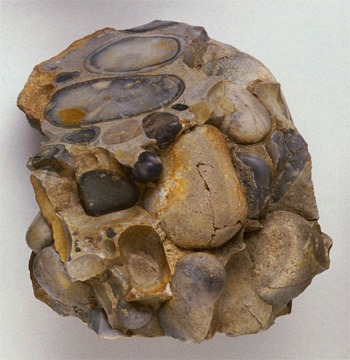
This rock was formed by smaller pieces of rock that settled at the bottom of a lake millions of years ago. What type of rock is this?
a)
Sedimentary
b)
Igneous
c)
Metamorphic
64.
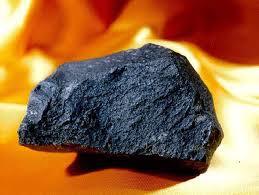
This rock was found near the mouth of a volcano. What type of rock is this?
a)
Sedimentary
b)
Igneous
c)
Metamorphic
65.
What is sedimentary?
a)
Formed by heat and pressure
b)
Formed by heat and cooling
c)
Layered rock formed by compaction
d)
All of the above
66.

When sediments are pressed together tightly, this is called ____________.
a)
Compaction
b)
Cementation
c)
Weathering
d)
Erosion
67.
The process in which dissolved minerals crystallize and glue sediment together.
a)
compaction
b)
deposition
c)
organic rock
d)
cementation
68.

The process when rocks break into smaller pieces due to exposure to natural elements is called
a)
erosion
b)
weathering
c)
sediments
69.
The movement of weathered material (sediment) is called?
a)
weathering
b)
erosion
c)
deposition
70.
Sedimentary rock that is made of fragments of rocks cemented together by a mineral are called...
a)
chemical
b)
organic
c)
clastic
71.
Sedimentary rock made from fossils are called...
a)
organic
b)
chemical
c)
stratified
72.
What is deposition?
a)
Dropping off sediment
b)
Movement of sediment
c)
Breaking down of sediment
73.
How did the humans use rocks in the past?
a)
to play sports
b)
to tell time
c)
to write
d)
to make tools
74.
Metamorphic rock in which minerals are NOT arranged in bands
a)
stratification
b)
non-foliated
c)
extrusive igneous rock
d)
strata
75.
the chemical makeup of a rock
a)
rock
b)
texture
c)
rock cycle
d)
composition
76.
process by which new rock is made from old rock
a)
rock
b)
texture
c)
rock cycle
d)
composition
77.
naturally occurring solid mixture of one or more minerals and organic matter
a)
deposion
b)
erosion
c)
rock
d)
rock cycle
78.
What has to increase for metamorphism to occur?
a)
weathering and erosion
b)
temperature and pressure
c)
melting and cooling
d)
compaction ad cementation
79.
Sedimentary rock is formed when grains of sediment undergo
a)
metamorphism
b)
compaction and cementation
c)
melting
d)
solidification
80.
Ricardo has an igneous rock in his rock collection. Where did this rock most likely form?
a)
in a volcano
b)
on a forest floor
c)
on a coral reef
d)
at the bottom of a river
81.
Obsidian and pumice are extrusive igneous rocks and lack crystals. Why is it that these rocks do not have crystals?
a)
There are no minerals in magma.
b)
The lava cooled slowly, deep inside the Earth.
c)
The lava cooled too quickly above the Earth to allow for the formation of crystals.
d)
The pressure was too great to make any crystals.
82.
Metamorphic rock forms when
a)
magma cools and hardens.
b)
minerals crystallize out of sea water.
c)
heat and pressure change the composition and texture of a rock.
d)
natural cement binds rock fragments together.
83.
Where would you most likely find a metamorphic rock?
a)
Deep in the Earth
b)
on the ocean floor
c)
next to a river
d)
in a volcano
84.
When tremendous heat and pressure is applied to sandstone deep within the Earth's crust, marble forms. It is a _____ rock
a)
chemical sedimentary
b)
extrusive igneous
c)
nonfoliated igneous
d)
nonfoliated metamorphic
85.
In order to create a metamorphic rock, what must be present?
a)
magma
b)
lava
c)
existing rock
d)
sediment
86.
When limestone is exposed to enough heat and pressure, it goes through physical changes. These changes can turn limestone into a different kind of rock called marble. Which of the BEST describes the change?
a)
It is an igneous rock
b)
It is a synthetic rock
c)
It is a sedimentary rock
d)
It is a metamorphic rock
87.
A rock that contains fossil seashells was most likely formed as a result of?
a)
Volcanic activity
b)
Sedimentation
c)
Heat and pressure
d)
. Magma and cooling
88.

This Rock Is Sedimentary. Which observation about the rock best supports this classification?
a)
The rock is composed of several minerals.
b)
The rock has large grains.
c)
The rock contains fragments of other rocks.
d)
The rock shows distorted and stretched pebbles.
89.
Takes millions of years to form.
a)
hydroelectric
b)
renewable
c)
solar
d)
fossil fuels
90.
Source of energy for fossil fuels.
a)
swamp
b)
plants
c)
sun
d)
water
91.
Solid fossil fuel formed from ancient plants.
a)
coal
b)
oil
c)
petroleum
d)
natural gas
92.
Heat produced from magma within the earth.
a)
solar
b)
biofuel
c)
hydroelectric
d)
geothermal
93.
Energy from living organisms.
a)
fossil fuels
b)
biofuels
c)
geothermal
d)
oil
94.
Best energy resource in a sunny location.
a)
wind
b)
hydroelectric
c)
solar
d)
geothermal
95.
Any useful material found in nature.
a)
natural
b)
alternative
c)
renewable
d)
nonrenewable
96.
Main disadvantage to solar energy.
a)
Produce too much energy.
b)
Causes wind.
c)
Expensive.
d)
Causes heat.
97.
Diamonds and other minerals.
a)
alternative
b)
renewable
c)
nonrenewable
98.
Another name for oil.
a)
coal
b)
natural gas
c)
petroleum
d)
alternative
99.
One advantage of solar energy is that it is nonpolluting and a free energy source.
a)
True
b)
False
100.

Today, most of the coal is used to:
a)
power steamships and steam trains
b)
heat homes and businesses
c)
produce electricity
d)
make iron and steel
101.
Takes millions of years to form.
a)
hydroelectric
b)
renewable
c)
solar
d)
fossil fuels
102.
Most plastic is made from oil.
a)
True
b)
False
103.
We use pencils each day in class. Which part is made from a renewable material?
a)
The eraser, made from fossil fuel.
b)
The shaft made from wood.
c)
The graphite made from a non-renewable resource.
d)
The ferrule, made from metal.
104.
can natural resources be replaced?
a)
Yes
b)
No
105.

What percentage of our energy use comes from fossil fuels?
a)
25%
b)
45%
c)
61%
d)
86%
106.
The summary at the end of an experiment that explains the results.
a)
conclusion
b)
procedures
c)
materials
d)
responding variable
107.
A possible explanation to a problem that has not yet been tested.
a)
data
b)
theory
c)
hypothesis
d)
fact
108.
Why are fossil fuels considered nonrenewable resources if they are still forming beneath the surface today?
a)
They are being formed as a type of methane which we cannot use.
b)
They are being formed too far beneath the surface.
c)
The fossil fuels are being broken down by a natural process.
d)
We are depleting the fossil fuels much faster than they can form.
109.

__________ is an energy resource that WILL run out in the next several hundred years.
a)
Renewable Energy Resource
b)
Nonrenewable Energy Resource
c)
Fossil Fuels
d)
Forever Fuels
110.

__________ is an energy resource that WILL NOT run out in the next several hundred years.
a)
Renewable Energy Resource
b)
Nonrenewable Energy Resource
c)
Fossil Fuel
d)
Forever Fuel
100 %

