
 Worksheets
Unit 4-6 Physical Science Review
Total questions: 99
Worksheet time: 2hrs 53mins
Name
Class
Date
1.
Which compound has the smallest molar mass?
a)
CO
b)
CO2
c)
H2O
d)
H2O2
2.
What is the mass in grams of 6.25 mol of copper (II) nitrate?
a)
126 g
b)
785 g
c)
625 g
d)
1172 g
3.
What is the mass of 2.50 mol of oxygen gas O2?
a)
40 g
b)
80 g
c)
16 g
d)
32 g
4.
Avogadro's number of representative particles is equal to one_____.
a)
kilogram
b)
gram
c)
kelvin
d)
mole
5.
What is the molar mass of AuCl3?
a)
96 g
b)
130 g
c)
232.5 g
d)
303.3 g
6.
What is the mass of one mole of aluminum?
a)
26.982 g
b)
13 g
c)
53.985 g
d)
14 g
7.
How many molecules are in 32.4 grams of phosphorous pentoxide?
a)
1.76 x 10²³ molecules
b)
0.29 moles
c)
1.76 x 10²² molecules
d)
0.29 molecules
8.
How many moles are in 15 grams of lithium?
a)
0.5 moles
b)
104.1 moles
c)
2.2 moles
d)
50 moles
9.
The number 6.02 x 10²³ is ______.
a)
molar mass
b)
molecules
c)
Avogadro's number
d)
hydrate
10.
36.0 g of Be contains how many moles?
a)
0.25 mol
b)
4.0 mol
c)
45 mol
d)
320 mol
11.
A mass of 6 g of Carbon contains
a)
1 mole of C
b)
2 moles of C
c)
0.5 moles of C
d)
72 moles of C
12.
O3 ---> O + O2
a)
Synthesis
b)
Single Replacement
c)
Decomposition
d)
Combustion
13.
P4 + 3 O2 ---> 2 P2O3
a)
Single Replacement
b)
Combustion
c)
Synthesis
d)
Decomposition
14.
The coefficient in 3H2O is
a)
6
b)
2
c)
3
d)
5
15.
The number in front of a compound or element is a
a)
Subscript
b)
Coefficient
c)
Superscript
d)
Charge
16.
If reaction starts with 20g of reactants it should produce
a)
a total of 40g of products
b)
a total of 10g of products
c)
a total of 80 g of products
d)
a total of 20g of products
17.
Which are the reactants in the following reaction?
2Mg + O2 ---> 2MgO
2Mg + O2 ---> 2MgO
a)
Mg and O
b)
MgO
c)
Mg and MgO
d)
O and MgO
18.
A chemical reaction is balanced when
a)
both sides have the same elements
b)
Both sides have the same number of atoms
c)
Same subscripts
d)
Same coefficients
19.
In a synthesis reaction
a)
A compound breaks apart into two or more compounds
b)
Two or more compounds make one single product
c)
CO2 and H2O must be products
d)
O2 must be a reactant
20.
Which of these is not a chemical reaction?
a)
Burning of wood
b)
Milk going bad
c)
Mixing vinegar and baking soda
d)
Melting of ice
21.
Matter can not be created nor destroyed: it can only be
a)
Destroyed a little bit
b)
Invisible
c)
Transformed, changed
d)
None of the above
22.
What will weigh more when a chemical change is complete? The reactants before the chemical reaction, or the product after the reaction is complete?
a)
They both will weigh the same
b)
The product always weighs more than the reactant
c)
The reactant will weigh more than the product
d)
They both will loose mass after the reaction
23.
How many elements are in C6H12O6?
a)
1
b)
2
c)
3
d)
4
24.
How many atoms of carbon (C) are in C6H12O6?
a)
3
b)
6
c)
12
d)
24
25.
Element or compound?
H2O
H2O
a)
element
b)
compound
26.
Element or compound?
O2
O2
a)
Element
b)
Compound
27.
Which of the following is a compound?
a)
Co
b)
O2
c)
C
d)
CO2
28.
Which of the following is NOT an element?
a)
H2O
b)
H2
c)
O2
d)
Au
29.
How many atoms are there TOTAL in:
H2SO4
H2SO4
a)
6
b)
5
c)
7
d)
3
30.

The red numbers in the image below represent ________
a)
subscripts
b)
coefficients
c)
I don't know, and don't want to try
d)
None of the answers are correct
31.

The blue numbers in the image below represent ________
a)
I don't know, and don't want to try
b)
coefficients
c)
subscripts
d)
none of the answers are correct
32.
The substances at the beginning of a chemical equation are called the ____
a)
product
b)
yield
c)
chemical symbol
d)
reactants
33.
In the equation, 2Mg + O2 ---> 2MgO, which are the reactants?
a)
Mg and O
b)
MgO
c)
Mg and MgO
d)
O and MgO
34.
Balance this equation...
H2 + Cl2 --> HCl
H2 + Cl2 --> HCl
a)
It is balanced
b)
3H2 + Cl2 --> 6H2Cl
c)
H2 + Cl2 --> 2HCl
35.
Which of the following shows the correct way to balance the chemical equation?
Fe + O2 -> Fe2O3
Fe + O2 -> Fe2O3
a)
4Fe + 3O2 -> 2Fe2O3
b)
2 Fe + 3O2 -> Fe2O6
c)
4 Fe + O6 -> 2Fe2O3
d)
None of the options are correctly balanced.
36.
What is the arrow in a chemical equation...
H2 + O --> H2O
H2 + O --> H2O
a)
Reactants
b)
Products
c)
Yields
d)
Chemical Equation
37.
Which of the following reactions is balanced?
a)
2CH4 + O2 -> CO2 + H2O
b)
CH4 + 2O2 -> CO2 + H2O
c)
CH4 + 2O2 -> CO2 + 2H2O
d)
None of the chemical equations are balanced.
38.
Pb(NO3)2 + KI --> PbI2 + KNO3
What type of reaction is this?
What type of reaction is this?
a)
Synthesis
b)
Decomposition
c)
Single Replacement
d)
Double Replacement
39.
__Na + O2 -----> __Na2O
Type of reaction?
Balance it too. :)
Type of reaction?
Balance it too. :)
a)
Synthesis, 2Na / 4Na2O
b)
Decomposition, 4Na / 2Na2O
c)
Synthesis, 4Na / 2Na2O
d)
Decomposition, 2Na / 4Na2O
40.
Balance this chemical reaction......?
__H2O2 ----> __H2O + O2
__H2O2 ----> __H2O + O2
a)
2H2O2 // 2H2O
b)
1H2O2 // 2H2O
c)
2H2O2 // 1H2O
d)
H2O2 // 2H2O
41.
Si + S8 --> Si2S4
a)
Synthesis (combination)
b)
Decomposition
c)
Single replacement
d)
Double replacement
42.
Which compound is higher in reactivity, Ag or Ca?
a)
Ag
b)
Ca
c)
Neither
d)
They're equal
43.
A combination reaction can be represented as ________________________.
a)
AB + CD → AC + BD
b)
AB → A + B
c)
A + B → AB
d)
A + BC → B + AC
44.
A decomposition reaction can be represented as _____________________.
a)
AB → A + B
b)
A + B → AB
c)
AB + CD → AC + BD
d)
A + BC → B + AC
45.
This chemical equation for mercury oxide is an example of what type of reaction?
2HgO → 2Hg + O2
2HgO → 2Hg + O2
a)
decomposition reaction
b)
combination reaction
46.
This chemical equation for magnesium oxide is an example of what type of reaction?
2Mg + O2 → 2MgO
2Mg + O2 → 2MgO
a)
decomposition reaction
b)
combination reaction
47.
Choose which equation shows conservation of mass during the electrolysis of water.
a)
H2O → H2 + O2
b)
2H2O → 2H2 + O2
48.
Which chemical equation shows a balanced equation for the combination reaction of magnesium metal with oxygen?
a)
2Mg + O2 → 2MgO
b)
Mg + O2 => 2MgO2
49.
Sodium azide forms sodium and nitrogen gas when an air bag explodes. What type of reaction is this?
2NaN3 → 2Na + 3N2
2NaN3 → 2Na + 3N2
a)
combination reaction
b)
decomposition reaction
50.
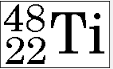
How many protons does this isotope of titanium have?
a)
48
b)
22
c)
26
d)
70
51.
How many neutrons in C-14?
a)
6
b)
7
c)
14
d)
8
52.

How many neutrons does the isotope of lithium have?
a)
8
b)
3
c)
4
d)
5
53.
How many neutrons does uranium-235 have?
a)
238
b)
92
c)
146
d)
143
54.

What do these isotopes of carbon all have in common?
a)
neutrons & mass number
b)
atomic number and neutrons
c)
atomic number and electrons
d)
protons, atomic number, and mass number
55.

In a correctly written symbol what would be located in the "A" position?
a)
number of neutrons
b)
atomic number
c)
number of electrons
d)
mass number
56.

What element is this? What is the mass number of this atom?
a)
sodium, 23
b)
magnesium, 23
c)
magnesium, 12
d)
sodium, 11
57.
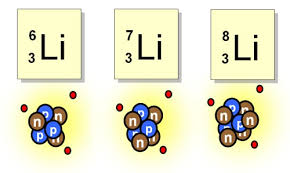
which atom has 4 neutrons?
a)
Li-6
b)
Li-7
c)
Li-8
d)
they have the same # of neutrons
58.
What quantities vary between isotopes of an element?
a)
protons, electrons, and atomic mass
b)
protons, electrons, and atomic number
c)
neutrons and electrons
d)
neutrons and atomic mass
59.

which explanation of this notation is correct?
a)
12 is proton #
b)
6 tells you there are 6 neutrons
c)
6 tells you there are 6 protons
d)
12 is not a mass # here
60.
Which of the following is an Alkali Metal?
a)
Magnesium
b)
Chromium
c)
Sodium
d)
Fluorine
61.
Which of the following is an Alkaline Earth Metal?
a)
Calcium
b)
Lithium
c)
Phosphorus
d)
Copper
62.
Which of the following is a transition metal?
a)
Iron
b)
Oxygen
c)
Neon
d)
Barium
63.
Which of the following is a Halogen?
a)
Bromine
b)
Rubidium
c)
Argon
d)
Beryllium
64.
Which of the following is a Noble Gas?
a)
Krypton
b)
Chlorine
c)
Radium
d)
Gallium
65.
Which of the following is the most reactive group of metals?
a)
Alkali
b)
Alkaline Earth
c)
Halogen
d)
Transition Metals
66.
Which of the following is the most reactive group of non-metals?
a)
Alkali
b)
Alkali Earth
c)
Halogen
d)
Noble Gas
67.
Which of the following groups is inert?
a)
Alkali
b)
Transition Metals
c)
Halogens
d)
Noble Gas
68.
How many valence electrons does an alkaline earth metal have?
a)
1
b)
2
c)
7
d)
8
69.
How many valence electrons does a halogen have?
a)
1
b)
2
c)
7
d)
8
70.

a)
2
b)
8
c)
3
d)
13
71.

a)
2
b)
3
c)
5
72.

a)
2
b)
6
c)
10
d)
16
73.

a)
2
b)
5
c)
10
d)
15
74.

a)
12
b)
7
c)
8
d)
14
75.

a)
10
b)
2
c)
8
d)
18
76.

a)
19
b)
20
c)
1
d)
4
77.

a)
14
b)
4
c)
3
d)
28
78.

a)
35
b)
4
c)
7
d)
17
79.

a)
7
b)
5
c)
2
d)
15
80.
Ions from the halogen group form what oxidation state?
a)
+1
b)
-1
c)
-7
d)
+7
81.
Do the elements in group 13 form cations or anion?
a)
Cations
b)
Anions
82.
What charge would a sulfur ion have?
a)
-6
b)
-16
c)
+2
d)
-2
83.
How many electrons does a copper ion, Cu+2, have?
a)
29
b)
31
c)
27
d)
2
84.
This element has the same number of electrons as a chlorine ion.
a)
Argon
b)
Nitrogen
c)
Sulfur
d)
Krypton
85.
Which of the following compounds is NOT an ionic compound?
a)
NaCl
b)
NH3
c)
Fe2O3
d)
HCl
86.
What is the oxidation number of Fe in FeO?
a)
+1
b)
-1
c)
+2
d)
-2
87.
What is a cation?
a)
a metal with a negative (-) charge
b)
a non-metal with a negative (-) charge
c)
a metal with a positive (+) charge
d)
a non-metal with a positive (+) charge
88.
What is a anion?
a)
a metal with a negative (-) charge
b)
a non-metal with a negative (-) charge
c)
a metal with a positive (+) charge
d)
a non-metal with a positive (+) charge
89.
Ionic Compounds HAVE a positive (+) or negative (-) charge
a)
True
b)
False
c)
Que onda, Hagerman?
d)
What was that now?
90.
Covalent Compounds HAVE a positive (+) or negative (-) charge
a)
True
b)
False
c)
Que onda, Hagerman?
d)
What was that now?
91.
Why does K become positive when it bonds to Cl to form KCl?
a)
Because it loses an electron to have a full valence shell
b)
Because it gains an electron to have 2 valence electrons
c)
Because it loses an electron to become negatively charged
d)
Because Cl gives away its 7 electrons to Na to form an equal charge
92.
MgCl2
a)
Ionic
b)
Covalent
c)
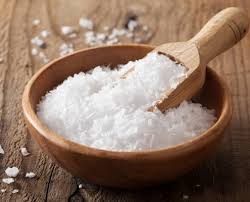
Polyatomic Ion
d)
Metallic
93.
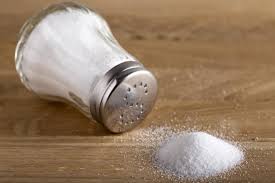
NaCl
a)
Ionic
b)
Covalent
c)
Metallic
d)
Polyatomic Ion
94.
SO4
a)
Covalent
b)
Ionic
c)
Metallic
d)
Polyatomic Ion
95.

Ionic compounds tend to be _________ whereas covalent compounds tend to be ______ or _____
a)
solids // liquids or gases
b)
liquids // solids or gases
c)
gases // solids or liquids
d)
solids // solids or liquids
96.
The octet rule means that all valence shells want to have the number......
a)
1
b)
9
c)
8
d)
16
97.
Why does NaCl have different charges?
a)
The metal gives away an electron to the nonmetal
b)
The metal takes the electron from the nonmetal
c)
The metal and the nonmetal equally share electrons
d)
The nonmetal gives away its electrons to the metal
98.
Why does CO2 not have a charge?
a)
The metal gives away an electron to the non-metal
b)
The metal takes the electron from the non-metal
c)
The non-metals equally share electrons
d)
The metal and the non-metal equally share electrons
99.

Formed when 2 atoms share electrons
a)
Ionic
b)
Covalent
100 %

