wayground logo

Free Printable Worksheets

Font size

S
M
L
XL
Worksheets

Chemistry Review

Total questions: 95

Worksheet time: 58mins

Name
Class
Date
1.

A substance made of only one type of atom that cannot be broken down by chemical means

a)

compound

b)

element

c)

electron

d)

molecule

2.

The smallest basic unit of matter is a(n)

a)

element

b)

atom

c)

molecule

d)

speck

3.

A subatomic particle that has a positive charge and that is found in the nucleus of an atom

a)

proton

b)

neutron

c)

electron

d)

valence

4.

A subatomic particle that has no charge and that is found in the nucleus of an atom

a)

electron

b)

neutron

c)

shell

d)

proton

5.

A subatomic particle that has a negative charge and is found in the electron cloud orbiting the nucleus

a)

proton

b)

neutron

c)

electron

d)

atom

6.

An atom that has gained or lost one or more electrons

a)

ion

b)

electron

c)

neutron

d)

bond

7.

Substance made of atoms of different elements that are bonded together in a particular ratio

a)

molecule

b)

compound

c)

charge

d)

electron shell

8.

Two or more atoms held together by covalent bonds; not necessarily a compound

a)

proton

b)

quark

c)

molecule

d)

nucleus

9.

Chemical bond formed when two atoms share one or more pares of electrons

a)

ionic bond

b)

Bail bond

c)

covalent bond

d)

electron bond

10.

What is an hypothesis?

a)

a guess

b)

a testable, tentative explanation

c)

a theory

d)

data

11.

What is a manipulated variable (independent variable)?

a)

the variable that changes as a result of the experiment

b)

the variable that the scientist changes

c)

the evidence

d)

the quantitative observation

12.

An observation made with your senses

a)

Qualitative observation

b)

Quantitative observation

c)

temperature

d)

conclusion

13.

What is a control?

a)

a variable that is unchanged to compare results to

b)

a changed variable

c)

a hypothesis

d)

a conclusion

14.

Which of the following is an example of quantitative data?

a)

grey

b)

oily

c)

44.2oC

d)

Copper

15.
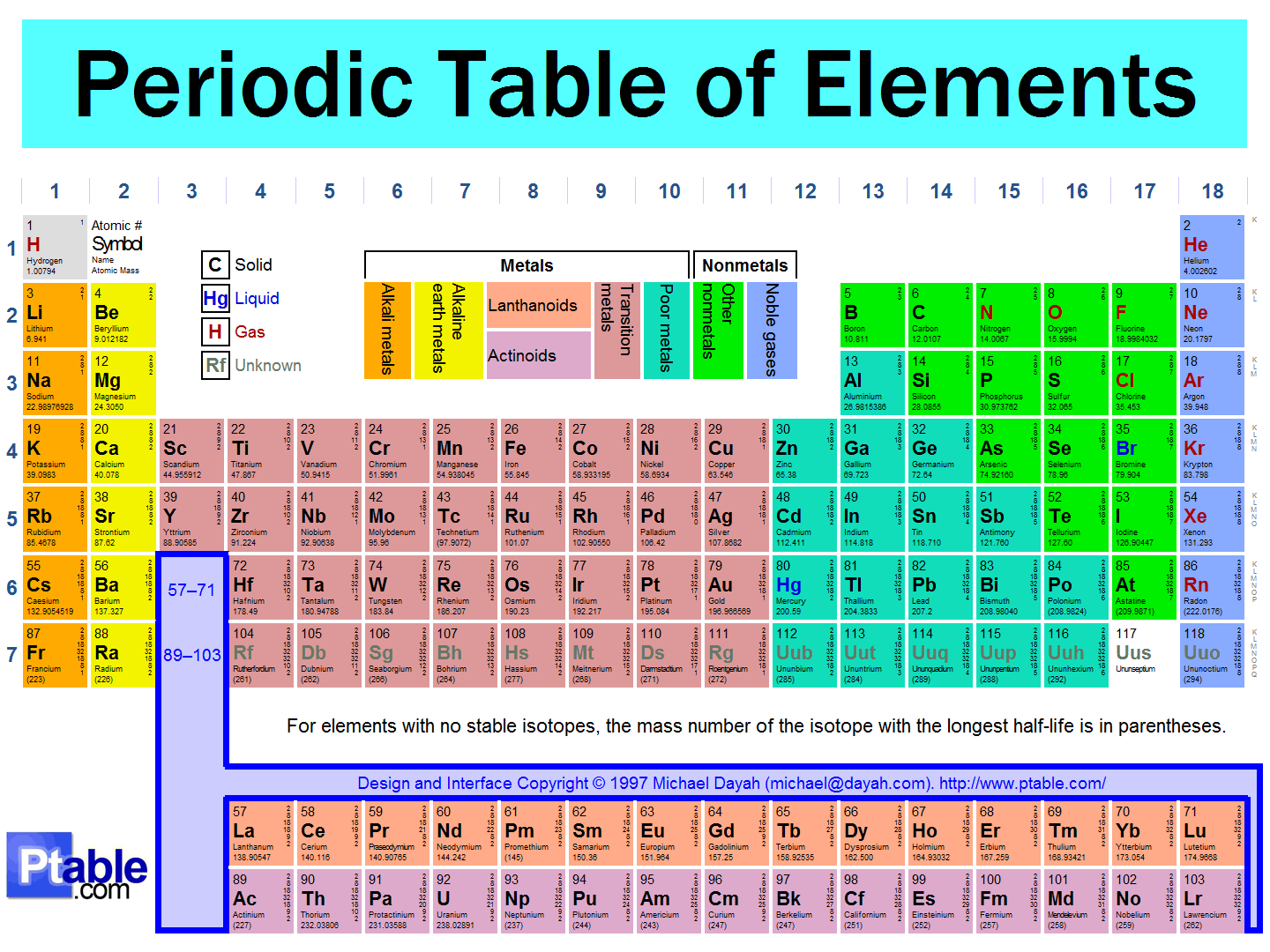
How did Mendeleev arrange the elements?
a)
alphabetical 
b)
density
c)
melting point
d)
atomic mass
16.
The horizontal row on the periodic table is called a
a)
group
b)
family
c)
period
d)
atomic number
17.
A vertical column is called...
a)
group
b)
tower
c)
period
d)
crew
18.
The number at the bottom of each square on the periodic table is the ...
a)
atomic number
b)
atomic mass
c)
chemical symbol
d)
element name
19.
The number at the top of each square on the periodic table is the ...
a)
atomic number
b)
atomic mass
c)
Chemical Symbol
d)
Element Name
20.
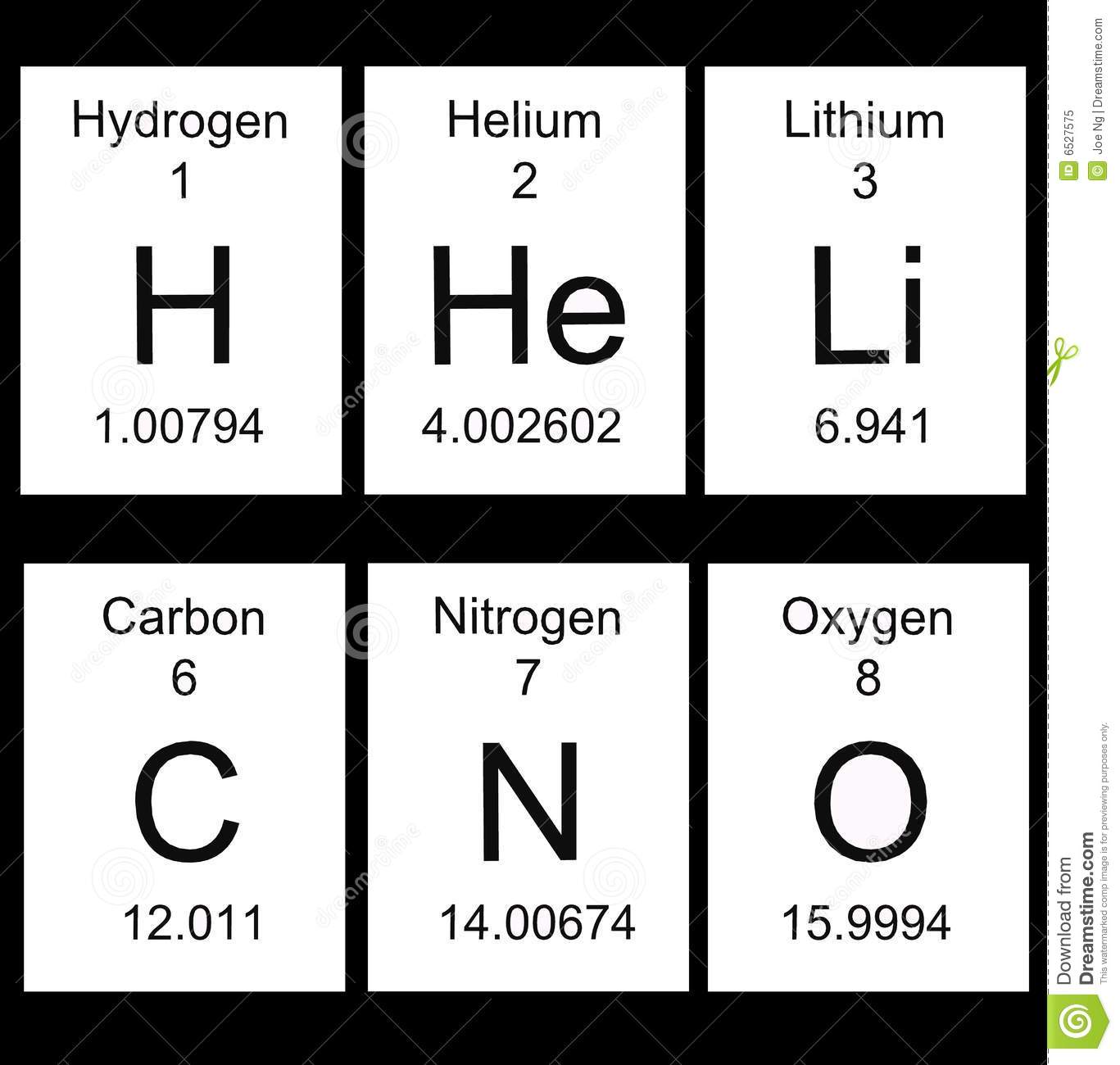
What is the chemical symbol for Lithium?
a)
H
b)
He
c)
Li
d)
N
21.
The months of the year are __________ because they repeat in the same order every 12 months.
a)
periodic
b)
group
c)
period
d)
halogens
22.
A rule that states that repeating chemical and physical properties of elements change periodically with the atomic number of the elements is the _________.
a)
periodic law
b)
alkaline-earth metals
c)
actinide
d)
group rule
23.
Pure forms of these elements are stored in oil so they won't react with oxygen and water in the air.
a)
Alkali Metals
b)
Alkaline-earth metals
c)
Halogens
d)
Noble Gases
24.
Diamonds are a pure form of what element?
a)
Carbon
b)
Oxygen
c)
Silicon
d)
Silver
25.
Most of the elements on the periodic table are classified as _____.
a)
Metals
b)
Nonmetals
c)
Metalloids
d)
Periods
26.

Who invented the Periodic Table?

a)

Mendeleev

b)

Bohr

c)

Lewis

d)

Democritus

27.

As you move left to right on a row or period what happens?

a)

Atomic number increases by 1

b)

Electrons decrease

c)

Number of shells decrease

d)

Nothing

28.

What happens to the number of shells as you move down a group?

a)

They decrease by 1

b)

They increase by 1

c)

Nothing

29.

The first energy shell can hold ______ electrons.

a)

2

b)

8

c)

18

30.

All elements in the same row have the same number of shells.

a)

True

b)

False

c)

Sometimes

31.

Mendeleev's genius was his ability to

a)

predict elements that were not discovered yet

b)

organize elements by their mass

c)

had an element named after himself

d)

organize elements by properties

32.

Valence means......

a)

inside

b)

outside

c)

full

33.

Elements in the same group or column have the same ...

a)

# of valence electrons

b)

# of shells

c)

# of protons

d)

Mass Number

34.

Rows on the periodic table are called ___________.

a)

Periods

b)

Sentences

c)

Fences

35.

Elements in the same group have __________

a)

Similar Properties

b)

Same number of shells

c)

Similar Mass

36.

What do all elements in the same period have?

a)

same number of shells

b)

same number of electrons

c)

belong in the same family

37.

Subatomic particles with a negative charge

a)

Electrons

b)

Neutrons

c)

Protons

d)

Quarks

38.
Subatomic particles with a positive charge
a)
neutrons
b)
atomic mass
c)
protons
d)
isotopes
39.
Measure mainly of the nuclear particles: protons + neutrons
a)
Subatomic Particles
b)
Atomic Number
c)
Atomic Mass
d)
Gluons
40.
Subatomic particles that are neutral in charge
a)
Neutrons
b)
Protons
c)
Nucleus 
d)
Electrons
41.

Atoms of the same element with a different number of neutrons

a)

Ion

b)

alloy

c)

Isotope

d)

Quarks

42.
A charged atom
a)
Ion
b)
Isotope
c)
Electron Cloud
d)
Quark
43.
Where electrons are likely to be found as they travel around the nucleus
a)
Nucleus
b)
Electron Cloud
c)
Within a Proton
d)
Within a Neutron
44.
A tiny but very dense, positively charged portion of the atom that holds most of the atomic mass
a)
Electron Shells
b)
Orbitals
c)
Electron Cloud
d)
Nucleus
45.
Arrangement of elements organized by atomic number
a)
Electron Cloud 
b)
Periodic Table 
c)
Electron Configuration
d)
None of these
46.

Calculation used to find the number of neutrons in an atom

a)

Mass Number- Atomic Number

b)

Atomic Number - Mass Number

c)

Mass Number - Electrons

d)

protons = electrons = neutrons

47.
How many protons does an aluminium atom have? (Use the image to help you)
a)
27
b)
14
c)
40
d)
13
48.
How many neutrons does a sodium atom have? (Use the image to help you)
a)
23
b)
11
c)
12
d)
34
49.
Atoms of the same element must always have the same number of _________
a)
electrons
b)
neutrons
c)
isotopes
d)
protons
50.
The _________ of an element equals the number of protons in an atom of that element
a)
mass number
b)
atomic weight
c)
atomic number
d)
isotopes
51.

The __________ of an atom is the sum of the protons and neutrons in the nucleus of that atom.

a)

atomic weight

b)

atomic number

c)

ionic charge

d)

isotope weight

52.
What is a substance called if it speeds up a chemical reaction?
a)
reusable
b)
catalyst
c)
specific
d)
fragile
53.
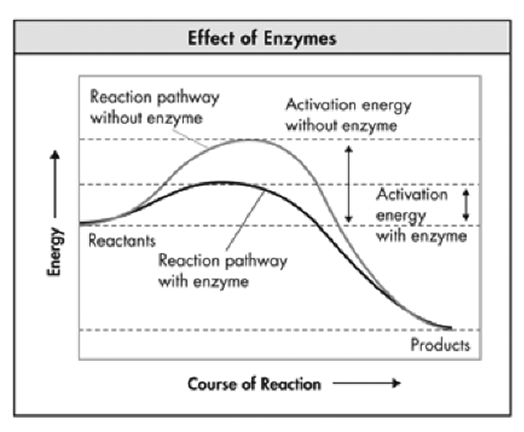
The graph shows how enzymes affect reactions in cells. Which statement best summarizes the information shown in the graph?
a)
Enzymes increase the energy of the reactants.
b)
Enzymes decrease the energy level of the products.
c)
Enzyme decrease the activation energy of the reaction.
d)
Enzymes reverse the direction of the reaction.
54.
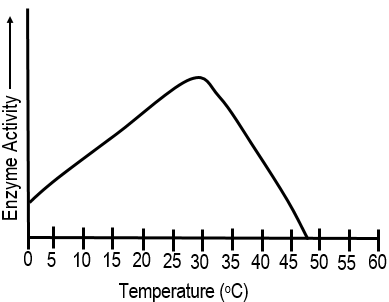
Based on the graph, what is the optimal temperature for this enzyme? 
a)
15oC
b)
40oC
c)
30oC
d)
35oC
55.
Enzymes are...
a)
nucleic acids
b)
proteins
c)
lipids
d)
carbohydrates
56.
What is the function of an enzyme?
a)
enzymes break themselves into small pieces
b)
enzymes slow down chemical reactions
c)
enzymes speed up chemical reactions
d)
enzymes combine products to form reactants 
57.
Enzymes speed up reaction rates by changing...
a)
Activation Energy
b)
pH
c)
Hydrogen Bonds
d)
Kinetic Energy
58.
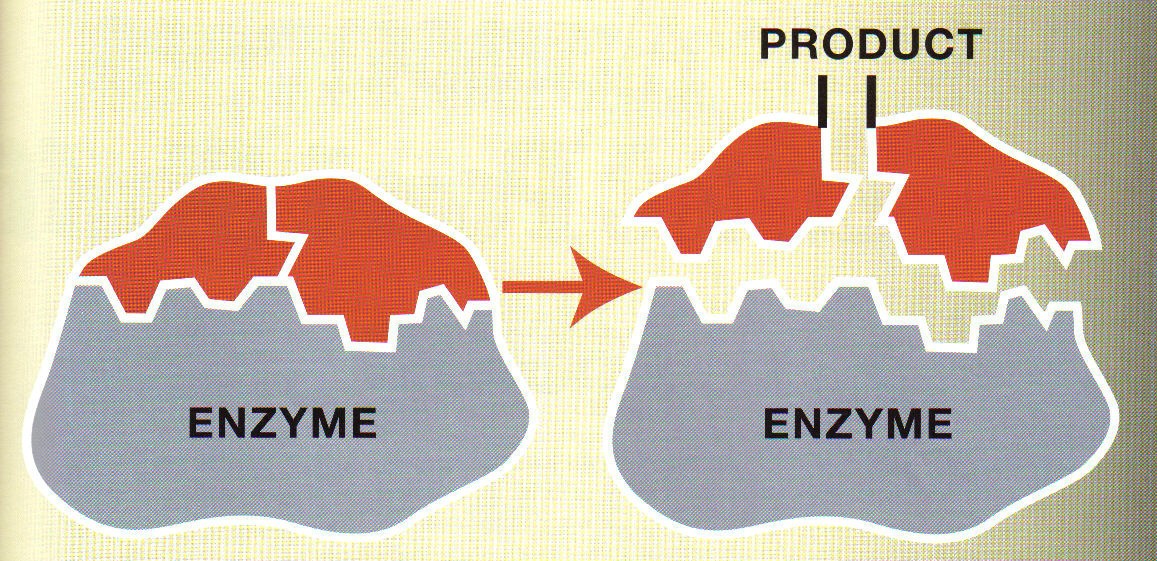
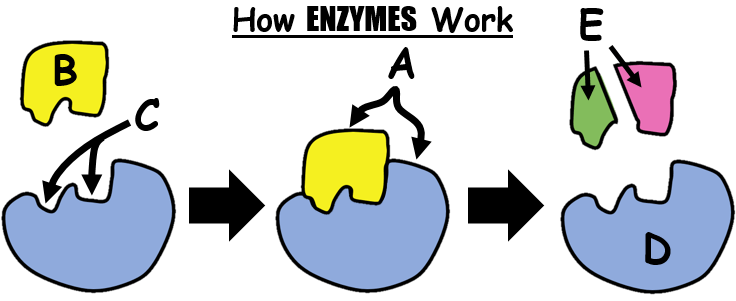
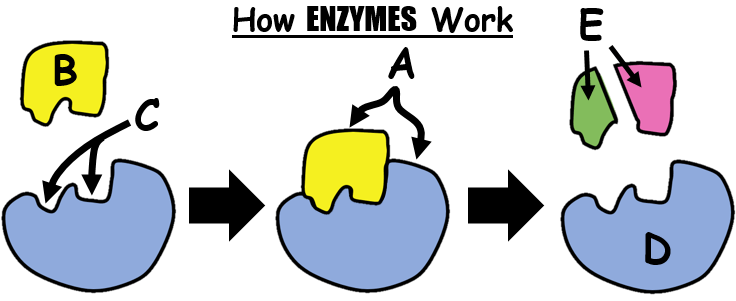
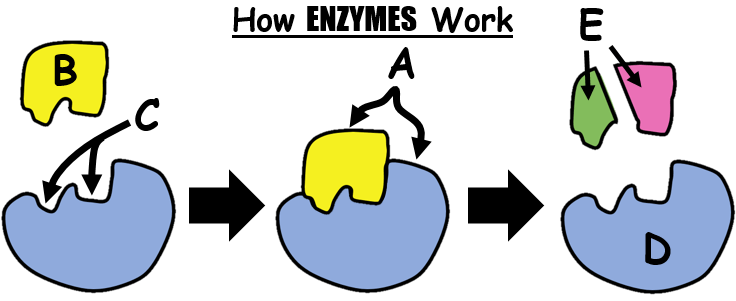
Letter D...
a)
active site
b)
enzyme
c)
substrate
d)
products
59.
Letter B...
a)
active site
b)
enzyme
c)
substrate
d)
products
60.
Letter C...
a)
active site
b)
enzymes
c)
substrate
d)
products
61.
Letter E...
a)
active site
b)
enzyme
c)
substrate
d)
products
62.
With what 3 letters do enzymes typically end?
a)
-ose
b)
-ase
c)
-ese
d)
-tic
63.
Which of the following conclusions can be drawn from this graph?
a)
The optimum pH of the enzyme is 6.6.
b)
The optimum pH of the enzyme is 5.8
c)
The enzyme’s activity increases as pH increases 5.0 to 9.0
d)
The enzyme’s activity is greater around pH of 8.0 .
64.

What happens when enzymes are heated to a high temperature?

a)

The enzymes die.

b)

The shapes of the enzyme are altered.

c)

The enzymes' amino acid sequence changes.

d)

The enzymes remain the same

65.
Enzymes will make a reaction go _______ and use ______ energy.
a)
faster, less
b)
faster, more
c)
slower, less
d)
slower, more
66.
What happens to an enzyme when it is denatured?
a)
Activation energy is lowered.
b)
It becomes stronger.
c)
It loses its shape.
d)
Activation energy is raised.
67.
Every enzyme has a optimal temperature and pH. True or False?
a)
True 
b)
False
68.
What is the mass of an atom if it has 11 protons, 12 neutrons, and 11 electrons?
a)
22
b)
11
c)
34
d)
23
69.
If an atom has 10 protons, 10 neutrons, and 10 electrons, what is the mass of the atom?
a)
10
b)
20
c)
30
70.
What subatomic particle(s) would be found orbiting the nucleus?
a)
Neutrons only
b)
Electrons only
c)
Protons and Neutrons
d)
Protons and Electrons
71.
Protons and Electrons balance the charge of an atom.
a)
True
b)
False
72.
What particle uniquely identifies an element?
a)
Number of Valence Electrons
b)
Number of Protons
c)
Number of Electrons
d)
Atomic Mass
73.
Which one of these is NOT located in the element square on the Periodic Table?
a)
Atomic Number
b)
Atomic Mass
c)
Room Temperature
d)
Chemical Symbol
74.
Where are electrons of an atom found?
a)
Nucleus
b)
Electron Cloud
c)
Some are in the nucleus and some in the electron cloud.
d)
They are moving everywhere.
75.
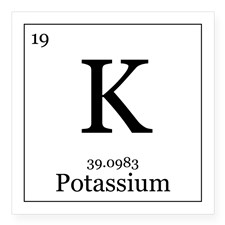
How many neutron are in the atom "K"?
a)
7
b)
2
c)
39
d)
20
76.
What is the number of protons that the element in this image contain?
a)
14
b)
7
c)
15
d)
18
77.
all matter is made of what 
a)
energy 
b)
atoms 
c)
electrons 
d)
compounds 
78.
The pH scale is a range from:
a)
1-7
b)
0-14
c)
1-5
d)
1-20
79.
A(n) ______ is a substance with a pH less than 7
a)
Acid
b)
Alkaline
c)
Base
d)
Buffer
80.
A(n) _______ is a substance with a pH greater than 7.
a)
Base
b)
Acid
c)
Buffer
d)
Water
81.
What is the only substance with a neutral pH of 7?
a)
Milk
b)
Orange Juice
c)
Water
d)
Blood
82.
Complete the sentence.
A substance that is more basic has a _____ pH than a substance that is acidic.
a)
lower
b)
higher
c)
the same
d)
none of the above
83.

In a test of pH levels, a baking soda has a pH of 9 and bleach has a pH of 12. What is true about there relationship?

a)

Both of the solution are Bases

b)

Both of the solution are Acids

c)

The Baking soda is an acid and the Bleach is a base

d)

The baking soda is a base and the Bleach is an Acid.

84.

A base is a substance

a)

That releases OH- ions when dissolved in water

b)

That releases H+ ions when dissolved in water

c)

Does not release any ions when dissolved in water

d)

None of the above

85.
On the pH scale higher numbers indicate
a)
acids
b)
bases
86.
If you have a substance with a pH of 7.1 it is a(n).....
a)
Acid
b)
base
87.

The picture below shows the relative concentrations of H+ and OH- in a solution. Is the solution an acid or a base?

a)

acid

b)

base

88.

An acid

a)

is a substance that releases H+ ions when dissolved in water

b)

is a substance that does not release any ions when dissolved in water

c)

is a substance that releases OH- when dissolved in water

d)

releases an equal amount of OH- and H+ ions when dissolved in water

89.

Water has a neutral because

a)

it has more H+ ions than OH-

b)

it has more OH- ions than H+

c)

it does not produce any ions

d)

it has an equal amount of H+ and OH- in solution

90.
According to the pH range which substance is more acidic than lemon juice
a)
Hydrochloric acid
b)
cabbage
c)
milk
91.
Bleach is a strong base, what is the pH level of bleach?
a)
13
b)
14
c)
1
d)
2
92.
A solution has a pH of 7.0.  What would happen to the pH if H ions were added?
a)
pH would go up
b)
pH would go down
c)
pH would stay the same
d)
None of these
93.
A solution has a pH of 7.0.  What would happen to the pH if OH ions were added?
a)
pH would go up
b)
pH would go down
c)
pH would stay the same
d)
None of these
94.
A solution with a pH of 10 is mixed with a solution with a pH of 4.  What would the pH of the mixture most likely be?
a)
10
b)
4
c)
40
d)
7
95.

Isotopes of an element have a different number of...

a)

Protons

b)

Neutrons

c)

Electrons

d)

Mass