
 Worksheets
Unit 5: Protein synthesis, Mutations, and Gene Expression Review
Total questions: 92
Worksheet time: 1hrs 27mins

Which organelle is the location where protein is made?
Ribosome
Nucleus
Cytoplasm
Nucleotide
During transcription, this type of ribonucleic acid is produced
tRNA
mRNA
rRNA
dRNA

When these bond together, they form a protein
Amino Acids
Peptide Bonds
Ribose
Nucleotides

mRNA is made during this process
Translation
Transcription
Replication
Delivery
Which of the following is the complementary mRNA sequence to this DNA strand: AACTGAA
UUGACUU
TTGACTT
AACTGAA
AACUGAA
DNA triplet
tRNA
anti-codon

In what process are proteins synthesized?
Transcription
Translation
DNA Replication
Mitosis
Which organelle contains rRNA and reads the mRNA to synthesize a protein?
Ribosome
Nucleus
Cytoplasm
Nucleotide

What brings the amino acids to the ribosome to assemble a protein?
DNA
How many nucleotides code for 1 amino acid?
1
2
3
4

What is the location in the cell for translation?
Cytoplasm
Nucleus
Lysosome
Golgi apparatus
In RNA, Adenine (A) pairs with...
T
U
C
G
Which of the following is a characteristic of RNA?
Double stranded
Contains the base Thymine
Can leave the nucleus
Contains the sugar deoxyribose
Which type of RNA is responsible for bringing amino acids to the ribosome?
mRNA
rRNA
tRNA
DNA

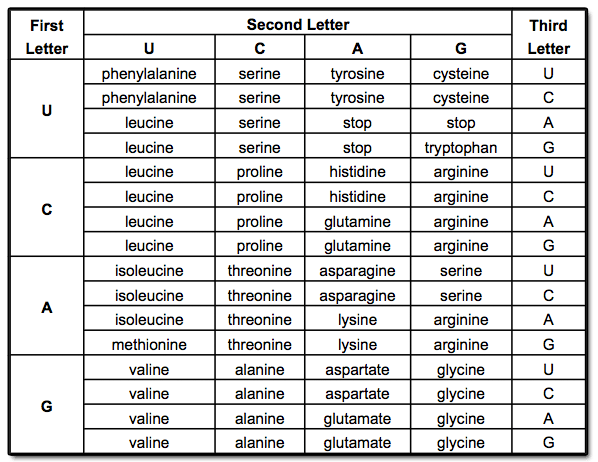
What amino acid is coded for by the RNA sequence below?
AGG
Gly
Leu
Arg
Val

Which process is shown?
Replication
Transcription
Translation
Photosynthesis
What type of mutation has occured to the DNA sequence below?
Original DNA: AAC - GTA
Mutated DNA: AAG - TA
Substitution
Deletion
Insertion
Non - sense
Select the DNA sequence below that demonstrates a subsitution mutation.
Original DNA: AAT - GCC
Mutated DNA:
AAT - GGC - C
Mutated DNA:
AAG- CC
Mutated DNA:
ATT - GCC
AAT - TGC - C
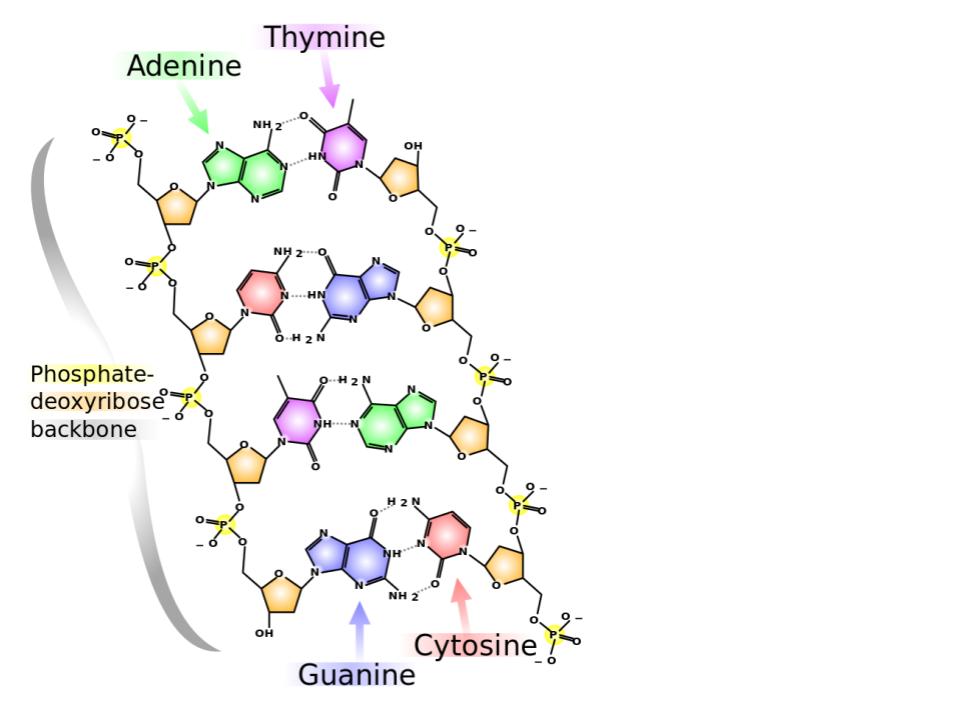
Transcribe the following DNA strand: CTG AAT
GAC TTA
CTG AAT
GAC UUA
CUG AAU


AATCATGGA
Transcribe the following DNA strand: CTG AAT
GAC TTA
CTG AAT
GAC UUA
CUG AAU

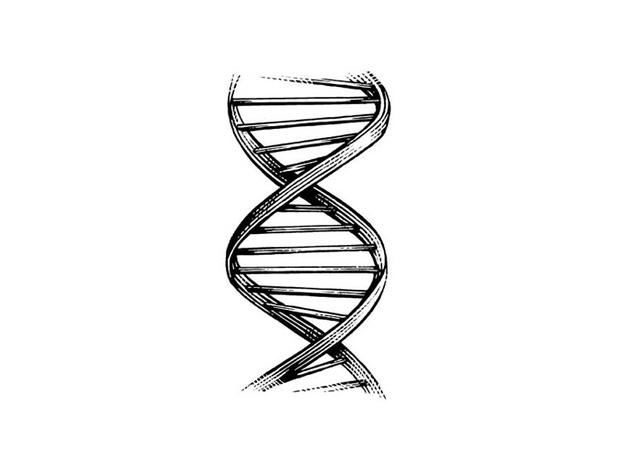

Which of the following make up a nucleotide?
Sugar, phosphate, and base
Sugar, nitrate, and base
Lipid, phospate, and sugar
Protein, phosphate, and base
What mutation has occurred here?
T-G-A-C-C-A
T-G-A-G-C-A
Substitution
Deletion
Insertion
Frameshift
Which of the following would result in a frameshift mutation?
Insertions only
Substitution only
Deletion only
Insertions and Deletions
DNA molecule segment is : TTACGCAAG
The mutated DNA segment is TTCGCAAG. This is an example of ___ mutation.
Substitution
Deletion
Insertion
Inversion
A mutation is defined as:
A change in the cell's structure
Anything that changes in an embryo
Any change in the physical features of a human
A change in the DNA sequence
ATTTGAGCC- Original
ATTGAGCC - Mutated
The example above is an example of a
Insertion- Frameshift
Deletion- Substitution
Deletion -Frameshift
All of the above
What mutation has occurred here?
T-G-A-C-C-A
T-G-A-G-C-A
Substitution
Deletion
Insertion
Frameshift
Why are insertion and deletion (frameshift) mutations so harmful?
They change all of the codons from the mutation on down the line, which changes the amino acid sequence
They insert things that an organism doesn't need.
They often delete things that organisms need.
Insertion and deletions are not any more harmful than substitution mutations.
Identify the DELETION mutation form the following:
ATG CCA AAT
ATG TCA AAT
ATG CCT AAA T
ATC CA AT
ATG CCA AAT

Which mutation will cause translation to stop?
Mutations 1 and 3 only
Mutation 1 only
Mutation 2 only
Muations 1, 2, 3

Which type of mutation does the model demonstrate?
Deletion
Substitution
Insertion
Translocation

A substitution mutation that has no effect
on amino acids sequence
Insertion Mutation
Translocation
Silent Mutation
Deletion Mutation

A nucleotide base is inserted or deleted shifting the entire DNA sequence. Entire protein will be changed.
Substitution Mutation
Silent Mutation
Frameshift Mutation
Translocation

A frameshift mutation where a nucleotide base
is removed from the DNA sequence.
Deletion Mutation
Substitution Mutation
Translocation
Silent Mutation

A frameshift mutation where a nucleotide base is added
to the DNA sequence
Insertion Mutation
Deletion Mutation
Substitution Mutation
Chromosomal Mutation
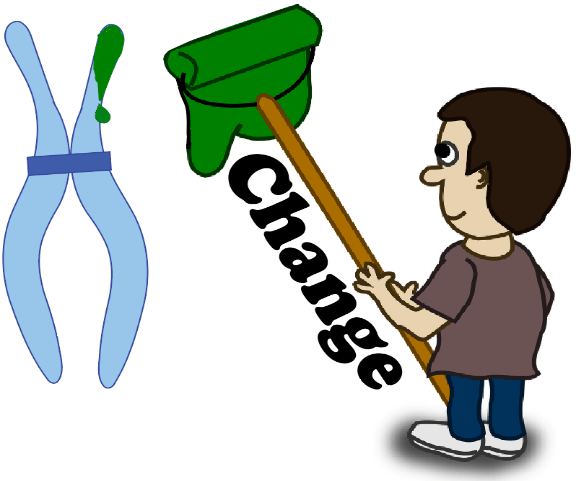
Mutations that involve parts of or all of
a chromosome
Replication
Deletion Mutation
Chromosomal Mutation
Transcription
Which of the following would result in a frameshift mutation?
(More than one correct answer)
Insertions
Substitutions
Deletions
What are the two steps in protein synthesis? (Hint: C-->L)
translation
transcription
codon
anticodon

The Himalayan rabbit's habitat has cold, snowy winters and mild summers. The body is typically covered in white fur except for the nose, feet, tail, and ears, which are covered in black fur.
A scientist shaved an area of white fur on the back of a Himalayan rabbit and placed an ice pack over the shaved area . The shaved area grew black fur.
Which of these best explains why the hair that grew back where the Ice pack was placed was black and not white?
The white hair mutated to black hair as the rabbit's body temperature decreased.
The coat color changed from white to black with the age of the rabbit.
The genes for black hair were activated by specific temperatures.
White hair only grows during certain times of the year.
CRISPR-Cas9 is a genetic modification technique that edits parts of the genome of an organism . Using this technique scientists can add, remove, or modify sections of the DNA sequence.
How can scientists use this technique to control gene expression?
By determining the number of chromosomes in an organism
By identifying how closely related one individual is to another
By calculating the number of genes different organisms produce
By activating or deactivating specific genes
What is gene expression?
The process by which information from a gene is used to create a functional product
Large molecules made up of chains of amino acids that perform various functions
To make a written or typed copy of something, in this case, DNA into RNA
To control or manage something, in this case, the process of gene expression
What are proteins?
The process by which information from a gene is used to create a functional product
Large molecules made up of chains of amino acids that perform various functions
To make a written or typed copy of something, in this case, DNA into RNA
To control or manage something, in this case, the process of gene expression
What does it mean to transcribe?
The process by which information from a gene is used to create a functional product
Large molecules made up of chains of amino acids that perform various functions
To make a written or typed copy of something, in this case, DNA into RNA
To control or manage something, in this case, the process of gene expression
What is the role of gene expression in multicellular organisms?
To make sure that each cell has the right proteins for its job
To conserve energy and space in our cells
To determine when and how our genes make proteins
To regulate how much protein is made
How is gene expression regulated?
By turning the gene on or off
By controlling how much protein is made
By transcribing DNA into RNA
By making a written or typed copy of something
What is the importance of gene expression for all living things?
To make sure that each cell has the right proteins for its job
To conserve energy and space in our cells
To determine when and how our genes make proteins
To help organisms adapt to their environment and respond to changes
What is the role of gene expression in the development of different cell types in multicellular organisms?
To make sure that each cell has the right proteins for its job
To conserve energy and space in our cells
To determine when and how our genes make proteins
To play a role in the development of different cell types
Cell differentiation is critical during embryonic development. The process of cell differentiation results in the production of many different kinds of specialized cells. This process is most directly influenced by
DNA
Lipids
Carbohydrates
ATP
As a fertilized egg divides, the cells differentiate because they
have different sets of DNA passed on to the daughter cells
have different sets of genes activated in the daughter cells
have mutations that cause different genes to appear in the daughter cells
randomly assort the chromosomes into different daughter cells
When gene expression occurs
A gene is mutated with either an insertion or deletion
The gene is removed from the genotype in that cell
The gene is passed on to the daughter cells during mitosis
The gene is activated and used in protein synthesis
Which reason explains why nerve cells function differently than muscle cells?
In nerve cells all the genes are expressed.
In muscle cells all the genes are expressed.
In both kinds of cells the same genes are expressed.
In both kinds of cells different genes are expressed.

How can environmental factors affect gene expression?
a) By modifying DNA sequences
b) By altering how a gene is expressed.
c) By directly changing gene function
d) None of the above

Environmental factors can influence the regulation of gene expression.
True
False

Gene expression is solely determined by genes and is not impacted by the environment.
True
False
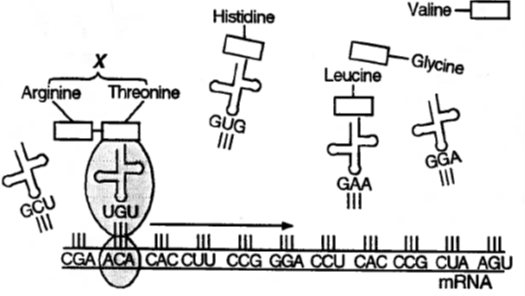


CAA
Cells differentiate to perform different functions because
all genes are turned on inside that cell
all genes are turned off inside that cell
different genes are turned on inside that cell
different genes are turned on or off inside that cell
During the process of differentiation
all sections of DNA are activated to determine the structure of a body cell
ONLY ONE section of DNA are deactivated to determine the structure of a body cell
only specific sections of DNA sequence are activated to determine the structure and functions of a body cell
There are about 200 cells in the human body. All these cells have the same DNA. True or False?
True
False
maybe
it depends upon the type
So why do stomach cells function differently than skin cells?
They have different DNA.
Different types of cells simply use different genes contained in the DNA.

