wayground logo

Free Printable Worksheets

Font size

S
M
L
XL
Worksheets

Unit 2: Intro to Biology test review

Total questions: 93

Worksheet time: 1hrs 22mins

Name
Class
Date
1.

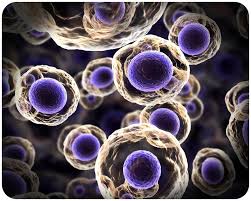
Is this a prokaryote or a eukaryote?

a)

Prokaryote

b)

Eukaryote

2.

Is this a prokaryote or a eukaryote?

a)

prokaryote

b)

Eukaryote

3.

Is this a prokaryote or a eukaryote?

a)

prokaryote

b)

eukaryote

4.

Is this a prokaryote or a eukaryote?

a)

prokaryote

b)

eukaryote

5.

Is this a prokaryote or a eukaryote?

a)

prokaryote

b)

eukaryote

6.

What is the function of the mitochondria?

a)

Breaks down cellular material

b)

Creates energy from sunlight

c)

Protects the cell and provides structure

d)

Provides energy for the cell

7.

In which type of cell is the cell membrane found?

a)

Eukaryotes

b)

Prokaryotes

c)

Animal cells

d)

All types of cells

8.

Which of the following types of cells is a eukaryote?

a)

One without a nucleus

b)

Bacteria

c)

One with a nucleoid

d)

Animal cell

9.

Which of the following types of cells is a prokaryote?

a)

One with a nucleus

b)

Bacteria

c)

One with mitochondria

d)

An animal cell

10.

What is the correct function of a vesicle?

a)

Transport materials throughout the cell

b)

Make proteins

c)

Sorts and packages proteins

d)

Store materials

11.

What is the correct function of a Lysosome?

a)

Breaking down and recycling organelles

b)

Transporting materials throughout the cell

c)

Making proteins

d)

Sorting and packaging proteins

12.

Which of the following is true about prokaryotes?

a)

They do not have DNA

b)

They do not have a nucleus

c)

They do not have a cell membrane

d)

They do not move

13.

Which of the following is true about the mitochondria?

a)

They are only found in animal cells

b)

They are found in prokaryotes

c)

They are found in muscle cells to provide quick bursts of energy

d)

They are found in prokaryotes

14.

Which of the following is correct about chloroplasts?

a)

They are the site for photosynthesis

b)

They convert sunlight to energy in animal cells

c)

They are found in prokaryotes

d)

They protect and support the cell

15.

Which of the following is true about cell walls?

a)

They are not found in plant cells

b)

They are found in animal cells

c)

They protect and support the cell

d)

They are not found in bacteria

16.

Which of the following organelles are found in prokaryotes?

a)

Ribosomes

b)

Nucleus

c)

Vacuoles

d)

There are no organelles in prokaryotes

17.

Which of the following are found in plant cells but not in bacteria?

a)

Cell membrane

b)

Cell wall

c)

Chloroplast

d)

Ribosomes

18.

Which of the following are found in both animal and plant cells?

a)

Chloroplasts

b)

One large, central vacuole

c)

Cell wall

d)

Cell membrane

19.

Which of the following matches the correct organelle with its function?

a)

The Golgi Apparatus is covered in ribosomes and assembles proteins.

b)

The Ribosome modifies, sorts, and packages proteins and other materials

c)

The Endoplasmic Reticulum is an organelle found in prokaryotes and eukaryotes that makes proteins

d)

The Vesicle moves materials between cell organelles as well as to and from the cell

20.

Which of the following matches the correct organelle with its function?

a)

The Nucleus breaks down materials

b)

The Lysosome stores materials like water, salts, proteins, and carbohydrates.

c)

The Cytoskeleton helps the cell maintain its shape and structure

d)

The Vesicle modifies, sorts, and packages proteins and other materials

21.
Which type of cell?
a)
Prokaryote
b)
Eukaryote
22.
In what organelle is the genetic material found inside?
 
a)
Endoplasmic Reticulum
b)
Golgi Complex
c)
Nucleolus
d)
Nucleus
23.
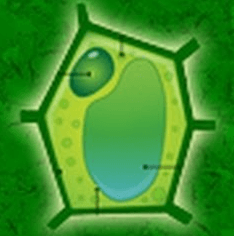
Using this image, what organelle is C?
a)
Cell Wall
b)
Mitochondria
c)
Large Cell Vacuole
d)
Chloroplast
24.
What is the function of the mitochondria?
a)
Structure that manufactures ribosomes
b)
Structures that converts nutrients to energy
c)
Stack of membranes that packages chemicals
d)
Structure that contains DNA and directs the cell
25.
What is the function of the vacuole?
a)
Sac that stores water, nutrients, and waste products
b)
Sac filled with digestive chemicals
c)
Jelly-like substance within the plasma membrane
d)
stack of membranes that packages chemicals
26.
I store water in both plant and animal cells. What am I?
a)
cytoplasm
b)
ribosomes
c)
vacuole
d)
lysosomes
27.
I make proteins for the cell. What am I?
a)
ribosome
b)
mitochondria
c)
chloroplast
d)
lysosome
28.
What can only be found in plant cells?
a)
Cell membrane
b)
Vacuole
c)
Chloroplast
d)
Mitochondrion
29.
The two kinds of cells are Prokaryotes and Eukaryotes. How are they different?
a)
Prokaryotes have a nucleus.
b)
Eukaryotes have a nucleus.
c)
Prokaryotes are plant cells.
d)
There is no difference.
30.
What cell part is NOT found in all cells?
a)
Cell Wall
b)
Cell Membrane
c)
Cytoplasm
d)
Genetic Material
31.
Where are proteins made?
a)
Golgi body
b)
Mitoichondria
c)
Chromosomes
d)
Ribosomes
32.
A rigid layer that lies outside the cell's  membrane is...
a)
Cytoskeleton
b)
Cilia
c)
Cell Wall
d)
Flagella
33.
What does this organism use for movement?
a)
Pseudopod
b)
Cilia
c)
Flagella
d)
legs
34.
What does this organism use for movement?
a)
Pseudopod
b)
Cilia
c)
Flagella
d)
legs
35.
The difference in the concentration of a substance from one location to another is called a/an
a)
diffusion
b)
osmosis
c)
concentration gradient
d)
passive transport
36.
A molecule that diffuses down a concentration gradient goes from an area of ______ concentration into an area of ______ concentration.
a)
high, low
b)
low, high
c)
passive, active
d)
active, passive
37.

Passive transport requires no

a)

concentration gradients

b)

osmosis

c)

motion

d)

energy

38.
This example of passive transport is the diffusion of water.
a)
osmosis
b)
concentration gradient
c)
isotonic
d)
facilitated diffusion
39.
This example of passive transport gets energy from the natural motion of particles
a)
osmosis
b)
concentration gradient
c)
isotonic
d)
diffusion
40.
The higher the concentration of dissolved particles in a solution (solute), the _______ the concentration of water molecules in that solution. 
a)
higher
b)
greater
c)
lower
d)
smaller
41.
This solution has the highest concentration of particles.
a)
hypertonic
b)
hypotonic
c)
isotonic
42.
This solution has the highest concentration of water molecules.
a)
hypertonic
b)
hypotonic
c)
isotonic
43.
This solution has the equal concentrations of water molecules and particles.
a)
hypertonic
b)
hypotonic
c)
isotonic
44.
In facilitated diffusion, molecules move
a)
Down a concentration gradient
b)
Against a concentration gradient
45.
A solution with a higher level of solutes than the solution is called
a)
hypertonic
b)
hypotonic
c)
isotonic
46.
This is the simplest form of passive transport:
a)
osmosis
b)
diffusion
c)
facilitated diffusion
d)
endocytosis
47.
This cell organelle helps organisms maintain homeostasis by controlling what substances may enter or leave cells.
a)
vacuole
b)
nucleus
c)
cell membrane
d)
cell wall
48.
Controlling what goes into or out of the cell without energy is called
a)
active transport
b)
endocytosis
c)
passive transport
d)
exocytosis
49.
Controlling what goes into or out of the cell with the help of energy is called
a)
active transport
b)
endocytosis
c)
passive transport
d)
exocytosis
50.
This process gets rid of wastes.
a)
endocytosis
b)
exocytosis
c)
osmosis
d)
diffusion
51.
The movement of molecules down a concentration gradient is all of the following except
a)
simple diffusion
b)
facilitated diffusion
c)
active transport
52.
The movement of molecules through selective membrane proteins happens in all of the following except
a)
simple diffusion
b)
facilitated diffusion
c)
active transport
53.
Most active transport proteins use energy from the breakdown of:
a)
nucleus
b)
cell membrane
c)
ATP
d)
mitochondria
54.
This uses energy
a)
endocytosis
b)
exocytosis
c)
both
55.
This takes substances into a cell
a)
endocytosis
b)
exocytosis
c)
both
56.
This releases substances outside a cell
a)
endocytosis
b)
exocytosis
c)
both
57.
In which solution will water move out of the cell resulting in the cell shriveling up?
a)
Hypertonic
b)
Isotonic
c)
Hypotonic
58.
In which solution will water move into the cell resulting in the cell bursting?
a)
Hypertonic
b)
Isotonic
c)
Hypotonic
59.
In which solution will water move into and out of the cell at the same rate?
a)
Hypertonic
b)
Isotonic
c)
Hypotonic
60.
This is a picture of
a)
Cell wall
b)
Cell membrane
c)
chloroplast
d)
mitochondria
61.
How does a cell maintain homeostasis?
a)
Regulates what enters and leaves the cell
b)
Flexibility
c)
Protective barrier
d)
Structure and support
62.
Another term for equilibrium is...
a)
Not enough
b)
Too little
c)
Homeostasis
d)
Too much
63.
The cell membrane is selectively permeable, which means...
a)
All materials can enter and leave the cell
b)
Certain things can enter while others cannot
c)
The cell manually sorts through all materials
d)
Only certain cells can interact with the cell.
64.
A can of air freshener is sprayed in the opposite side of the room.  Ten minutes later you start to smell the scent.  This is an example of 
a)
diffusion
b)
active transport
c)
endocytosis
d)
osmosis
65.
What is homeostasis?
a)
How the body releases oxygen
b)
Passive transportation 
c)
How the body regulates itself for survival
d)
Active transport
66.
Where is there a low concentration of dye?
a)
at the bottom of cup
b)
in the color
c)
at the top of cup 
d)
no concenteraion gradient
67.
Against the concentration gradient
low to high
uses energy/ATP
a)
facilitated diffusion
b)
osmosis
c)
active transport
d)
simple diffusion
68.
This picture represents what type of cell transport?
a)
endocytosis
b)
exocytosis
c)
osmosis
d)
passive transport
69.
Which molecules would be moved from a high concentration to a low concentration using Facilitated Diffusion?
a)
Oxygen (O2)
b)
Sodium (Na)
c)
Carbon Dioxide (CO2)
70.
Simple Diffusion moves SMALL and NONPOLAR molecules and Facilitated Diffusion moves LARGE and POLAR molecules
a)
True
b)
False
71.
Sodium (Na), Calcium (Ca) and Potassium (K) are all non-polar molecules and will be transported through Simple Diffusion
a)
True
b)
False
72.
Is it possible to have a HIGH concentration of something INSIDE a cell with a LOW concentration OUTSIDE of the cell?
a)
Yes
b)
No
73.
Phospholipids are a Facilitator for LARGE and POLAR molecules
a)
True
b)
False
74.
Which would represent a concentration gradient for Passive Transport
a)
Low to High
b)
High to Low
75.
Which type of Passive Transport is being represented in this picture?
a)
Passive Diffusion
b)
Simple Diffusion
c)
Active Diffusion
d)
Facilitated Diffusion
76.
The oval molecules represent LARGER and POLAR molecules, when will they STOP being transported across the cell membrane
a)
When equilibrium is achieved
b)
Never
c)
When they begin to move from a LOW concentration to a high concentration
77.
Which type of molecules would be transported by Simple Diffusion?
a)
small, polar 
b)
small, nonpolar
c)
large, polar
d)
large, nonpolar
78.
Simple and Facilitated diffusion are powered by an unequal concentration gradient of HIGH to LOW
a)
True
b)
False
79.
This variable in an experiment is the one being deliberately changed by the scientist. 
a)
dependent variable
b)
independent variable
c)
data
d)
control group
80.
Should experiments be repeated over and over to see if the results are the same each time?
a)
yes
b)
no
81.
There are two types of data. Which type of data involves numbers that are obtained by counting or measuring?
a)
quantitative
b)
qualitative
82.
There are two types of data. Which type of data involves descriptions/photographs/illustrations that cannot be counted or measured?
a)
qualitative
b)
quantitative
83.
In a controlled experiment, how many independent variables can be worked with at a time? 
a)
one
b)
none
c)
two or more
d)
how ever many makes sense.
84.
Mr. S. sets up an experiment to see how the mass of a ball affects the distance it rolls off a ramp.  Identify the independent variable.
a)
distance traveled by the ball
b)
height of the ramp
c)
mass of the ball
d)
weight of the ball
85.
Mr. S. sets up an experiment to see how the mass of a ball affects the distance it rolls off a ramp.  Identify the dependent variable.
a)
height of the ramp
b)
 distance traveled by the ball
c)
mass of the ball
d)
weight of the ball
86.
A student is planning an experiment to find out how the height from which he drops a ball affects how high the ball bounces. The dependent variable is the _____.
a)
Diameter of the ball
b)
Force acting on the ball
c)
Height that the ball bounces
d)
Height from which the ball is dropped
87.
When experimenting with the growth of a plant, a scientist uses three (of the same type of) plants, two different fertilizers, equal light, and equal water. What type of variable is the fertilizer?
a)
Dependent
b)
Independent
c)
Control
d)
Compound
88.
An experiment is performed on plants to see how different liquids affect plant growth. Each plant in the experiment is given a different liquid; water, apple juice, or milk. Each plant has the same amount of soil, sunlight, and listens to the same music. In this investigation, what is the dependent variable?
a)
Type of plant
b)
Water, apple juice, milk
c)
Plant growth
d)
Color of the plant's leaves
89.
If I study for my scientific method quiz, then I will have a better test score. What is the dependent variable?
a)
Scientific Method
b)
Studying
c)
Independent variable
d)
Test score
90.
Which is NOT a step in the scientific method?
a)
Make observation
b)
Form a theory
c)
Collect data
d)
Form a hypothesis
91.
This part of the experiment serves as a basis of comparison; the one variable being tested has been omitted. 
a)
experimental group
b)
control group
c)
data
d)
variables
92.
Why do we want to test only one independent variable at a time?
a)
Because it is hard to setup a data table with more than one variable
b)
To better identify what is causing the changes
c)
It is what has always been done
d)
It's easier to perform the experiment
93.
True or False: Your hypothesis can never be wrong.
a)
True
b)
False