wayground logo

Free Printable Worksheets

Font size

S
M
L
XL
Worksheets

Pre AP: Unit 2 Exam Review

Total questions: 90

Worksheet time: 2hrs 14mins
Name
Class
Date
1.

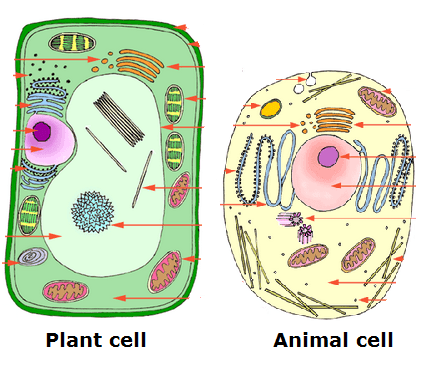
What distinguishes a plant cell from an animal cell? (How do you tell them apart) Hint: There's 3 ways (Check all 3)

a)

Central Vacuole

b)

Mitochondria

c)

Cell Wall

d)

Ribosomes

e)

Chloroplasts

2.

These foods contain A LOT of which Bio-molecule that our body LOVES to use for Energy?

a)

Protein

b)

Nucleic Acids

c)

Baconidis

d)

Carbohydrates

3.

Cellular Respiration occurs within me and I am in BOTH plant and animal cells. I am a....

a)

Nucleus

b)

Golgi Body

c)

Cytoskeleton

d)

Mitochondria

4.
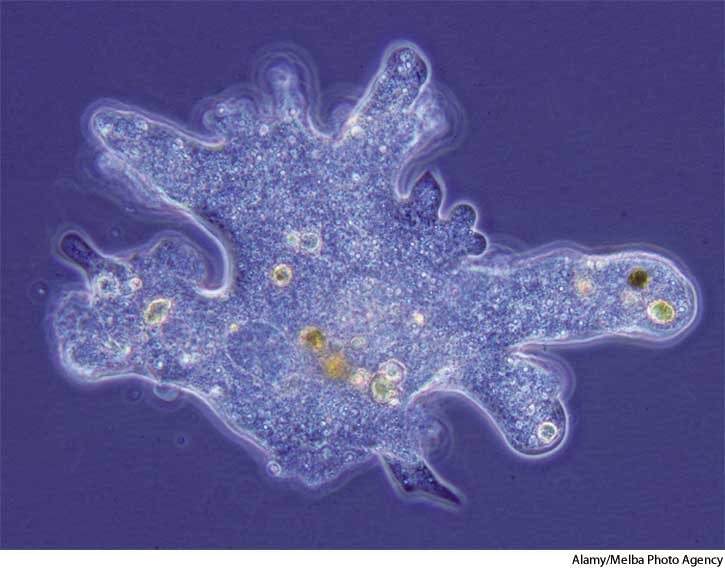
An Amoeba is a unicellular, animal-like protist that lives in ponds and streams. According to cell theory, where did this cell come from?
a)
another pre-existing amoeba cell.
b)
energy from sun that allowed the protist to reproduce.
c)
a multicellular organism.
d)
the nonliving environment.
5.
Robert Hooke, Anton van Leeuwenhoek, Theodor Schwann, Rudolf Virchow, and Matthias Schliden were all responsible for what theory?
a)
The Theory of Gravity
b)
The Theory of Relativity
c)
The Cell Theory
d)
The Theory of Continental Drift
6.
Rocks are not living because
a)
they never move
b)
they aren't needed for humans
c)
they are not made of cells
d)
they don't break down
7.
All cells are produced ____________.
a)
From pre-existing and deceased cells
b)
from other pre-existing cells
c)
Cells can come from anywhere, as long as there is the sun.
8.
Which of the following statements is not part of the cell theory?
a)
Cells are the basic unit of structure and function in all living things.
b)
All cells are produced from other cells.
c)
Only animal cells are composed of cells.
d)
All living things are composed of cells.
9.
Why are microscopes important when studying most cells?
a)
Most cells are very large.
b)
Most cells are very small.  
c)
Most cells move very quickly.
d)
Most cells are dead.  
10.
Which of the following are NOT found in animal cells
a)
chloroplasts and cytoplasm
b)
chloroplasts and cell wall
c)
cell wall and cell membrane
d)
mitochondria and nucleus
11.
What do vacuoles do? 
a)
They actually do not have an important role
b)
They protect the cell
c)
They are the brain of the cell
d)
storage area for cells; water storage in plants 
12.

What are the two types of cells?

a)

Prokaryotic & Eukaryotic

b)

Bacteria & Eukaryotic

c)

Eukaryotic

d)

Animal & Plant

13.

Which organelle is responsible for the removal of waste and foreign particles?

a)

Plasma Membrane

b)

Lysosomes

c)

Peroxisomes

d)

Mitochondrion

14.

What is a unique characteristic of the plasma (cell) membrane?

a)

Semipermeable

b)

Rigid

c)

Jelly-like

d)

Orange

15.

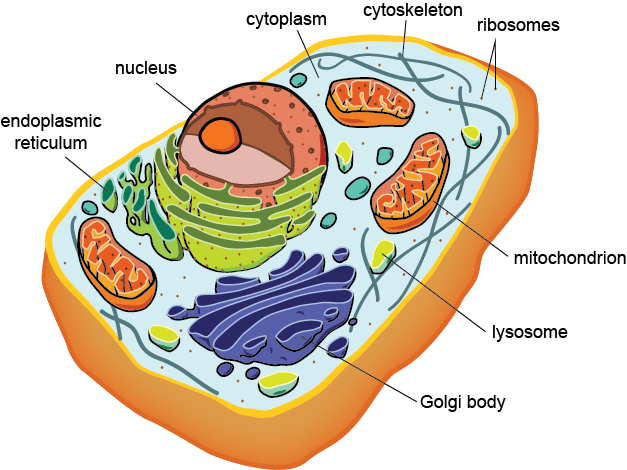
What is the name of this organelle?

a)

Mentos

b)

Mitochondrion

c)

Chlorophyll

d)

Chloroplast

16.
Bacteria are prokaryotes.
a)
True
b)
False
17.
Bacteria are considered non-living.
a)
True
b)
False
18.
Bacteria are unicellular
a)
True
b)
False
19.
Which of the following is found inside a prokaryote?
a)
cytoplasm
b)
DNA
c)
ribosomes
d)
all of these
20.
Eukaryotic cells are complex.
a)
true
b)
false
21.
Has membrane bound organelles
a)
Prokaryote
b)
Eukaryote
c)
both
22.
Both prokaryotes and eukaryotes have a nucleus.
a)
True
b)
False
23.
Plants and animal cells are examples of ___ cells 
a)
prokaryotic cells 
b)
eukaryotic cells 
24.
These cells have DNA surrounded by a nuclear membrane...
a)
Eukaryotic
b)
Prokaryotic
c)
Neither
d)
Both prokaryotic and eukaryotic
25.
Has nucleus
a)
Prokaryote
b)
Eukaryote
c)
both
26.

Which of the following structures is ALWAYS found in both eukaryotic and prokaryotic cells?

a)

nucleus

b)

mitochondria

c)

ribosomes

d)

cell wall

27.

Which of the following is only found in EUKARYOTIC cells?

a)

nucleus

b)

DNA

c)

cell membrane

d)

ribosomes

28.
Find the total magnification: 
Eyepiece = 10X 
Objective lens = 55X
 
a)
10x
b)
55x
c)
65x
d)
550x
29.
You should always carry the microscope by the
a)
arm and base
b)
arm and body tube
c)
arm only
d)
the objectives
30.

When making a wet-mount slide, slowly lower the cover slip on top of the drop of water.

a)

TRUE

b)

FALSE

31.

To calculate the power of magnification, multiply the power of the __________ by the power of the _________.

a)

eyepiece, diaphragm

b)

eyepiece, nosepiece

c)

eyepiece, objective

d)

nosepiece, objective

32.

What would the magnification be if the power of the ocular lens is 10x and the power of the objective is 4x?

a)

10x

b)

40x

c)

400x

d)

14x

33.

This part of a cell is where energy is produced:

a)

nucelus

b)

mitochondria

c)

cell membrane

d)

cell wall

34.

Animal and plant cells both have (check all that apply):

a)

cell wall

b)

cell membrane

c)

nucleus

d)

mitochondria

e)

vacuole

35.

Subatomic particle with a positive charge...

a)

electron

b)

proton

c)

neutron

d)

nucleus

36.

The smallest unit of matter that has the chemical properties of a particular element...

a)

ion

b)

compound

c)

cell

d)

atom

37.

All ecosystems combined...

a)

biosphere

b)

community

c)

habitat

d)

population

38.

The smallest unit of life that is able to carry out all the functions of living things...

a)

subatomic particle

b)

organelle

c)

atom

d)

cell

39.

DNA is an example of a(n)...

a)

atom

b)

element

c)

molecule

d)

ion

40.

Membrane enclosed structures that carry out specialized functions within a cell.

a)

organs

b)

organelles

c)

ions

d)

molecules

41.

The smallest unit that makes up the known elements.

a)

Molecule

b)

Organelle

c)

Cell

d)

Atom

42.

The smallest unit

of a compound consisting of two or more atoms

bonded together.

a)

Organelle

b)

Cell

c)

Molecule

d)

Atom

43.

Structures in a cell that have specialized jobs.

Similar concept to organs for the human body.

a)

Tissue

b)

Molecule

c)

Atom

d)

Organelles

44.

Any single living individual, and can refer to a single human, animal, plant,

Protista, bacteria, or fungi.

a)

Community

b)

Cell

c)

Population

d)

Organism

45.

Where life is found on earth.

a)

Community

b)

Habitat

c)

Ecosystem

d)

Biosphere

46.
A phospholipid has 2 parts. What are they called? 
a)
Hydrophilic Head, Hydrophobic Tail 
b)
Hydrophobic Head, Hydrophilic Tail 
47.
"Water Loving"
a)
Hydrophobic
b)
Hydrophilic 
c)
Hydroelectric 
d)
Hydroloric
48.
"Water Fearing" 
a)
Hydrophobic
b)
Hydrophilic 
c)
Hydroelectric 
d)
Hydroloric
49.
Describes the arrangement of the cell membrane as bendable and made of many parts. 
a)
The Fluid Mosaic Model 
b)
The Major Mobility Model 
c)
The Crazy Cell Model
d)
The Maze Model
50.
___________ allow cells to recognize each other and act like ID tags. 
a)
Carbohydrates 
b)
Proteins
c)
Phospholipids 
d)
Cholesterol
51.
___________ strengthens and stabilizes the cell membrane.
a)
Carbohydrates 
b)
Proteins 
c)
Phospholipids 
d)
Cholesterol
52.
___________ form the two layers of the cell membrane. 
a)
Carbohydrates 
b)
Proteins 
c)
Phospholipids 
d)
Cholesterol
53.
Something is ___________ ____________
when some molecules can cross the membrane while others cannot. 
a)
Selectively (or Semi) Permeable 
b)
Totally Transparent
c)
Liquid Licorice 
d)
Heavily Patrolled 
54.

What forms the channels and pumps in the phospholipid bilayer?

a)

carbohydrates

b)

proteins

c)

hydrophilic heads

d)

lipids

55.
Which of the following is NOT part of the cell membrane?
a)
Lipids
b)
Carbohydrates
c)
Proteins
d)
Nucleic Acids
56.
How does a cell maintain homeostasis?
a)
Regulates what enters and leaves the cell
b)
Flexibility
c)
Protective barrier
d)
Structure and support
57.
What does polar mean?
a)
Unequal charge
b)
Equal charge
c)
Arctic area
d)
Bear that drinks Coca-Cola
58.
When looking at the cell membrane, where are the lipid heads located?
a)
Floating between bilayer levels
b)
Outer part of the bilayer
c)
Inner part of the bilayer
d)
Located at different parts throughout the bilayer
59.
When looking at the cell membrane, where are the lipid tails located?
a)
Inner part of the bilayer
b)
Outer part of the bilayer
c)
At the end of the bilayer
d)
Goes through each end of the bilayer
60.
True or false:  Regulating what enters and leaves the cell helps the cell maintain homeostasis. 
a)
True
b)
False
61.
Osmosis is the movement of _____ across a membrane.
a)
food
b)
energy
c)
oxygen
d)
water
62.
During osmosis
a)
water moves from high to low concentration
b)
large or oddly shaped molecules move across a cell membrane
c)
water moves when energy is used
d)
proteins are built
63.

The diffusion of WATER through a semi-permeable membrane is called?

a)

Osmosis

b)

Cell wall

c)

Diffusion

d)

Respiration

64.
Molecules will move from an area of high concentration to an area of low concentration until they reach
a)
osmosis
b)
equilibrium
c)
selective permeability
d)
diffusion
65.
Which diagram best shows the end result of diffusion?
a)
F
b)
G
c)
H
d)
J
66.
In diffusion, particles move down a _______ ________
a)
Concentrate gradient
b)
Conceited gradient
c)
Concentration gradient 
d)
Concentrated orange juice
67.
If there is more oxygen in the blood than in an organ, which direction would the oxygen move?
a)
Out of the blood
b)
Into the blood
68.

Diffusion & Facilitated Diffusion are both __________ transport.

a)

Passive

b)

Active

c)

Easy

d)

Free

69.

Passive Transport is the movement of particles across the membrane from an area of [ ___ ] to an area of [ ___ ]

a)

high to low

b)

low to high

c)

low to low

d)

high to high

70.

Passive Transport uses ____ energy

a)

no

b)

a lot of

c)

a little bit of

d)

some

71.

What is a difference between diffusion and facilitated diffusion?

a)

movement of particles from [high] to [low]

b)

a protein "helper"

c)

movement of particles from [low] to [high]

d)

energy

72.
The difference in the concentration of solutes between a cell and a solution is ....
a)
Diffusion
b)
Osmosis
c)
Tonicity
d)
ATP
73.
Which of the following is not a type of passive transport?
a)
Osmosis
b)
Diffusion
c)
Endocytosis
d)
Facilitated Diffusion
74.
The solution that has the highest amount of particles?
a)
Hyptonic
b)
Isotonic
c)
Hypertonic
75.
Which type of transport gets rid of wastes?
a)
Protein Pumps
b)
Endocytosis
c)
Exocytosis
d)
Facilitated Diffusion
76.
In which solution will water move into a cell?
a)
Hypertonic
b)
Hypotonic
c)
Isotonic
d)
Equilibrium
77.
What type of transport is this?
a)
Diffusion
b)
Osmosis
c)
Facilitated Diffusion
d)
Active Transport
78.
What type of transport is this?
a)
Endocytosis
b)
Exocytosis
c)
Diffusion
d)
Sodium-Potassium Pump
79.
What type of transport is this?
a)
Endocytosis
b)
Facilitated Diffusion
c)
Active Transport Pump
d)
Osmosis
80.
What type of transport is this?
a)
Endocytosis
b)
Diffusion
c)
Exocytosis
d)
Osmosis
81.
What type of organelle is used during endocytosis and exocytosis?
a)
Endoplasmic Reticulum
b)
Golgi Body
c)
Vesicle
d)
Lysosome
82.
Which biomolecule is made of nucleotides and contain you DNA?
a)
Carbohydrate
b)
Lipids
c)
Protein
d)
Nucleic Acid
83.
Which biomolecule is made of amino acids?
a)
Nucleic Acid
b)
Carbohydrate
c)
Protein
d)
Lipid
84.
Which biomolecule is your main source of quick energy?
a)
Nucleic Acid
b)
Protein
c)
Lipid
d)
Carbohydrate
85.
If you want a reaction to speed up you need an _________.
a)
nucleic acid
b)
enzyme
c)
nerve cell
d)
carbohydrate
86.
Once an enzyme does it's work, the enzyme is ___________.
a)
destroyed
b)
unchanged
c)
duplicated
d)
changed
87.
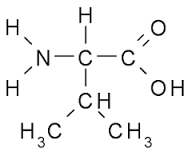
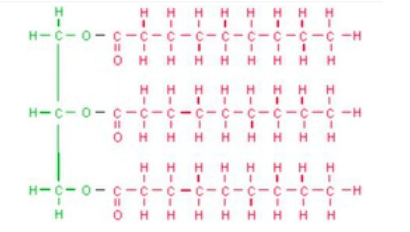
Which biomolecule is this a picture of?
a)
Protein
b)
Nucleic Acid
c)
Lipid
d)
Carbohydrate
88.
Carbon, Hydrogen, Oxygen and Nitrogen are elements in what biomolecule?
a)
Carbohydrate
b)
Lipid
c)
Protein
d)
Nucleic acid
89.
Which biomolecule is this a picture of?
a)
Protein
b)
Nucleic Acid
c)
Lipid
d)
Carbohydrate
90.

How do you feel about the Unit 2 Exam?

a)

Awesome! Let's rock this!

b)

Pretty good.

c)

Um, what are we covering in this unit?

d)

Still need to study quite a few of the concepts.