
 Worksheets
Cells, Cell Parts, and Cell Transport Review for TEST 2
Total questions: 88
Worksheet time: 7hrs 20mins
Students are observing particles moving against the concentration gradient in a lab investigation. Which type of transport are they observing?
osmosis
active Transport
facilitated diffusion
diffusion
Students are observing particles moving with the concentration gradient in a lab investigation. Which type of transport are they observing?
using pumps to move things quickly
passive transport
osmosis
endocytosis

This picture shows molecules of red dye that have moved. What is this type of movement called?
Osmosis; the water molecules are moving from high concentration to low
Diffusion; the dye molecules are moving from low to high concentration
Diffusion; the dye molecules are moving from high to low concentration.
Facilitated diffusion; because the molecules are moving through a protein channel.
The cell membrane is responsible for allowing molecules to diffuse into or out of the cell. What type of movement is diffusion?
Passive transport
Active transport
The cell membrane is responsible for allowing molecules to diffuse through a protein channel, from high concentration to low concentration. What type of transport is this?
Passive Transport
Active transport
The cell membrane needs to use energy to move molecules quickly out of the cell through a pump. What type of transport is this?
Passive transport
Active transport
Passive transport is when molecules move ________ the concentration gradient.
against
up
down
with
Active transport is when molecules move ________ the concentration gradient.
against
up
down
with

This picture is a representation of what type of transport?
Osmosis because it is diffusing through a protein from an area of high concentration to low concentration.
Facilitated diffusion because it is diffusing through a protein from an area of high concentration to low concentration.
Facilitated diffusion because it is diffusing through a protein from an area of low concentration to high concentration.
Simple diffusion because it is diffusing through a protein from an area of high concentration to low concentration.

This picture describes the movement of molecules across the cell membrane. Choose 2 answers that correctly describes the movement of the molecules.
Molecules are moving up the concentration gradient.
Molecules are moving from an area of low concentration to area of high concentration .
Molecules are moving down the concentration gradient.
Molecules are moving from an area of high concentration to area of low concentration.

This a picture of an animal and plant cell placed in a solution. Describe the solution?
Isotonic
Hypotonic
Hypertonic

This a picture of an animal and plant cell placed in a solution. Describe the solution?
Isotonic
Hypotonic
Hypertonic

What type of solution was this plant placed in?
hypertonic
isotonic
hypotonic

What type of solution was this plant placed in?
hypotonic
isotonic
hypertonic
A cell with a 10% salt solution; is placed in distilled water with 0% starch concentration. Water can travel across a semipermeable membrane but starch cannot. Would you expect to see after an hour?
The solution inside the cell is hypotonic and moves into the cell.
The solution inside the cell is hypertonic so the water moves into the cell.
The solution inside the cell is hypotonic and moves out of the cell.
The solution inside the cell is isotonic so the water doesn't move.
Particle of movement from an area of lower concentration to an area of higher concentration.
Active transport
Passive transport
Particle of movement from an area of higher concentration to an area of lower concentration.
Active transport
Passive transport
Which type of transport uses energy in the form of ATP to transport substances?
Active transport
Passive transport
Which type of transport does not use energy to transport substances?
Active transport
Passive transport
Which type of passive transport uses transport proteins to transport items such as glucose through the membrane?
Facilitated diffusion
Osmosis
Diffusion
Which type of passive transport focuses on the movement of water through the membrane?
Facilitated diffusion
Osmosis
Diffusion

Which type of diffusion is represented?
Facilitated diffusion
Osmosis
Diffusion
Which type of solution has the same solute concentration inside of and outside of the cell?
Hypertonic
Hypotonic
Isotonic

What part of the cell regulates what can enter and leave the cell?
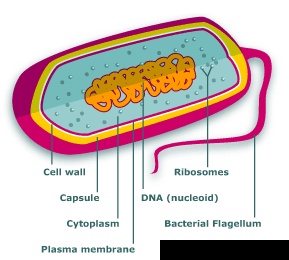
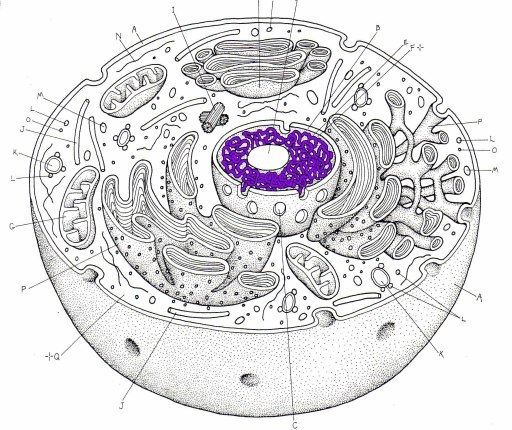

Bacteria is what kind of cell?
Eukaryotic
Prokaryotic

What kind of cells are these?
Eukaryotic
Prokaryotic
Which of the following organisms is made up of prokaryotic cells?
Plants
Bacteria
Animals
Fungi
Eukaryotic cells have membrane bound organelles.
True
False
Which of the following organisms is made up of eukaryotic cells?
Plants
Bacteria
Archae
None of the above
Which type of cell has a cell membrane?
Prokaryotic cells
Eukaryotic cells
Both prokaryotic and eukaryotic cells

What type of cell is pictured below?
Prokaryotic
Eukaryotic
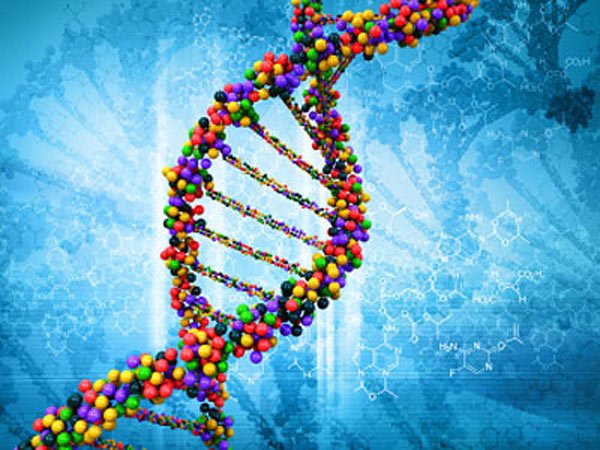
The DNA of these cells is circular and not found within a nucleus.
Prokaryotic cells
Eukaryotic cells
Both prokaryotic and eukaryotic cells
Which type of cell has a cytoplasm?
Prokaryotic cells
Eukaryotic cells
Both prokaryotic and eukaryotic cells

What type of cell is pictured below?
Prokaryotic cell
Eukaryotic cell
Prokaryotes are _______________ and include ______________.
single cells, DNA but not a nucleus.
multiple cells, a nucleus with DNA
One main difference between prokaryotic and eukaryotic cells is that...
only prokaryotic cells have cell walls
only eukaryotic cells have a nucleus
only prokaryotic cells have ribosomes
only eukaryotic cells have DNA
Which part of the cell allows material to pass in and out of the cell?
nucleus
cell membrane
cytoplasm
Chloroplast
An organism made of only one cell is called _____ .
Eukaryotic
Mutlicellular
Monocellular
Unicellular

What is the order of organization within living things?
Cells, tissues, organs, organ systems, organism
Tissues, cells, organs, organ systems, organism
Organism, cells, tissues, organs, organ systems
Organism, organ systems, cells, tissues, organs

Both Unicellular and Multicellular organisms...
have chloroplasts.
have nuclei.
have DNA.
reproduce asexually.
Which do BOTH prokaryotes and eukaryotes contain?
nucleus
mitochondria
ribosomes
cell wall


Contains NO membrane bound organelles.
prokaryotic
eukaryotic
both
neither
Which of the following cells do not have a cell membrane?
prokaryotic
eukaryotic
both
they both DO have a cell membrane.

What kind of cell is pictured?
prokaryotic
eukaryotic
bacteria

What is the function of the organelle depicted in the photo?
To dispose of waste in the cell.
To capture sunlight and convert it into glucose for the cell.
To release energy into the cell.
To control what leaves and enters the cell.
Which photo shows the mitochondrion of the cell?


This organelle is found in both plant and animal cells, but is usually much bigger in plant cells.


Identify the structure that is indicated by the arrow in the image.
cell wall
central vacuole
chloroplast
cell membrane
Which of these organelles is not found in a animal cell?
Cell Membrane
Nucleus
Mitochondria
Cell Wall
This organelle is responsible for disposing of waste in the cell.
Mitochondria
Nucleus
Cell Wall
Lysosome
Which organelle serves as an internal transport system, and can be either "rough" or "smooth"?
Nucleus
Mitochondria
Cell Wall
Endoplasmic Reticulum
Which organelle makes proteins?
Mitochondria
Chloroplast
Ribosome
Lysosome

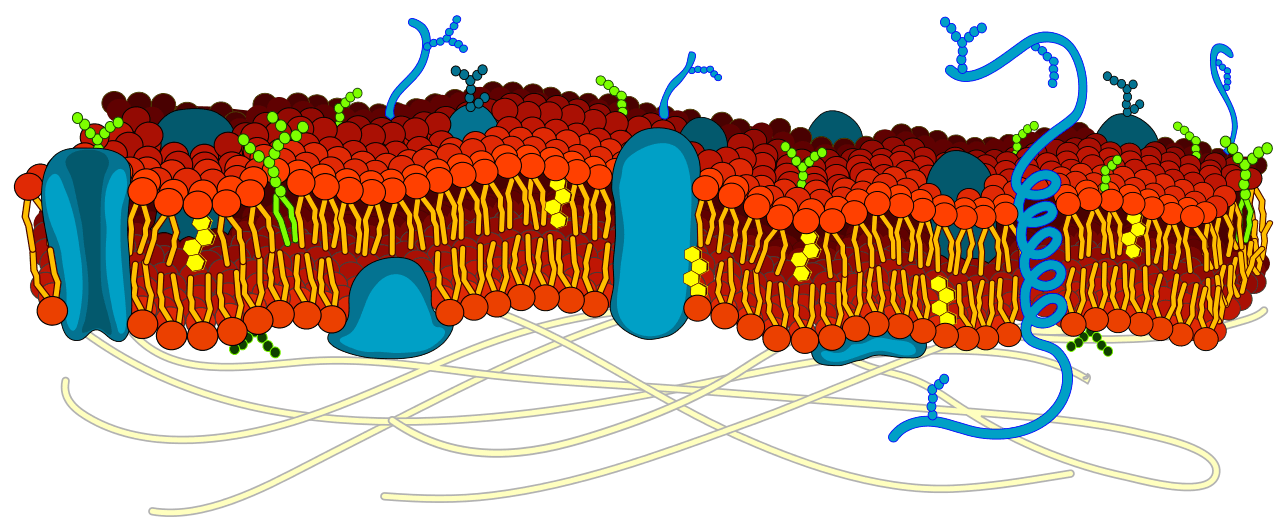
What is the function of the cell membrane?
To control what comes in and out of the cell
To break down food inside the cell
to serve as a barrier
to eat the cells food

Which organelle produces the energy a cell needs to carry out its function
Mitochondria
Golgi Bodies
Cytoplasm
Nucleus

Which organelle receives proteins and materials from the ER, packages them and distributes them
Vacuoles
Golgi Bodies
Nucleus
Chromatin

The control center of cell is
the nucleus
ribosomes
chromatin

Chromatin is
tiny strands inside the nucleus that contain the instructions for directing the cell's function
found inside the nucleus
needed to make proteins
3 structures found only in a plant cell -
Call membrane, vacuoles, Chloroplast
Cell wall, large vacuole, cytoplasm
Cell membrane, large vacuole, cytoplasm
Cell wall, large vacuole, chloroplast
Includes millions of ribosomes, protein folding, production, and dispatching of protein -
Rough ER
Smooth ER
Nucleus
Mitochondria
Lipid (fat) manufacture and metabolism, steroid and hormone production
Rough ER
Smooth ER
Lysosomes
Cytoplasm
Creation of proteins, responsible for protein synthesis
Chloroplast
Cytoplasm
Mitochondria
Ribosomes

The yellow and brown portion of this image is:
protein
phopholipid
carbohydrate
cholesterol
The purple regions of the image represent:
phospholipid
cholesterol
proteins
carbohydrates
Examples of particles that can diffuse across through the phospholipid bilayer include:
oxygen and carbon dioxide
sugar
water
calcium ions
when some molecules can cross the membrane while others cannot.

