
 Worksheets
Category 5- Ecology
Total questions: 83
Worksheet time: 1hrs 5mins
Which is an example of an ecosystem?
An area of cold climate and communities of different species
one elk
a group of elks living together in the same area
elks, snow rabbits, and owls living in the same area
Which definition best fits the term BIOTIC?
The study of the interactions between animals and their environment
Factors in the environment that are considered not alive
Factors in the environment that are considered living or the remains of living things
One species benefits, the other is unaffected
symbiosis
parasitism
mutualism
commensalism
Honey guide birds alert and direct badgers to bee hives. The badgers then expose the hives and feed on the honey first. Then, the honey guide birds eat as well.
symbiosis
parasitism
mutualism
commensalism
Tapeworms reside in human intestine and take nutrients from the human
symbiosis
parasitism
mutualism
commensalism

Vines grow on a tree. The vines get light but the tree is not affected. What kind of relationship is this?
Competition
Mutualism
Commensalism
Parasitism

Predator
Autotroph
Producer
Decomposer
The ecological role an organism performs in their specific environment is considered the organism's...
Habitat
Population
Biome
Niche
They point to the organism that is being eaten.
It shows how sunlight flows within an ecosystem.
They show what direction the energy is flowing between organisms.
They represent how water is transferred within a habitat.

The populations of which organisms will most likely increase as a result of a disease that suddenly reduced the population of Texas horned lizards?
Grasses and ants
Ants and grasshoppers
Grasshoppers and Texas Cottonmouths
Texas cottonmouths and red shouldered hawks

Why might an organism have more than one arrow coming FROM them in a food web?
More than one organism may eat them.
They may eat more than one other organism.
This organism gets its energy from multiple sources.
Grass > Grasshopper > Bird > Snake
Decomposer
This is an organism that breaks down and gains nutrients from dead organisms.
Predator
This is an animal that lives by preying on other animals.
Producer
This is an organism that supplies matter and energy, also known as an autotroph.
Consumer
This is an organism that relies on other organisms for its food and energy supply; heterotroph
Parasite
This is an organism which feeds on, but usually does not kill, a larger organism

What happens to the amount of available energy in the pyramid as it moves up through the different levels?
it increases
it decreases
it remains the same
In any food web, the organisms that are responsible for converting raw energy into usable chemical energy are collectively called ________ while organisms that recycle the nutrients trapped in dead organisms are collectively called ________.
producers;consumers
producers; decomposers
consumers; decomposers

If a scientist in New Zealand was studying how a group of herbivores interacted with a group of omnivores, and all of their abiotic surroundings, what level of ecology would she be studying?
Community
Population
Species
Ecosystem
Biome
Ruby-throated hummingbirds live in woodland areas, but also frequent gardens where flowering plants are plentiful. They hover to feed on flowers, nectar, and sap. During this floral feeding process, the birds pollinate many plants. These tiny birds are omnivores, sometimes feeding on insects and spiders.
Habitat of an autotroph
Niche of an autotroph
Niche of a heterotroph
Habitat of a heterotroph
If there are 100 KJ of energy available at the secondary consumer level, how many KJ of energy are available at the producer level?
10 KJ
1,000 KJ
10,000 KJ
1 KJ

A
B
C
D

F
G
H
J

A
B
C
D

A
B
C
D

F
G
H
J

F
G
H
J

A
B
C
D

F
G
H
J

A
B
C
D

A
B
C
D

A
B
C
D

A
B
C
D

F
G
H
J

A
B
C
D

F
G
H
J

F
G
H
J

F
G
H
J

A
B
C
D

F
G
H
J
Which one is an example of the role of microorganisms:
Bacteria in your intestines helping digest food
Bacteria in the water that you drink causes you to become ill
Bacteria in the soil helping plants grow by providing nutrients in the soil
What are the two types of ecological succession?
primary and tertiary
secondary and tertiary
primary and secondary
Primary succession starts on
rock
grass
soil
shrubs
Only ______ and ______ can grow on rocks.
lichen and trees
moss and lichen
moss and grass
When moss and lichen die they become what for producers to grow on?
rock
soil
trees
Secondary success occurs after a:
stable ecosystem
natural disaster
normal stability
Which succession takes the longest to grow into a stable ecosystem?
primary
secondary
Why does it take less time for secondary succession to occur?
because there are rocks
because there is soil
because it just does
Tapeworms reside in human intestine and take nutrients from the human
symbiosis
parasitism
mutualism
commensalism
Which type of succession happens when a new island is formed by a volcano erupting?
primary succession
secondary succession

Primary succession

pioneer species

abiotic factor

secondary sucession

climax community
What is the main difference between primary and secondary ecological succession?
Primary begins WITHOUT soil; Secondary begins WITH soil
Primary is the first state and secondary is the second stage
Primary builds plant community; secondary builds animal community.
Primary begins WITH soil; Secondary begins WITHOUT soil
What is an example of an area that is likely to undergo primary succession?
Glaciers melt and leave exposed rock
Plants die from drought and decompose
Land is bulldozed and soil remains
After a volcanic eruption, volcanic rock is present (but no soil). Which of the following states the most likely order of succession that would be seen?
Lichens → Shrubs → Grasses → Trees
Lichens → tree → shrubs→Grasses
Grasses → Lichens → Shrubs → Trees
Lichens → Grasses → Shrubs → Trees

Primary or secondary ecological succession?


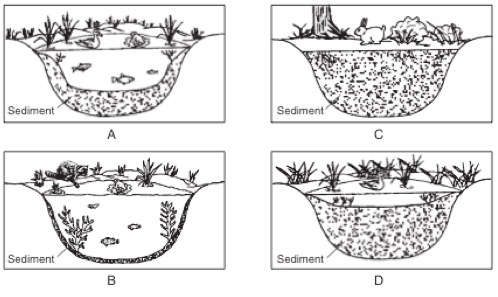
newly exposed or newly formed rock is colonized by living things for the first time. Certain hardy plants and lichens with few soil requirements, called pioneer species, colonize the area first.
Climax community
Primary succession
Ecological succession
Secondary succession
A species that has a disproportionately large effect on community structure relative to their abundance.
Pioneer Species
Invasive Species
Keystone Species
Foundation Species
Biomass
the total amount of living tissue in a trophic level.
Species richness
All the populations of all the different species that live together in a particular area
Complexity
the state or quality of being intricate or complicated
Dynamic Equilibrium
a state of balance between continuing processes
Biodiversity
the variety of organisms in an area, by species, genes, populations, and communities
Non-native species whose introduction causes, or can cause harm in their new area
Pioneer Species
Invasive Species
Keystone Species
Foundation Species
all living things and their physical environments within a particular area
Community
Invasive Species
Ecosystem
Biodiversity
The first species to populate an area during succession.
Keystone species
Pioneer species
Foundation species
Invasive species
What process converts nitrogen gas into a biologically useful (fixed) form?
Respiration
Assimilation
Denitrification
Nitrogen fixation
Which organisms play the largest role in converting nitrogen into various usable forms and back to a gas form?
rabbits
bacteria
plants
worms
How do animals get nitrogen to make important biological molecules?
Breathe it in through the air
Fix it from nitrogen gas
Consume other organisms
Assimilate it through the soil
Which of the following cannot fix nitrogen?
lightning
fertilizer production
combustion
rain
Which of the following is not a possible process that results in ammonification?
photosynthesis
decomposition
nitrogen fixation
fertilizer production
What happens to carbon during the process of photosynthesis?
CO2 is released by plants
CO2 is taken up by plants
organic carbon is taken up through plant roots
carbon is lost through heat
The process of breathing in oxygen and releasing carbon dioxide into the air (or water) is...
Assimilation
Decomposition
Photosynthesis
Respiration
Which of the following best describes weathering and erosion?
when it rains on rocks
decay of dead organisms
break down of rocks that wash into the water
when a volcano erupts
Which of the following best describes the Greenhouse Effect?
when solar radiation reflects off the atmosphere
heat is retained in Earth's atmosphere by greenhouse gases
plants grow better when a greenhouse is filled with CO2
when solar radiation hits Earth's surface directly
Which gas is most abundant in the atmosphere?
carbon dioxide
methane
nitrous oxide
nitrogen gas
Which of the following does NOT release carbon dioxide into the atmosphere?
volcanic activity
respiration
photosynthesis
fossil fuel combustion
The most abundant Greenhouse Gas in the atmosphere is...
carbon dioxide
nitrogen gas
nitrate
oxygen
The process of making nitrites and nitrates is...
denitrification
nitrogen fixation
nitrification
ammonification
What does denitrification do?
converts fixed nitrogen into nitrogen gas
converts nitrogen gas into fixed nitrogen
makes nitrates
makes ammonia

What is the percentage of the Nitrogen in the air ?
1%
21%
78%

True or False: Bacteria fix nitrogen from the atmosphere into a form plants can use
True
False
Which of the following is correct about the carbon cycle?
Photosynthesis of plant life is one of the main producers of CO2
Burning fossil fuels decreases atmospheric CO2
Glucose is a form of carbon storage in plants
Cellular respiration is a process that decreases CO2
Which is a true statement about the Nitrogen Cycle?
The burning of fossil fuels has no effect on the Nitrogen Cycle
Bacteria are responsible for converting Nitrogen into a form that can be used by plants
Nitrogen is not a very important element to living organisms
Nitrogen fixing takes place during photosynthesis
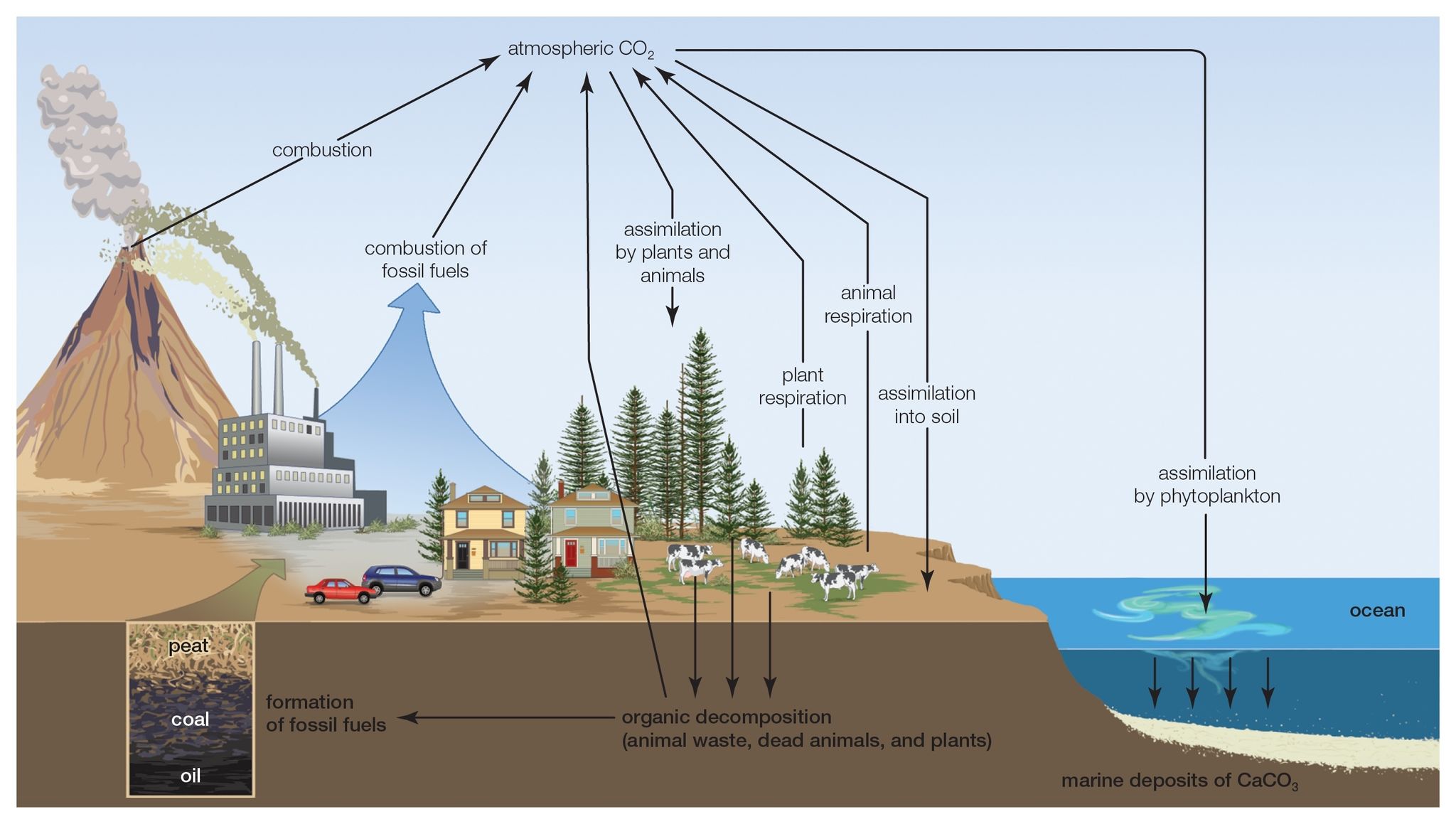

Where does nitrogen go once it is in the soil?
stems of plants
leaves of plants
roots of plants
flowers of plants

