
 Worksheets
Cells
Total questions: 80
Worksheet time: 7hrs 40mins
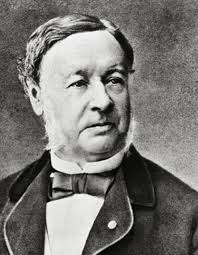

Which of the following scientists was the first to observe a living cell?
Which scientist coined the term "cell"?
Schleiden
Schwann
Hooke
Van Leuwenhoek
A cell without a true nucleus
Prokaryotic
Eukaryotic
A cell that has a true nucleus
Prokaryotic
Eukaryotic
Which do BOTH prokaryotes and eukaryotes contain?
nucleus
mitochondria
ribosomes
cell wall
Bacteria is an example of a(n)
prokaryotic cell.
eukaryotic cell.

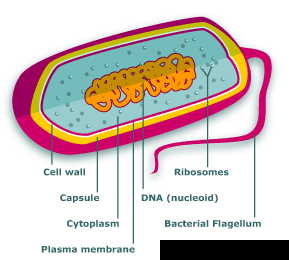
Which is true of prokaryotic and eukaryotic cells?
Prokaryotic cells are larger than eukaryotic cells.
Eukaryotic cells do not have nuclei, and prokaryotic cells do have nuclei.
Prokaryotic cells lack membrane-bound organelles, and eukaryotic cells contain membrane-bound organelles.
Eukaryotic cells are simpler than prokaryotic cells.
organelle in eukaryotic cells near the nucleus
that has ribosomes attached to it
rough ER
smooth ER
golgi apparatus
lysosome


The _____________ stores food, water, wastes, and other materials in both plant and animal cells.
Vacuole
Mitochondria
Cytoplasm
Nucleus
Which cell part is a specialized part of the cell with a specific job?
Lysosome
Organelle
Chloroplast
Cytoplasm

Which organelle receives proteins and materials from the ER, packages them and distributes them
Vacuoles
Golgi Bodies
Nucleus
Chromatin


Which organelle is shown by the letter B?
Rough Endoplasmic Reticulum
Ribosomes
Mitochondria
Nucleus

Which organelle is shown by the letter E?
Centrioles
Mitochondria
Golgi apparatus
secretory vesicle

Which organelle is shown by the letter H?
cytoplasm
plasma (cell) membrane
mitochondria
nucleus

Which organelle is shown by the letter K?
Ribosome
Smooth Endoplasmic Reticulum
Centriole
Nucleolus

Which organelle is shown by the letter L?
Golgi apparatus
nucleus
ribosome
plasma (cell) membrane

Which organelle is shown by the letter F?
Ribosomes
Smooth Endoplasmic Reticulum
Rough Endoplasmic Reticulum
Golgi apparatus

Which organelle is shown by the letter G?
nucleolus
mitochondria
centriole
secretory vesicle

Which organelle is shown by the letter D?
plasma (cell) membrane
cytoplasm
nucleus
ribosome

Which organelle is shown by the letter J?
Rough endoplasmic reticulum
Golgi apparatus
centriole
plasma (cell) membrane

Which organelle is shown by the letter M?
mitochondria
Smooth endoplasmic reticulum
Golgi apparatus
Rough endoplasmic reticulum

Where does photosynthesis occur?
mitochondria
stomata
xylem
chloroplast

This is the "genetic material" that is inside of cells.
DNA
Ribosomes
Lysosomes
Vacuole

If the cell is considered to be EUKARYOTIC, what does that mean about its DNA and nucleus?
It DOES have a NUCLEUS, and the DNA is INSIDE the NUCLEUS
It DOES NOT have a NUCLEUS, and the DNA is free floating in the cytoplasm.
If the cell is considered to be PROKARYOTIC, what does that mean about its DNA and nucleus?
It DOES have a NUCLEUS, and the DNA is INSIDE the NUCLEUS
It DOES NOT have a NUCLEUS, and the DNA is free floating in the cytoplasm.
This structure provides protection and structure to ALL plant cells & SOME prokaryotes. Animal cells DO NOT have this.
Plasma Membrane
Cell Wall
Golgi Apparatus
Ribosomes
This is what controls what goes into and out of the cell (helps maintain homeostasis). It is made of lipids and ALL CELLS have this.
Plasma Membrane
Cell Wall
Lysosomes
Vacuole
This is the gel-like fluid that fills up all the space in the cell that is not occupied by other organelles. All cells have this.
Ribosomes
Nucleus
Cytoplasm
DNA
This is an organelle that is present in all cells, it is where proteins are synthesized(made).
Plasma Membrane
Ribosomes
Vesicle
Mitochondria

This is the organelle where energy is created in the form of ATP. Also known as the powerhouse of the cell.
Lysosomes
Nucleus
Chloroplasts
Mitochondria

This is the organelle that helps move/transport ribosomes and other materials around the inside of the cell.
Endoplasmic Reticulum
Golgi (Body) Apparatus
Lysosomes
Nucleus

I am an organelle that helps clean up the cell, break down food, break down the cell when it is dead, and is also considered an enzyme.
Nucleolus
Nucleus
Lysosome
Ribososme

I am an organelle that holds the DNA. I am also considered the control center. If I am a prokaryotic cell I don't have one.
Ribosomes
Plasma Membrane
Nucleus
Vesicle

This organelle is inside of the nucleus and is where ribosomes are made
DNA
Nucleolus
Cytoplasm
Lysosome

This organelle is only present in plant cells, it helps by capturing sunlight in order to perform photosynthesis.
Mitochondria
Chloroplasts
Cell Wall
Lysosomes

This organelle is in both plant and animal cells. It is a storage place for water, waste, and some food.
Ribosome
Nucleus
Golgi Apparatus
Vacuole

This organelle is where material goes to in order to be packaged into a vesicle so that it can leave the cell.
Endoplasmic Reticulum
Nucleus
Golgi Apparatus (Body)
Mitochondria
Both prokaryotic & eukaryotic cells have all 4 of these!
Cytoplasm, Ribosomes, Mitochondria, Vacuole
DNA, Cytoplasm, Chloroplasts, Plasma Membrane
Ribosomes, DNA, Nucleus, Cytoplasm
Plasma Membrane, Ribosomes, DNA, Cytoplasm
Plant and animal cells are examples of
prokaryotic cells
eukaryotic cells
The smallest unit of a living thing are
atoms
cells
DNA
organelles
What is the function of the smooth endoplasmic reticulum?
To store genetic material
To make proteins
To make lipids
To get rid of waste
Which cell has central large vacuole
plant cell
animal cell

Has NO nucleus
prokaryotic
eukaryotic
both
none of these

Can be either single celled or multicellular
prokaryotic
eukaryotic
both
neither

Contains NO membrane bound organelles.
prokaryotic
eukaryotic
both
neither

Where are the ribosomes attached in a cell?
Smooth ER
Cell Membrane
Mitochondria
Rough ER
Cell part #2 is:
smooth ER
nucleus
nucleolus
mitochondrion
Cell part #9 is:
Golgi Body(apparatus)
rough ER
nucleus
mitochondrion
ribosome
Choose the Mitochondria on the cell diagram.
Select the Golgi Apparatus.
Match the following
Makes ATP (energy).
mitochondria
control center of the cell, contains DNA
nucleus
makes proteins
ribosomes
protects the cell and lets stuff in and out of cell, maintains homeostasis
cell membrane
converts sunlight into glucose (sugar) for the plant cell
chloroplast
Match the following
Cleans up the cell
Lysosome
Storage tanks of the cell
Vacuole
Control center of the cell
Nucleus
Energy production of the cell
Mitochondria
Outer layer of the cell
Cell membrane


What organelle is represented by this image?
rough endoplasmic reticulum
smooth endoplasmic reticulum
ribosome
nucleus

What organelle does this image represent?
Golgi Apparatus
Ribosome
Mitochondria
Chloroplast

Plants cells have one large one, whereas an animal cell will have several smaller ones. These store substances such as water.
Vacuole
Endoplasmic Reticulum
Golgi apparatus
Vesicle

