wayground logo

Free Printable Worksheets

Font size

S
M
L
XL
Worksheets

Bio 1 - Unit 5 - DNA and Biotechnologies Review

Total questions: 88

Worksheet time: 2hrs 34mins

Name
Class
Date
1.

In what process is mRNA synthesized?

a)

Transcription

b)

Translation

c)

DNA Replication

d)

Mitosis

2.

Where does TRANSCRIPTION occur?

a)

Nucleus

b)

Ribosome

c)

Cytoplasm

d)

Mitochondria

3.

Why must transcription occur where DNA can be found?

a)

because DNA can't leave

b)

because ribosomes are in the nucleus

c)

because DNA polymerase is found there

d)

because helicase unzips the DNA

4.

Which of the following is a codon?

a)
b)

ATG

c)

AUG

d)

AUT

5.

How many codons equals 1 amino acid?

a)

1

b)

2

c)

3

d)

4

6.

How many nucleotides equal 1 amino acid?

a)

1

b)

2

c)

3

d)

4

7.

On which molecule can an anticodon be found?

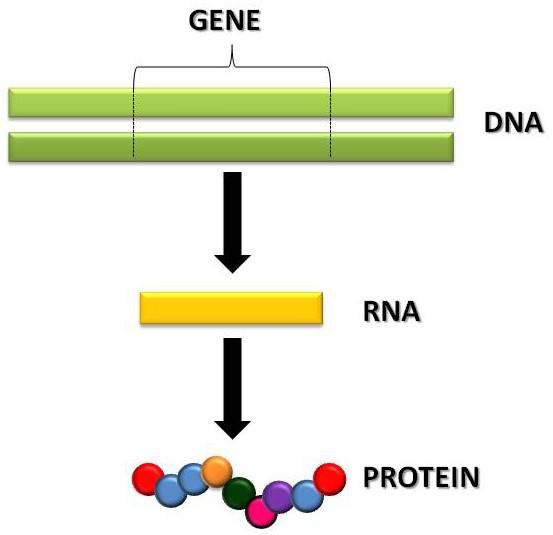
a)

mRNA

b)

DNA

c)

tRNA

d)

rRNA

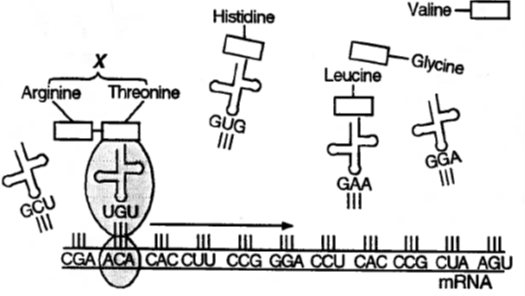
8.

Where is the anticodon located?

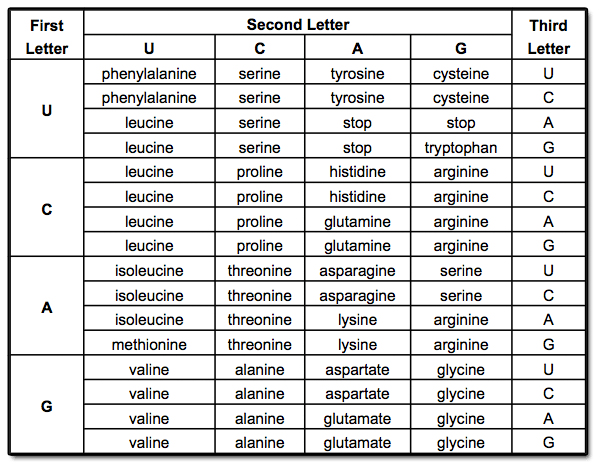
a)

at the top of the molecule it's found on

b)

at the bottom of the molecule it's found on

c)

on the right of the molecule it's found on

d)

on the left of the molecule it's found on

9.

What is the purpose for anti-codons?

a)

to ensure the correct amino acid is dropped off

b)

to match the strand of DNA

c)

to decode a sequence of 4 nucleotides into an amino acid

d)

to make me hate biology

10.

A polypeptide is a sequence of ____________________ held together by a ______________ bond.

a)

amino acids; peptide

b)

fatty acids; ionic

c)

proteins; hydrogen

d)

fatty acids; covalent

11.

How do you know when to begin translating a strand of mRNA?

a)

look for AUG

b)

start at the beginning

c)

look for ATG

d)

when Ms. H tells me to

12.

How do you know when to STOP translating a strand of mRNA?

a)

look for STOP on the decoder

b)

stop at the end of the strand

c)

you don't

d)

when Ms. H tells me to

13.

TRANSCRIBE this DNA sequence: TACGTTACT

a)

AUGCAAUGA

b)

ATGCAATGA

c)

AUGGATUGA

d)

TACGTTACT

14.

TRANSLATE this RNA sequence: AUGCAAUGA

a)

Met-Glu-Stop

b)

Met-His-Stop

c)

Thr-Glu-Stop

d)

Thr-Pro-Stop

15.
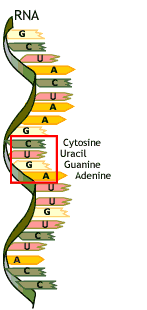
What process is going on in this photo? 
a)
Transcription 
b)
Translation 
c)
Replication 
d)
All the above 
16.

A DNA nucleotide may be made up of a phosphate group, along with

a)

deoxyribose sugar and uracil

b)

ribose sugar and cytosine

c)

deoxyribose sugar and thymine

d)

ribose sugar and adenine

17.

The important enzyme related with transcription is;

a)

gyrase

b)

DNA polymerase

c)

RNA polymerase

d)

ligase

18.
In RNA, Uracil pairs with ______. 
a)
cytosine
b)
adenine
c)
guanine
d)
thymine
19.

DNA is the template for

a)

amino acids

b)

tRNA

c)

mRNA

d)

sugars

20.
What amino acid is represented by the codon UUA?
a)
Phenylalanine
b)
Tyrosine
c)
Leucine
d)
Stop codon
21.

In DNA, Adenine bonds with ______________.

a)

Guanine

b)

Thymine

c)

Cytosine

d)

Uracil

22.

In DNA, guanine bonds with ______________.

a)

Adenine

b)

Uracil

c)

Cytosine

d)

Thymine

23.
Which 2 molecules form the sides (backbone) of the DNA ladder?
a)
deoxyribose sugar and adenine
b)
deoxyribose sugar and a hydrogen bond
c)
deoxyribose sugar and the nucleus
d)
deoxyribose sugar and phosphate
24.
Nitrogenous bases are joined by which type of bond?
a)
polar bonds
b)
ionic bonds
c)
covalent bonds
d)
hydrogen bonds
25.
The enzyme that unzips the DNA to prepare for replication
a)
helicase
b)
replicase
c)
polymerase
d)
synthase
26.
A process in which DNA has the unique ability to make an exact copy of itself.
a)
Replication
b)
Translation
c)
Transcription
27.
Which of the following units are repeatedly joined together to form a strand of DNA?
a)
amino acids
b)
nucleotides
c)
fatty acids
d)
polysaccharides
28.
What are the nucleotides made of?
a)
Sugar, Phosphate, nitrogen base
b)
Phosphate, Adenine, nitrogen base
c)
Thymine, Adenine, Cytomine
d)
Phosphate, Nitrogen, Adenine
29.
Which enzyme fixes the Okazaki fragments in the lagging strand?
a)
Helicase
b)
Polymerase
c)
Ligase
d)
Primerase
30.
If a strand reads:
3' A A A T T T C 5'
The matching strand would read...
a)
5' T T T A A A G 3'
b)
3' T T T A A A G 5'
c)
5' A A A T T T C 3'
d)
3' U U U A A A G 5'
31.
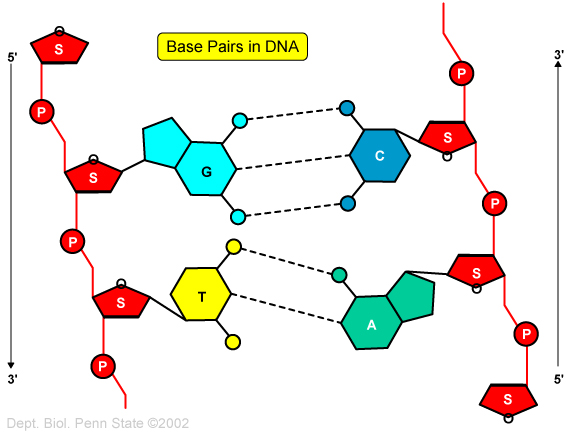
This picture is illustrating the ____ nature of DNA.
a)
anti-parallel
b)
deoxyribosic
c)
helical
d)
radioactive
32.
Polymerase is able to replicate the new DNA ______ along the leading strand.
a)
continuously
b)
only in short fragments
c)
very slowly
d)
prokaryotically
33.
What is the shape of DNA?
a)
Double helix
b)
Triple helix
c)
Flat, bilayer
d)
Three-pronged rigid ladder
34.
If the percentage of DNA is made of 30% Thymine, what is the correct percentage of Guanine?
a)
30
b)
15
c)
20
d)
60
35.
These are the "smaller", single ringed bases such as thymine and cytosine
a)
complementary
b)
 cytosine
c)
purine
d)
pyrimidine
36.
These are the "larger", double-ringed bases such as adenine and guanine.
a)
complementary
b)
 cytosine
c)
purine
d)
pyrimidine
37.
In Chargaff's Rule, adenine pairs with ________, and cytosine pairs with _________.
a)
thymine, guanine
b)
guanine, thymine
c)
uracil, guanine
d)
thymine, uracil
38.
What is the sugar in the DNA molecule?
a)
deoxyribose
b)
ribose
c)
glucose
d)
fructose
39.
Which enzyme is responsible for adding nucleotides?
a)
Topoisomerase
b)
DNA Polymerase
c)
Ligase
d)
Primase
40.

Which enzyme is responsible for adding the RNA primer to the template strand?

a)

Helicase

b)

DNA Polymerase

c)

Ligase

d)

Primase

41.

It is the transfer of genetic material for the purpose of treating human disease.

a)

chemotherapy

b)

gene therapy

c)

gene transfer

d)

gene editing

42.

A/an "_____" gene is introduced into the patient to replace an "_____" disease causing gene.

a)

normal - abnormal

b)

good - bad

c)

abnormal - normal

d)

bad - good

43.
Gene therapy is the attempt to
a)
fuse cells taken from different species.
b)
treat disease by changing a patient's DNA.
c)
determine a baby's sex before birth.
d)
provide genes to people who have none.
44.
vectors 
a)
plasmid or virus that contains or carries modified genetic material 
b)
They can be used to represent any quantity that has magnitude, has direction
c)
displacement 
d)
velocity 
45.
What is DNA sequencing?
a)
The total of genes carried by an individual or cell
b)
Coding genes in order to identify single nucleotide polymorphisms
c)
Deciphering the functions of various parts of the human genome
d)
The process of identifying the order of the bases in DNA
46.
Why might stem cell research lead to a cure for diabetes?
a)
Stem cells can be used to grow pancreas cells that produce insulin.
b)
Stem cells can create babies that have normal functioning pancreases.
47.
Stem cells are
a)
cells that grow uncontrollably.
b)
undifferentiated and can develop into many types of cells.
c)
cells that never go through cell division.
d)
only found in embryos.
48.
A clone can be BEST thought of as a(n)  _____ created in the lab. 
a)
identical twin
b)
GMO
c)
science fiction experiment
49.
A somatic cell contains _______________
a)
Half the number of chromosomes coming from one parent
b)
a complete set of chromosomes coming from both parents
50.
Why might people be against cloning? 
a)
It's creepy
b)
It can cause unknown defects
c)
It is detrimental to genetic diversity
d)
All of the above
51.
In cloning, what is the purpose of the surrogate mother? 
a)
Donate her DNA
b)
Donate her egg cell
c)
Incubate and carry the baby until birth
d)
Nothing.  She's useless.
52.
A deletion of a DNA segment alters a gene in a single skin cell of an individual. Which statement best describes a result of this mutation?
a)
The mutation will spread into other types of cells.
b)
Any cell produced from this skin cell will have the same mutation.
c)
The gametes of this individual will have the same mutation.
d)
All offspring of the individual will have a skin cell mutation.
53.
A liver cell can make enzymes that a heart cell can not make because liver cells
a)
digest large, complex molecules
b)
remove carbon dioxide from blood
c)
use different genes than the heart cells use
d)
contain more DNA than heart cells
54.
In sexually reproducing organisms, mutations can be inherited if they occur in
a)
the egg, only
b)
the sperm, only
c)
either the egg or the sperm
d)
any body cell of either the mother or the father
55.
If the ribosomes of a cell were destroyed, what effect would this most likely have on the cell?
a)
The cell would be unable to synthesize proteins.
b)
Development of abnormal hereditary features would occur in the cell.
c)
It would stimulate mitotic cell division.
d)
Increased protein absorption would occur through the cell membrane.
56.
Which statement best explains the fact that some identical twins appear different from one another?
a)
Their DNA is essentially the same and the environment plays little or no role in the expression of their genes.
b)
Their DNA is very different and the environment plays a significant role in the expression of their genes.
c)
Their DNA is essentially the same and the environment plays a significant role in the expression of their genes.
d)
Their DNA is very different and the environment plays little or no role in the expression of their genes.
57.
In the procedure indicated by letter A, DNA segments from humans and bacteria are first cut and then joined together by the action of
a)
hormones
b)
 simple sugars  
c)
enzymes  
d)
starch molecules
58.
The diagram shows the results of a technique used to analyze DNA.
This technique used to analyze DNA directly results in
a)
synthesizing large fragments of DNA
b)
separating DNA fragments on the basis of size
c)
producing genetically engineered DNA molecules
d)
removing the larger DNA fragments from the samples
59.
This laboratory technique is known as
a)
protein synthesis
b)
gel electrophoresis
c)
DNA replication
d)
genetic recombination
60.
The diagram shows a normal gene sequence and three mutated sequences of a segment of DNA.
Which answer correctly identifies the cause of each type of mutation?
a)
Mutation A - Deletion
Mutation B - Substitution 
Mutation C - Insertion
b)
Mutation A - Insertion
Mutation B - Deletion 
Mutation C - Substitution
c)
Mutation A - Insertion
Mutation B - Substitution 
Mutation C - Deletion
d)
Mutation A - Deletion
Mutation B - Insertion 
Mutation C - Substitution
61.
______ is the manipulation of organisms or their parts to produce useful products.
a)
Genetics
b)
Heredity
c)
Biotechnology
d)
Recombinant Technology
62.
Which of these fields are most likely related to the use of biotechnology?
a)
construction and engineering
b)
medicine and agriculture            
c)
water treatment and electricity generation
d)
communication and computer technology
63.
Where would you most likely find a job involving biotechnology?
a)
On a farm
b)
At a bank
c)
In a restaurant
d)
Driving a truck
64.
What is a biggest benefit of using biotechnologies in agriculture?
a)
Increase modifications
b)
Increase resistance
c)
Decreased nutrition
d)
Increase crop yield
65.
GMO stands for 
a)
Genetically modified organism
b)
Genetically made organism
c)
Generically made organ
d)
Generically modified organism
66.
Who was the first adult mammal successfully cloned?
a)
Dolly the Sheep
b)
Dolly the Dog
c)
Dolly the Duck
d)
Dolly the Cow
67.
What type of gene mutation has occurred here? 
T-G-A-C-C-A
T-G-A-C-C-A-A
a)
Base Substitution
b)
Base Deletion
c)
Base Insertion
d)
Frameshift 
68.
Which change below would result in a different Amino Acid? 
3'-GCT-5'
a)
GTT
b)
TCT
c)
TCC
d)
GCA
69.
DNA molecule segment is : TTACGCAAG
The mutated DNA segment is TTACGCAAC. This is an example of ___ mutation.
a)
Base Substitution
b)
Base Insertion
c)
Base Inversion
d)
Translocation
70.
What kind of mutation is the result of an insertion?
a)
Silent Mutation
b)
Missense mutation
c)
Nonsense mutation
d)
Frameshift mutation
71.

Insertion

a)

A

b)

B

c)

C

72.

Deletion

a)

A

b)

B

c)

C

73.

Insertion

a)

A

b)

B

c)

C

74.
What determines the code, or information, of a DNA molecule?
a)
the shape (structure) of the nitrogen bases
b)
the order (sequence) of the nitrogen bases
c)
the color of the nitrogen bases
d)
the frequency (number) of nitrogen bases
75.

What is the correct order to make a protein?

a)

Protein, DNA, RNA

b)

RNA, DNA, Protein

c)

DNA, RNA, Protein

d)

Protein, RNA, DNA

76.

Where are proteins made?

a)

ER

b)

nucleus

c)

cytoplasm

d)

mitochondria

77.
What is the name given to part of a DNA molecule that codes for a protein?
a)
Glucose
b)
Chromosome
c)
Gene
d)
Phosphate
78.
If you are a boy, what percent of your genes did you get from your dad?
a)
25%
b)
50%
c)
75%
d)
100%
79.
T6- Combining DNA from 2 different organisms is called
a)
Bioengineering
b)
Biotechnology
c)
Recombinant DNA
d)
Genetic Engineering
80.
T6- How do scientists cut DNA into smaller strands?
a)
restriction enzymes
b)
scissors
c)
ligase
d)
agarose
81.

Which choice describes DNA after replication has taken place?

a)

Two molecules, each with two old strands.

b)

Two molecules, each with two new strands.

c)

Two molecules, each with one original and one new strand.

d)

none of these

82.
Which phase of which process does this picture show?
a)
Transcription
b)
Translation
c)
Replication
83.
The job of tRNA is to
a)
carry amino acids to the ribisomes
b)
carry ribisomes to the ER
c)
carry glucose to mitochondria
d)
carry mRNA out of the nucleus
84.
How does #8 bind with the mRNA strand?
a)
The anticodon on the the tRNA matches with the code on the mRNA
b)
The anticodon on the mRNA matches with the codon on the tRNA
85.
The codon CCU codes for what amino acid?
a)
Isoleucine
b)
Stop
c)
Methionine
d)
Proline
86.
What structure of this molecule binds with the mRNA molecule?
a)
Amino Acid
b)
tRNA
c)
Anticodon
d)
Codon
87.

Does NOT code for a protein

a)

intron

b)

exon

88.

Sequences of mRNA that DO code for a protein are called

a)

introns

b)

exons

c)

none of the above