
 Worksheets
2nd nine week review
Total questions: 61
Worksheet time: 48mins
Name
Class
Date
1.
What is diffusion?
a)
when molecules move from a low concentration to a high concentration
b)
when molecules move from a high concentration to a low concentration.
c)
no movement
2.

Equilibrium?
a)
a large amount of substance on side of the cell and a small amount on the other side
b)
a small amount of substance on side of the cell and a large amount on the otherside
c)
equal amount of substance on either side of the membrane
3.
What a cell needs to transport particles by active transport?
a)
Sun
b)
Wind
c)
Energy
d)
Channels
4.
Osmosis is the movement of _____ across a membrane.
a)
food
b)
energy
c)
oxygen
d)
water
5.
Passive transport requires no
a)
concentration gradients
b)
osmosis
c)
motion
d)
energy
6.

Where is there a low concentration of dye?
a)
at the bottom of cup
b)
in the color
c)
at the top of cup
d)
no concenteraion gradient
7.
Where in the cell does photosynthesis happen?
a)
chloroplast
b)
mitochondria
c)
cell membrane
d)
nucleus
8.
Where in the cell does cellular respiration happen?
a)
chloroplast
b)
mitochondria
c)
nucleus
d)
cell membrane
9.
The breaking down of sugar with oxygen to make energy is called ____.
a)
cellular respiration
b)
photosynthesis
c)
fermentation
d)
diffusion
10.
Large particles being encased in a vesicle and brought into the cell.
a)
endocytosis
b)
exocytosis
c)
passive transport
d)
active transport
11.
What is the ultimate ORIGINAL source of energy for living things
a)
Sugar
b)
Sun
c)
Moon
d)
Carbon Dioxide
12.
Plants need ________ for photosynthesis
a)
oxygen
b)
soil
c)
carbon dioxide
d)
sugar
13.
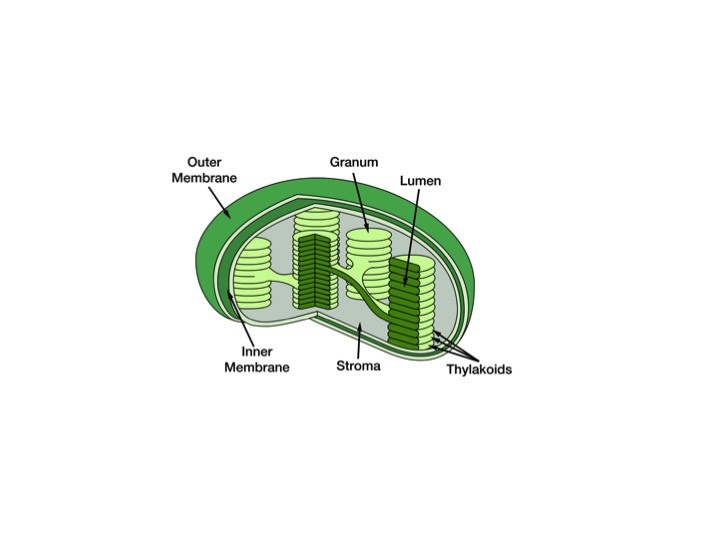
Chloroplasts are...
a)
Structures of animal cells to produce ATP
b)
Organelles where lipids are elaborated
c)
Specialized structures of plants where food is made
d)
Waste organelle of plants
14.
What is the pigment in chloroplasts that performs photosynthesis?
a)
Chlorosynthesis
b)
Chlorophyll
c)
ADP
d)
Electron Transport
15.
After photosynthesis, plants store their energy as _________ .
a)
chlorophyll
b)
pigment
c)
glucose (sugar)
d)
Oxygen
16.
In a chemical equation, which is true?
a)
reactants--> products
b)
products--> reactants
17.
Photosynthesis is a sugar-making process and cellular respiration is a ___________process.
a)
sugar -burning
b)
sugar-making
c)
sugar-forming
18.
What is the function of the heart?
a)
Protects organs and produces red blood cells.
b)
Generates heat.
c)
Breaks down food into nutrients.
d)
The heart is a pump, which moves the blood. The arteries and veins are the pipes where the blood flows.
19.
Arteries, veins, and capillaries are three types of __________
a)
heart valves
b)
blood vessels
c)
cells
d)
veins
20.

What does blood do?
a)
Carries Water to cells
b)
Carries Oxygen to cells
c)
Carries Food to cells
d)
All of the above
21.

I have a brain, spinal cord and nerves.
a)
Digestive System
b)
Nervous System
c)
Muscular System
d)
Circulatory System
22.

I bring in air into the body and remove carbon dioxide.
a)
Respiratory System
b)
Skeletal System
c)
Endocrine System
d)
Excretory System
23.

I eliminate waste from the body in the form of urine.
a)
Reproductive System
b)
Muscular System
c)
Nervous System
d)
Excretory System
24.

I am a network of cells, tissues, and organs that defend the body against invaders.
a)
Immune/lymphatic System
b)
Circulatory System
c)
Reproductive System
d)
Skeletal System
25.

I contain the heart and blood vessels.
a)
Circulatory System
b)
Muscular System
c)
Endocrine System
d)
Excretory System
26.

I convert food into simpler molecules.
a)
Excretory System
b)
Reproductive System
c)
Skeletal System
d)
Digestive System
27.

I am a group of glands that produce hormones.
a)
Endocrine System
b)
Excretory System
c)
Skeletal System
d)
Digestive System
28.

I am the system that continues life.
a)
Nervous System
b)
Reproductive System
c)
Muscular System
d)
Endocrine System
29.

I work with the skeletal system to control movement.
a)
Digestive System
b)
Respiratory System
c)
Reproductive System
d)
Muscular System
30.

I have bones, cartilage, and ligaments.
a)
Skeletal System
b)
Muscular System
c)
Digestive System
d)
Excretory System
31.

I am your body´s first line of defense against invasion and injury.
a)
Nervous System
b)
Reproductive System
c)
Circulatory System
d)
Integumentary System
32.

I contain the kidneys and the urethra.
a)
Respiratory System
b)
Endocrine System
c)
Excretory System
d)
Immune System
33.

I carry oxygen and nutrients to every cell in the body.
a)
Integumentary System
b)
Circulatory System
c)
Respiratory System
d)
Digestive System
34.

I can be broken down into these three types: skeletal, smooth and cardiac.
a)
Skeletal System
b)
Muscular System
c)
Respiratory System
d)
Endocrine System
35.
What cells are responsible for carrying oxygen throughout the body?
a)
white blood cells
b)
red blood cells
c)
nerve cells
d)
skin cells
36.
What is a major difference between arteries and veins?
a)
arteries carry blood to the heart
veins carry blood away from the heart
veins carry blood away from the heart
b)
arteries carry blood away from the heart
veins carry blood towards the heart
veins carry blood towards the heart
c)
arteries work with the immune system
veins work with the circulatory system
veins work with the circulatory system
37.
What two systems must work together to provide cells with oxygen and remove carbon dioxide?
a)
excretory and muscular
b)
circulatory and immune
c)
respiratory and circulatory
d)
respiratory and muscular
38.
Major Organs: Lungs
a)
Respiratory
b)
Digestive
c)
Muscular
d)
Nervous
39.
Major organs: Brain, spinal cord
a)
Digestive
b)
Nervous
c)
Muscular
d)
Human
40.
sends and receives messages to other body systems
a)
Nervous
b)
Digestive
c)
Excretory
d)
Muscular
41.
Which body system provides framework?
a)
Circulatory
b)
Muscular
c)
Skeletal
d)
Nervous
42.
Your skin and hair are parts of your ___________
a)
endocrine system
b)
excretory system
c)
immune system
d)
integumentary system
43.
Which system includes the lymph, lymph nodes, and white blood cells?
a)
Excretory
b)
Digestive
c)
Immune
d)
Nervous
44.
What is the level of organization known as a group of cells that work together?
a)
cells
b)
organ system
c)
organ
d)
tissue
45.
Which system? villi
a)
digestive
b)
respiratory
c)
urinary
d)
endocrine
46.
Which system? alveoli
a)
digestive
b)
respiratory
c)
urinary
d)
endocrine
47.
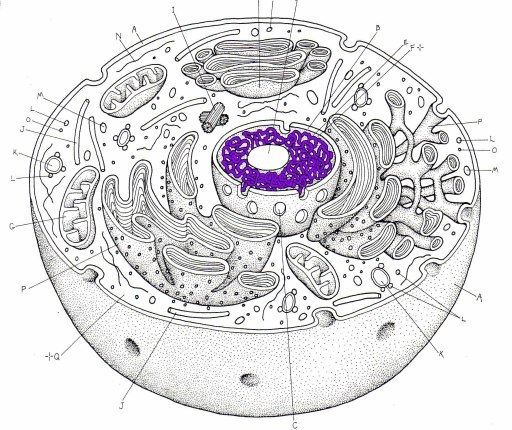
What kind of cell is this?
a)
Eukaryotic
b)
Prokaryotic
48.
What type of cell has a nucleus?
a)
eukaryotic
b)
prokaryotic
49.

What type of cell is pictured?
a)
Prokaryotic
b)
Eukaryotic
c)
Plant
d)
Animal
50.

Type of cell shown?
a)
Bacterial
b)
Prokaryotic
c)
Eukaryotic
d)
Red blood
51.

What is the name of this organelle?
a)
Cell membrane
b)
Nucleus
c)
Cytoplasm
d)
Cell wall
52.
Stores food and water for the cell.
a)
Cytoplasm
b)
Cell Wall
c)
Vacuole
d)
Nucleus
53.

What is the name of this organelle?
a)
Rough ER
b)
Mitochondria
c)
Lysosomes
d)
Nuclear Membrane
54.

According to cell theory, where did this cell come from?
a)
another living cell
b)
energy from sun
c)
a multicellular organism
d)
the nonliving environment
55.

This organelle transports materials from throughout the cell.
a)
ER
b)
Ribosomes
c)
FedEx
d)
Golgi Complex
56.
Where is pollen made?
a)
ovary
b)
petal
c)
pistil
d)
anther
57.
What is the sticky part of the flower that catches pollen?
a)
style
b)
stigma
c)
ovary
d)
petal
58.
Requires two parents
a)
sexual
b)
asexual
59.
What is the purpose of cellular respiration?
a)
to break down food
b)
to create energy in the body
c)
to release energy from food
d)
there is none; it's a waste of time
60.
This reaction releases the energy stored in glucose.
a)
Cell respiration
b)
Photosynthesis
61.
What molecule do all cells use for energy?
a)
Carbs
b)
Protein
c)
Fat
d)
ATP
100 %

