
 Worksheets
1st Semester Test study guide
Total questions: 83
Worksheet time: 5hrs 40mins
Name
Class
Date
1.
What are negative unintended consequences of technology
a)
It can hurt the enviorment
b)
uses or results that engineers do not purposely include in the design of the product.
2.
A student wants to determine if different colored boxes produce the same temp as a white box. The student places white,red, and blue boxes of the same size in the sunlight. A thermometer is placed inside each box. The student observes and records the temp in the boxes throughout the day. Which is the dependent variable in this investigation?
a)
Size of the boxes
b)
repeated trials
c)
color of the boxes
d)
Recorded temperatures
3.
How does Air pressure flow
a)
high to low
b)
low to high
c)
high to low to high
d)
low to low
4.
What is the Mesosphere?
a)
Outermost layer temps can reach around 1000 C
b)
gases from distinct laters, including the ozone layer
c)
Coldest layer temp goes down and alitude goes higher
5.
What is Stratosphere
a)
Coldest layer temp goes down and alitude goes higher
b)
gases from distinct laters, including the ozone layer
c)
Outermost layer temps can reach around 1000 C
6.
What is thermosphere
a)
Outermost layer temps can reach around 1000 C
b)
gases from distinct laters, including the ozone layer
c)
Coldest layer temp goes down and alitude goes higher
7.
What is photosynthesis
a)
A process by which plants use sunlight to produce their own food
b)
Outermost layer temps can reach around 1000 C
8.
When at the top of a roller coaster what kind of energy is it
a)
Potential
b)
Kinetic
9.
What is Mutualism
a)
Both animals benifit
b)
One animal benefits the other does not care
c)
One of the animals benefit the other dies
10.
What is Commensalim
a)
Both animals benefit
b)
One of the animals benefit the other dies
c)
One animal benefits the other does not care
11.
What is Paratisism
a)
One of the animals benefit the other dies
b)
One animal benefits the other does not care
c)
Both animals benefit
12.
What does an omnivore do
a)
eats both plants and animals
b)
eats only plants
c)
beaks down dead material into organic matter
d)
Organisms that use sunlight to make their own food
13.
What does a decomposer do?
a)
Organisms that use sunlight to make their own food
b)
beaks down dead material into organic matter
c)
eats only plants
d)
eats both plants and animals
14.
What does a herbivores do
a)
eats both plants and animals
b)
beaks down dead material into organic matter
c)
Organisms that use sunlight to make their own food
d)
eats only plants
15.
What is a biosphere
a)
Part of Earth where life exists
b)
One living thing
c)
Same species of organism
16.
What is an organism
a)
One living thing
b)
Same species of organism
c)
All of the populations that live together in the same habitat
17.
What is an community
a)
All of the populations that live together in the same habitat
b)
community of organisms and their abiotic environment
18.
What is ecosystem
a)
community of organisms and their abiotic environment
b)
One living thing
c)
Same species of organism
d)
Part of Earth where life exists
19.
What is population
a)
Same species of organism
b)
community of organisms and their abiotic environment
c)
Part of Earth where life exists
20.
What happens to the temp of a substance as you increase its kinetic energy
a)
Temp will decrease
b)
Temp will increase
21.
Energy of motion is which type of energy?
a)
Potential
b)
Kinetic
c)
Sound
d)
Gravitational
22.

What type of energy is in this picture?
a)
Kinetic
b)
Potential
c)
Chemical
d)
Sound
23.
When plants convert the sun's energy into food, which type of energy is it?
a)
kinetic
b)
chemical
c)
thermal
d)
radiant
24.
On a roller coaster, where is maximum potential energy?
a)
At the bottom of a big hill
b)
When going around a corner
c)
When going upside down
d)
At the top of a big hill
25.
On a roller coaster, where is maximum kinetic energy?
a)
At the bottom of a big hill
b)
When going around a corner
c)
When going upside down
d)
At the top of a big hill
26.

At what position does the rock have the greatest kinetic energy?
a)
A
b)
B
c)
D
d)
E
27.
Heat energy is also called
a)
electrical energy
b)
chemical energy
c)
light energy
d)
thermal energy
28.
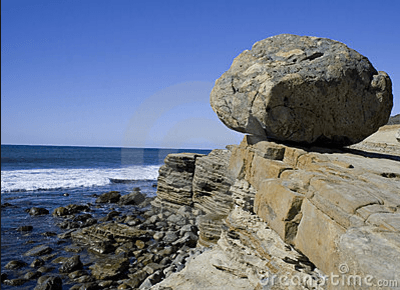
A rock at the edge of a cliff.
a)
Potential
b)
Kinetic
29.
Which kind of energy is known as stored energy?
a)
Kinetic
b)
Potential
30.
What kind of potential energy does a roller coaster have at the top of a hill?
a)
Elastic
b)
Gravitational
c)
Chemical
31.
Jose is stretching a rubber band so that it is tight. Before he lets the rubber band fly, the rubber band has:
a)
Magnetic Energy
b)
Kinetic Energy
c)
Potential Energy
d)
None of these types of Energy
32.
An organism that is eaten by another organism
a)
pray
b)
prey
c)
predator
d)
hamburger
33.
A relationship between two organisms in which one organism benefits and the other is harmed.
a)
Mutualism
b)
Competition
c)
Parasitsm
d)
Commensalism
34.
A relationship between two organisms in which one organism benefits and the other is unharmed
a)
Mutualism
b)
Competition
c)
Parasitsm
d)
Commensalism
35.
A relationship between two organisms in which both organisms benefit.
a)
Mutualism
b)
Competition
c)
Parasitsm
d)
Commensalism
36.
Barnacles create home sites by attaching themselves to whales. This neither harms nor benefits the whales.
a)
Mutualsim
b)
Parasitism
c)
Commensalism
37.
Mistletoe extracts water and nutrients from the spruce tree and harms it
a)
Mutualsim
b)
Parasitism
c)
Commensalism
38.
Yucca flowers are pollinated by yucca moths. The moths lay their eggs in the flowers where the larvae hatch and eat some of the developing seeds. Both species benefit.
a)
Mutualism
b)
Parasitism
c)
Commensalism
39.
Silverfish live and hunt with army ants. They share the prey. They neither help nor harm the ants.
a)
Mutualism
b)
Parasitism
c)
Commensalism
40.

Which of the following is a herbivore?
a)
cricket
b)
frog
c)
hawk
d)
shrew
41.

How many herbivores are in this web?
a)
1
b)
2
c)
3
d)
4
42.

Use the diagram to answer the question.
What is a fitting description for this diagram?
What is a fitting description for this diagram?
a)
A Food Chain
b)
An Ecosystem
c)
A Food Web
d)
Biotic and Abiotic Factors
43.

Use the diagram to answer the question.
The Mayfly is a food source for which 3 organisms?
The Mayfly is a food source for which 3 organisms?
a)
Frog, Dragon Fly and snake
b)
Frog, trout and dragon fly
c)
Frog, salamander and trout
d)
Frog and phytoplankton
44.

Use the diagram to answer the question.
The trout is a source of food for the human and the eagle. When there are more than one organism trying for the same food we call this____?
The trout is a source of food for the human and the eagle. When there are more than one organism trying for the same food we call this____?
a)
Population
b)
Resources
c)
Community
d)
Competition
45.

Which of the following best describes the blue bird's (in the middle) role in this ecosystem?
a)
carnivore
b)
omnivore
c)
herbivore
d)
decomposer
46.

Which of the following best describes the wolf's role in this ecosystem?
a)
herbivore
b)
omnivore
c)
carnivore
d)
decomposer
47.
Bacteria and fungi typically serve what role in an ecosystem?
a)
herbivore
b)
carnivore
c)
omnivore
d)
decomposer
48.

What is a producer?
a)
an organism that gets energy from eating other organisms
b)
an organisms that uses sunlight to make its own food
c)
an organism that gets energy from eating dead organisms, non-living material or waste
d)
an organism that uses chemical energy to make its own food
49.

This is an image of a _________.
a)
consumer
b)
scavenger
c)
decomposer
d)
producer
50.

In this food chain, what will happen if the frogs become extinct?
a)
The snakes will increase.
b)
The grasshoppers will decrease.
c)
The eagles will remain the same.
d)
The grasshoppers will increase.
51.

Does this food web have arrows pointing the right way?
a)
Yes
b)
No
52.

Does this food web have arrows pointing the right way?
a)
yes
b)
no
53.
A collection of organisms that belong to different populations but all live in the same area and interact with one another.
a)
Population
b)
Ecosystem
c)
Community
d)
Ecosphere
54.
A collection of organisms that make up a community as well as all of the nonliving aspects of the environment.
a)
Population
b)
Community
c)
Habitat
d)
Ecosystem
55.

What are the biotic factors in this image?
a)
sunlight, elephants, and grasses
b)
sunlight, water, and air
c)
elephants, plants, trees
56.

What are the abiotic factors in this image?
a)
water, sunlight, dirt, air
b)
birds and plants
c)
water, plants, and birds
57.
A large geographical area that is characterized by its climate, flora (plants), and fauna (animals).
a)
Biome
b)
Ecosystem
c)
Habitat
d)
Community
58.
Identify the examples as: a organism, population, community, or ecosystem.
All speckled sting-ray that live in the Pacific Ocean
All speckled sting-ray that live in the Pacific Ocean
a)
Organism
b)
Population
c)
Community
d)
Ecosystem
59.
Identify the examples as: a organism, population, community, or ecosystem.
A beautiful butterfly.
A beautiful butterfly.
a)
Organism
b)
Population
c)
Community
d)
Ecosystem
60.
The largest level of ecological organization which includes all biotic and abiotic factors.
a)
Ecosystem
b)
Organism
c)
Population
d)
Community
61.
Identify the examples as: a organism, population, community, or ecosystem.
Chicken, Cow, Grass, Buffalo, and Mouse living on farmland.
Chicken, Cow, Grass, Buffalo, and Mouse living on farmland.
a)
Organism
b)
Community
c)
Population
d)
Ecosystem
62.

The study of organisms and how they interact with one another and their environment is best described as
a)
Biology
b)
Ecology
c)
Zoology
d)
Botany
63.
Which is the thin layer of the earth that supports life and also the largest level of ecological organization?
a)
A community
b)
The biosphere
c)
A population
d)
The biome
64.
A ___________is a group of interacting individuals of the same species located in the same area
a)
Organism
b)
Population
c)
Community
d)
Ecosystem
65.
A ___________is all of the populations of different species in a particular area
a)
Organism
b)
Population
c)
Community
d)
Ecosystem
66.
A ___________is all of the populations of different species in a particular area
a)
Organism
b)
Population
c)
Community
d)
Ecosystem
67.
What are the ecological levels of organization from smallest to the largest?
a)
organism, population, community, ecosystem, biome, biosphere
b)
organism, community, population, ecosystem, biome, biosphere
c)
organism, population, community, biome, ecosystem, ecosphere.
d)
organism, community, population, biome, ecosystem, ecosphere
68.
Where you will find the ozone layer.
a)
stratosphere
b)
thermosphere
c)
exosphere
d)
mesosphere
69.
The coldest layer.
a)
troposphere
b)
thermosphere
c)
exosphere
d)
mesosphere
70.
As you go higher in the mesosphere, the temperature _______________.
a)
decreases
b)
increases
c)
stays the same
71.
The layer of atmosphere closest to the Earth is called the
a)
mesosphere
b)
stratosphere
c)
troposphere
d)
proctosphere
72.
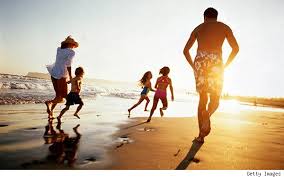
The sun shines down on this family as the play on the beach.
a)
conduction
b)
convection
c)
radiation
73.

A group of friends gather around a fire to stay warm.
a)
conduction
b)
convection
c)
radiation
74.

Walking on the warm sand sand with your bare feet.
a)
conduction
b)
convection
c)
radiation
75.

Blow drying your wet hair.
a)
conduction
b)
convection
c)
radiation
76.
What type of winds blow constantly, predictably, and over long distances?
a)
land breezes
b)
mountain breezes
c)
global winds
d)
local winds
77.
Warm air rises over the land. As the air rises, it cools and drops over ocean. What type of breeze results?
a)
Ocean breeze
b)
Land breeze
78.
Cool air moving across land and warm air rising up from the ocean will result in:
a)
land breeze
b)
sea breeze
c)
warm breeze
d)
no breeze
79.
What causes GLOBAL winds to move in all directions?
a)
breezes
b)
coriolis effect
c)
westerlies
d)
easterlies
80.
During energy transformations, energy is never ___.
a)
released as heat
b)
used to increase an object's potential energy
c)
completely transformed
d)
created or destroyed
81.
Which energy transformation occurs in a toaster?
a)
chemical to electric
b)
electric to thermal
c)
kinetic to chemical
d)
thermal to potential
82.
Energy transformations occur when...
a)
energy is created through conduction
b)
energy changes from one form to another
c)
two forces slide together that are touching
d)
a chemical reaction takes place
83.
According to the Law of Conservation of Energy, energy cannot be _________ or ____________.
a)
destroyed, destroyed
b)
created, saved
c)
created, destroyed
d)
lost, found
100 %

