
NEW
Font size
S
M
L
XL
 Worksheets
Semester 1 Review
Total questions: 50
Worksheet time: 13hrs 30mins
Name
Class
Date
1.

TOPIC: NUCLEAR
Which type of nuclear radiation is being emitted here?
Which type of nuclear radiation is being emitted here?
a)
alpha
b)
beta
c)
gamma
d)
none
2.

TOPIC: NUCLEAR
What particle completes this reaction?
What particle completes this reaction?
a)
alpha particle
b)
beta particle
c)
gamma particle
d)
neutron
3.
TOPIC: NUCLEAR
Solve this equation for alpha decay.
20985At = ___ + 42He
Solve this equation for alpha decay.
20985At = ___ + 42He
a)
20583Bi
b)
20986Rn
c)
20781Tl
d)
20885At
4.
TOPIC: NUCLEAR
Solve this equation for beta decay.
6027Co = ___ + 0-1e
Solve this equation for beta decay.
6027Co = ___ + 0-1e
a)
5625Mn
b)
6028Ni
c)
5823V
d)
5927Co
5.
TOPIC: CHEMICAL VS PHYSICAL
The density of pyrite is 5g/cm3 . This is an example of
The density of pyrite is 5g/cm3 . This is an example of
a)
physical intensive property
b)
physical extensive property
c)
chemical change
d)
chemical property
6.
TOPIC: CHEMICAL VS PHYSICAL
Wood burning is an example of _______
Wood burning is an example of _______
a)
physical intensive property
b)
physical extensive property
c)
chemical change
d)
Physical change
7.
TOPIC: CHEMICAL VS PHYSICAL
The rose is red. This is an example of a
The rose is red. This is an example of a
a)
physical extensive property
b)
Chemical property
c)
physical intensive property
d)
physical change
8.
TOPIC: CHEMICAL VS PHYSICAL
The mass of a lead cube is 64 grams. This is an example of
The mass of a lead cube is 64 grams. This is an example of
a)
physical intensive property
b)
physical extensive property
c)
chemical change
d)
physical change
9.
TOPIC: CHEMICAL VS PHYSICAL
Which of the following is a chemical property of milk?
Which of the following is a chemical property of milk?
a)
it is white
b)
it has fats
c)
it has turns sour if left out of the refridgerator
d)
it is soluble in water
10.
TOPIC: TYPES OF MATTER
Elements can be described as
Elements can be described as
a)
cannot be categorized with with other substances
b)
cannot be combined with other substances
c)
cannot be broken down into simpler substances
d)
cannot be separated from other substances
11.

TOPIC: ATOMIC THEORY
What contribution did John Dalton make to atomic theory?
What contribution did John Dalton make to atomic theory?
a)
He discovered that every atom was positively charged.
b)
He discovered that every element consisted of one type of atom.
c)
He discovered that atoms had nuclei.
d)
He discovered that atoms could be divided into smaller parts.
12.
TOPIC: ATOMIC THEORY
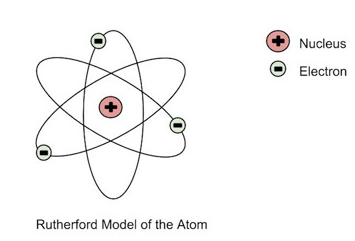
Rutherford's gold foil experiment provided evidence that...
Rutherford's gold foil experiment provided evidence that...
a)
negative and positive charges are spread evenly throughout the atom.
b)
alpha particles have a positive charge.
c)
gold is not a dense as previously thought.
d)
there is a dense positively charged nucleus at the center of an atom.
13.
TOPIC: SUBATOMIC PARTICLES
Isotopes can have different mass numbers because:
Isotopes can have different mass numbers because:
a)
they have different electrons
b)
they have different protons
c)
they have different neutrons
d)
they are always ions
14.
TOPIC: STATES OF MATTER
Which of the following best describes a rock?
Which of the following best describes a rock?
a)
rigid, not fluid, definite volume
b)
no definite shape, fluid, rigid
c)
not fluid, compressible, no definite shape
d)
no definite volume, compressible, definite shape
15.
TOPIC: CHEMICAL VS PHYSICAL
A large piece of steel has a density of 8.05 g/cm3. The large piece of steel is cut into four pieces. What is the density of one of the smaller pieces of steel? Is density an intensive or extensive property?
A large piece of steel has a density of 8.05 g/cm3. The large piece of steel is cut into four pieces. What is the density of one of the smaller pieces of steel? Is density an intensive or extensive property?
a)
The density of the smaller piece is 2.01 g/cm3 because density is an intensive property.
b)
The density of the smaller piece is 2.01 g/cm3 because density is an extensive property.
c)
The density of the smaller piece is 8.05 g/cm3 because density is an intensive property.
d)
The density of the smaller piece is 8.05 g/cm3 because density is an extensive property.
16.
TOPIC: CHEMICAL VS PHYSICAL
Which of the following is NOT an observable clue that a chemical reaction has occurred?
Which of the following is NOT an observable clue that a chemical reaction has occurred?
a)
release of a gas.
b)
color change.
c)
formation of a precipitate.
d)
mixing of the reactants.
17.
TOPIC: TYPES OF MATTER
A chemistry is given a liquid sample of an unknown substance. The substance cannot be separated into its components by filtration, evaporation, distillation, paper chromatography, or any other physical means. The chemist then tries to decompose the substance by a chemical change but cannot. Based on the chemist’s results, which of the following best describes the unknown sample?
A chemistry is given a liquid sample of an unknown substance. The substance cannot be separated into its components by filtration, evaporation, distillation, paper chromatography, or any other physical means. The chemist then tries to decompose the substance by a chemical change but cannot. Based on the chemist’s results, which of the following best describes the unknown sample?
a)
An element
b)
A compound
c)
A mixture
d)
A suspension
18.

TOPIC: TYPES OF MATTER
A scientist analyzes three different samples of the SAME metallic material gathered from a crime scene. The results are demonstrated in the table. The unknown metallic material is a(n) —
A scientist analyzes three different samples of the SAME metallic material gathered from a crime scene. The results are demonstrated in the table. The unknown metallic material is a(n) —
a)
element.
b)
compound.
c)
homogeneous mixture.
d)
heterogeneous mixture.
19.
TOPIC: TYPES OF MATTER
Which of the following best describes air?
Which of the following best describes air?
a)
rigid, not fluid, definite volume
b)
no definite shape or volume, fluid, and compressible
c)
not fluid, compressible, no definite shape
d)
no definite volume or shape and rigid
20.
TOPIC: PERCENT ERROR
As a result of an experiment, a student determines the density of a sample of metal to be 6.88 g/cm3 while the actual density is 7.13 g/cm3. Calculate the percent error of the student’s result.
As a result of an experiment, a student determines the density of a sample of metal to be 6.88 g/cm3 while the actual density is 7.13 g/cm3. Calculate the percent error of the student’s result.
a)
3.51%
b)
25.0%
c)
3.63%
d)
28.0%
21.
TOPIC: TYPES OF MATTER
Sodium (Na) violently reacts with water and chlorine gas (Cl2) is poisonous. However, sodium chloride (NaCl) can be safely dissolved in water and we eat it every day as table salt. Why do sodium and chlorine have different properties from sodium chloride?
Sodium (Na) violently reacts with water and chlorine gas (Cl2) is poisonous. However, sodium chloride (NaCl) can be safely dissolved in water and we eat it every day as table salt. Why do sodium and chlorine have different properties from sodium chloride?
a)
Because sodium chloride is a mixture.
b)
Because chlorine is a gas, but sodium chloride is solid.
c)
Because when elements combine physically they form new substances with different properties.
d)
Because when elements combine chemically they form new substances with different properties.
22.
TOPIC: SUBATOMIC PARTICLES
The nucleus of an atom contains
The nucleus of an atom contains
a)
protons and electrons.
b)
protons and neutrons.
c)
electrons and neutrons.
d)
only neutrons.
23.
TOPIC: Almost all of the mass of an atom is found
a)
outside the nucleus.
b)
in the electron cloud.
c)
in the energy levels.
d)
in the nucleus.
24.
TOPIC: SUBATOMIC PARTICLES
All atoms are
All atoms are
a)
positively-charged, with the number of protons exceeding the number of electrons.
b)
negatively-charged, with the number of electrons exceeding the number of protons.
c)
neutral, with the number of protons equaling the number of electrons.
d)
neutral, with the number of protons equaling the number of neutrons.
25.
TOPIC: SUBATOMIC PARTICLES
Barium-138 has-
Barium-138 has-
a)
82 protons, 82 electrons, and 56 neutrons
b)
82 protons, 82 neutrons, and 56 electrons
c)
56 protons, 56 neutrons, and 82 electrons
d)
56 protons, 56 electrons, and 82 neutrons
26.

TOPIC: AVERAGE ATOMIC MASS
There are four naturally occurring isotopes of the element tinomium. If the relative atomic masses and abundances of each of these isotopes are as follows, calculate the average atomic mass of tinomium to three decimal places.
There are four naturally occurring isotopes of the element tinomium. If the relative atomic masses and abundances of each of these isotopes are as follows, calculate the average atomic mass of tinomium to three decimal places.
a)
12.999 amu
b)
51.996 amu
c)
50.455 amu
d)
49.999 amu
27.
TOPIC: AVERAGE ATOMIC MASS
The three most common isotopes of calcium are: calcium-40, calcium-42, and calcium-44. Based on its average atomic mass of 40.078 amu, which isotope of calcium would be the most abundant in nature?
The three most common isotopes of calcium are: calcium-40, calcium-42, and calcium-44. Based on its average atomic mass of 40.078 amu, which isotope of calcium would be the most abundant in nature?
a)
calcium-40
b)
calcium-42
c)
calcium-44
28.

TOPIC: FUSION VS FISSION
Which of these reactions depicts nuclear fission?
Which of these reactions depicts nuclear fission?
a)
a
b)
b
c)
c
d)
d
29.
TOPIC: FISSION VS FUSION
A common example of combustion is gasoline burning in your car engine. Fusion occurs in reactions on the sun; whereas fission is the driving force in a nuclear reactor. Sublimation is when a solid directly changes into a gas such as dry ice. Which of the following produces the most energy per gram of original substance?
A common example of combustion is gasoline burning in your car engine. Fusion occurs in reactions on the sun; whereas fission is the driving force in a nuclear reactor. Sublimation is when a solid directly changes into a gas such as dry ice. Which of the following produces the most energy per gram of original substance?
a)
Fusion
b)
Fission
c)
Combustion
d)
Sublimation
30.
TOPIC: ATOMIC THEORY
Dalton postulated that atoms of the same element would have the same mass. Today, this claim is not supported due to the existence of isotopes. Isotopes do not have the same mass because they differ in the number of ___________.
Dalton postulated that atoms of the same element would have the same mass. Today, this claim is not supported due to the existence of isotopes. Isotopes do not have the same mass because they differ in the number of ___________.
a)
protons
b)
neutrons
c)
electrons
d)
atomic numbers
31.
TOPIC: PERIODIC TRENDS
Which of the following decreases as you go from left to right across the periodic table?
Which of the following decreases as you go from left to right across the periodic table?
a)
electronegativity
b)
atomic radius
c)
ionization energy
d)
nuclear charge
32.
TOPIC: PERIODIC TRENDS
Which of the following elements has the smallest atomic radius?
Which of the following elements has the smallest atomic radius?
a)
Li
b)
K
c)
O
d)
S
33.
TOPIC: PERIODIC TRENDS
Which of the following groups of elements would have the highest electronegativity?
Which of the following groups of elements would have the highest electronegativity?
a)
alkali metals
b)
alkaline earth metals
c)
halogens
34.
TOPIC: ELECTRON CONFIGURATIONS
Identify the element with the following electron configuration: 1s22s22p63s23p64s23d104p3
Identify the element with the following electron configuration: 1s22s22p63s23p64s23d104p3
a)
arsenic
b)
magnesium
c)
calcium
d)
argon
35.

TOPIC: ELECTRON CONFIGURATION
What is the correct noble gas notation for Xenon?
What is the correct noble gas notation for Xenon?
a)
a
b)
b
c)
c
d)
d
36.
TOPIC: PERIODIC TABLE
How does Moseley’s periodic arrangement of the elements differ from Mendeleev’s?
How does Moseley’s periodic arrangement of the elements differ from Mendeleev’s?
a)
Moseley arranged it in order of increasing atomic mass
b)
Moseley left gaps in the periodic table for undiscovered elements.
c)
Moseley grouped the elements by similar properties.
d)
Moseley arranged it in order of increasing atomic number.
37.
TOPIC: VALENCE ELECTRONS
Identify the number of valence electrons for the neutral atom of Carbon.
Identify the number of valence electrons for the neutral atom of Carbon.
a)
6
b)
4
c)
2
d)
12
38.

TOPIC: ENERGY
Use the table to the right and your knowledge about light to determine the relationship between the wavelength, frequency, and energy. Which of the following statements are true?
I. Red visible light has a lower frequency than blue visible light.
II. Red visible light has a higher frequency than blue visible light.
III. Red visible light has a higher energy than blue visible light.
IV. Red visible light has a lower energy than blue visible light.
Use the table to the right and your knowledge about light to determine the relationship between the wavelength, frequency, and energy. Which of the following statements are true?
I. Red visible light has a lower frequency than blue visible light.
II. Red visible light has a higher frequency than blue visible light.
III. Red visible light has a higher energy than blue visible light.
IV. Red visible light has a lower energy than blue visible light.
a)
I and III are true.
b)
I and IV are true.
c)
II and III are true.
d)
II and IV are true.
39.
TOPIC: BONDING
A bond between a sulfur atom and an oxygen atom would be
A bond between a sulfur atom and an oxygen atom would be
a)
covalent.
b)
ionic.
c)
metallic.
40.
TOPIC: BONDING
Metals are good conductors of electricity because they
Metals are good conductors of electricity because they
a)
are hard.
b)
are ductile.
c)
bend easily.
d)
contain a sea of mobile valence electrons.
41.

TOPIC: LEWIS DOT
Which drawing below shows the electron dot structure for gaseous nitrogen?
Which drawing below shows the electron dot structure for gaseous nitrogen?
a)
a
b)
b
c)
c
d)
d
42.

TOPIC: LEWIS DOT
a)
a
b)
b
c)
c
d)
d
43.

TOPIC: SHAPES
a)
a
b)
b
c)
c
d)
d
44.

TOPIC: SHAPES
a)
a
b)
b
c)
c
d)
d
45.

TOPICS: NAMING
a)
iron(IV) sulfate
b)
iron sulfate
c)
iron(II) sulfate
d)
iron(I) sulfate
46.

TOPICS: NAMING
a)
nitrogen oxide
b)
nitrogen trioxide
c)
dinitrogen trioxygen
d)
dinitrogen trioxide
47.

TOPICS: NAMING
a)
a
b)
b
c)
c
d)
d
48.

TOPICS: NAMING
a)
a
b)
b
c)
c
d)
d
49.
TOPICS: NAMING
When magnesium and chlorine ions combine, what is the name of the compound formed?
When magnesium and chlorine ions combine, what is the name of the compound formed?
a)
magnesium chlorine
b)
magnesium(II) chloride
c)
magnesium chloride
d)
magnesium dichloride
50.

TOPICS: NAMING
a)
a
b)
b
c)
c
d)
d
Reset

