
 Worksheets
'17 Conceptual Physics 1st Semester Review
Total questions: 90
Worksheet time: 1hrs 22mins
Name
Class
Date
1.
Which best describes a simple series circuit?
a)
Electricity flows along one pathway.
b)
The flow of electricity comes from the switch.
c)
Electricity flows along many pathways.
d)
The flow of electricity comes from the light bulb.
2.
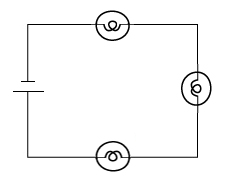
The picture shows an electrical circuit. This circuit is a series circuit because:
a)
It has 3 light bulbs.
b)
The same current flows through all three light bulbs.
c)
It uses a single battery.
d)
The electrical current is divided between the three light bulbs.
3.
The energy within a battery is called _____________.
a)
voltage
b)
circuit
c)
filament
d)
conductor
4.
In a parallel circuit if one light bulb goes OUT; then they ALL go out. TRUE OR FALSE?
a)
TRUE
b)
FALSE
5.
Which best describes a parallel circuit?
a)
Electricity flows along one pathway.
b)
The flow of electricity comes from more than one source.
c)
Electricity flows along more than one pathway.
d)
The flow of electricity comes from more than 1 load.
6.
A closed circuit allows charges to flow.
a)
True
b)
False
7.

What is this symbol for?
a)
light bulb
b)
switch
c)
battery
d)
resistor
8.
A conductor is?
a)
material that current can pass through easily
b)
material that current cannot pass through easily
c)
magnet
d)
electric current
9.
Insulator is?
a)
material that current can pass through easily
b)
material that current cannot pass through easily
c)
magnet
d)
static electricity
10.

A continuous flow of electricity is called_____________
a)
series
b)
circuit
c)
static
d)
current
11.
How many Volts would it take to push 1 Amp through a resistance of 1 Ohm
a)
10 volts
b)
1 volt
c)
48 volts
d)
5 volts
12.
What size resistor would produce a 3 Amp current flow with a 12 Volt battery
a)
1 Ohm
b)
3 Ohms
c)
4 Ohms
d)
12 Ohms
13.
What letter represents Current?
a)
A
b)
I
c)
R
d)
E
14.
What is resistance measured in?
a)
Ω (Ohms)
b)
V (Volts)
c)
A (Amps)
d)
W (Watts)
15.
How do you calculate current
a)
Resistance X Voltage
b)
Voltage X Resistance
c)
Resistance ÷ Voltage
d)
Voltage ÷ Resistance
16.
If the lights are off, the circuit is
a)
closed
b)
open
c)
electrified
d)
in trouble
17.

A class prepared some electrical circuits using battery, connecting wires, and three light bulbs. Which of these circuits can make the three bulbs light?
a)
A
b)
B
c)
C
d)
D
18.

This instrument can be used to see if materials conduct electricity. Which of these groups contains items that could all conduct electricity to complete the circuit?
a)
rubber ball, plastic comb, nail
b)
paper clip, penny, screw
c)
cork, dollar bill, tweezers
d)
pencil, eraser, spoon
19.
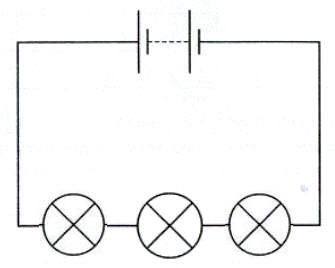
what kind of circuit is this?
a)
parallel
b)
series
c)
chris barton
d)
open
20.
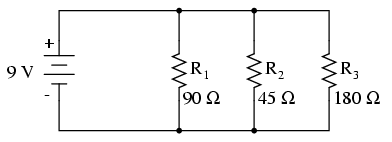
This is an example of a ______ circuit
a)
Series
b)
Parallel
c)
Open
d)
Complex Series
21.
A possible explanation to a problem that has not yet been tested.
a)
data
b)
theory
c)
hypothesis
d)
fact
22.
A series of steps used by scientists to solve a problem or answer a question.
a)
scientific method
b)
recipe
c)
data collection
d)
metric system
23.
Testing a hypothesis often involves a(n):
a)
answer
b)
experiment
c)
problem
d)
safety check
24.
The name of the information that you get from your experiment (you organize it into charts and graphs).
a)
observations
conclusion
conclusion
b)
data
c)
variables
d)
hypothesis
25.
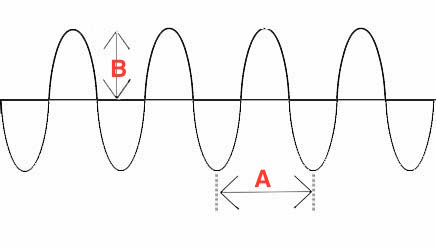
What property of this wave is represented by the letter "A"
a)
amplitude
b)
crest
c)
trough
d)
wavelength
26.
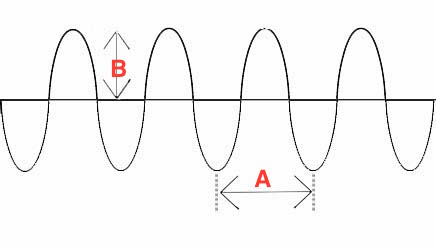
What property of the wave is represented by the letter "B"?
a)
amplitude
b)
crest
c)
trough
d)
wavelength
27.
The highest point on a wave is:
a)
the crest
b)
the trough
c)
the top
d)
the coast
28.
The lowest point on a wave is the:
a)
Amplitude
b)
Crest
c)
Trough
d)
Wavelength
29.
The number of wavelengths that pass a point each per second is:
a)
frequency
b)
period
c)
longitudinal
d)
transverse wave
30.
The type of waves that require medium to pass:
a)
Mechanical Waves
b)
Electromagnetic Waves
31.
When the frequency of a wave increases, what happens to the wavelength?
a)
The wavelength is not directly affected by the frequency of a wave.
b)
The wavelength increases.
c)
The wavelength decreases.
d)
More specific information is needed to form a conclusion about the wavelength.
32.
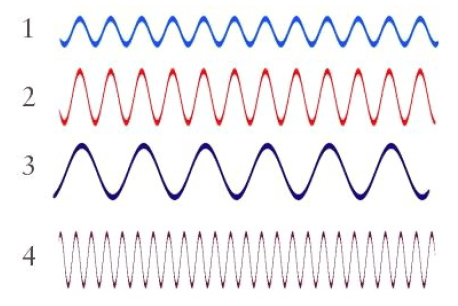
Which wave in the diagram has the greatest frequency?
a)
1
b)
2
c)
3
d)
4
33.
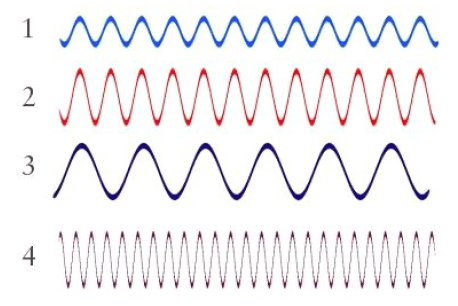
Which wave in the diagram has the greatest wavelength?
a)
1
b)
2
c)
3
d)
4
34.
Which of the following can sound travel through?
a)
solid
b)
liquid
c)
gas
d)
all of the above
35.
Electromagnetic waves include the following except
a)
radio waves
b)
X-rays
c)
doing the wave at a football game
d)
microwaves
36.
regular disturbances that carry energy through matter or space
a)
crest
b)
energy
c)
wave
d)
trough
37.
which material does sound travel the fastest?
a)
solid
b)
liquid
c)
gases
38.
A wave carries...?
a)
energy only
b)
matter only
c)
the matter carries the energy
d)
neither
39.
Amplitude reflects the amount of ____________________ in a wave.
a)
energy
b)
compression
c)
rarefaction
d)
speed
40.

This type of Electromagnetic wave shows a break in bones.
a)
gamma ray
b)
x-ray
c)
brokenometer
d)
radio wave
41.

_______ carry the greatest amount of energy.
a)
x-rays
b)
gamma rays
c)
infrared rays
d)
visible light
42.
How much of the electromagnetic spectrum is visible?
a)
All of it
b)
None of it
c)
Most of it
d)
Only a small part
43.

Cell phones use_____________waves.
a)
Microwaves
b)
Gamma
c)
XRays
d)
Radio
44.
Sound is caused by?
a)
force
b)
vibrations
c)
instruments
d)
medium
45.
Why is sound able to travel faster through a solid than a gas?
a)
Gas molecules are packed tightly.
b)
Sound does not travel faster through a solid than a gas.
c)
Solid molecules are packed tightly.
d)
Gas molecules move slowly.
46.
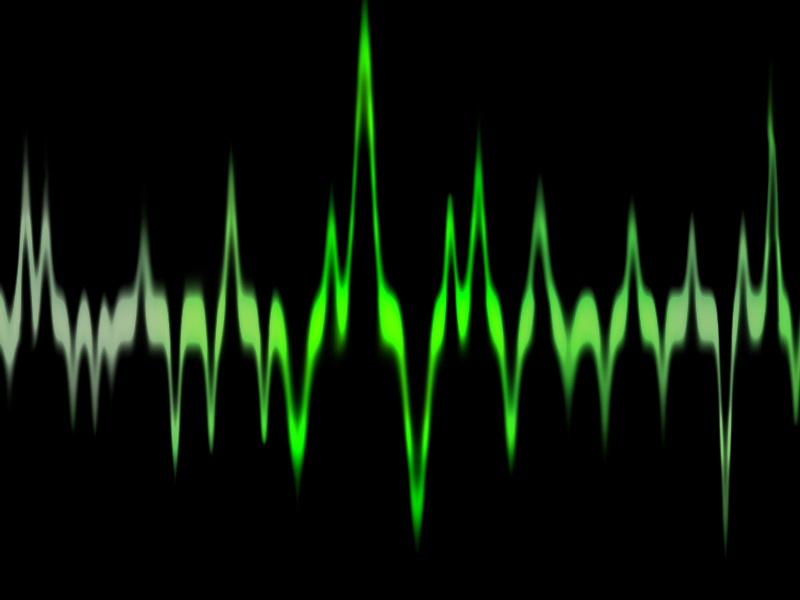
The units for frequency are measured in _____________.
a)
hertz
b)
seconds
c)
m/s
d)
m
47.
In a transverse wave, particles move...?
a)
back and forth
b)
vertically
c)
up and down
d)
wherever the matter's going
48.
In a longitudinal wave, the particles move...?
a)
back and forth
b)
up and down
c)
vertically
d)
in the direction of the hertz
49.

Measure of how high or low a sound is
a)
amplitude
b)
compression
c)
speed of sound
d)
pitch
50.
What is volume?
a)
how high or low a sound is
b)
the loudness or softness of a sound
c)
the number of vibrations per second
d)
vibrations
51.
What best describes the doppler effect?
a)
An apparent change in frequency of a wave due to the relative motion between a wave source and an observer
b)
When sound changes pitch
c)
When light changes color
d)
An apparent change in the amplitude of a wave due to the relative motion between a wave source and an observer.
52.
In a pitch-black night, you hear a police siren is getting higher and higher, could you tell if the car is coming toward you or driving away from you?
a)
coming toward you
b)
away from you
c)
going circles around you
d)
parking still
53.
What wave has rarefaction and compression?
a)
longitudinal
b)
surface
c)
heat
d)
transversal
54.
One end of the rope is vibrated to produce a wave with a wavelength of .25 m. The Frequency of the wave is 3.0 Hz. What is the speed of the wave?
a)
3.00 m/s
b)
2.50 m/s
c)
.75 m/s
d)
1.25 m/s
55.

If this wave chain represents 1 second, What is the frequency of the waves?
a)
1 Hz
b)
9 Hz
c)
3 Hz
d)
6 Hz
56.
A reflected sound wave is an...
a)
speed of sound
b)
resonance
c)
loudness
d)
echo
57.
As amplitude increases
a)
softer the sound becomes
b)
the louder the sound becomes
c)
the higher the frequency
d)
Both a and b
58.
When two waves combine to form a new wave with a smaller amplitude, it is called
a)
Refraction
b)
Constructive Interference
c)
Resonance
d)
Destructive Interference
59.
When two waves combine to form a new wave with a larger amplitude, it is called
a)
Diffraction
b)
Destructive Interference
c)
Resonance
d)
Constructive Interference
60.

If two overlapping waves are in-phase, the resultant wave will have ______ compared to the two waves.
a)
Greater amplitude
b)
Greater frequency
c)
Greater wavelength
d)
Greater wave speed
61.

Look at the diagram. At which positions will the overlapping waves have the most constructive interference?
a)
Positions #1 & #2
b)
Positions #2 & #3
c)
Positions #3 & #4
d)
Positions #4 & #5
62.
In standing waves, _____________ are points with zero amplitude.
a)
nodes
b)
amplitude
c)
diffraction
d)
crest
63.
The bending of a wave as it changes speed is called
a)
Reflection
b)
Diffraction
c)
Refraction
d)
Interference
64.

Refract or Reflect?
a)
Refract
b)
Reflect
65.

What is happening in this picture?
a)
Reflection
b)
Refraction
c)
Diffraction
d)
Absorption
66.
Which wave behavior do noise cancelling headphones use?
a)
diffraction
b)
refraction
c)
constructive interference
d)
destructive interference
67.
The Law of Reflection States that the angle of _________________ is equal to the angle of __________________.
a)
Scattering ; Absorption
b)
Refraction ; Reflection
c)
Incidence ; Reflection
d)
Incidence ; Absorption
68.
Concave mirrors bend
a)
inward
b)
outward
c)
they do not bend at all
d)
both inward and outward
69.
Convex Mirrors bend
a)
inward
b)
outward
c)
they do not bend at all
d)
they bend both inward and outward.
70.
Convex Lenses make light
a)
Stand Still
b)
Converge
c)
Diverge
71.
Concave lenses make light
a)
Converge
b)
Diverge
c)
Stand Still
72.
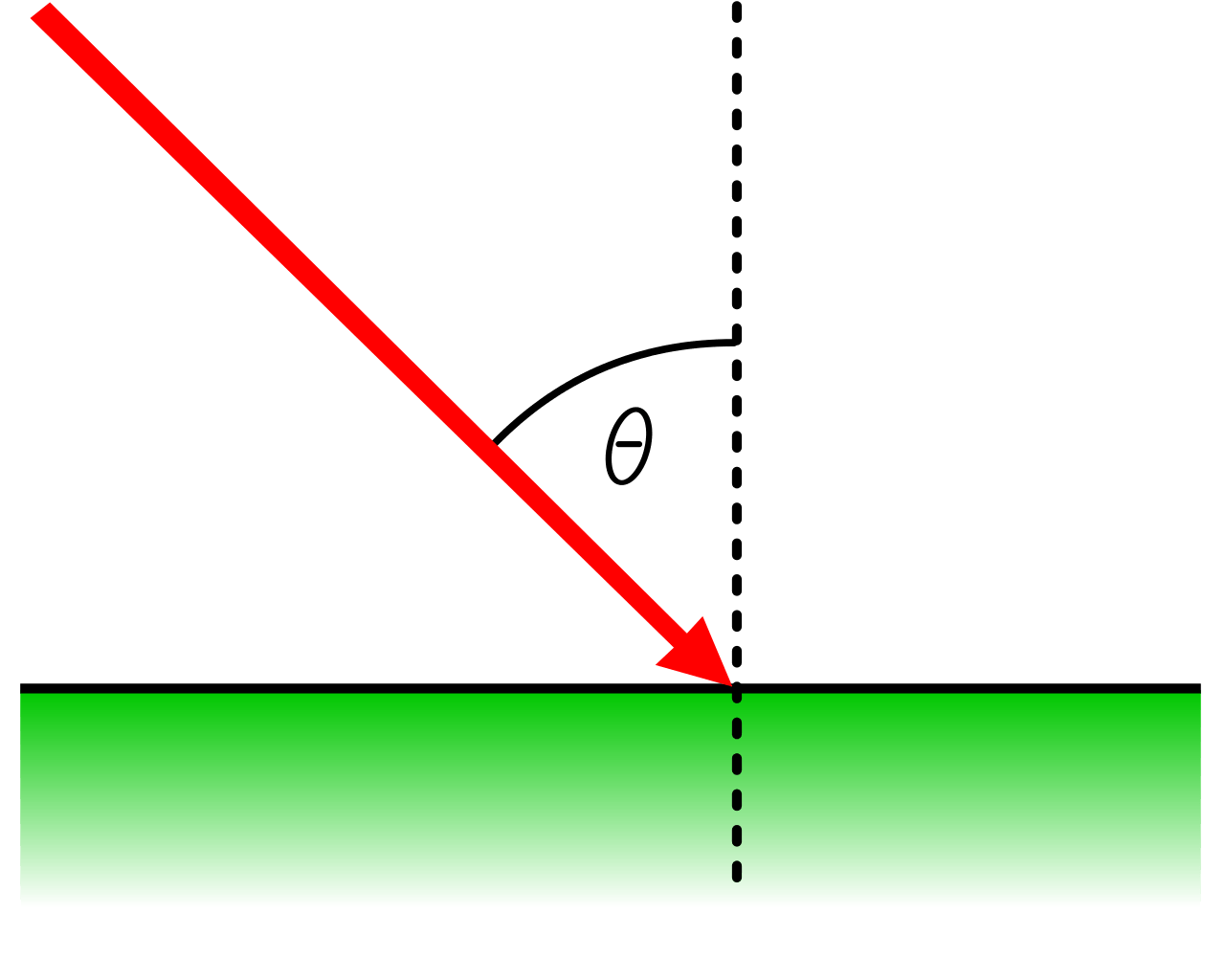
According to the Law of reflection, a light ray striking a mirror
a)
continues moving through the mirror in the same direction
b)
moves into the mirror at a slightly different angle
c)
bounces off the mirror toward the direction it came from
d)
bounces off the mirror at the same angle it hits.
73.

Glass has a _____________ index of refraction than air.
a)
Equal
b)
Greater
c)
Less
d)
Impossible to say
74.
The measure of how much light refracts is called...
a)
Refraction
b)
Law of reflection
c)
reflected ray
d)
Index of refraction
75.

How does light behave as it enters these mediums?
a)
continue its path as straight line.
b)
bends toward the normal
c)
bends away from the normal
d)
reflects
76.

The color black (shown on the far right) is sometimes defined as the absence of all color. Based on that definition, the color white could be defined as:
a)
the separation of combined colors
b)
All colors put together
c)
the addition of one or more colors
d)
the highest level of brightness
77.

Why does the ray of light stop once it hits surface D?
a)
surface D is opaque
b)
surface D is a mirror
c)
surface D is a translucent surface
d)
surface D is a clear piece of glass
78.

Surface B is made up of a translucent material. The ray of light is dotted as it crosses through the material because :
a)
the light is unable to pass through
b)
he light increases as it passes through
c)
the light changes color as it passes through
d)
not all of the light is able to pass through
79.

Based on the picture, what kind of material is surface A?
a)
translucent
b)
reflective
c)
opaque
d)
transparent
80.
Luminous means...
a)
Gives out its own light
b)
Reflects light from other things
81.

Which color reflects all light?
a)
White
b)
Black
c)
Orange
d)
Green
82.
What is the speed of light in a vacumn?
a)
300,000,000 m/s
b)
3,000,000 m/s
c)
3,000 m/s
d)
300 m/s
83.
If a material absorbs all frequencies of light waves EXCEPT green, what color will be perceived by the observer?
a)
Green
b)
White
c)
Black
d)
Yellow
84.
What part of the visible spectrum has the highest energy?
a)
Red
b)
Orange
c)
Green
d)
Violet
85.
What is R+G+B
a)
primary colors of light
b)
tiny dot on a TV screen and is either red, green, or blue.
c)
type of color seen when light goes through filters
d)
only allows selective wavelengths of light to pass through
86.
R + B =
a)
Red
b)
Cyan
c)
Magenta
d)
Yellow
87.
A shirt reflects all light, what color is the shirt
a)
Black
b)
Blue
c)
Magenta
d)
White
88.
The color you see is the color that is ___.
a)
reflected
b)
absorbed
89.
White light goes through a red filter what color do we see?
a)
Red
b)
Green
c)
Cyan
d)
Yellow
90.

In the image on the left we see the clothes of a boy under white light. How would the boys clothes look under green light
a)
A
b)
B
100 %

