
 Worksheets
Honors Bio 1st Sem Exam Review
Total questions: 85
Worksheet time: 1hrs 11mins
Name
Class
Date
1.
Which type of biomolecule is responsible for insulation and energy storage?
a)
Protein
b)
Nucleic Acids
c)
Lipid
d)
Carbohydrate
2.
Which biomolecule class includes sugars and starches?
a)
Lipids
b)
Proteins
c)
Carbohydrates
d)
Nucleic Acids
3.
Which type of biomolecule is made of amino acids?
a)
Nucleic Acid
b)
Carbohydrate
c)
Protein
d)
Lipid
4.
Which type of biomolecule is your main source of energy?
a)
Nucleic Acid
b)
Protein
c)
Lipid
d)
Carbohydrate
5.
Which biomolecule class contains fats, oils, and waxes?
a)
Proteins
b)
Nucleic Acid
c)
Lipids
d)
Carbohydrate
6.
Steroids are a type of ________.
a)
Nucleic Acid
b)
Lipid
c)
Cholesterol
d)
Protein
7.
Lipids are made of
a)
monosaccharides
b)
amino acids
c)
glycerol and 3 fatty acids
d)
nucleotides
8.
What is the function of a nucleic acid?
a)
Stores genetic information
b)
Stores energy
c)
Quick source of energy
d)
Builds structures
9.
Enzymes are considered to be
a)
Lipids
b)
Carbohydrate
c)
Protein
d)
Nucleic Acid
10.
What is the purpose of an enzyme?
a)
give permission for the reaction
b)
raise activation energy
c)
speed up reactions
d)
control how many reactions occur
11.
Enzymes are capable of increasing the rate of a chemical reaction within a living cell. Enzymes accomplish this through which of the following means?
a)
reducing the number of products
b)
reducing the activation energy
c)
increasing the temperature of the cell
d)
increasing the concentration of reactants
12.
How do enzymes speed up chemical reaction?
a)
Increasing activation energy
b)
Decreasing activation energy
c)
Increasing deactivation energy
d)
Decreasing deactivation energy
13.

Which of the following conclusions can be drawn from this graph?
a)
The optimum pH of the enzyme is 6.6.
b)
The optimum pH of the enzyme is 5.8
c)
The enzyme’s activity increases as pH increases 5.0 to 9.0
d)
The enzyme’s activity is greater around pH of 8.0 .
14.
The "lock and key hypothesis" attempts to explain the mechanism of?
a)
Vacuole formation
b)
Pinocytosis
c)
Sharing of electrons
d)
Enzyme specificity
15.
Any substance that is acted upon by an enzyme is called a(n)?
a)
Coenzyme
b)
Substrate
c)
Vitamin
d)
Polypeptide
16.
Which of the following is found inside a prokaryote?
a)
cytoplasm
b)
DNA
c)
ribosomes
d)
all of these
17.
Both prokaryotes and eukaryotes have membrane bound organelles.
a)
True
b)
False
18.
Bacteria are considered non-living.
a)
True
b)
False
19.
What is the function of the ribosome?
a)
Movement
b)
Protein production
c)
Contains genetic material
d)
Necessary for reproduction
20.
Researchers have discovered a new species of bacteria that makes glucose to obtain energy. What could be the reactants of how this bacteria produces glucose?
a)
Water + oxygen + sunlight
b)
Oxygen + sunlight
c)
Carbon dioxide + oxygen + sunlight
d)
Carbon dioxide + sunlight + water
21.
What are the reactants of cellular respiration?
a)
Water + carbon dioxide + ATP
b)
Oxygen + glucose
c)
Water + carbon dioxide + sunlight
d)
Water + glucose
22.
What statement is true regarding the relationship between photosynthesis and cellular respiration?
a)
Cellular respiration only occurs in photosynthetic bacteria
b)
The products of one become the reactants of the other
c)
Cellular respiration is the pre-process that prepares the oxygen needed for photosynthesis
d)
Photosynthesis provides the carbon dioxide needed for cellular respiration
23.
Out of the organisms listed below, which one was the first to appear on Earth?
a)
Unicellular Eukaryotes
b)
Multicellular Eukaryotes
c)
Prokaryotes
d)
None of the above
24.
In what organelle is the genetic material found inside?
a)
Endoplasmic Reticulum
b)
Golgi Complex
c)
Nucleolus
d)
Nucleus
25.
What is the function of the mitochondria?
a)
Structure that manufactures ribosomes
b)
Structures that converts nutrients to energy
c)
Stack of membranes that packages chemicals
d)
Structure that contains DNA and directs the cell
26.
What is the function of the vacuole?
a)
Sac that stores water, nutrients, and waste products
b)
Sac filled with digestive chemicals
c)
Jelly-like substance within the plasma membrane
d)
stack of membranes that packages chemicals
27.

I store water in both plant and animal cells. What am I?
a)
cytoplasm
b)
ribosomes
c)
vacuole
d)
lysosomes
28.
Where does photosynthesis occur?
a)
mitochondria
b)
stomata
c)
xylem
d)
chloroplast
29.

What cell part is NOT found in all cells?
a)
Cell Wall
b)
Cell Membrane
c)
Cytoplasm
d)
Genetic Material
30.
The green pigment in plants is due to the presence of
a)
chlorophyll
b)
Chlorine
c)
Chlorophyta
d)
chromatophores
31.

What kind of cell is this?
a)
animal cell
b)
bell bell
c)
plant cell
d)
vacuole
32.
Animals cell do or do not have cell walls?
a)
do
b)
do not
33.
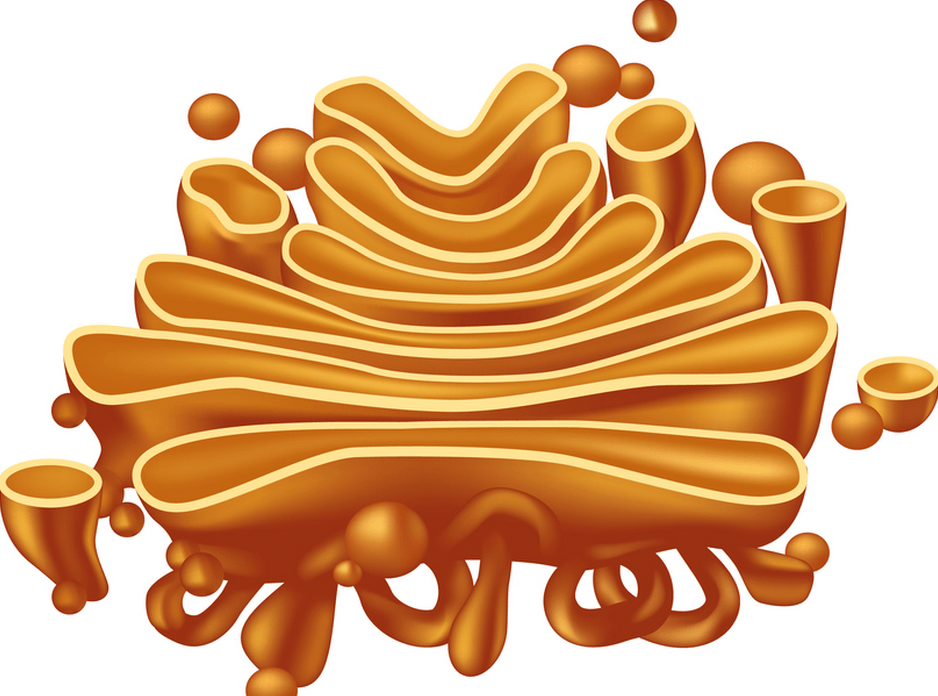
I am a protein packaging and shipping machine! Who am I?
a)
vacuole
b)
ribosome
c)
mitochondrion
d)
golgi apparatus
34.
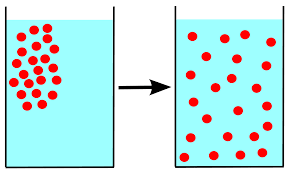
The picture below is an example of _________________.
a)
osmosis
b)
isotonic
c)
diffusion
d)
active transport
35.
Osmosis is the movement of _____ across a membrane.
a)
food
b)
energy
c)
oxygen
d)
water
36.
During osmosis
a)
water moves from high to low concentration
b)
large or oddly shaped molecules move across a cell membrane
c)
water moves when energy is used
d)
proteins are built
37.
Permeable means
a)
things can pass through
b)
the concentration levels are different
c)
it is permanent
d)
things are stuck
38.
What a cell needs to transport particles by active transport?
a)
Sun
b)
Wind
c)
Energy
d)
Channels
39.
When both inside and outside of a cell have the same amount of water it is said that the cell has reached a state of
a)
Osmosis
b)
Diffusion
c)
Equilibrium
40.
A person should never drink salty water because their cells would
a)
shrink
b)
expand
41.
Passive transport requires no
a)
concentration gradients
b)
osmosis
c)
motion
d)
energy
42.

The picture is an example of...
a)
active tranport
b)
passive transport
c)
diffusion
d)
osmosis
43.
Sometimes, energy is required for ____ molecules to go in or out of the cell because they cannot fit into the membrane.
a)
big
b)
small
c)
crunchy
d)
water
44.
When there is an unequal concentration of something, it will create a
a)
concentration gradient
b)
an unequal diffusion
c)
equalibrium
45.
Unlike Facilitated Diffusion, Simple Diffusion is able to use the concentration gradient to move SMALL NON-POLAR molecules across the plasma membrane.
a)
True
b)
False
46.
Passive Diffusion can be described as molecules moving DOWN the concentration gradient, from high to low, because it is powered by ATP.
a)
True
b)
False
47.

Why do the molecules eventually stop exhibiting a net movement across the membrane?
a)
There is still a homeostatic imbalance.
b)
The molecules grew into a larger size
c)
The concentration gradient is now gone
d)
The molecules are still moving
48.
Facilitated Diffusion is the movement of LARGE or POLAR molecules across the cell membrane with the help of membrane proteins
a)
True
b)
False
49.
Which type of molecules would be transported by simple diffusion?
a)
small, polar
b)
small, nonpolar
c)
large, polar
d)
large, nonpolar
50.
Which of the following is an example of a prokaryotic cell?
a)
Plant cell
b)
Animal cell
c)
Bacterium
d)
Fungal cell
51.
Which organelle is responsible for detoxification?
a)
Rough ER
b)
Smooth ER
c)
Golgi
d)
Vacuole
52.
An example of a molecule that would move into or out of the cell by facilitated diffusion would be
a)
oxygen
b)
carbon dioxide
c)
ions
d)
glucose
53.
Active transport and facilitated diffusion both require
a)
membrane proteins
b)
movement against a gradient
c)
energy
d)
vesicles
54.
The largest molecules are moved into a cell using
a)
exocytosis
b)
endocytosis
c)
protein pumps
d)
facilitated diffusion
55.
A cell placed in a hypotonic solution will experience
a)
shrinking
b)
swelling
c)
no change
56.
A cell placed in a hypertonic solution will experience
a)
shrinking
b)
swelling
c)
no change
57.
A cell placed in an isotonic solution will experience
a)
shrinking
b)
swelling
c)
no change
58.
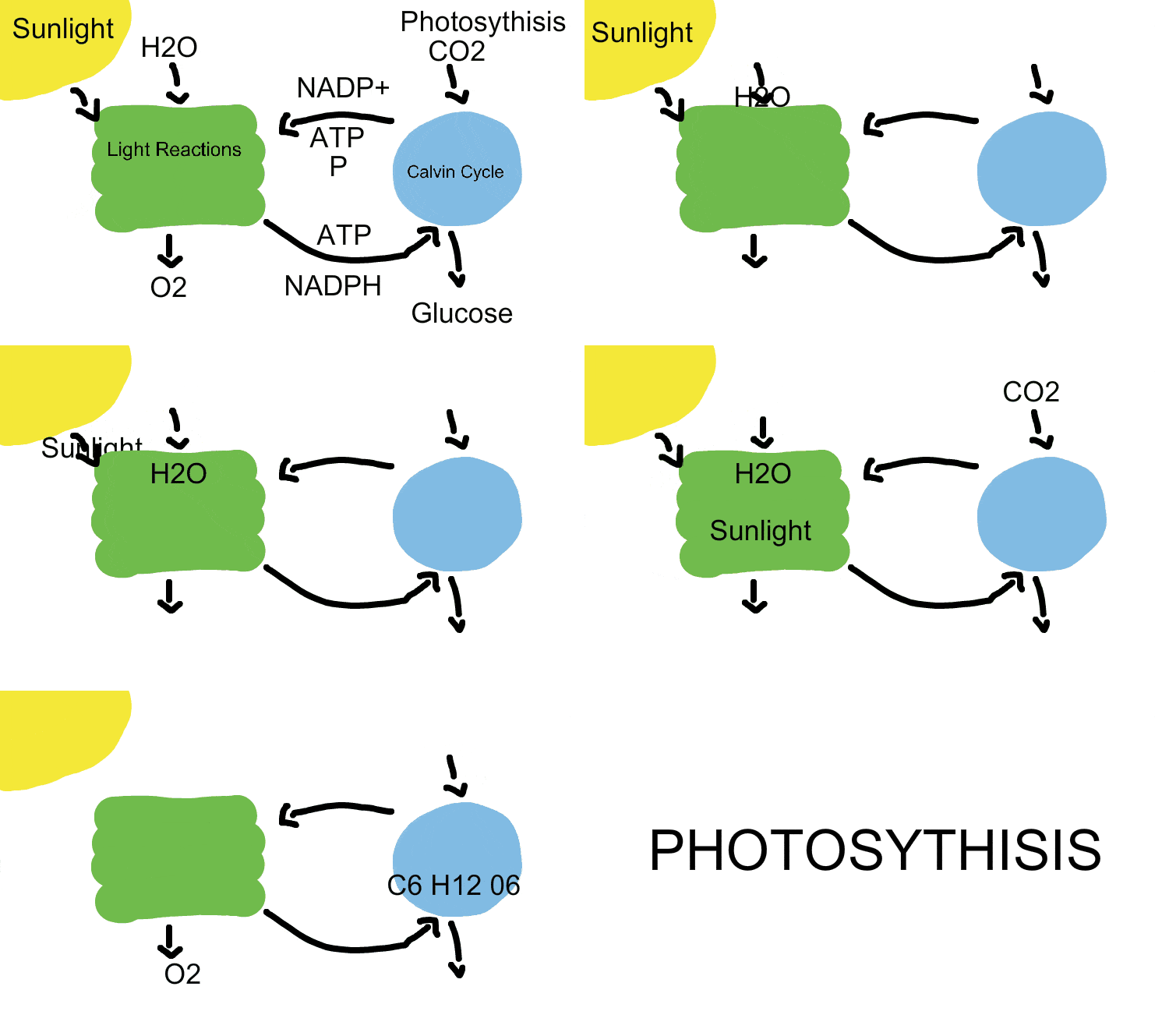
Chlorophyll absorbs a higher percentage of _____ and _______ light.
a)
purple and green
b)
red and blue
c)
black and orange
d)
yellow and green
59.

Most plants appear green because chlorophyll
a)
absorbs green light.
b)
absorbs violet light.
c)
reflects green light.
d)
does not absorb violet light.
60.

The reactants of photosynthesis are
a)
sugar and water.
b)
sugar and oxygen.
c)
carbon dioxide and water.
d)
carbon dioxide and oxygen.
61.

What pigment absorbs sunlight for photosynthesis?
a)
chloroplast
b)
thylakoid
c)
grana
d)
chlorophyll
62.

What is the function of NADPH and ATP?
a)
They absorb light
b)
They power the light-dependent reactions
c)
They are light-reflecting pigments
d)
They are short term energy carriers
63.

Where do the light-dependent reactions occur?
a)
thylakoid membrane
b)
stroma
c)
mesophyll
d)
mitochondria
64.

Which product is produced during the light-dependent reactions?
a)
water
b)
oxygen
c)
glucose
d)
carbon dioxide
65.
What is a similarity between photosynthesis and chemosynthesis?
a)
Both are metabolic processes which produce energy for living things
b)
Both use sunlight
c)
Both are performed by bumblebees
d)
Both produce Carbon Dioxide
66.
Where does chemosynthesis occur?
a)
In plants
b)
In animals
c)
At the bottom of the ocean
d)
In the sky
67.
The process by which the nuclear material is divided equally between two new cells
a)
mitosis
b)
cancer
c)
spindle
d)
centromere
68.
If the message never gets through for a cell to stop dividing and it just keeps dividing over and over again, what can form?
a)
tumor
b)
freckle
c)
goosebump
d)
scab
69.
Another name for a sex cell is a:
a)
gamete
b)
embryo
c)
bone cell
d)
muscle cell
70.

The process on the left is:
The process on the right is:
The process on the right is:
a)
Left: meiosis
Right: meiosis
Right: meiosis
b)
Left: meiosis
Right: cloning
Right: cloning
c)
Left: mitosis
Right: meiosis
Right: meiosis
d)
Left: mitosis
Right: mitosis
Right: mitosis
71.
Which of the following statements about homologous chromosomes is correct?
a)
They contain the same genes at the same locations
b)
They are two identical copies of a parent chromosome which are attached to one another at the centromere.
c)
They come from the same parent.
d)
They are chromosomes that have identical genes and alleles.
72.
A cat has a total of 38 chromosomes in its body cells. How many in its gametes?
a)
38
b)
19
c)
76
d)
10
73.
Put the following stages of the cell cycle in order: G2, S, G1, M.
a)
G1, S, G2, M
b)
S, G1, G2, M
c)
G1, M, G2, S
d)
M, G1, S, G2
74.
DNA is a polymer made up of long chains of
a)
lipids
b)
nucleotides
c)
amino acids
d)
monosaccharides
75.
Where is DNA located in Eukaryotes?
a)
Golgi Apparatus
b)
Smooth ER
c)
Nucleus
d)
Vessicle
76.
Which nitrogen bases are complementary in DNA?
a)
A-G & C-T
b)
A-T & C-G
c)
C-T & A-G
d)
A-C & D-C
77.
What is meant by semi-conservative DNA replication?
a)
Both new DNA strands are 1 template strand and 1 new strand
b)
1 New DNA strand is all template and the other is all new
c)
The new DNA is half republican and half democrat
d)
Both new DNA strands are entirely new
78.
For the following DNA strand, correctly replicate the complementary strand: ATCGGATTCAGA
a)
TAGCCTAAGTCT
b)
UAGCCUAAGUCU
c)
CGATTCGGACTC
d)
CGAUUCGGACUC
79.
TRUE or FALSE: Before a cell divides the DNA must replicate.
a)
TRUE
b)
FALSE
80.
The process of transcription produces?
a)
RNA Molecules
b)
RNA Polymerase
c)
Proteins
d)
DNA Molecules
81.
The process of translation produces?
a)
RNA Molecules
b)
RNA Polymerase
c)
Proteins
d)
DNA Molecules
82.
Which is the correct sequence of transfer of organisms in most organisms?
a)
RNA to Protein to DNA
b)
RNA to DNA to Protein
c)
Protein to DNA to RNA
d)
DNA to RNA to Protein
83.
Which of the following bases is found only in RNA?
a)
Adenine
b)
Guanine
c)
Thymine
d)
Uracil
84.
What is the function of mRNA?
a)
carries amino acids
b)
prevents mutations
c)
makes up ribosomes
d)
carries genetic message from nucleus
85.
What is the function of tRNA?
a)
carries amino acids
b)
prevents mutations
c)
makes up ribosomes
d)
carries genetic message
100 %

