
 Worksheets
Berner Forces/Motion Unit test review
Total questions: 60
Worksheet time: 58mins
Name
Class
Date
1.

At which point is potential energy greatest?
a)
W
b)
X
c)
Y
d)
Z
2.

What type of energy is in this picture?
a)
Kinetic
b)
Potential
c)
Chemical
d)
Sound
3.

At which point is kinetic energy greatest?
a)
W
b)
X
c)
Y
d)
Z
4.

Describe the energy transformation in this picture.
a)
Potential to Kinetic
b)
Kinetic to Potential
c)
No transformation - it's all potential.
d)
No transformation - it's all kinetic.
5.

Which graph represents zero acceleration (constant velocity)?
a)
A
b)
B
c)
C
d)
D
6.
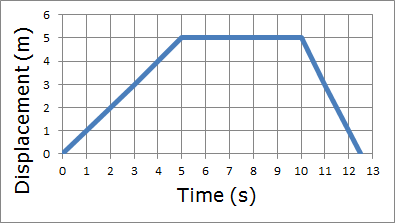
According to the graph how far does the person travel in the first 5 seconds?
a)
2 m
b)
10 m
c)
0 m
d)
5 m
7.

Which graph shows the object standing still?
a)
A
b)
B
c)
C
d)
D
8.

What is happening at C?
a)
Stationary
b)
Accelerating
c)
Fast steady speed; moving away from the starting position
d)
Slower steady speed; moving away from the starting position
9.

What law of motion does this picture represent?
a)
Newtons 3rd law
b)
Newtons 4th law
c)
Newtons 1st law
d)
Newtons 2nd law
10.
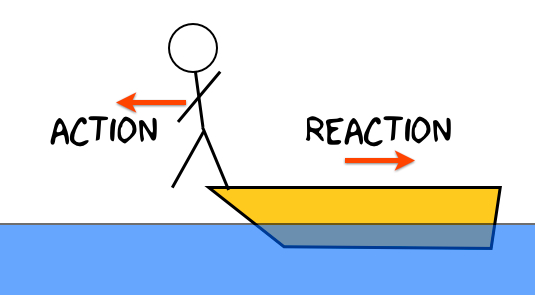
What law of motion does this picture represent?
a)
Newtons 1st law
b)
Newtons 4th law
c)
Newtons 3rd law
d)
Newtons 2nd law
11.
Which has more Inertia? (so need more force to move)
a)
Truck
b)
Ant
c)
A cat
d)
A skateboard
12.
You push on a tree with 20 N of force. If the tree doesn't move, the tree is pushing back on you with _____of force.
a)
20N
b)
40N
c)
10N
d)
70N
13.
What is Newtons 2nd law of motion?
a)
Force= Mass multiplied by acceleration
b)
An object at rest stays at rest unless acted on an unbalanced force.
c)
For every action there is a equal and opposite re-action.
d)
Law of gravity
14.
Acceleration: is the rate of change in ___________.
a)
speed
b)
distance
c)
velocity
d)
displacement
15.
Acceleration only takes place when things speed up.
a)
True
b)
False
16.
In each of the following cases, determine where the car has no acceleration ?
a)
A car shortly after a stoplight turns green.
b)
A car approaching a red light
c)
A car with the cruise control set at 80 km/h
d)
A car moving down a ramp
17.
Changes in our speed, direction or both are called _________.
a)
gravity
b)
changes
c)
acceleration
d)
displacement
18.
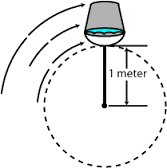
You swing a bucket of water attached to a string in a circle above your head. What keeps the water in the bucket?
a)
Friction
b)
Centripetal Force
c)
Gravity
d)
Inertia
19.

If centripetal force stopped acting on all satellites they would continue traveling in space in a constant direction and constant speed.
a)
True
b)
False
20.
When an object is in circular motion it is constantly changing its velocity.
a)
True
b)
False
21.
Which of these is a non-contact force
a)
mass
b)
gravity
c)
friction
d)
air resistance
22.
Gravity is the force objects put on each other because of their ______.
a)
Mass
b)
Friendliness
c)
Acceleration
d)
Speed
23.

What is the net force?
a)
40 N left
b)
0 N Balalnced
c)
400 N right
d)
40 N right
24.

How will this object move?
a)
It won't move.
b)
It will move to the right.
c)
It will move to the left.
d)
It will move in both directions.
25.

Calculate the Net Force.
a)
40N, Left
b)
40N, Right
c)
0N, Balanced
d)
75N, Right
26.
What is the equation to calculate distance?
a)
distance = speed/time
b)
distance = time/speed
c)
distance = speed/distance
d)
distance = speed x time
27.
A car travels 30 miles/hr for 3 hours, calculate the distance it will travel
a)
90 miles
b)
10 miles
c)
600 miles
d)
90 km
28.
Why does a car accelerate as it round a corner at a constant speed?
a)
Its direction changes
b)
It doesn't
c)
It slows down
d)
Its speeds up
29.
Friction is a force that acts in an ___________ direction of movement.
a)
similar
b)
opposite
c)
parallel
d)
west
30.
How does friction affect speed?
a)
more friction decreases speed
b)
more friction increases speed
c)
less friction decreases speed
31.
A car drives 84 meters forward. It's displacement and distance would be the same.
a)
True
b)
False
32.
Displacement and distance are always the same number.
a)
True
b)
False
33.
A persons walks 50 meters directly north, stops, and then travels 32 meters directly south. What is their displacement?
a)
82 meters
b)
18 meters
c)
28 meters
34.
A measure of how much matter an object has is--
a)
weight
b)
gravity
c)
mass
d)
volume
35.
The weight of an object _________ as it moves away from the center of Earth.
a)
increases
b)
stays the same
c)
triples
d)
decreases
36.
The mass of an object ___________ as it moves away from the center of Earth
a)
stays the same
b)
decreases
c)
increases
d)
doubles
37.
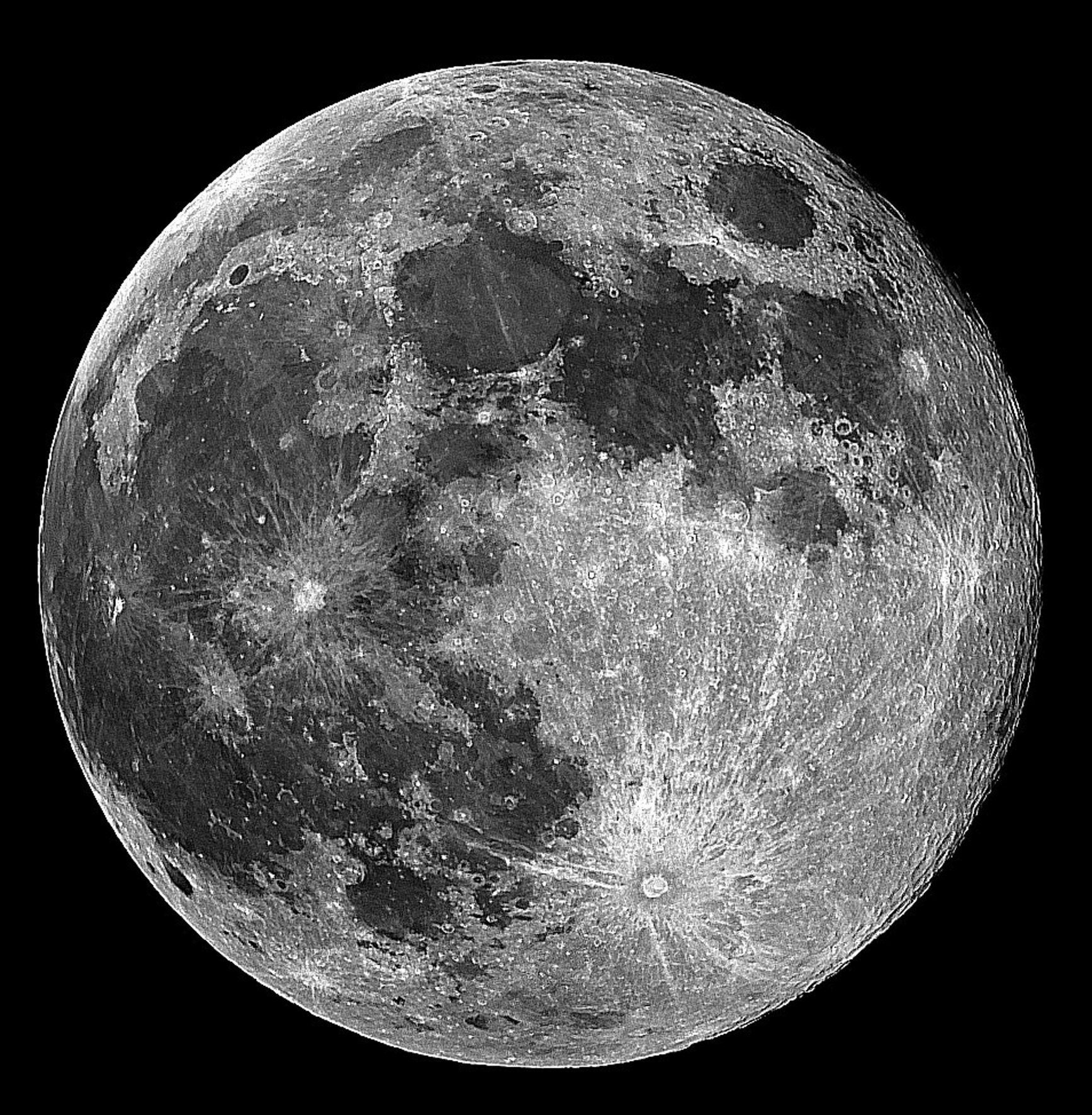
Why would you weigh less on the moon compared to Earth?
a)
less air
b)
less sunlight
c)
more gravitational pull
d)
less gravitational pull
38.
Which of the following is the measure of the amount of matter in an object?
a)
mass
b)
weight
c)
gravity
d)
force
39.
If the net force is equal to zero the forces acting on the object are
a)
balanced
b)
unbalanced
40.

The dog's force is?
a)
Applied
b)
Normal
c)
Gravitational
d)
Magnetic
41.

What force brings the pencil down?
a)
Applied
b)
Magnetic
c)
Normal
d)
Gravitational
42.
An _______ force must act on an object for it to CHANGE it's motion
a)
balanced
b)
unbalanced
c)
gravitational
d)
electrical
43.
The law of inertia (Newton’s First Law) applies
a)
to both moving and nonmoving objects
b)
only to moving objects
c)
only to objects that are not moving
44.
Inertia is the tendency of an object to resist a change in its ___________.
a)
temperature
b)
shape
c)
size
d)
motion
45.

Which activity uses a pull?
a)
pressing a button on a phone
b)
picking a flower
c)
stapling a paper
46.
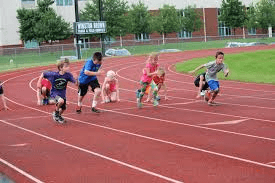
Which describes how fast something is moving?
a)
force
b)
speed
c)
position
d)
slide
47.

What type of force is being shown?
a)
push
b)
pull
c)
friction
48.

What type of motion is demonstrated in the following example?
a)
Circular
b)
Projectile
c)
Vibrational
d)
Linear or Straight Line
49.

What type of motion is demonstrated in the following example?
a)
Circular
b)
Projectile
c)
Vibrational
d)
Linear or Straight Line
50.

What type of motion is demonstrated by the following example?
a)
Circular
b)
Projectile
c)
Vibrational
d)
Linear or Straight Line
51.

What type of motion is demonstrated by the wheels of a train?
a)
Circular
b)
Projectile
c)
Vibrational
d)
Linear or Straight Line
52.

What type of motion is represented by the head of a bobble head doll?
a)
Vibrational
b)
Circular
c)
Projectile
d)
Linear Or Straight Line
53.

What type of motion is demonstrated by an entire train as it moves down the track?
a)
Linear or Straight Line
b)
Circular
c)
Projectile
d)
VIbrational
54.

The force that acts on an object to stop its motion.
a)
Speed
b)
Friction
55.
A baseball pitcher is warming up as he travels to a game by plane. The plane is flying at 400 km/h ] relative to the ground. The pitcher throws the ball at 150 km/h relative to the airplane. What is the ball’s velocity relative to the ground, if the pitcher throws the ball towards the front of the plane?
a)
250 km/h
b)
350 km/h
c)
450 km/h
d)
550 km/h
56.
A baseball pitcher is warming up as he travels to a game by plane. The plane is flying at 400 km/h ] relative to the ground. The pitcher throws the ball at 150 km/h relative to the airplane. What is the ball’s velocity relative to the ground, if the pitcher throws the ball towards the back of the plane?
a)
150 km/h
b)
250 km/h
c)
350 km/h
d)
450 km/h
57.

Total distance divided by total time is
a)
average speed
b)
constant speed
c)
instantaneous speed
d)
acceleration
58.
The momentum of an object depends upon the object's ___________&_____________.
a)
size and shape
b)
mass and speed
c)
mass and veloctiy
d)
mass and energy
59.
Speed =
a)
distance / time
b)
time / distance
c)
distance * time
60.
Acceleration is
a)
increasing speed
b)
decreasing speed
c)
changing direction
d)
all of the above
100 %

